wayground logo

Free Printable Worksheets

Font size

S
M
L
XL
Worksheets

AQA Ecology revision quiz

Total questions: 96

Worksheet time: 1hrs 18mins

Name
Class
Date
1.
What is the original source of almost all energy in most ecosystems?
a)
carbohydrates
b)
sunlight
c)
water
d)
carbon
2.
What is the term for each step in the transfer of energy and matter within a biological community?
a)
energy path
b)
food web
c)
trophic level
d)
food pyramid
3.
Autotrophs make up the _______ level in all ecosystems.
a)
First
b)
Second
c)
Third
d)
Fourth
4.
What does a food web represent?
a)
All connections of energy flow throughout all organisms in a habitat.
b)
The specific ways that mutualism is carried out.
c)
A single pathway or energy flow between organisms. 
d)
How carnivores get their food. 
5.
The image provided is an example of a(n):
a)
Carnivore
b)
Herbivore
c)
Producer
d)
Autotroph
6.
The image provided is an example of a(n):
a)
Producer
b)
Autotroph
c)
Consumer
d)
Insect
7.
An illustration that uses arrows to show the many possible directions in which matter and energy can pass through the organisms in an ecosystem.
a)
Food chain
b)
Food web
c)
Energy Pyramid
d)
Succession Map
8.
The nonliving aspects of an ecosystem.
a)
Abiotic factors
b)
Biotic factors
9.
The living portions of the ecosystem.
a)
Biotic factors
b)
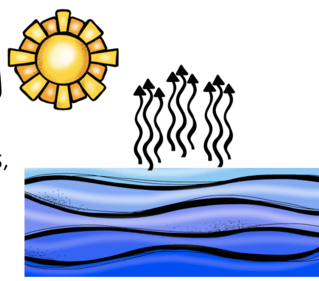
Abiotic factors
10.
Water temperature would be an example of ...
a)
A biotic factor
b)
An abiotic factor
11.
A collection of organisms that belong to different populations but all live in the same area and interact with one another.
a)
Population
b)
Ecosystem
c)
Community
d)
Ecosphere
12.
A place where an organism lives.
a)
Terrain
b)
Habitat
c)
Community
d)
Population
13.
A collection of organisms that make up a community as well as all of the nonliving aspects of the environment.
a)
Population
b)
Community
c)
Habitat
d)
Ecosystem
14.
Organisms that can capture energy from inorganic, nonliving sources.
a)
Producers
b)
Consumers
c)
Detritivores
d)
Carnivores
15.
Organisms that feed on both living producers and other consumers.
a)
Carnivores
b)
Omnivores
c)
Herbivores
d)
Detritivores
16.
The general name for organisms like animals and fungi that get their energy from eating other organisms.
a)
Producers
b)
Consumers
c)
Detritivores
d)
Carnivores
17.
An organism at the second trophic level would be considered a...
a)
Top carnivore
b)
Producer
c)
Herbivore
d)
Carnivore
18.
True or False:  It is possible for a carnivore to be a producer.
a)
False
b)
True
19.
The rabbit in this food web would be considered a:
a)
Decomposer
b)
Producer
c)
Secondary Consumer
d)
Primary Consumer
20.
What are the Abiotic factors in this image? 
a)
water, sunlight, dirt, air
b)
birds and plants
c)
birds, water, dirt
d)
plants, water
21.
How many carnivores are shown in this food web?
a)
6
b)
4
c)
5
d)
3
22.
What might happen if you remove a primary consumer from the ecosystem?
a)
There would be more food for secondary consumers.
b)
The number of primary consumers would increase.
c)
The number of plants would increase.
d)
The number of secondary consumers would increase.
23.
Which of the following would be the most likely effect, if there were a sudden increase in the cricket population?
a)
There would be a decrease in the small bird population.
b)
There would be a decrease in the grass/flowers population.
c)
There would be a decrease in the mice population.
d)
There would be an increase in the grass/flowers population.
24.

What is a quadrat

a)

A type of bike

b)

A sampling tool typically of one square metre, used to sample plants

c)

A sampling tool typically of one square metre, used to sample animals

d)

A type of hat

25.

Which of the following is true about quadrats?

a)

quadrats should be placed randomly so that a representative sample is taken

b)

you should look at the results from several quadrats in an area to reduce the effect of an unusual distribution

c)

the results are more reliable when you look at the results from many quadrats

d)

All the above are true

26.

What is the best way to place a quadrat?

a)

Place it where you like

b)

Divide the sample area into a grid and use a random number generator to choose a square.

c)

Throw the quadrat so it's random

d)

Divide the sample area into a grid and choose a square.

27.
What is an adaptation?
a)
A feature or behavior that helps an animal survive.
b)
The food that an animal eats.
c)
How energy moves in a food web.
d)
How animals evolve throughout time.
28.

Imagine a very hot summer with little rain. What would be the limiting factor for the populations of all of the animals?

a)

competition

b)

food

c)

space

d)

water

29.
The struggle between organisms to survive in a habitat with limited resources
a)
Prey
b)
Symbiosis
c)
Predation
d)
Competition
30.

A pine tree and an oak tree are in the same forest and both need sunlight. This is an example of _______________.

a)

Competition

b)

Mutualism

c)

Commensalism

d)

Predation

31.
An inherited trait that helps those organisms that have it to survive
a)
niche
b)
structure
c)
characteristic
d)
adaptation
32.
Coloring or another physical characteristic that help an organism blend in with its environment
a)
mimicry
b)
camouflage
c)
hibernation
d)
migration
33.
Which feature of a rose helps it grow without being eaten by large animals?
a)
flowers with bright colors
b)
sharp thorns
c)
small seeds
d)
deep roots
34.
Which feature helps an animal hide from other animals?
a)
looking like a dangerous animal
b)
being the same color as the place it lives (camoflauge)
c)
having sharp claws or a strong shel
d)
having only a few young and caring for them
35.
How do adaptations help animals?
a)
To escape animals
b)
to hunt for food
c)
to survive in their habitats
d)
All of these are correct
36.
Plants with spines and waxy leaves are well suited for life in which environment?
a)
Desert
b)
Temperate forest
c)
Grassland
d)
Tropical Rainfroest
37.
An example of a physical adaptation is...
a)
a turtle hiding inside its shell
b)
The spikes on a porcupine fish
c)
a rabbit burrowing underground
d)
a viper biting when threatened
38.
How are hardwood trees adapted to live in cold winters?
a)
They have long stems buried in mud.
b)
They live on tree islands.
c)
They lose their leaves in winter.
d)
They grow low to the ground.
39.
Tigers, Jellyfish, Gorillas and Sponges are all part of kingdom _______.
a)
Animalia
b)
Plantae
c)
Fungi
d)
Bacteria
40.
The scientific name for an organism is made from the:
a)
class and family name
b)
genus and species name
c)
domain and kingdom name
d)
kingdom and phylum name
41.
Term given to describe the 2 name naming system is:
a)
dichotmous key
b)
binomial nomenclature
c)
2 scientific names
d)
binomial key
42.
Which two kingdoms are entirely multicellular?
a)
Animalia and Plantae
b)
Animalia and Protista
c)
Protista and Plantae
43.

Who first proposed binomial nomenclature as a way of classifying organisms?

a)

Carl Linnaeus

b)

Carl's Jr.

c)

Charles Darwin

d)

Henry Groseclose

44.
What is the original source of almost all energy in most ecosystems?
a)
carbohydrates
b)
sunlight
c)
water
d)
carbon
45.
What is the term for each step in the transfer of energy and matter within a biological community?
a)
energy path
b)
food web
c)
trophic level
d)
food pyramid
46.
Autotrophs make up the _______ level in all ecosystems.
a)
First
b)
Second
c)
Third
d)
Fourth
47.
The image provided is an example of a(n):
a)
Carnivore
b)
Herbivore
c)
Producer
d)
Autotroph
48.
The image provided is an example of a(n):
a)
Producer
b)
Autotroph
c)
Consumer
d)
Insect
49.
An illustration that uses arrows to show the many possible directions in which matter and energy can pass through the organisms in an ecosystem.
a)
Food chain
b)
Food web
c)
Energy Pyramid
d)
Succession Map
50.
The nonliving aspects of an ecosystem.
a)
Abiotic factors
b)
Biotic factors
51.
The living portions of the ecosystem.
a)
Biotic factors
b)
Abiotic factors
52.
Water temperature would be an example of ...
a)
A biotic factor
b)
An abiotic factor
53.
A collection of organisms that belong to different populations but all live in the same area and interact with one another.
a)
Population
b)
Ecosystem
c)
Community
d)
Ecosphere
54.
A place where an organism lives.
a)
Terrain
b)
Habitat
c)
Community
d)
Population
55.
A collection of organisms that make up a community as well as all of the nonliving aspects of the environment.
a)
Population
b)
Community
c)
Habitat
d)
Ecosystem
56.
Organisms that can capture energy from inorganic, nonliving sources.
a)
Producers
b)
Consumers
c)
Detritivores
d)
Carnivores
57.
Organisms that feed on both living producers and other consumers.
a)
Carnivores
b)
Omnivores
c)
Herbivores
d)
Detritivores
58.
The general name for organisms like animals and fungi that get their energy from eating other organisms.
a)
Producers
b)
Consumers
c)
Detritivores
d)
Carnivores
59.
An organism at the second trophic level would be considered a...
a)
Top carnivore
b)
Producer
c)
Herbivore
d)
Carnivore
60.
True or False:  It is possible for a carnivore to be a producer.
a)
False
b)
True
61.
The rabbit in this food web would be considered a:
a)
Decomposer
b)
Producer
c)
Secondary Consumer
d)
Primary Consumer
62.
What are the Abiotic factors in this image? 
a)
water, sunlight, dirt, air
b)
birds and plants
c)
birds, water, dirt
d)
plants, water
63.
How many carnivores are shown in this food web?
a)
6
b)
4
c)
5
d)
3
64.
What might happen if you remove a primary consumer from the ecosystem?
a)
There would be more food for secondary consumers.
b)
The number of primary consumers would increase.
c)
The number of plants would increase.
d)
The number of secondary consumers would increase.
65.
Which of the following would be the most likely effect, if there were a sudden increase in the cricket population?
a)
There would be a decrease in the small bird population.
b)
There would be a decrease in the grass/flowers population.
c)
There would be a decrease in the mice population.
d)
There would be an increase in the grass/flowers population.
66.

What is a quadrat

a)

A type of bike

b)

A sampling tool typically of one square metre, used to sample plants

c)

A sampling tool typically of one square metre, used to sample animals

d)

A type of hat

67.

Which of the following is true about quadrats?

a)

quadrats should be placed randomly so that a representative sample is taken

b)

you should look at the results from several quadrats in an area to reduce the effect of an unusual distribution

c)

the results are more reliable when you look at the results from many quadrats

d)

All the above are true

68.

What is the best way to place a quadrat?

a)

Place it where you like

b)

Divide the sample area into a grid and use a random number generator to choose a square.

c)

Throw the quadrat so it's random

d)

Divide the sample area into a grid and choose a square.

69.
What is an adaptation?
a)
A feature or behavior that helps an animal survive.
b)
The food that an animal eats.
c)
How energy moves in a food web.
d)
How animals evolve throughout time.
70.

Imagine a very hot summer with little rain. What would be the limiting factor for the populations of all of the animals?

a)

competition

b)

food

c)

space

d)

water

71.
The struggle between organisms to survive in a habitat with limited resources
a)
Prey
b)
Symbiosis
c)
Predation
d)
Competition
72.

A pine tree and an oak tree are in the same forest and both need sunlight. This is an example of _______________.

a)

Competition

b)

Mutualism

c)

Commensalism

d)

Predation

73.
An inherited trait that helps those organisms that have it to survive
a)
niche
b)
structure
c)
characteristic
d)
adaptation
74.
Coloring or another physical characteristic that help an organism blend in with its environment
a)
mimicry
b)
camouflage
c)
hibernation
d)
migration
75.
Which feature of a rose helps it grow without being eaten by large animals?
a)
flowers with bright colors
b)
sharp thorns
c)
small seeds
d)
deep roots
76.
Which feature helps an animal hide from other animals?
a)
looking like a dangerous animal
b)
being the same color as the place it lives (camoflauge)
c)
having sharp claws or a strong shel
d)
having only a few young and caring for them
77.
How do adaptations help animals?
a)
To escape animals
b)
to hunt for food
c)
to survive in their habitats
d)
All of these are correct
78.
Plants with spines and waxy leaves are well suited for life in which environment?
a)
Desert
b)
Temperate forest
c)
Grassland
d)
Tropical Rainfroest
79.

An example of a structural adaptation is...

a)

a turtle hiding inside its shell

b)

The spikes on a porcupine fish

c)

a rabbit burrowing underground

d)

a viper biting when threatened

80.

Organisms that are adapted to live in extreme environments are known as what?

a)

Survivors

b)

Extremophiles

c)

Microorganisms

d)

Mammals

81.

An example of a functional adaptation is...

a)

arctic fox has white fur

b)

swallows migrate during the winter months

c)

Camels conserve water by producing very little sweat

82.

What affects the Rate of Decay?

a)

Temperature

b)

Oxygen Availability

c)

Water Availibility

d)

Amount of Decomposers

e)

Food Availability

83.

What is the Product of Anaerobic Decay of Waste Materials?

a)

Biogas

b)

Carbon Dioxide

84.

What is Biodiversity?

a)

Variety of Different species of Organisms on Earth or within an Ecosystem

b)

How Organisms Adapt to their environment

85.

Which of these are the Problems with Deforestation?

a)

Less Carbon Dioxide is Taken In

b)

More Carbon Dioxide in the Atmosphere

c)

Less Biodiversity

86.

What does Tropic Level 2 Contain?

a)

Producers

b)

Primary Consumers

c)

Secondary Consumers

d)

Tertiary Consumers

87.

What does Tropic Level 4 Contain?

a)

Producers

b)

Primary Consumers

c)

Secondary Consumers

d)

Tertiary Consumers

88.
All of the carbon in existence is continually recycled in the carbon cycle
a)
True
b)
False
89.
How is the burning of fossil fuels related to global warming?
a)
Magic
b)
Fuels are hot
c)
Greenhouse effect
d)
Photosynthesis
90.
Which of the following removes carbon from the atmosphere?
a)
Combustion
b)
Respiration
c)
Photosynthesis
d)
Death
91.
Organisms that do not decompose can be buried and become what?
a)
water
b)
nutrients
c)
air
d)
fossil fuels
92.
Combustion is another word for __________.
a)
Transportation
b)
Respiration
c)
Fossil Fuels
d)
Burning
93.
What is the water cycle?
a)
the 3 forms of water
b)
the movement of water on, above, or below the surface of the Earth
c)
when water melts
d)
when clouds form
94.
Which of these is an example of precipitation?
a)
snow
b)
air
c)
clouds
d)
vapor
95.
Evaporation happens when the sun ___________ water and turns it into vapor.
a)
cools
b)
heats up
c)
freezes
d)
lights up
96.
When water condenses, the water vapor in the air gets ___________ and changes back into liquid.
a)
cold
b)
hot
c)
warm
d)
solid