
 Worksheets
Spring 2024 Final Review
Total questions: 100
Worksheet time: 1hrs 14mins
The variety of organisms in an area is also called biological diversity.
It is identified by which of the following? (Check all that apply)
species
genes
populations
communities
What are the three main parts of biodiversity? (Check all that apply)
Endangered
Species
Genetic
High Risk
Ecosystem

A small marine area has phytoplankton as its only producer. Should the marine biologist be concerned about this ecosystem?
No, the fish do not need the phytoplankton. Since there are so many fish, there is high biodiversity.
Yes, this ecosystem has low biodiversity. Without a producer, the herbivores will die out leaving no food.
Yes, this system has high biodiversity; however, the fish can adapt and get food from another source.
Yes, the fish will overeat to get all of the phytoplankton that is left, then they will die.

When there is higher biodiversity
more organisms are likely to die because they can't adapt to environmental changes.
there is less diversity.
there is more diversity and higher sustainability of life.
there is more diversity and lower sustainability of life

This picture is a great example of ____________ biodiversity.
high
moderate
low
there is no way to know without counting.

Different biomes support different varieties of organisms. Think of a desert biome. In this environment, you will see organisms that have adapted to the heat and low availability of water, such as cacti, mice, or rattlesnakes. In which biome would you find an animal that has padding on its feet and white fur?
Desert
Tundra
Forest
Savannah

An organism has:
* long legs
* no fur on its belly
* hunts at night (nocturnal)
In what biome would we find this organism?
Grassland
Desert
Tundra
Forest
Biodiversity is greater:
Near the poles
In the Tundra
In the desert
Near the equator
Extinction of a single species can affect the functioning of an ecosystem.
True
False
A stable ecosystem typically has high biodiversity.
True
False
Which of these is a threat to the survival of an ecosystem?
predator-prey population cycles
less biomass at higher levels of the food web
a shrinking variety of animal and plant species
competition among some consumer populations
Why is it important to conserve the biodiversity of Earth?
to decrease the amount of global predator populations
to decrease the stability of major global ocean currents
to increase the stability of ecosystems during environmental changes
to increase the amount of nonrenewable resources located in the lithosphere
A species that is critical to the success of an ecosystem.
Predator species
Parasitism
Carrying capacity
Keystone species
Two types of ecological disturbance are:
animals and plants
abiotic and biotic
natural and human-caused
weather and climate

According to the diagram, which of the following both have large amounts of precipitation?
desert & tropical rain forest
seasonal forest & tundra
tundra & desert
tropical rain forest & temperate rain forest
The landscape of the tundra is characterized by having no trees. Why do you think there are no trees or other large plants in the tundra?
Because of the permanently frozen ground, cold temperatures, and short growing season
Because it is too hot for part of the year
Because it gets far too much precipitation
None of these

The biome where we live in Georgia is
tropical rain forest
temperate deciduous forest
temperate rain forest
tropical seasonal forest
Terrestrial biomes are defined mainly by their
climate, plants & animals
climate only
animals & plants only
none of these
The tundra biome & the desert biome are both very dry, but
the desert is always hot
the desert has a wider temperature range
the tundra has a wider temperature range
they are also similar in temperature

The biome shown in the climatogram above would best be described as a:
temperate deciduous forest
desert
tundra
tropical rain forest
Characteristics of this biome include: warm year-round, large herbivores and predators, drought-resistant plants, animals give birth during the rainy season.
tropical rainforest
savanna
desert
tundra
Which of the following adaptations would you see from an animal that lives in a desert biome?
nocturnal
burrowing
both nocturnal and burrowing
none of the above
Terrestrial biomes are defined mainly by their
climate, plants & animals
climate only
animals & plants only
none of these
The tundra biome & the desert biome are both very dry, but
the desert is less diverse
the desert has a wider temperature range
the tundra has a wider temperature range
they are also similar in temperature
The farther a biome is from the equator, the more we would expect it to be
warmer & wetter
warmer & drier
cooler & wetter
cooler & drier
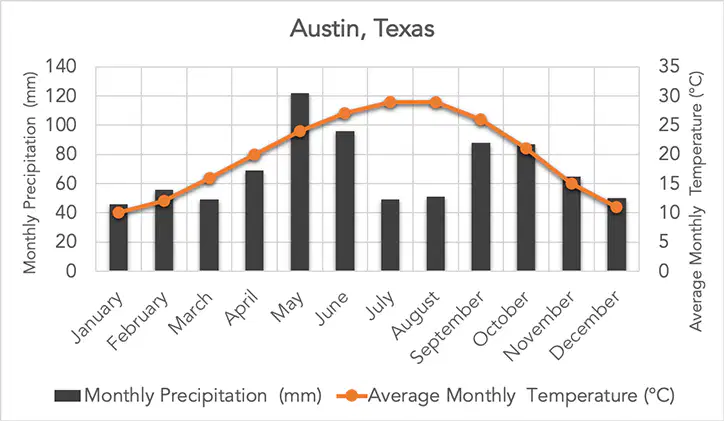
The biome shown in the climatogram above would best be described as a:
Grassland
Desert
Tundra
Tropical rain forest
Which terrestrial biome has the most biodiversity?
taiga
tundra
temperate deciduous forest
tropical rainforest
Characteristics of this biome include: warm year-round, large herbivores and predators, drought-resistant plants, animals give birth during the rainy season.
tropical rainforest
savanna
desert
tundra
An animal adaptation for this biome is a change in fur color between the warmer and colder seasons.
temperate forest
tropical rainforest
taiga
none of these

As altitude or latitude increases...
vegetation increases
rocks increase
there is no change in vegetation
vegetation decreases
The main human activity that releases greenhouse gases is
using public transportation to thereby reduce the effects of greenhouse gases.
texting on cellphones
burning fossil fuels
eating meat
What is the greenhouse effect?
The warming of a planet due to trapped radiation.
The heating of a solid, such as a rock.
The cooling of Earth due to air pollution.
What gas from the list below is a cause for global warming?
Urethane
Oxygen
Carbon Dioxide
What do scientists think the effect will be of having more greenhouse gases in our atmosphere?
More warming of the atmosphere
More air in the atmosphere
More cooling of the atmosphere
Less air in the atmosphere
T/F: Some greenhouse gases are naturally present in the Earth's atmosphere.
true
false
Which of the following have been linked to climate change?
droughts
melting of polar ice caps
flooding
all of the above
Agriculture of this food source contributes greatly to climate change.
Chicken
Vegetables
Beef
Pork
All nations contribute equally to the challenges of climate change for the planet.
True
False
Climate change has endangered the following global animals EXCEPT:
Arctic animals such as penguins, polar bears, and seals
Ocean species such as coral reefs, Atlantic cod, and sea turtles
Forest-dwelling animals such as koalas, orangutans, rhinos, chimpanzees, gorillas, pandas, and elephants
mosquitos

Which of the following is the best conclusion that can be made from this graph?
Atmospheric carbon dioxide levels have been decreasing since 1960
Hawaii has a lot of carbon dioxide
Humans have been working hard to decrease carbon dioxide levels
Atmospheric carbon dioxide levels have increased steadily since 1960
What do humans do that releases greenhouse gases into the atmosphere?
Burn fossil fuels (like gas and coal)
Build cement buildings
Ride bikes and use solar energy
Compete in the Olympics
Which is a natural source of greenhouse gases?
aerosols
deforestation
volcanic eruptions
burning fossil fuels
Which natural process removes carbon dioxide from the atmosphere?
forest fires
volcanic eruptions
cellular respiration
photosynthesis
The average temperature of the surface of Earth has increased approximately 1.5°C in the past century. Which reason best explains this increase in temperature?
lower levels of ozone in the atmosphere
lower levels of nitrogen in the atmosphere
higher levels of carbon dioxide in the atmosphere
higher levels of oxygen in the atmosphere
Which is the primary energy source used by power plants to generate electricity in the United States?
coal
wood
gasoline
nuclear fission
Where is carbon stored?
Trees and other living things
Oceans
Underground in soil and fossil fuels
All are correct
What is the average weather for a particular time and region called?
drought
weather
emissions
climate
Things you can do to help decrease global warming include:
Eat more ice cream.
Keep your freezer door open.
Keep your air conditioner on high.
Turn off your lights when you’re not using them.
Which of the following is contributing to an increase in carbon dioxide in the atmosphere?
deforestation
photosynthesis
oceans
all of the above
The reservoir that holds the most carbon dioxide, in various forms, is which?
Geosphere (Earth and soils)
Atmosphere (Air)
Hydrosphere (Oceans)
Biosphere (Living things)
What is an example of a non-renewable energy source?
Sunlight
Wind
Oil
Tides
Which of the following is true about nonrenewable energy sources?
They took thousands of years to form.
They do not need to be conserved.
They will never run out.
They are the cleanest option for energy production today.
________ energy sources cannot be replaced quickly. They are Finite in the human life span.
Fossil fuels came from the fossilized remains of plants and animals from long ago.

Which of the following is NOT a fossil fuel?
coal
natural gas
oil
water


the supply of fossil fuel is decreasing
True or False. The burning of fossil fuels causes the earth to warm more quickly because of greenhouse gases and pollution.
True
False
Which is an advantage of coal energy?
it's cheap and plentiful
it's a free resource that can be replenished quickly
It creates greenhouse gases when burned
it will eventually run out
Which best explains why we are still dependent on oil and coal energy?
it is cleaner than renewable energy
it is cheap and most residential and commercial industries rely on it
it is never going to run out
it is not very abundant on Earth
Which fossil fuel burns the cleanest?
Nuclear
Oil
Coal
Natural gas
What is the main disadvantage to Coal?
It is difficult to obtain
It creates CO2 and other pollution when it is burned
It is expensive
We lack the technology to use it properly
Why is Uranium considered non-renewable?
Because it is a fossil fuel
Because it is not carbon based.
It's actually a renewable resource
Because it produces nuclear waste
Uranium is a fossil fuel.
True
False
Any significant change in measures of climate, such as temperature lasting for an extended period of a decade or longer.
BIOTECHNOLOGY
CLIMATE CHANGE
CONVECTION
COMPOST
A natural fuel (coal, oil, or gas) formed in the geological past from the remains of living organisms.
FUEL CELL
WIND ENERGY
SOLAR ENERGY
FOSSIL FUEL
Energy stored in the earth in the form of heat.
GEOTHERMAL
SOLAR ENERGY
WIND ENERGY
NUCLEAR ENERGY
The use of flowing water from waterfalls and dams to produce electricity.
HYDRO & TIDAL POWER
SOLAR ENERGY
WIND ENERGY
NUCLEAR ENERGY
Energy stored in the nucleus of an atom.
HYDRO & TIDAL POWER
SOLAR ENERGY
WIND ENERGY
NUCLEAR ENERGY
Plant materials and animal waste used especially as a source of fuel.
BIODEGRADABLE
BIOMASS
REDUCE
RECYCLABLE
Energy from the sun.
HYDRO & TIDAL POWER
SOLAR ENERGY
WIND ENERGY
NUCLEAR ENERGY
Energy derived from wind by means of windmills or wind turbines.
HYDRO & TIDAL POWER
SOLAR ENERGY
WIND ENERGY
NUCLEAR ENERGY
Which type of energy produces Carbon Dioxide, which can be harmful to our planet and cause pollution?
Solar Energy
Wind Energy
Fossil Fuels (Coal, oil, and gas)
Nuclear Energy
A resource that can be replaced when needed.
Fossil Fuels
Nonrenewable Energy
Exhaustible Energy
Renewable Energy
Most renewable energy is derived directly or indirectly from the sun.
True
False

Population growth is...
Change in population size
The number of live births per 1000 people per year
The number of death per 1000 people per year
Number of people living in a unit area of land
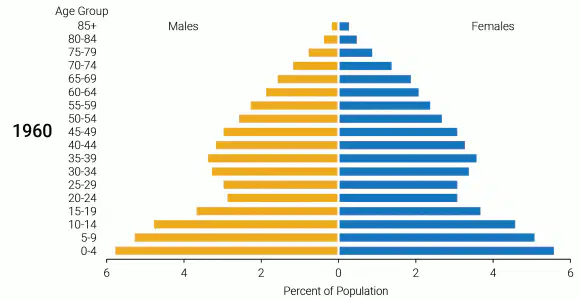
The percentages of individuals found at different age levels make up the ______ of the population. We use these percentages to make a graph to show population growth trends.
Today the human population of Earth is
more than 10 billion
less than 6.7 million
7 million
more than 7 billion
Advances sciences and technology have improved human health and life expectancy and allowed for tremendous population growth.
true
false

How would you describe the population of this country?
They are experiencing stable population growth
They are experiencing negative population growth
They are experiencing rapid population growth
If population and the demand for natural resources continue to grow at the present rate, the human population will be too large for Earth to support.
true
false

Using Figure 5–6, describe the type of growth Mexico is experiencing.
Mexico is experiencing a rapid growth rate because there are more children than adults.
Mexico is experiencing no growth because people are living longer.
Mexico is experiencing slowed growth because there are fewer adults.
Mexico is experiencing a rapid decline because there are more children than adults.
What happens to the size of a population if the birth rate decreases while the death rate remains the same?
it stays the same
it increases
it decreases
it increases, then decreases
Which of the following is used to describe organisms leaving a population?
Immigration
Population clumping
Emigration
population growth
A country with a death rate that is equal to or exceeds the birth rate will see their population...
Increase
Stabilize
Decrease
How does preserving biodiversity come into conflict with human interests?
A. Additional land is used for agriculture or housing in response to population growth
B. Species may represent food or a source of income to the population
Both A and B are correct
None of these
Why does technology play a role in climate change?
Makes life easier
Makes life harder
Decreases demand for natural resources
Increases demand for natural recourse

