
 Worksheets
Final
Total questions: 100
Worksheet time: 1hrs 15mins
Cancer is
a premature stop in the cell cycle.
uncontrolled mitosis.
programmed cell death.
The growth phase of the cell cycle is called
Interphase
Telophase
Prophase
Anaphase

During which stage of the cell cycle does the cell divide?
G1
G2
S
M

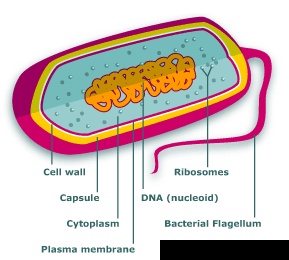
What type of cell has a nucleus?
eukaryotic
prokaryotic
neither
both
Which do BOTH prokaryotes and eukaryotes contain?
nucleus
mitochondria
ribosomes
cell wall
Prokaryotes do NOT have....
membrane bound organelles
DNA or RNA
Cell membrane
Life
You can distinguish a prokaryote apart from a eukaryote by--
The presence of a ribosome
The presence of a cell membrane
The presence of DNA
The presence of a nuclear membrane

2. Which biomolecules contains your genetic information?
Proteins
Lipids
Carbohydrates
Nucleic Acids
1. The four most common elements found in biomolecules are __________.
Sulfur, Phosphorus, Carbon, Oxygen
Carbon, Oxygen, Nitrogen, Hydrogen
Sulfur, Nitrogen, Carbon, Iron
Carbon, Nitrogen, Hydrogen, Sulfur
What is the function of carbohydrates?
Perform cell's functions/tasks
Fast energy
Energy storage
Alter other biomolecules
Store information for cells
What is the function of proteins?
Perform cell's functions/tasks
Fast energy
Energy storage
Alter other biomolecules
Store information for cells
Which process is used to make mRNA from the DNA in the nucleus?
transcription
translation
replication
ATG GGA ACT CCA
Proteins are mode of
nucleotides
glucose
fatty acids
amino acids

Find the amino acid that this segment of RNA codes for: UUG
Glycine
Asparagine
Lysine
Leucine
A codon is a group of ___ RNA bases.
1
3
5
6
In DNA, C pairs with G , and A pairs with
U
A
C
T
In RNA, C pairs with G , and A pairs with
U
A
C
T
RNA goes to the ribosome where it is used as a guide to attach amino acids together. Amino acids in a chain is a protein
This is Transcription.
This is Translation.
DNA is used as a guide to rewrite the genetic code into RNA. RNA can then leave the nucleus.
This is Transcription.
This is Translation.
MET is know as the __________ codon.
stop
main
start
most common
Where is RNA made into protein?
Cytoplasm
Nucleus
Ribosome
Cell Membrane

Enzymes are
Lipids
Protein
Carbohydrates
Nucleic Acids
Enzymes are responsible for-
Speeding up reactions
Giving the body energy
Slowing down reactions
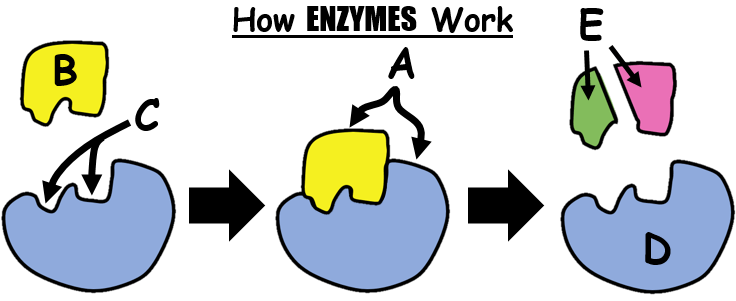
Letter B...
active site
enzyme
substrate
products

Letter D...
active site
enzyme
substrate
products
Letter c...
active site
enzyme
substrate
products


Which type of passive transport uses proteins to help molecules pass through the membrane?
All of the following are functions of a cell membrane EXCEPT
surrounding and protecting the contents of the cell.
releasing waste products from the cell.
producing energy for the cell processes.
allowing gases to enter the cell.
Passive Transport
Does require cell energy
Does NOT require cell energy
Which of the following is a product of cellular respiration?
Radiant Energy
Oxygen
Glucose
Water
Cellular respiration's main goal is to ...
Make ATP
make water
make glucose
make oxygen
Cellular respiration occurs in the...
Nucleus
Mitochondria
Cytoplasm
Chloroplast
In which cell organelle does photosynthesis take place?
mitochondria
chloroplast
nucleus
they produce
Identical halves of a chromosome are called?
Cousins
Chromatids
Centromere
Centrosome
When cells go through mitosis repeatedly without entering interphase, this results
arthritis
cancer
mutation
diabetes
These undifferentiated cells can become specialized cells after receiving a chemical signal.
stem cells
generic cells
blank cells
empty cells
After mitosis, the cytoplasm and organelles are divided between the two new forming cells in a process called
centriole
chromatin
cytokinesis
centromere
In telophase of mitosis, chromosomes
form and the nuclear envelope disappears.
are pulled toward opposite ends of the cell.
chromosomes line up along the equator of the cell
chromosomes begin to decondense and the two new nuclei begin to form.
In anaphase of mitosis, chromosomes
form and the nuclear envelope disappears.
are pulled toward opposite ends of the cell.
chromosomes line up along the equator of the cell
chromosomes begin to decondense and the two new nuclei begin to form.
In metaphase of mitosis, chromosomes
form and the nuclear envelope disappears.
are pulled toward opposite ends of the cell.
chromosomes line up along the equator of the cell
chromosomes begin to decondense and the two new nuclei begin to form.
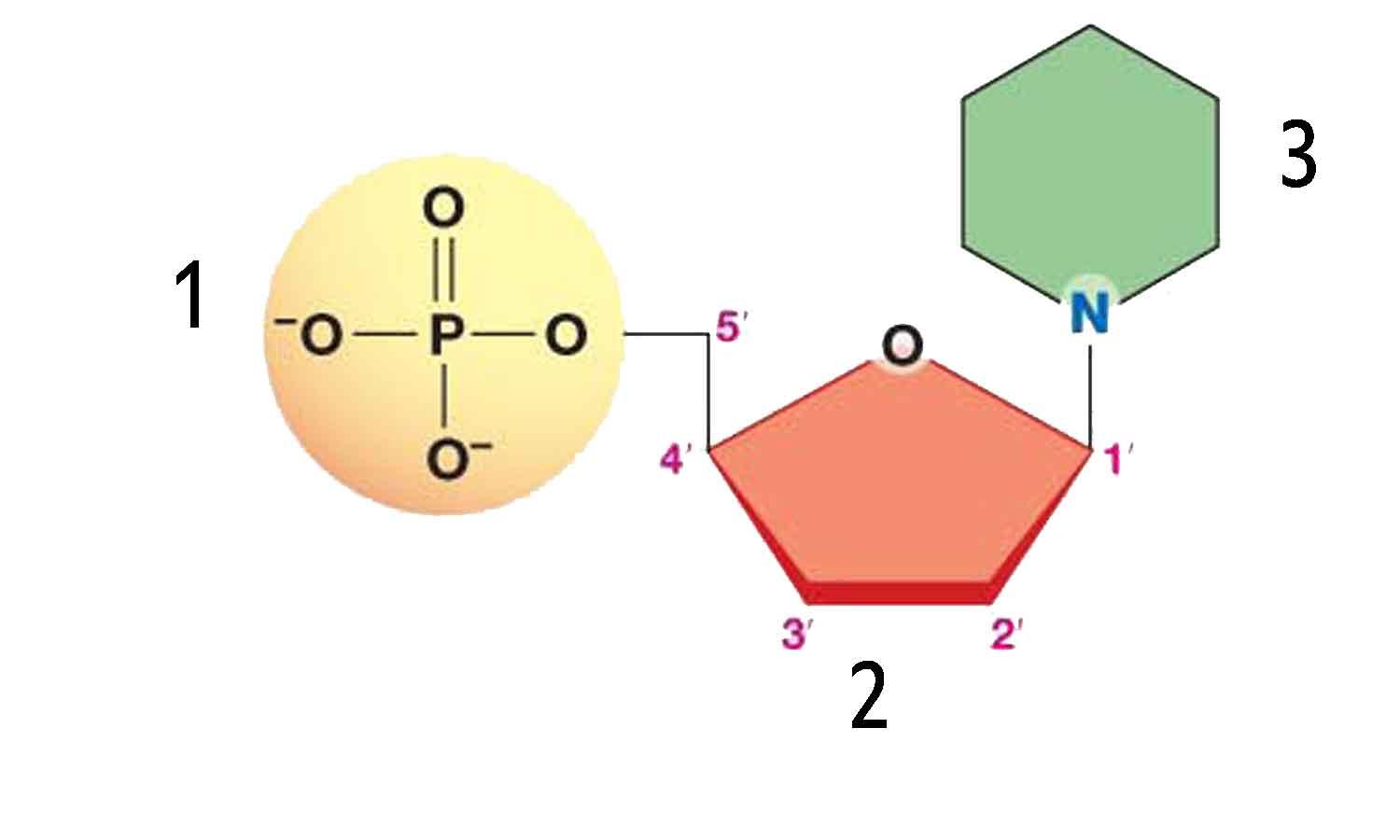
3) Nitrogen Base
2) Phosphate
3) Nitrogen Base
2) Ribose Sugar
3) Nitrogen Base
2) Deoxyribose Sugar
3) Nitrogen Base
DNA is replicated during ______ of the cell cycle.
Gap 1
Synthesis (S phase)
Gap 2
Gap 0
During which part of the cell cycle is DNA replicated?
interphase
mitosis
cytokinesis
Which part of the cell cycle is divided into prophase, metaphase, anaphase, and telophase?
interphase
mitosis
cytokinesis
Simon looks at an image of a slide and notices that all of the chromosomes are lined up in along the middle of the cell. He is likely looking at a cell that is in
prophase
metaphase
anaphase
telophase
Why is it so important to replicate DNA?
so that each daughter cell is unique
to release energy
to make sure that the daughter cells are genetically identical to the parent cells
all of the above
Which base can only pair up with Cytosine?
Adenine
Thymine
Guanine
all of the above can pair with cytosine
Which of these parts of the cell cycle are arranged in the correct sequence?
metaphase-> prophase-> telophase
anaphase-> telophase-> cytokinesis
interphase-> cytokinesis-> mitosis
mitosis-> interphase-> anaphase
What are the three types of gene mutation?
Insertion, Deletion, Subsitution
Aberration, Deletion, Substitution
Inversion, Duplication, Insertion
Insertion, Duplication, Substitution
In this type of point mutation, one base pair is lost
substitution
insertion
deletion
translocation
In this type of point mutation, one extra base pair is inserted into a sequence of DNA
substitution
insertion
deletion
translocation

The bottom DNA sequence in the image has been altered by this type of mutation
substitution
insertion
deletion
translocation

The bottom DNA sequence in the image has been altered by this type of mutation
substitution
insertion
deletion
translocation
Specialized cells such as muscle, blood, or nerve cells are caused by cell differentiation led by
DNA
nucleus
ribosomes
plasma membrane
Cells differentiate to perform different functions because
all genes are turned on inside that cell
all genes are turned off inside that cell
different genes are turned on inside that cell
different genes are turned on or off inside that cell

The alleles for different traits are sorted separately and don't affect one another.
Law of Dominance
Law of Independent Assortment
Law of Conservation of Matter
Law of Segregation
States that alleles of each gene segregate into gametes independently of alleles of other genes, as shown in a dihybrid cross.
Law of Complete Dominance
Law of Independent Assortment
Law of Segregation
The rule of addition
The rule of multiplication

Crossing over occurs during prophase I of meiosis. Which statement about crossing over is true?
RNA translation occurs in the smooth endoplasmic reticulum
Crossing over takes place in backterial cells
Crossing over produces genetically identical daughter cells
Crossing over provides genetic diversity in eukaryotic cells
Which of the following are in order from smallest to largest
Cells -> tissue -> organ -> organ system
Cells -> Organ system -> tissue -> organ
Organ system -> Organ -> Tissue -> Cell
Tissue -> organ system -> Cell -> Organ

What does the image demonstrate
Punnet squares
Crossing over
Metaphase
Dna replication
G1, S, and G2 are all phases of
Mitosis
Meiosis
Interphase
Prophase
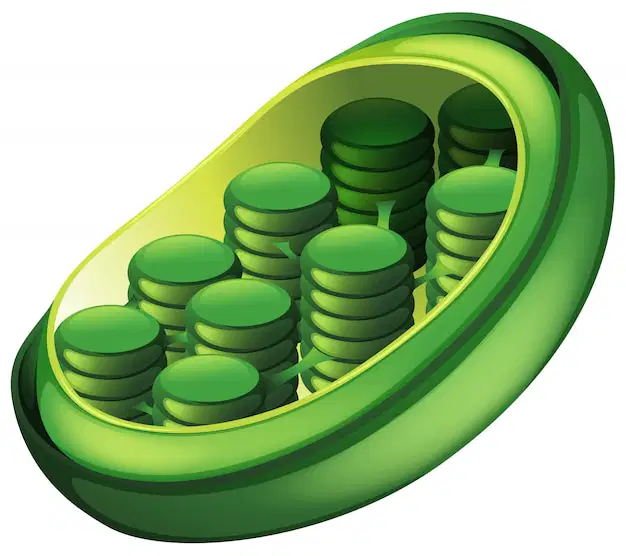
This organelle is in charge of
Cellular Respiration
Photosynthesis
Both
None
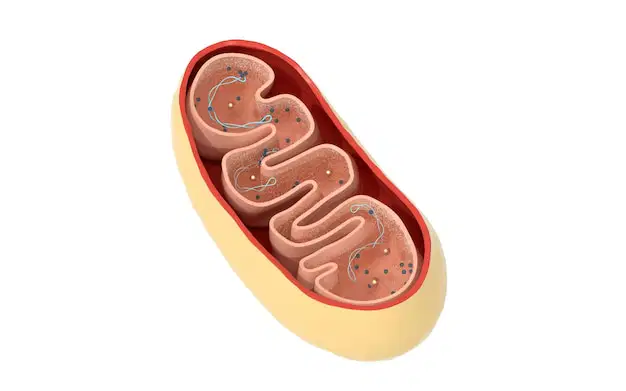
This organelle is in charge of
Cellular Respiration
Photosynthesis
Both
None
Osmosis is the movement of ____________.
Sugar
Particles
Proteins
Water
What type of transport requires NO energy?
Passive
Active

