wayground logo

Free Printable Worksheets

Font size

S
M
L
XL
Worksheets

Fall Semester Final Review

Total questions: 98

Worksheet time: 3hrs 32mins

Name
Class
Date
1.
All living things are made up of _____. 
a)
Cells 
b)
Bacteria 
c)
Virus 
d)
ATP
2.
Prokaryotic cells do NOT have a nucleus. 
a)
True 
b)
False 
3.
Which of the following is an example of a prokaryotic cell? 
a)
Virus 
b)
Plant Cell 
c)
Bacteria 
d)
Animal Cell 
4.
Eukaryotic cells do NOT have a nucleus. 
a)
True 
b)
False 
5.
Which of the following is a Eukaryotic cell?
a)
Bacteria 
b)
Virus 
c)
Animal/Plant Cell 
d)
All of the above. 
6.
Directs all cell activities through the DNA located there.
a)
Lysosomes
b)
Nucleus
c)
ribosomes
d)
Mitochondria
7.
Where are proteins made?
a)
Golgi body
b)
Mitoichondria
c)
Chromosomes
d)
Ribosomes
8.
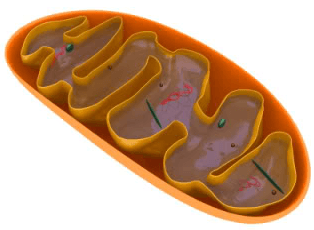
What are tiny organelles that convert glucose into ATP?
a)
Ribosomes
b)
Vesicles
c)
Cytoskeleton
d)
Mitochondria
9.
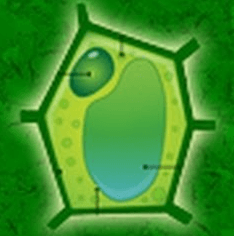
A rigid layer that lies outside the cell's  membrane is...
a)
Cytoskeleton
b)
Cilia
c)
Cell Wall
d)
Flagella
10.
The site of photosynthesis
a)
ribosome
b)
mitochondria
c)
chloroplast
d)
nucleus
11.
Which of the following would be found in both eukaryotic AND prokaryotic cells?
a)
chloroplast
b)
DNA
c)
nucleus
d)
endoplasmic reticulum
12.

What is the function of carbohydrates?

a)

Perform cell's functions/tasks

b)

Fast energy

c)

Energy storage

d)

Alter other biomolecules

e)

Store information for cells

13.
Which biomolecule includes sugars and starches? (Hint: simple or complex)
a)
Lipids
b)
Proteins
c)
Carbohydrates
d)
Nucleic Acids
14.
Which biomolecule group includes fats, oils, and waxes?
a)
Proteins
b)
Nucleic Acid
c)
Lipids
d)
Carbohydrate
15.
The monomer (building block) of a nucleic acid is
a)
Monosaccharide
b)
Amino Acid
c)
Nucleotide
d)
Polysaccharide
16.
ALL polymers (large molecules) are made up of...
a)
monosaccharides
b)
monomers
c)
proteins
d)
None of these
17.

What is the function of carbohydrates?

a)

provides quick energy

b)

stores energy

c)

helps with growth and repair of tissues

d)

stores genetic information

18.

What is the function of proteins?

a)

provides quick energy

b)

stores energy

c)

helps with growth and repair of tissues

d)

stores genetic information

19.

What is the function of nucleic acid?

a)

provides quick energy

b)

stores energy

c)

helps with growth and repair of tissues

d)

stores genetic information

20.

What is the monomer for carbohydrates?

a)

Monosaccarides

b)

Fatty Acids

c)

Amino Acids

d)

Nucleotides

21.

What is the monomer for proteins?

a)

Monosaccarides

b)

Fatty Acids

c)

Amino Acids

d)

Nucleotides

22.
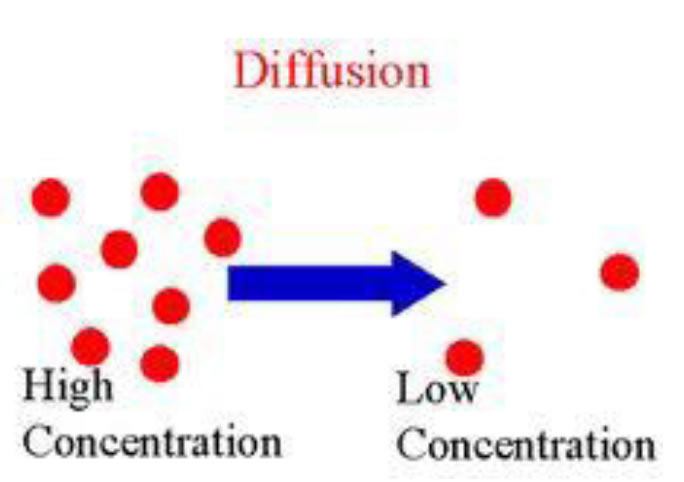
Movement of particles from high to low concentration. 
a)
Passive Transport
b)
Active Transport
23.
a)
Passive Transport
b)
Active Transport
24.
Osmosis is a form of ______________. 
a)
Passive Transport
b)
Active Transport
25.
Solutes move with the concentration gradient, therefore no energy is used. 
a)
Passive Transport
b)
Active Transport
26.
Low to High
a)
Passive Transport
b)
Active Transport
27.
Solutes move against the concentration gradient, therefore energy is needed
a)
Passive Transport
b)
Active Transport
28.
What is it called when molecules move across the cell membrane from an area of high concentration to an area of low concentration through a carrier protein?
a)
Diffusion
b)
Osmosis
c)
Active Transport
d)
Facilitated Diffusion
29.
Osmosis is the movement of _____ across a membrane.
a)
food
b)
energy
c)
oxygen
d)
water
30.
This cell organelle helps organisms maintain homeostasis by controlling what substances may enter or leave cells.
a)
vacuole
b)
nucleus
c)
cell membrane
d)
cell wall
31.

What is the definition of Selective Permeability?

a)

The movement of materials across the cell membrane that requires NO ENERGY from the cell.

b)

The movement of materials through (or across) the cell membrane

c)

The ability of the cell membrane to allow some things to pass through while preventing other things from passing through.

32.

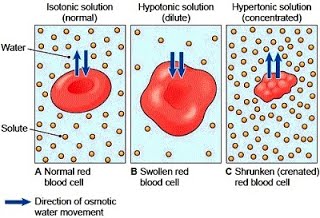
An animal cell placed in a hypertonic (salty) solution will

a)

Stay the same

b)

Shrink- get smaller

c)

Swell- get bigger

33.

If you looked at red blood cells under a microscope and saw the blood cells exploded, what would you say happened?

a)

The cells were placed in a hypotonic solution.

b)

the solution was isotonic.

c)

The solution was hypertonic.

34.

The three stages of the cell cycle are __________, mitosis, and

cytokinesis.

a)

interphase

b)

anaphase

c)

metaphase

d)

prophase

35.

What can the cell cycle also be called?

a)

Cell growth

b)

DNA Replication

c)

Preparation for Mitosis

d)

Cell Division

36.
Which part of the Cell Cycle takes the longest?
a)
Interphase
b)
Mitosis
c)
Prophase
d)
Cytokinesis
37.
Fruit fly body cells have 8 chromosomes. After mitosis, you would expect a resulting fruit fly daughter cell to have ...
a)
16 chromosomes.
b)
46 chromosomes.
c)
8 chromosomes.
d)
4 chromosomes.
38.

What is the result of the cell cycle?

a)

Three cells

b)

Four daughter cells

c)

Two identical cells

d)

One clone cell

39.
Put the following actions in order: DNA replicates, cell grows, cell divides, cell prepares for mitosis. 
a)
DNA replicates, cell grows, cell prepares for mitosis, cell divides
b)
cell grows, cell prepares for mitosis, DNA replicates, cell divides
c)
cell grows, DNA replicates, cell prepares for mitosis, cell divides
d)
DNA replicates, cell prepares for mitosis, cell grows, cell divides
40.
The following describes __________ during mitosis. The chromatin condenses and spindle fibers form at each side of the cell. The nuclear membrane breaks apart.
a)
prophase
b)
metaphase
c)
anaphase
d)
telophase
41.

The following describes _________ during mitosis. Two new nuclei form, chromosomes are no longer visible, and the spindle fibers disappear.

a)

prophase

b)

metaphase

c)

anaphase

d)

telophase

42.
What phase of mitosis is shown in the picture?
a)
Prophase
b)
Anaphase
c)
Telophase
d)
Metaphase
43.
Name the previous phase.
a)
Prophase
b)
Metaphase
c)
Anaphase
d)
Telophase
44.

Which of the following is the complementary mRNA sequence to this DNA strand: AACTGAA

a)

UUGACUU

b)

TTGACTT

c)

AACTGAA

d)

AACUGAA

45.
The process to go from DNA to mRNA is _______
a)
translation
b)
transcription
c)
replication
46.
The process to go from mRNA to a protein is called ____
a)
transcription
b)
rRNA
c)
replication
d)
translation
47.
Genetic info flows in one direction. Which best represents this flow?
a)
DNA-protein-RNA
b)
Protein-RNA-DNA
c)
RNA-protein-DNA
d)
DNA-RNA-protein
48.
What is the location in the cell for transcription?
a)
nucleus
b)
cytoplasm
c)
ribosome
d)
mitochondria
49.

What brings the amino acids to the ribosome to assemble a protein?

a)
mRNA
b)
tRNA
c)
rRNA
d)

DNA

50.

Assembling proteins via instructions from DNA.

a)

Replication

b)

Mutations

c)

Protein synthesis

d)

Homeostasis

51.

Double stranded DNA is unzipped, and one strand is used as a template to form Messenger RNA.

a)

Translation

b)

Transcription

c)

Replication

d)

Mitosis

52.

A nucleotide base that takes the place of Thymine in RNA.

a)

Uracil

b)

Thymine

c)

Adenine

d)

uRNA

53.

A ←→ U

C ←→ G

T → A

a)

Homeostasis

b)

Mitosis

c)

Base Pairing Rules for Replication

d)

Base Pairing Rules for Transcription

54.

The instruction of one allele covers up the instruction

of the other allele in a homologous pair. Symbolized by a capital letter.

a)

Recessive Allele

b)

Dominant Allele

c)

Heredity

d)

Trait

55.

A genotype where one dominant and one recessive allele was passed on from both parents for one trait.

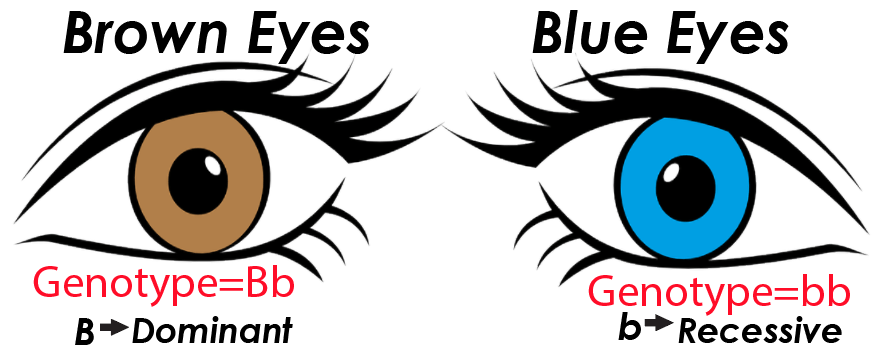
Bb Aa Tt Ll

a)

Allele

b)

Homozygous Dominant

c)

Homozygous Recessive

d)

Heterozygous

56.

The observable traits dictated by the genotype

a)

Phenotype

b)

Genotype

c)

Homozygous Recessive

d)

Homozygous Dominant

57.

During meiosis and gamete formation, homologous (paired up) alleles split up

a)

Phenotype

b)

Law of Segregation

c)

Genotype

d)

Dihybrid Cross

58.

During meiosis, the homologous pairs of chromosomes and the matching alleles are lined up independently.

Offspring are a mix of maternal genes and paternal genes.

This increases genetic variation.

a)

Homozygous Dominant

b)

Law of Segregation

c)

Crossing Over

d)

Independent Assortment

59.
If you are homozygous dominant, the genotype would be 
a)
AA
b)
aa
c)
Aa
60.
A heterozygous long-tusked elephant is crossed with a homozygous recessive short-tusked elephant. What is the probability of the offspring having short tusks?
a)
0%
b)
25%
c)
50%
d)
75%
61.
If green is dominant over purple, then what is the genotype for this individual?
a)
Purple
b)
Green
c)
GG
d)
gg
62.
Another word for homozygous is...
a)
purebred
b)
hybrid
c)
heterozygous
d)
dominant
63.

What is the predicted percentage of homozygous recessive offspring in this cross?

a)

0%

b)

25%

c)

50%

d)

75%

64.
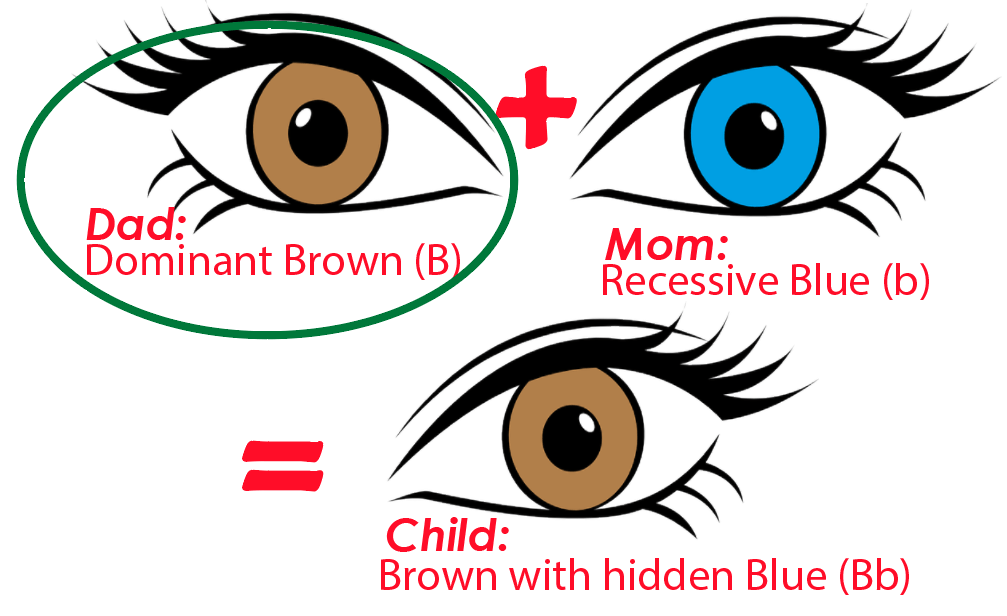
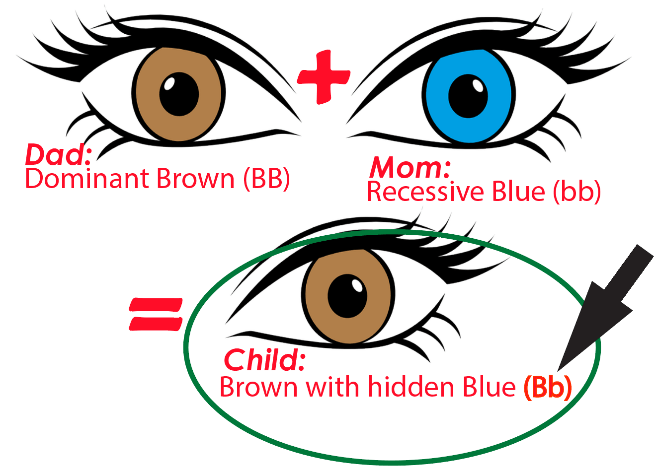
Two brown eyed parents (Bb) have a baby. What is the chance the baby is blue eyed?
a)
0 %
b)
25%
c)
50%
d)
75%
65.
A calico cat shows both the traits for orange fur and black fur. What kind of allele expression is this?
a)
Incomplete Dominance
b)
Co dominance
66.

Which of the following statement is correct regarding Codominance?

a)

Both alleles are expressed equally

b)

Neither allele is expressed

c)

Expression of a trait depends upon the environment
67.
Which of the following statements is true regarding blood types?
a)
A and O are codominant, B is recessive.
b)
B and O are codominant, A is recessive.
c)
A and B are codominant, O is recessive.
d)
A , B and O are all codominant with each other.
68.
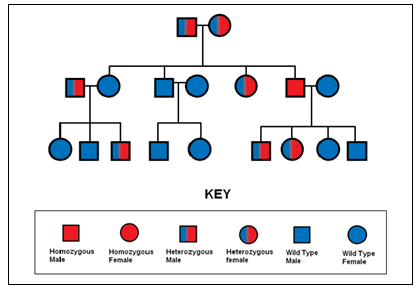
In a pedigree, what shape represents a male?
a)
circle
b)
square
c)
triangle
d)
diamond
69.
What do we use pedigrees for?
a)
To look at families
b)
To make determinations about the offspring
c)
To track traits in families
d)
Nothing
70.
What percentage of the female offspring will be a carrier for this recessive disease?
a)
0%
b)
50%
c)
100%
d)
25%
71.
This is an example of ___________?
a)
Incomplete dominance
b)
Co-Dominance
72.

In this pedigree, the shading represents people in the family with dark hair while the unshaded represents blondes. Is dark hair controlled by a dominant or recessive allele?

a)

Dominant

b)

Recessive

73.

Some flowers are controlled by codominance. Red flowers (RR), blue flowers (BB) and Speckled flowers (RB).


Cross two speckled flowers.

a)

1 red, 2 speckled, 1 blue

b)

2 red, 2 blue

c)

2 blue, 2 speckled

d)

1 red, 1 speckled, 2 blue

74.

A viruses are considered

a)

Living

b)

Non-living

75.

When a virus attaches to a host, what does it inject into the host

a)

protein coat

b)

Capsid

c)

DNA/ RNA

d)

Envelope

76.

Viruses require a host cell to

a)

Breathe and eat

b)

Replicate

c)

Move and sleep

d)

Make protein and carbohydrates

77.

What is a host?

a)

An organism that eats another organism

b)

An organism or a cell that the virus needs to reproduce in

c)

Something that causes harm to the cell

d)

The person that greats you at a resturant

78.

Which is in order from largest to smallest structure?

a)

chromosome, DNA strand, gene, nucleotide

b)

chromosome, gene, DNA strand, nucleotide

c)

gene, DNA strand, chromosome, nucleotide

d)

DNA strand, chromosome, gene, nucleotide

79.

What are the parts of a nucleotide?

a)

phosphate, sugar, base

b)

A, T, G, C

c)

Nucleic Acids

d)

two base pairs connected

80.

Which of the following is correctly matches: ATT GTA CGA

a)

TAA CAT GCT

b)

ATT GTA CGA

c)

TAA GTA TCG

d)

GCC ACG TAC

81.
Why is DNA important?
a)
it is very small and very complicated
b)
it's in everything
c)
it serves as the blueprint for traits of all living things
d)
because we eat it every day for energy
82.
What is the significance of the sequence (order) of the Nitrogen Bases in DNA?
a)
The order of the Nitrogen Bases determines the number of chromosomes present in an organism.
b)
The order of the Nitrogen Bases determines the traits that an organism will possess (have).
c)
The order of the Nitrogen Bases determines the gender of an organism.
d)
The order of the Nitrogen Bases determines whether an organism is abiotic biotic.
83.
order of replication
a)
3, 2, 1, 4
b)
2, 1, 4, 3
c)
2, 3, 1, 4
d)
3, 4, 1, 2
84.
What are the three components of a nucleotide?
a)
sugar, hydrogen, nitrogen base
b)
sugar, oxygen, nitrogen base
c)
sugar, phosphate, nitrogen base
d)
sugar, phosphate, protein
85.

What organelle converts glucose into ATP?

a)

Ribosomes

b)

Vesicles

c)

Cytoskeleton

d)

Mitochondria

86.
Process that converts light energy to chemical energy...
a)
photosynthesis 
b)
heterotroph
c)
autotroph
d)
hypothesis 
87.

Which of the following would most affect the rate of photosynthesis?

a)

Amount of carbon dioxide in the atmosphere

b)

amount of water in the soil

c)

amount of sunlight

d)

All of the above

88.

How many daughter cells are made at the end of Meiosis ll?

a)

2

b)

4

c)

6

d)

8

89.

How many daughter cells are made at the end of Meiosis l?

a)

2

b)

3

c)

4

d)

6

90.
What scientific process is being shown?
a)
Mixing
b)
Crossing under
c)
Crossing over
d)
square dancing
91.
What is the genotype of the mother?
a)
BB
b)
bb
c)
Bb
d)
BB or Bb
92.
If two parents are heterozygous for type A blood, what is the probability that their offspring would have type O blood?
a)
100 %
b)
75%
c)
50%
d)
25%
93.
Someone with type A blood can receive blood from someone who is type AB.
a)
True
b)
False
94.

If one of your parents is blood type A and the other is type B and both are heterozygous, which of the following blood types would you likely be?

a)

O

b)

AB

c)

A or B

d)

All of those are equally likely

95.

What is the mode of inheritance shown here?

a)

Recessive because it "skips" a generation

b)

Dominant because it shows up in every generation

96.

Colorblindness is more common in males than in females because......

a)

fathers pass the allele for colorblindness to their sons only

b)

the allele for colorblindness is located on the Y chromosome

c)

the allele for colorblindness is recessive and located on the X chromosome

d)

males who are colorblind have two copies of the allele for colorblindness

97.
Hemophilia is a recessive x-linked disorder.
Which genotype represents a male with hemophilia?
a)
XHXh
b)
XhXh
c)
XHY
d)
XhY
98.

A red flowered plant (RR) is crossed with a white flowered plant (WW). The gene for petal color in these plants expresses incomplete dominance. What percentage of the offspring will have pink (RW) flowers?

a)

0%

b)

25%

c)

50%

d)

100%