wayground logo

Free Printable Worksheets

Font size

S
M
L
XL
Worksheets

DNA, Genes, and Chromosomes

Total questions: 100

Worksheet time: 2hrs 40mins

Name
Class
Date
1.
What are the nucleotides made of?
a)
Sugar, Phosphate, nitrogen base
b)
Phosphate, Adenine, nitrogen base
c)
Thymine, Adenine, Cytomine
d)
Phosphate, Nitrogen, Adenine
2.
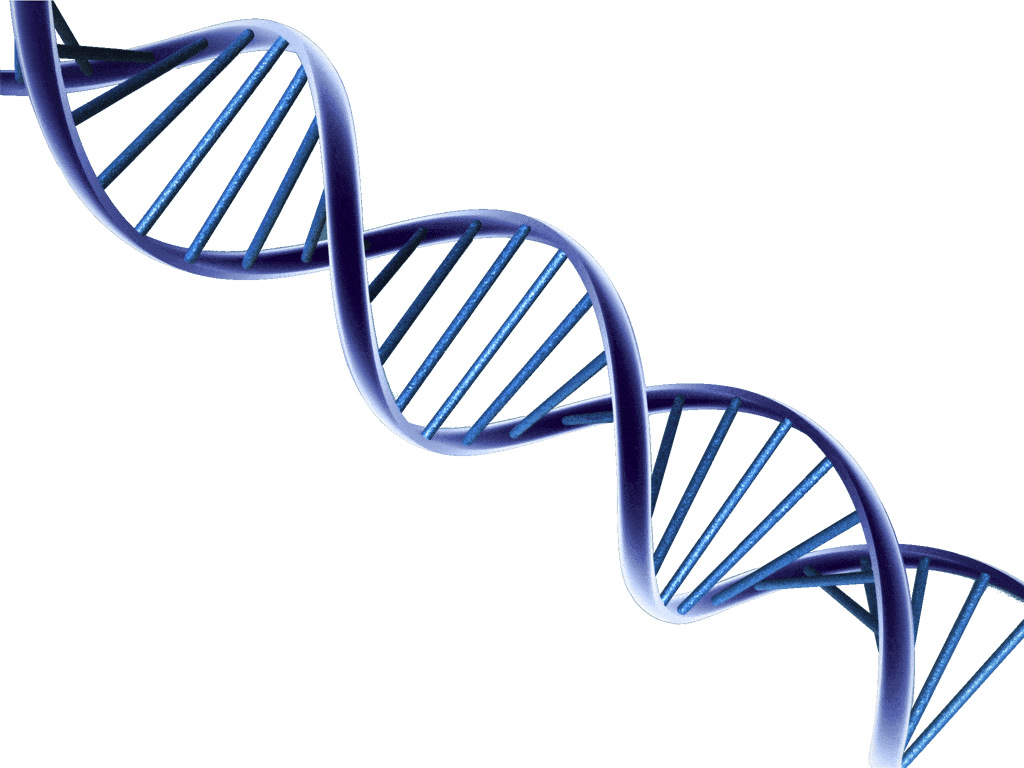
Which of the following best describes a DNA molecule?
a)
double helix
b)
contains ribose
c)
made of amino acids
d)
contains Uracil
3.
Adenine bonds with ______________.
a)
Guanine
b)
Thymine
c)
Cytosine
d)
Adenine
4.
Guanine bonds with ______________.
a)
Adenine
b)
Guanine
c)
Cytosine
d)
Thymine
5.
Why is DNA important?
a)
it is very small and very complicated
b)
it's in everything
c)
it serves as the blueprint for traits of all living things
d)
because we eat it every day for energy
6.
Which sequence of DNA bases would pair with this partial strand
ATG TGA CAG
a)
ATG TGA CAG
b)
TAC ACT GTC
c)
GTA AGT GAC
d)
CAT TCA CTG
7.
Which organelle is DNA usually found in?
a)
cell membrane
b)
vacuole
c)
chloroplast
d)
nucleus
8.
Which 2 molecules forms the sides (backbone) of the DNA ladder?
a)
deoxyribose and adenine
b)
deoxyribose and a hydrogen bond
c)
sugar and the nucleus
d)
deoxyribose (sugar) and phosphate
9.
Which shows the correct complementary base pairing for DNA?
a)
C-A, T-G
b)
A-G, C-T
c)
C-G, U-A
d)
T-A, G-C
10.
What does DNA stand for?
a)
Deoxyribonucleic acid
b)
Denitrogenous acid
c)
Deribonucleic acid
d)
Diribonucleic acid
11.

How many chromosomes do human cells have?

a)

46

b)

23

c)

2

d)

44

12.
What is a gene?
a)
A bundle (like a hot dog bun) that the DNA is packed into
b)
something inside the nucleus
c)
a piece of DNA
d)
all of your DNA
13.

Bundled up, organized DNA is called a

a)

gene

b)

trait

c)

chromosome

d)

nucleotide

14.
DNA is a polymer made of:
a)
Nucleotides
b)
Ribosomes
c)
Purines
d)
Pyrimidines
15.
In a molecule of double-stranded DNA, the amount of Adenine present is always equal to the amount of
a)
cytosine
b)
guanine
c)
thymine
d)
uracil
16.
What will the matching sequence be on a strand that reads AAGCTAT?
a)
AACGATA
b)
TTCGTTA
c)
CCTGATA
d)
TTCGATA
17.
DNA codes for...
a)
bases
b)
proteins
c)
amino acids
d)
phosphates
18.
_____________________ carries information for inherited traits.
a)
DNA
b)
FBI
c)
RNA
d)
CBS
19.
A nucleotide is made up of three parts:  which of these is not one of those parts?
a)
sugar
b)
phosphate
c)
amino acids
d)
base
20.
A strand of DNA that looks like a twisted ladder is called a _____________________
a)
triple twist
b)
corkscrew
c)
double helix
d)
chain reaction
21.
____________________ is to make copies of DNA
a)
replicate
b)
recycle
c)
reuse
d)
rejoice
22.
_____________________ is a cell organelle composed of RNA and Protein
a)
cytoplasm
b)
ribosome
c)
DNA
d)
Amino Acid
23.
Who is responsible for producing this image?
a)
Francis Crick
b)
James Watson
c)
Rosalind Franklin
d)
Watson and Crick
24.
What does this image show?
a)
Double helical structure of DNA
b)
Triple Helical Structure of DNA
c)
Double helical structure of RNA
d)
Triple Helical Structure of RNA
25.
How did Rosalind Franklin's photo 51 affect the work of Watson and Crick?
a)
It was used to determine the physical structure of DNA
b)
It was used to identify the four bases that make up DNA
c)
It was used to determine the theory of independent assortment
d)
It was used to show DNA was the molecule of inheritance
26.
What was Watson and Crick's main scientific accomplishment?
a)
Building the first accurate model of DNA
b)
Isolating strains of pneumonia causing bacteria
c)
Determining base pairing rules
d)
Discovering the process of genetic transformation
27.
Rosalind Franklin's "Photo 51" allowed Watson and Crick to determine the _______ of DNA.
a)
Shape
b)
Backbone
c)
Nitrogen bases
d)
Hydrogen bonds
28.
Who was responsible for the experiment depicted by the image?
a)
Martha Chase
b)
Watson and Crick
c)
Frederick Griffith
d)
Rosalind Franklin
29.
Who was responsible for the model shown?
a)
Oswald Avery
b)
Watson and Crick
c)
Erwin Chargaff
d)
Rosalind Franklin
30.
Which sugar is contained in DNA
a)
Dextrose
b)
Ribose
c)
Deoxyribose
d)
Glucose
31.
In a molecule of double-stranded DNA, the amount of Adenine present is always equal to the amount of
a)
cytosine
b)
guanine
c)
thymine
d)
uracil
32.
Watson and Crick were the first to suggest that DNA is _____
a)
a short molecule
b)
the shape of a double helix
c)
a protein molecule
d)
the genetic material
33.
The instructions governing the traits of an organism are determined by...?
a)
The order of bases 
b)
The length of the DNA
c)
Which bases are paired with which
d)
The proportions of A,G,C, and T
34.
The two strands of DNA are held together by what type of bond?
a)
Ionic
b)
Covelant
c)
Polar
d)
Hydrogen
35.
The bonds that hold the strands of DNA together are between the...
a)
Bases and the Sugars
b)
Bases and the Phosphates
c)
Bases and other Bases
d)
Sugars and Phosphates
36.
Given the following sequence - ATGCGTGACGATA
The complimentary sequence would be...
a)
ATGCGTGACGATA
b)
UACGCACUGCUAU
c)
TACGCACTGCTAT
d)
TACGTCGATATGE
37.
These two scientists worked well together to solve the riddle of DNA
a)
Franklin and Wilkins
b)
Crick and Franklin
c)
Watson and Crick
d)
Watson and Wilkins
38.
Which scientists built a 3-D model of the DNA double helix?
a)
Hershey and Chase
b)
Watson and Crick
c)
Chargaff and Franklin
d)
Griffith and Avery
39.

Rosalinda Franklin discovered DNA was ________________.

a)

square

b)

spiral

c)

circular

d)

rectangular

40.

What does a Double Helix look like?

a)

Twisted ladder

b)

Upside down ladder

c)

Sideways ladder

d)

Double circle

41.

Who used x ray diffraction to see DNA?

a)

Watson

b)

Chargaff

c)

Franklin

d)

Crick

42.

Who built models of DNA and said it looked like a twisted ladder (double helix)?

a)

Franklin

b)

Sunny and Cher

c)

Chargaff

d)

Watson and Crick

43.
Complex molecule that carries genetic information that defines an organism's traits. It is stored in the nucleus.
a)
DNA
b)
protein
c)
RNA
d)
glucose nucleic acid (GNA)
44.

A segment of DNA that codes for a trait

a)

gene

b)

allele

c)

chromosome

d)

chromatid

45.
the passing of genetic traits from parent to offspring.
a)
heredity
b)
trait
c)
gene
d)
allele
46.
Which of the following cell types is formed by meiosis?
a)
muscle cells
b)
skin cells
c)
sperm cells
d)
blood cells
47.

Human gametes contain how many chromosomes?

a)

46

b)

23

c)

12

d)

28

48.
The drawing shows the structure of what molecule?
a)
A DNA molecule
b)
A lipid molecule
c)
A carbohydrate molecule
d)
A protein molecule
49.

A gene determines a __________ such as eye or hair color.

a)

nucleus

b)

DNA

c)

chromosome

d)

Trait

50.

What are sections of DNA called?

a)

DNA

b)

Genes

c)

Chromosomes

d)

Nucleus

51.

How many pairs of chromosomes do humans have?

a)

21

b)

22

c)

23

d)

24

52.

The union of egg and sperm to form a new offspring is

a)

gene

b)

fertilization

c)

amino acids

d)

DNA

53.

The cell division that produces gametes (egg & sperm).

a)

binary fission

b)

mitosis

c)

homologous pairing

d)

meiosis

54.

How are similarities passed from parent to offspring?

a)

through teaching

b)

through learning

c)

through blood

d)

through genes

55.

Which term refers to physical characteristics that are studied in genetics?

a)

offspring

b)

traits

c)

generations

d)

hybrids

56.

Factors that control traits are called

a)

parents

b)

genes

c)

purebreds

d)

recessives

57.

When sex cells combine to produce offspring, each sex cell will contribute

a)

twice the number of chromosomes in body cells.

b)

the normal number of chromosomes in body cells.

c)

half the number of chromosomes in body cells.

d)

one fourth the number of chromosomes in body cells.

58.

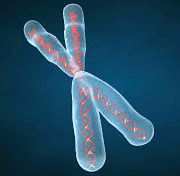
Which structure looks like a skinny X?

a)

Chromosome

b)

DNA

c)

Gene

d)

Nucleus

59.

The inherited traits of an organism is governed by...

a)

Mitochondria

b)

Genes

c)

Enzymes

d)

Cytoplasm

60.

Genetic instructions are passed from both parents to their...

a)

offspring

b)

organism

c)

organelle

d)

parents

61.

Which is NOT an inherited trait?

a)

shape of eyes

b)

male or female

c)

widow's peak hairline

d)

favorite color

62.

What is the main purpose of chromosomes?

a)

To store genetic instructions (DNA)

b)

To release energy

c)

To control what enters and leaves cell

d)

To store materials inside the cell

63.
The haploid number of human chromosomes is
a)
11
b)
12
c)
23
d)
46
64.
The diploid number of human chromosomes is
a)
23
b)
46
c)
92
65.
Histones are 
a)
proteins wound up in DNA
b)
critical to maintaining the shape of chromosomes
c)
aid in the tight packing of DNA
d)
all of these 
66.
Each identical side of a chromosome is the 
a)
centromere
b)
chromatin
c)
centriole
d)
chromatid
67.
When DNA is in its less coiled, "relaxed," state, between cell divisions, it is called
a)
autosomes
b)
chromatid
c)
chromatin
d)
centromere
68.
Autosomes are
a)
chromosomes found in autotrophs, only
b)
chromosomes that automatically correct all errors in the DNA
c)
chromosomes that determine traits other than sex
d)
chromosomes that determine the sex of the individual
69.
The structure that holds two chromosomes together until they separate for cell division is the
a)
chromatid
b)
chromatin
c)
centromere
d)
cytoplasm
70.

A chromosome is composed of two identical sister

a)

centromeres

b)

chromatids

c)

autosomes

d)

somatic cells

71.

The disc shaped protein core that DNA wraps around is called

a)

histone

b)

nucleosome

c)

chromatin

d)

gene

72.

Cells that contain two sets of chromosomes (example: 2n = 46) are called

a)

gametes

b)

haploid

c)

diploid

d)

chromatin

73.

Chromosomes contain genetic information in the form of

a)

DNA

b)

histone

c)

centromere

d)

karyotypes

74.

Sister chromatids are held together by a

a)

histone core

b)

chromatin

c)

nucleosome

d)

centromere

75.

Chromosomes that do not determine the sex of an individual

a)

autosomes

b)

sex chromosomes

c)

gametes

d)

chromatids

76.

A segment of DNA

a)

nucleosome

b)

gene

c)

histone

d)

chromatin

77.

Body cells are also known as

a)

prokaryotic cells

b)

somatic cells

c)

gametes

d)

sperm or egg

78.

Determine the sex of an individual and are represented by XX or XY

a)

sex chromosomes

b)

autosomes

c)

somatic cells

d)

diploid cells

79.

Made of chromatin and become visible during cell division

a)

chromosomes

b)

histones

c)

mitochondria

d)

nucleosomes

80.

The substance that chromosomes are composed of is called

a)

nucleosomes

b)

DNA

c)

chromatin

d)

histones

81.

A _______ is a segment of DNA that controls our traits.

a)

gene

b)

gamete

c)

chromosome

d)

chromatid

82.

A _________ is DNA tightly coiled around proteins.

a)

gene

b)

chromosome

c)

trait

d)

mutation

83.

The 2 exact copies of DNA in a chromosome are called ________.

a)

chromatids

b)

genes

c)

mutations

d)

pathogens

84.

Chromosomes that are organized in pairs, are the same size, and have the same genes are called _______ chromosomes.

a)

homeostasis

b)

homologous

c)

matching

d)

sister

85.

The 23rd pair of chromosomes that contain the genes to determine the sex of an individual are called ___________.

a)

sex chromosomes

b)

autosomes

c)

homologous

d)

genes

86.

The 2 female sex chromosomes are ___.

a)

XY

b)

XX

87.

The 2 male sex chromsomes are _____.

a)

XY

b)

XX

88.

How many chromosomes do we get from each parent?

a)

12

b)

23

c)

46

d)

78

89.

Chromosomes are only visible when a cell divides. (getting ready to go cell division)

a)

True

b)

False

90.

SELECT ALL THAT APPLY: What is true for the two "sides" of the X of a chromosome?

a)

Each side is called a sister chromatid

b)

Each side is called a homologous chromosome

c)

Each side is composed of identical DNA

d)

Each side is composed of different DNA

91.

The structure in the image is called a:

a)

Chromosome

b)

Karyotype

c)

Gene

d)

Protein

92.

Which chromosomes are shown in the image?

a)

Sex Chromosomes

b)

Autosomes

c)

Trisomy

d)

Monosomy

93.

XX

a)

Female

b)

Male

94.

XY

a)

Female

b)

Male

95.

This person's sex is:

a)

Female

b)

Male

96.

This person's sex is:

a)

Female

b)

Male

97.

SELECT ALL THAT APPLY: Sex Chromosomes:

a)

Pair #23

b)

Determine whether you're male / female

c)

Pairs #1-22

d)

Every chromosome except sex chromosomes

98.

SELECT ALL THAT APPLY: Autosomes Chromosomes:

a)

Pair #23

b)

Determine whether you're male / female

c)

Pairs #1-22

d)

Every chromosome except sex chromosomes

99.
The structures labeled B are
a)
centrioles
b)
chromatids
c)
centromeres
d)
chromopheres
100.
The structure labeled A is a(n)
a)
chromatid
b)
centriole
c)
centromere
d)
chromophere