wayground logo

Free Printable Worksheets

Font size

S
M
L
XL
Worksheets

Osmosis and Diffusion

Total questions: 96

Worksheet time: 1hrs 17mins
Name
Class
Date
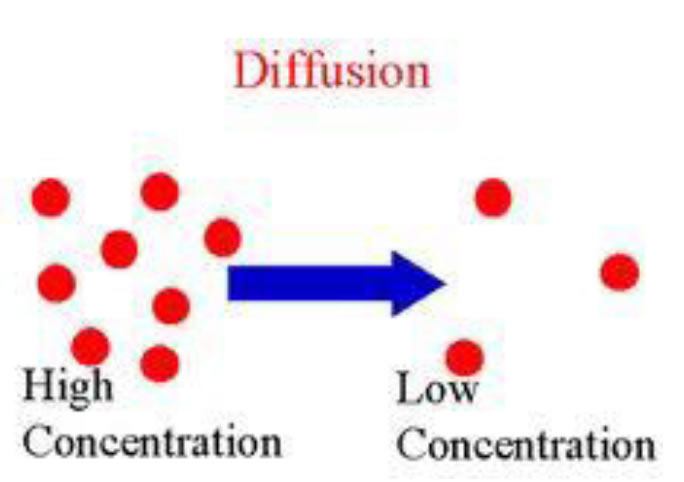
1.
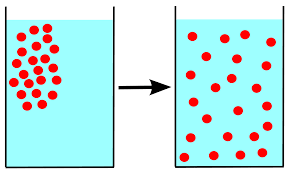
The picture below is an example of _________________.
a)
osmosis
b)
isotonic
c)
diffusion
d)
active transport
2.
Osmosis is the movement of _____ across a membrane.
a)
food
b)
energy
c)
oxygen
d)
water
3.
During osmosis
a)
water moves from high to low concentration
b)
large or oddly shaped molecules move across a cell membrane
c)
water moves when energy is used
d)
proteins are built
4.
Permeable means
a)
things can pass through
b)
the concentration levels are different
c)
it is permanent
d)
things are stuck
5.
What is the definition of  Selective Permeability?
a)
The movement of materials across the cell membrane that requires NO ENERGY from the cell.
b)
The movement of materials through (or across) the cell membrane
c)
The ability of the cell membrane to allow some things to pass through while preventing other things from passing through.
d)
The movement of molecules from an area of high concentration to a area of low concentration 
6.
Passive transport requires no
a)
concentration gradients
b)
osmosis
c)
motion
d)
energy
7.
The picture is an example of...
a)
active tranport
b)
passive transport
c)
diffusion
d)
osmosis
8.
What is diffusion?
a)
when molecules move 
b)
when molecules move from a high concentration to a low.
c)
no movement 
d)
molecules move everywhere
9.
_______ regulates what enters and leaves a cell.  
a)
Cell Membrane
b)
Nucleus
c)
Mitochondria
d)
Cytoplasm
10.
Large particles enter the cell by which process...
a)
exocytosis
b)
endocytosis
c)
exoskeleton
d)
osmosis
11.
What is diffusion?
a)
when molecules move 
b)
when molecules move from a high concentration to a low.
c)
no movement 
d)
molecules move everywhere
12.
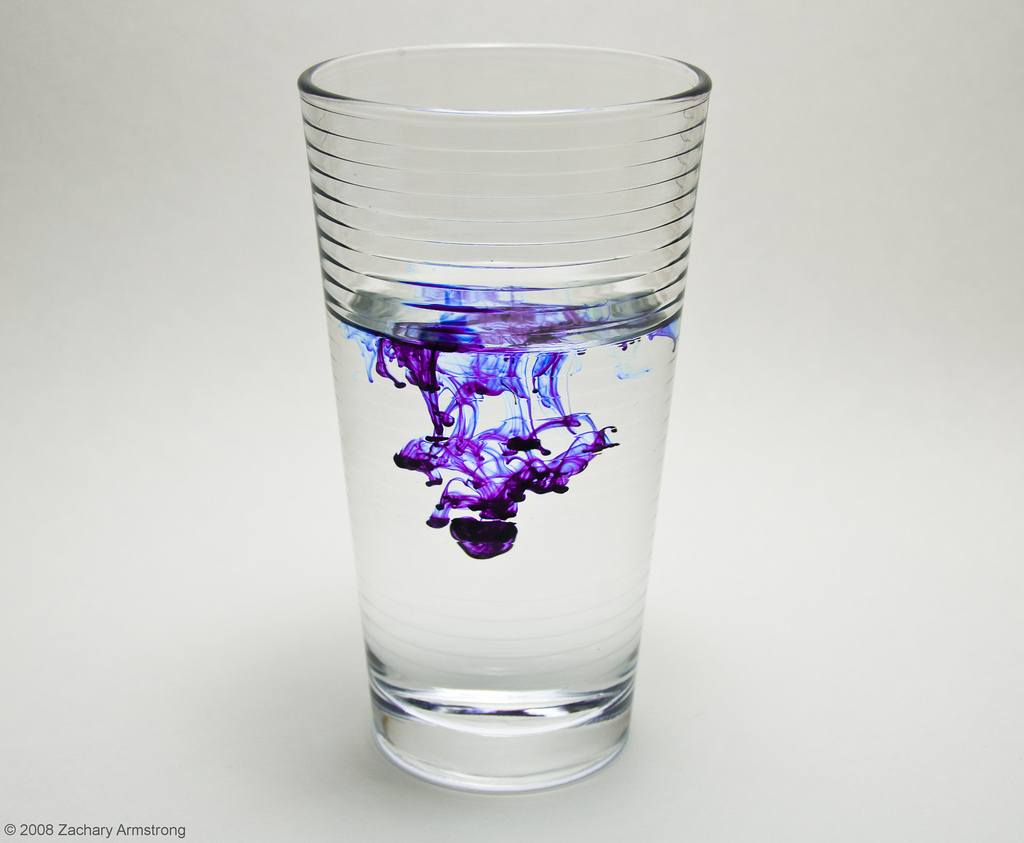
Where is there a low concentration of dye?
a)
at the bottom of cup
b)
in the color
c)
at the top of cup 
d)
no concenteraion gradient
13.
The picture below is an example of _________________.
a)
osmosis
b)
isotonic
c)
diffusion
d)
active transport
14.
Osmosis is the movement of _____ across a membrane.
a)
food
b)
energy
c)
oxygen
d)
water
15.
During osmosis
a)
water moves from high to low concentration
b)
large or oddly shaped molecules move across a cell membrane
c)
water moves when energy is used
d)
proteins are built
16.
The diffusion of water through a semi-permeable membrane is called?
a)
Osmosis
b)
Cell wall
c)
Diffusion
d)
Respiration
17.
Where is there a high concentration of water?
a)
in the flower
b)
cannot be determined by picture.
c)
in the vase
d)
in the leaves
18.
Where is there a low concentration of perfume?
a)
in the bottle
b)
on the hand
c)
in the room
d)
in the top
19.
What is the definition of  Selective Permeability?
a)
The movement of materials across the cell membrane that requires NO ENERGY from the cell.
b)
The movement of materials through (or across) the cell membrane
c)
The ability of the cell membrane to allow some things to pass through while preventing other things from passing through.
d)
The movement of molecules from an area of high concentration to a area of low concentration 
20.
When both inside and outside of a cell have the same amount of water it is said that the cell has reached a state of
a)
Osmosis
b)
Diffusion
c)
Equilibrium
21.
A person would never have pure water put into their veins in a hospital because their cells would...
a)
Shrink/Dehydrate
b)
Expand
22.
A person should never drink salty water because their cells would
a)
shrink
b)
expand
23.

Osmosis is what type of transport?

a)

Active

b)

Passive

24.

Osmosis needs _____ energy.

a)

zero

b)

a lot of

c)

10 kilowatts

d)

some

25.

Osmosis is the movement of

a)

Sugar

b)

CO2

c)

Water

d)

Proteins

26.

Osmosis is the movement of

a)

water from high concentration to low concentration

b)

water from low concentration to high concentration

c)

sugar from high concentration to low concentration

d)

sugar from low concentration to high concentration

27.

_____ is the amount of a given substance contained in a solution

a)

concentration

b)

equilibrium

c)

diffusion

d)

facilitated diffusion

28.

If the dots represent sugar which is more concentrated

a)

Inside the cell

b)

Outside the cell

c)

Neither they are equal (equilibrium)

29.

If the dots represent sugar, what direction will water flow?

a)

Into the cell

b)

Out of the cell

c)

Into and out equally (equilibrium)

30.

If the percentage represents sugar, what direction will water flow?

a)

Into the cell

b)

Out of the cell

c)

Into and out equally (equilibrium)

31.

If the miligrams are referring to the amount of sugar, what direction will water flow?

a)

Into the cell

b)

Out of the cell

c)

Into and out equally (equilibrium)

32.

Which cell would water move into?

a)
b)
c)
d)
33.

Which cell would water move out of?

a)
b)
c)
d)
34.

A homogeneous mixture of solvent and solute molecules.

a)

Solvent

b)

Solute

c)

Solution

35.

A substance that can dissolve a solute to create a solution.

a)

Solvent

b)

Solute

c)

Solution

36.

A substance that can be dissolved by a solvent to create a solution

a)

Solvent

b)

Solute

c)

Solution

37.

What are TWO ways you can predict the movement of water?

a)

from a [High] of water to a [Low] of water

b)

towards the [Lower] of solutes

c)

towards the [Higher] of solutes

d)

from a [Low] of water to a [High] of water

38.
Which statement best describes the cell membrane?
a)
The protective outer layer that controls what enters and leaves the cell.
b)
Stores information on DNA molecules / Directs and controls the activities of the cell.
c)
A folded membrane that moves materials around inside cells / Also acts as the site of manufacturing materials needed by the cell.
d)
The smallest organelle with a huge job / Makes proteins, which are the building blocks of the body.
39.
During osmosis
a)
water moves from high to low concentration
b)
large or oddly shaped molecules move across a cell membrane
c)
water moves when energy is used
d)
proteins are built
40.
Osmosis is the movement of _____ across a membrane.
a)
food
b)
energy
c)
oxygen
d)
water
41.
A person would never have pure water put into their veins in a hospital because their cells would...
a)
Shrink/Dehydrate
b)
Expand
42.
What is diffusion?
a)
when molecules move 
b)
when molecules move from a high concentration to a low.
c)
no movement 
d)
molecules move everywhere
43.

Osmosis is the diffusion of _____________ across a cell membrane.

a)

Air

b)

Oxygen

c)

Water

d)

Food

44.

Why can't you drink salt water?

a)

It's hypertonic to your cells

b)

It's hypotonic to your cells

c)

It's isotonic to your cells

d)

It's paratonic to your cells

45.
Ideally, your cells should be in a(n) _______ solution
a)
Hypertonic
b)
Hypotonic
c)
Isotonic
d)
Cola
46.
An animal cell placed in a hypertonic (salty) solution will
a)
Shrink
b)
Swell
c)
Stay the same
47.

All organisms are made of

a)

organs

b)

tissues

c)

cells

48.
Movement of particles from high to low concentration. 
a)
Passive Transport
b)
Active Transport
49.
Osmosis is a form of ______________. 
a)
Passive Transport
b)
Active Transport
50.
What is it called when molecules move across the cell membrane from an area of high concentration to an area of low concentration through a carrier protein?
a)
Diffusion
b)
Osmosis
c)
Active Transport
d)
Facilitated Diffusion
51.
Osmosis is the movement of _____ across a membrane.
a)
food
b)
energy
c)
oxygen
d)
water
52.
Which is true about active transport?
a)
It requires energy
b)
it does not require energy
c)
It moves substances down the concentration gradient
d)
it moves material from high to low concentration
53.
This cell organelle helps organisms maintain homeostasis by controlling what substances may enter or leave cells.
a)
vacuole
b)
nucleus
c)
cell membrane
d)
cell wall
54.

You can learn a lot from a GIF.

Check the products (things that are made) during photosynthesis. There are two:

a)

oxygen

b)

carbon dioxide

c)

glucose (sugar)

d)

water

e)

sunlight

55.

You can learn a lot from a GIF.

ATP energy is a product of cellular respiration. This GIF doesn't show that (boo! 😒 ). Check the other products (things that are made) during cellular respiration. There are two:

a)

oxygen

b)

carbon dioxide

c)

glucose (sugar)

d)

water

e)

sunlight

56.

Our cells get rid of carbon dioxide multiple times a minute. Which body process takes in oxygen and puts out carbon dioxide?

a)
b)
c)
d)
57.
The overall goal of cellular respiration is to make:
a)
Glucose
b)
ATP
c)
Oxygen
d)
Water
58.
The process of converting sunlight energy into chemical energy stored in a molecule is called
a)
Cellular respiration
b)
Photosynthesis
c)
Mitochondria
d)
Carbon dioxide
59.
One molecule given off by plants during photosynthesis is
a)
Carbon dioxide
b)
Water
c)
Oxygen
d)
Mitochondria
60.
Photosythesis happens in a cell's 
a)
Mitochondria
b)
Chloroplast
c)
Nucleus
d)
Cell Wall
61.

Which organelle converts energy found in food into a form that cells can use?

a)

Mitochondria

b)

Ribosomes

c)

Nucleus

d)

Nucleolus

62.
Glucose is...
a)
A product of photosynthesis and cellular respiration
b)
A reactant of photosynthesis and cellular respiration
c)
A product of photosynthesis and a reactant of cellular respiration
d)
A reactant of photosynthesis and a product of cellular respiration
63.
Oxygen is...
a)
A product of photosynthesis and cellular respiration
b)
A reactant of photosynthesis and cellular respiration
c)
A product of photosynthesis and a reactant of cellular respiration
d)
A reactant of photosynthesis and a product of cellular respiration
64.

Where do plants get the energy for photosynthesis to take place?

a)

nutrients in the soil

b)

the sun

c)

chlorophyll

d)

bee pollination

65.
Osmosis is the movement of _____ across a membrane.
a)
food
b)
energy
c)
oxygen
d)
water
66.
During osmosis
a)
water moves from high to low concentration
b)
large or oddly shaped molecules move across a cell membrane
c)
water moves when energy is used
d)
proteins are built
67.
Permeable means
a)
things can pass through
b)
the concentration levels are different
c)
it is permanent
d)
things are stuck
68.
The diffusion of water through a semi-permeable membrane is called?
a)
Osmosis
b)
Cell wall
c)
Diffusion
d)
Respiration
69.
Where is there a high concentration of water?
a)
in the flower
b)
cannot be determined by picture.
c)
in the vase
d)
in the leaves
70.
What is the definition of  Selective Permeability?
a)
The movement of materials across the cell membrane that requires NO ENERGY from the cell.
b)
The movement of materials through (or across) the cell membrane
c)
The ability of the cell membrane to allow some things to pass through while preventing other things from passing through.
d)
The movement of molecules from an area of high concentration to a area of low concentration 
71.
In the given scenario what will happen to the organism: salt is poured onto eggplant.
a)
Water will move out of the eggplant cells and the cells will shrink.
b)
Water will move out of the eggplant cells and the cells will swell.
c)
Water will move into the eggplant cells and the cells will swell.
72.
In the given scenario what will happen?  An egg is placed in pure water for 48 hours.
a)
The egg will gain water and swell.
b)
Water will move in and out of the cell equally, and the cell with neither shrink nor swell.
c)
The egg will lose water and shrink.
73.
An animal cell placed in a hypertonic (salty) solution will
a)
Shrink
b)
Swell
c)
Stay the same
74.
Which way will the water molecules move during osmosis?
a)
Out of the cell, so the cell shrinks.
b)
Out of the cell, so the cell swells.
c)
Into the cell, so the cell shrinks.
d)
Into the cell, so the cell swells.
75.
Water will move INTO a cell in a(n) _______ solution
a)
Hypertonic
b)
Hypotonic
c)
Isotonic
d)
Gravy
76.
Ideally, your cells should be in a(n) _______ solution
a)
Hypertonic
b)
Hypotonic
c)
Isotonic
d)
Cola
77.
If you enjoy rubbery carrots, place them in .....
a)
Cold Water
b)
Hot Water
c)
Distilled Water
d)
Salt Water
78.
An animal cell that is surrounded by fresh water will burst because the osmotic pressure causes
a)
water to move into the cell.
b)
water to move out of the cell.
c)
solutes to move into the cell.
d)
solutes to move out of the cell.
79.
What information could be added to make this diagram a more complete model of osmosis in red blood cells?
a)
Information about the temperatures of the cell and of the solution.
b)
The relative concentrations of solute inside and outside the cell.
c)
Show that energy is required for the osmosis to occur.
d)
Show the cell holding its shape as osmosis occurs.
80.

 If the volume of a cell 

increases when it is placed 

in a solution, that solution is

 said to be __________ to the 

cell

a)
 hypertonic
b)
subatomic
c)
 isotonic
d)
 hypotonic 
81.
Osmosis is the movement of _____ across a membrane.
a)
food
b)
energy
c)
oxygen
d)
water
82.
During osmosis
a)
water moves from high to low concentration
b)
large or oddly shaped molecules move across a cell membrane
c)
water moves when energy is used
d)
proteins are built
83.
Permeable means
a)
things can pass through
b)
the concentration levels are different
c)
it is permanent
d)
things are stuck
84.
The diffusion of water through a semi-permeable membrane is called?
a)
Osmosis
b)
Cell wall
c)
Diffusion
d)
Respiration
85.
Where is there a high concentration of water?
a)
in the flower
b)
cannot be determined by picture.
c)
in the vase
d)
in the leaves
86.
What is the definition of  Selective Permeability?
a)
The movement of materials across the cell membrane that requires NO ENERGY from the cell.
b)
The movement of materials through (or across) the cell membrane
c)
The ability of the cell membrane to allow some things to pass through while preventing other things from passing through.
d)
The movement of molecules from an area of high concentration to a area of low concentration 
87.
In the given scenario what will happen to the organism: salt is poured onto eggplant.
a)
Water will move out of the eggplant cells and the cells will shrink.
b)
Water will move out of the eggplant cells and the cells will swell.
c)
Water will move into the eggplant cells and the cells will swell.
88.
In the given scenario what will happen?  An egg is placed in pure water for 48 hours.
a)
The egg will gain water and swell.
b)
Water will move in and out of the cell equally, and the cell with neither shrink nor swell.
c)
The egg will lose water and shrink.
89.
An animal cell placed in a hypertonic (salty) solution will
a)
Shrink
b)
Swell
c)
Stay the same
90.
Which way will the water molecules move during osmosis?
a)
Out of the cell, so the cell shrinks.
b)
Out of the cell, so the cell swells.
c)
Into the cell, so the cell shrinks.
d)
Into the cell, so the cell swells.
91.
Water will move INTO a cell in a(n) _______ solution
a)
Hypertonic
b)
Hypotonic
c)
Isotonic
d)
Gravy
92.
Ideally, your cells should be in a(n) _______ solution
a)
Hypertonic
b)
Hypotonic
c)
Isotonic
d)
Cola
93.
If you enjoy rubbery carrots, place them in .....
a)
Cold Water
b)
Hot Water
c)
Distilled Water
d)
Salt Water
94.
An animal cell that is surrounded by fresh water will burst because the osmotic pressure causes
a)
water to move into the cell.
b)
water to move out of the cell.
c)
solutes to move into the cell.
d)
solutes to move out of the cell.
95.
What information could be added to make this diagram a more complete model of osmosis in red blood cells?
a)
Information about the temperatures of the cell and of the solution.
b)
The relative concentrations of solute inside and outside the cell.
c)
Show that energy is required for the osmosis to occur.
d)
Show the cell holding its shape as osmosis occurs.
96.

 If the volume of a cell 

increases when it is placed 

in a solution, that solution is

 said to be __________ to the 

cell

a)
 hypertonic
b)
subatomic
c)
 isotonic
d)
 hypotonic