wayground logo

Free Printable Worksheets

Font size

S
M
L
XL
Worksheets

Unit 5 Test Review--Electrons

Total questions: 94

Worksheet time: 2hrs 51mins

Name
Class
Date
1.
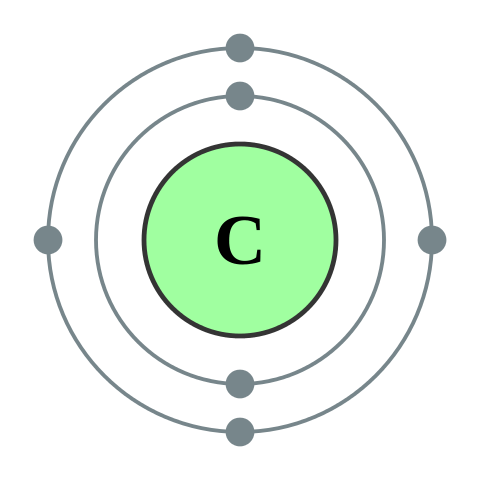
Which element is pictured?
a)
neon
b)
fluorine
c)
magnesium
d)
argon
2.
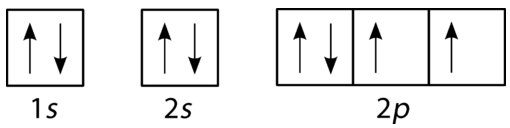
Which element is depicted from this orbital diagram
a)
Fluorine
b)
Neon
c)
Chlorine
d)
Argon
3.
This orbital diagram represents:  
a)
C
b)
B
c)
N
d)
O
4.
This orbital diagram represents:  
a)
C
b)
B
c)
N
d)
O
5.
What is incorrect about this orbital diagram?
a)
Both arrows in the 2p box should be pointing up
b)
There is nothing incorrect with this diagram
c)
In the 2p box there should only be 1 electron in the first 2p box and one in the 2nd 2p box
d)
All the arrows should be pointing up.
6.
Electrons occupy orbitals of lowest energy first is part of what electron configuration rule?
a)
Hund’s Rule
b)
Aufbau Principle
c)
Pauli Exclusion Principle
7.
What is the Pauli Exclusion Principle?
a)
An atomic orbital can only hold a maximum of 2 electrons, each with opposite spins
b)
An atomic orbital can hold a minimum of 6 electrons, each with opposite spins
c)
An atomic orbital can hold a maximum of 6 electrons, each with the same spin
d)
An atomic orbital can hold a minimum of 2 electrons, each with opposite spins
8.
Which orbital shows a violation of Hund's Rule?
a)
A
b)
B
c)
C
d)
D
9.
Which orbital shows a violation of the Aufbau Principle?
a)
A
b)
B
c)
C
d)
D
10.
Which orbital shows a violation of the Pauli Exclusion Principle?
a)
A
b)
B
c)
C
d)
D
11.
Which element is depicted from this atomic orbital diagram?
a)
Carbon
b)
Nitrogen
c)
Oxygen
d)
Phosphorus
12.

This orbital diagram represents

a)

Sodium

b)

Magnesium

c)

Aluminum

d)

Iron

13.
All orbitals of equal energy are occupied by one electron before any single orbital is occupied by a second electron.
a)
Aufbau principle
b)
Pauli exclusion principle
c)
Hund’s rule
d)
Core Notation
14.
Maximum number of electrons that can be placed in an s orbital.  
a)
2
b)
6
c)
10
d)
14
15.
The maximum number of electrons that can be placed in an p orbital.  
a)
2
b)
6
c)
10
d)
14
16.
The maximum number of electrons that can be placed in an d  orbital.  
a)
2
b)
6
c)
10
d)
14
17.
The maximum number of electrons that can be placed in an f orbital.  
a)
2
b)
6
c)
10
d)
14
18.
In an orbital diagram,  an arrow represents: 
a)
an electron
b)
an orbital
c)
an element
19.

What atom matches this electron configuration?

1s22s22p63s23p64s23d10

a)

zinc

b)

copper

c)

nickel

d)

germanium

20.
What electron configuration matches an oxygen atom?
a)
1s22s22p63s2, 3p64s23d104p5
b)
1s22s22p4
c)
1s22s22p6
d)
1s22s22p63s23p64s23d1
21.
The electron configuration of an atom is 1s22s22p6.  The number of electrons in the atom is 
a)
3
b)
6
c)
8
d)
10
22.

Which electron configuration belongs to Cl-?

a)

1s2 2s2 2p6 3s2 3p5

b)

1s2 2s2 2p6 3s2 3p6

c)

1s2 2s2 2p6 3s2 3p7

d)

1s2 2s2 2p6 3s2 3p4

23.
How many electrons can the d sublevel hold?
a)
14
b)
10
c)
2
d)
6
24.

What element has this electron configuration?

a)

hydrogen

b)

helium

c)

lithium

d)

beryllium

25.

What element has this orbital notation?

a)

lithium

b)

beryllium

c)

boron

d)

carbon

26.

What element has this electron configuration?

a)

helium

b)

lithium

c)

beryllium

d)

boron

27.

Which element is represented by this orbital notation?

a)

carbon

b)

nitrogen

c)

oxygen

d)

fluorine

28.

Which element is represented by this electron configuration?

a)

neon

b)

sodium

c)

magnesium

d)

aluminum

29.

Which element is represented by this orbital notation?

a)

neon

b)

sodium

c)

magnesium

d)

aluminum

30.

Which of the following is the electron configuration for Fluorine

a)
b)
c)
d)
31.

Which of the following is the electron configuration for neon?

a)
b)
c)
d)
32.

Which of the following is the electron configuration for silicon?

a)
b)
c)
d)
33.
Which guideline, Hund’s rule or the Pauli exclusion principle, is violated in the following orbital diagrams?
a)
Aufbau's
b)
Hund's
c)
Pauli exclusive
34.
What do you start electron configuration with?
a)
1s2
b)
1d10
c)
1f14
d)
1p6
35.

What is the electron configuration for Manganese?

a)

1s22s22p63s2

b)

1s22s22p63s23p64s24d5

c)

1s22s22p63s23p64s23d5

d)

1s22s22p63s23p64s24d10

36.

What is the electron configuration for Silver?

a)

1s22s22p63s23p64s24p63d55s24d9

b)

1s22s22p63s23p64s23d104p65s24d9

c)

1s22s22p63s23p63d104s24p64d9

d)

1s22s22p63s23p64s24d54p65s25d9

37.

Which of the following is the electron configuration for silicon?

a)
b)
c)
d)
38.

What is the element?

a)

Neon

b)

Chlorine

c)

Aluminum

d)

Argon

39.

What is the element?

a)

sulfur

b)

chlorine

c)

phosphorus

d)

silicon

40.

How many electrons can occupy any single subshell orbital?

a)

1

b)

2

c)

6

d)

10

41.
 The diagram above represents two electrons with 
a)
a. opposite spins.
b)
 b. the same spin.
c)
c. different energies.
d)
d. different energy levels.
42.

Which shows the correct orbital diagram for Cobalt?

a)
b)
c)
d)
43.
Valence electrons are the...
a)
Innermost electrons
b)
Middle electrons
c)
Outermost electrons
d)
Any electrons
44.

How many valence electrons does carbon have?

a)

4

b)

5

c)

6

d)

7

45.

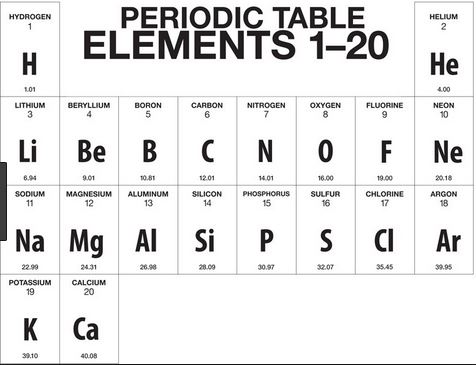
USE THE PERIODIC TABLE

How many valence electrons does sodium have?

a)

1

b)

2

c)

3

d)

4

46.

USE THE PERIODIC TABLE

How many valence electrons does Phosphorus have?

a)

31

b)

5

c)

15

d)

4

47.
Elements in the same column of the periodic table always have the same # of _______ as one another.
a)
Protons
b)
Neutrons
c)
Electrons
d)
Valence Electrons
48.
How many valence electrons are found in atoms of group 14?
a)
4
b)
3
c)
14
d)
16
49.
Valence electrons are: 
a)
Electrons farthest away from the nucleus
b)
Electrons closest to the nucleus
c)
Electrons that just come and go - they don't stay with the atom
d)
Electrons in the second shell
50.
How many valence electrons are in an atom of Ba?
a)
2
b)
8
c)
4
d)
1
51.

How many valence electrons does Helium Have?

a)

1 Valence electron

b)

2 Valence electron

c)

3 Valence electron

d)

4 Valence electron

e)

5 Valence electron

52.

How many valence electrons does Magnesium Have?

a)

1 Valence electron

b)

2 Valence electron

c)

3 Valence electron

d)

4 Valence electron

e)

5 Valence electron

53.

How many valence electrons does Aluminum Have?

a)

1 Valence electron

b)

2 Valence electron

c)

3 Valence electron

d)

4 Valence electron

e)

5 Valence electron

54.

How many valence electrons does Potassium Have?

a)

1 Valence electron

b)

2 Valence electron

c)

3 Valence electron

d)

4 Valence electron

e)

5 Valence electron

55.

How many valence electrons does Lithium Have?

a)

1 Valence electron

b)

2 Valence electron

c)

3 Valence electron

d)

4 Valence electron

e)

5 Valence electron

56.

How many valence electrons does Boron Have?

a)

1 Valence electron

b)

2 Valence electron

c)

3 Valence electron

d)

4 Valence electron

e)

5 Valence electron

57.

How many valence electrons does Sodium Have?

a)

1 Valence electron

b)

2 Valence electron

c)

3 Valence electron

d)

4 Valence electron

e)

5 Valence electron

58.

How many valence electrons does Beryllium Have?

a)

1 Valence electron

b)

2 Valence electron

c)

3 Valence electron

d)

4 Valence electron

e)

5 Valence electron

59.

How many valence electrons does Neon Have?

a)

4 Valence electron

b)

5 Valence electron

c)

6 Valence electron

d)

7 Valence electron

e)

8 Valence electron

60.

How many valence electrons does Fluorine Have?

a)

4 Valence electron

b)

5 Valence electron

c)

6 Valence electron

d)

7 Valence electron

e)

8 Valence electron

61.

How many valence electrons does Argon Have?

a)

4 Valence electron

b)

5 Valence electron

c)

6 Valence electron

d)

7 Valence electron

e)

8 Valence electron

62.

How many valence electrons does Calcium have?

a)

1

b)

2

c)

3

d)

4

e)

5

63.

Ga has _______ valence electrons.

4 lines
64.

Select the elements that has 8 valence electrons.

a)

Ne

b)

Br

c)

Kr

d)

Xe

65.

TRUE OR FALSE Lithium and Beryllium have the same number of valence electron.

a)

TRUE

b)

FALSE

66.

This is a correct dot diagram for fluorine (F)

a)

true

b)

false

67.

This is a correct dot diagram for oxygen (O)

a)

true

b)

false

68.

Electrons repel each other and move frantically in their shells because

a)

Their positive charges repel

b)

Their negative charges attract

c)

Their negative charges repel

d)

Their positive charges attract

69.

An ion is

a)

Also a compound

b)

An atom that has gained or lost an electron

c)

An atom that has only gained electrons

d)

An atom where the number of protons=electrons

70.

Cations

a)

Gain electrons, has an overall positive charge

b)

Lose electrons, has an overall positive charge

c)

Lose electrons, has an overall negative charge

d)

Gain electrons, has an overall negative charge

71.

Anions

a)

Gain electrons, has an overall positive charge

b)

Lose electrons, has an overall positive charge

c)

Lose electrons, has an overall negative charge

d)

Gain electrons, has an overall negative charge

72.

A Beryllium atom that has lost 2 electrons would look like

a)

Be2+

b)

B2-

c)

B2+

d)

Be2-

73.

The cation Rb+ has

a)

Had nothing happen to it

b)

Gained 1 electron

c)

Lost 1 electron

d)

Become negative

74.

What is a cation's charge?

a)

positive

b)

negative

c)

neutral

d)

depends on the element

75.

What is an anion's charge?

a)

positive

b)

negative

c)

neutral

d)

depends on the element's charge

76.

Is potassium a cation or an anion?

a)

cation

b)

anion

77.

What is the charge of phosphate?

a)

-3

b)

-2

c)

-1

d)

-4

78.
Why are ions formed?
a)
To make our lives difficult
b)
Because atoms want 8 valence electrons
c)
Because atoms have the same number of protons and electrons
d)
Because atoms gained neutrons
79.
An atom becomes _________ when it gains electrons.
a)
Positive
b)
Negative
c)
Neutral
d)
Invinsible
80.

What is the charge of a sodium ion?

a)

+2

b)

+1

c)

-1

d)

-2

81.
Group 17 always has ions with a charge of 
a)
+1
b)
+2
c)
-1
d)
-2
82.
What charge will an Oxygen ion have? 
a)
+1
b)
-1
c)
+2
d)
-2
83.
If an element has 3 valence electrons, what charge will likely form on its ion ?
a)
+3
b)
+5
c)
-3
d)
-5
84.
Which of the following has a -3 charge?
a)
Boron
b)
Fluorine
c)
Nitrogen
d)
Neon
85.
charge of lithium ion
a)
-2
b)
-1
c)
+1
d)
+2
86.
charge of beryllium ion
a)
-2
b)
-1
c)
+1
d)
+2
87.
Which of the following has a -1 charge? 
a)
Aluminum
b)
Bromine
c)
Calcium
d)
Potassium
88.
Elements on the LEFT side of the periodic table will most likely form:
a)
Positive ions
b)
Negative ions
c)
Neutral Ions
d)
None of these
89.
An atom becomes _______ when it loses electrons.
a)
Positive
b)
Negative
c)
Neutral
d)
Invinsible
90.
Which particles change the charge in atoms when ions are formed?
a)
Protons
b)
Electrons
c)
Neutrons
d)
Kittens
91.
What is the ionic symbol for a Caesium atom?
a)
Cs+
b)
Cs-
c)
Cs+2
d)
Cs-2
92.
A Radium atom wants...
a)
One more electron
b)
One less electron
c)
Two more electrons
d)
Two less electrons
93.
What is a Rubidium ion's symbol?
a)
Rb-
b)
Rb+
c)
Rb-2
d)
Rb+2
94.
What is the ionic symbol for a Gallium atom?
a)
Ga+3
b)
Ga-3
c)
Ga+2
d)
Ga-2