wayground logo

Free Printable Worksheets

Font size

S
M
L
XL
Worksheets

PSci Unit 5- Reactions

Total questions: 100

Worksheet time: 3hrs 20mins

Name
Class
Date
1.

Matter and mass can not be

a)

Shaken or stirred

b)

Made

c)

created or destroyed

d)

Transferred

2.

Which type of reaction has only one reactant?

a)

synthesis

b)

Double replacement

c)

Chemical reaction

d)

decomposition

3.

4Si + S8 --> 2Si2S4


What type of reaction is this?

a)

Synthesis

b)

Decomposition

c)

Single displacement

d)

Double displacement

4.

3Mg + N2 --> Mg3N2


What type of reaction is this?

a)

Synthesis

b)

Decomposition

c)

Single displacement

d)

Combustion

5.

What type of reaction is this?

P4 + 3O2 --> 2P2O3

a)

Synthesis

b)

Decomposition

c)

Single displacement

d)

Combustion

6.
Which chemical reaction breaks down into 2 substances?
a)
Double Replacement
b)
Single Replacement
c)
Synthesis
d)
Decomposition
7.
A + B = AB
a)
Double Replacement
b)
Synthesis
c)
Combustion
d)
Decomposition
8.
AB + CD = AD + CB
a)
Double Replacement
b)
Single Replacement
c)
Combustion
d)
Decomposition
9.
A + BC = B + AC
a)
Single Replacement
b)
Combustion
c)
Double Replacement
d)
Synthesis
10.
Which chemical reaction takes place when 2 substances react to form a single product?
a)
Decomposition
b)
Double Replacement
c)
Single Replacement
d)
Synthesis
11.
AB = A + B
a)
Decomposition
b)
Single Replacement
c)
Combustion
d)
Synthesis
12.
Fe + H2SO4 --> Fe2(SO4)3 + H2
a)
Synthesis (combination)
b)
Decomposition
c)
Single replacement
d)
Combustion
13.
What kind of reaction is this:
2H2 + O2 --> 2H2O
a)
Synthesis
b)
Decomposition
c)
Single Replacement
d)
Double Replacement
14.
What type of reaction occurs between an element and a compound?
Zn + 2HCl --> ZnCl2 + H2
a)
Synthesis
b)
Decomposition
c)
Single Replacement
d)
Double Replacement
15.
The reaction below is an example of?
AgNO3 + NaCl 
→ AgCl + NaNO3
a)
Single Replacement
b)
Double Replacement
c)
Decomposition
d)
Combustion
16.
What type of reaction is illustrated below?
2HI --> H2  +  I2
a)
synthesis
b)
decomposition
c)
single replacement
d)
double replacement
17.

Which of the following general formulas represents a single-replacement reaction?

a)

AB → A + B

b)

A + B → AB

c)

A + BC → AC + B

d)

AB + CD → AD + CB

18.

The Law of Conservation of Mass states that the total mass of the reactants should be

a)

More than the mass of the products

b)

Equal to the mass of the products

c)

Ignored during the reaction

d)

Less than the mass of the products

19.

Which of the following reactions involves the ions of two compounds exchanging places to form two new compounds?

a)

Synthesis

b)

Double replacement

c)

Combustion

d)

Single Displacement

20.

When balancing equations, the rule is that you can only add, change, and remove ____________

a)

Coefficients

b)

Mass

c)

Subscripts

d)

Elements

21.
The substances you put together in a chemical reaction and are on the left side of an equation are called
a)
products.
b)
reactants.
c)
elements.
d)
compounds.
22.
The substances you get in a chemical reaction and are listed on the right side of a chemical equation are called
a)
products.
b)
reactants.
c)
elements.
d)
compounds.
23.

How many Hydrogen atoms are in a molecule of water?

(H2O)

a)

0

b)

1

c)

2

d)

3

24.
What is the coefficient of the oxygen molecule in the elephant toothpaste equation?
2 H2O2 -> 2 H2O + O2
a)
0
b)
1
c)
2
d)
4
25.
Which is NOT an indicator of a chemical change?
a)
temperature change
b)
formation of a precipitate
c)
shape change
d)
production of light
26.
A subscript tells you...
a)
the # of atoms in the entire equation
b)
the # of elements in the equation
c)
the # atoms of the element it sits behind
d)
the # of compounds present
27.
A coefficient tells you...
a)
the # of atoms in the entire equation
b)
the # of elements in the equation
c)
the # atoms of the element it sits behind
d)
the # of molecules of that substance
28.
The Law of Conservation of Mass proves that -
a)
the number of atoms in a chemical reaction does not change
b)
there are more atoms on the reactant side than the product side
c)
there are more atoms on the product side than the reactant side
d)
no new matter can be made
29.

Aqueous means a substance is a

a)

liquid

b)

water molecule

c)

liquid because it was dissoved in water

d)

Liquid because it is in water

30.
Which of the following is NOT an element?
a)
H2O
b)
H2
c)
O2
d)
Au
31.
How many atoms are there TOTAL in:
H2SO4
a)
6
b)
5
c)
7
d)
3
32.
How many Hydrogen are in 4H2O?
a)
6
b)
8
c)
2
d)
4
33.
Properties of a substance change,but the identity of the substance does not change.
a)
Physical Change
b)
Chemical Change
c)
Yields
d)
Reactant
34.
A solid that forms from a solution during a chemical reaction.
a)
Yields
b)
Precipitate
c)
Reactant
d)
Product
35.
All of the following are chemical changes except
a)
iron rusting
b)
water evaporating
c)
wood burning
d)
food rotting
36.
How many atoms of carbon (C) are in C6H12O6?
a)
3
b)
6
c)
12
d)
24
37.
Which of the following is an example of a chemical change?
a)
Water evaporating
b)
Tearing paper into smaller pieces
c)
Combining baking soda and vinegar
d)
Mixing sugar and water
38.
All of the following are indicators of a chemical change except --
a)
change in the state of matter
b)
formation of a gas
c)
change in temperature
d)
formation of a precipitate
39.

The Law of Conservation of Mass states

a)

that matter exists in all states and reacts the same

b)

that matter can only be changed into new substances by introducing a catalyst

c)

that matter exists in the same state throughout any chemical change

d)

that matter cannot be created or destroyed and that the mass of the products must equal the mass of the reactants

40.

The substances listed on the right side of a chemical equation are the

a)

Yields

b)

Reactants

c)

Products

d)

Precipitates

41.

The substances listed on the left side of a chemical equation are the

a)

Products

b)

Coefficients

c)

Precipitates

d)

Reactants

42.

This is when heat is absorbed, it is an

a)

Exothermic reaction

b)

endothermic reaction

c)

both

d)

none

43.

When heat is released it is an

a)

exothermic reaction

b)

endothermic reaction

c)

both

d)

none

44.

The temperature increases outside of this reaction

a)

exothermic

b)

endothermic

c)

both

d)

none

45.

The temperature decreases outside of this reaction

a)

exothermic

b)

endothermic

c)

both

d)

none

46.

Evidence of a chemical reaction is when 2 substances react, they

a)

stay the same

b)

form a new substance

c)

both

d)

none

47.

Fire is an example of

a)

exothermic reaction

b)

endothermic reaction

c)

none

d)

both

48.

Fireworks are an example of

a)

exothermic

b)

endothermic

c)

both

d)

none

49.

A melting ice cube is an example of

a)

exothermic

b)

endothermic

c)

none

d)

both

50.

An ice pack in an example of

a)

exothermic

b)

endothermic

c)

both

d)

none

51.

photosynthesis is an example of

a)

Exothermic reaction

b)

Endothermic reaction

c)

both

d)

none

52.

Frying an egg is an example of

a)

exothermic reaction

b)

endothermic reaction

c)

both

d)

none

53.
In an exothermic reaction, heat is ...
a)
taken in
b)
given out
54.

In an endothermic reaction, heat is ...

a)

taken in

b)

given out

55.

If a chemical reaction is EXOTHERMIC, the surrounding temperature would....
a)
Stay the same
b)
Increase
c)
Decrease
56.
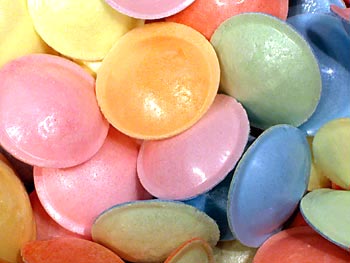
Have you ever eaten sherbet sweets candy? They fizz in your mouth and your tongue feels cold. Why do you think that is?
a)
It is an exothermic reaction
b)
It is an endothermic reaction
c)
It is made of ice
d)
It is dissolving your mouth
57.

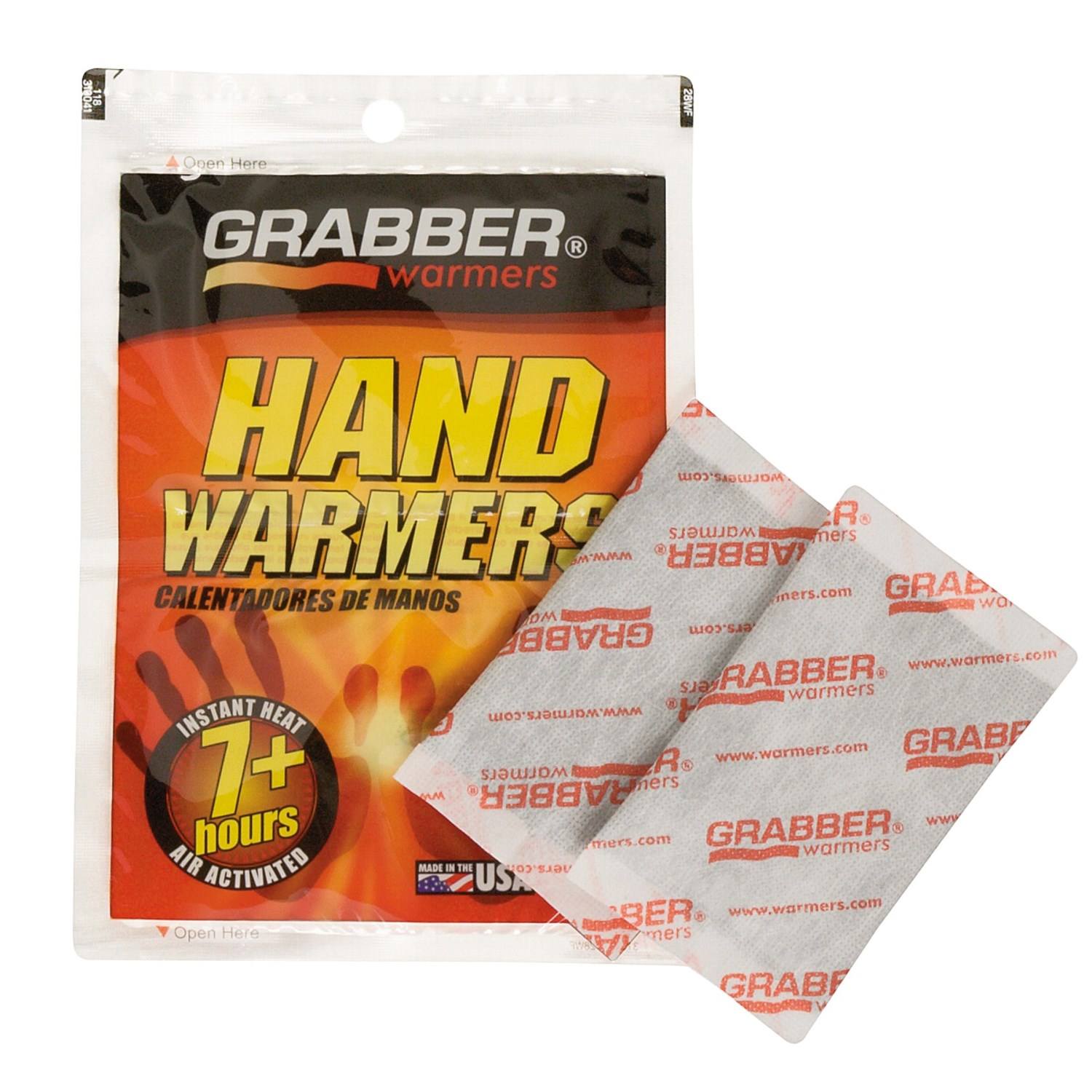
What type of reaction occurs in a hand warmer?

a)

exothermic

b)

endothermic

58.

During evaporation, water absorbs heat so that bonds can break and water vapor forms. This is an example of an _____________ reaction.

a)

endothermic

b)

exothermic

59.

Energy is released during the process of cellular respiration. This is an example of an ___________ reaction.

a)

endothermic

b)

exothermic

60.

When rust forms on nails, new bonds are formed and energy is released. This is an example of an _____________ reaction.

a)

endothermic

b)

exothermic

61.

The reactants in the image above are:

a)

CH4 and 2 O2

b)

2 H2O and CO2

c)

All of these are reactants

d)

All of these are products

62.

How many Na atoms are present in this compound? 5Na3PO4

a)
5
b)

8

c)

15

d)

20

63.
What is a coefficient?
a)
The small number on the right of the chemical symbol.
b)
The large number in front of a chemical formula.
c)
The number in between the chemical symbols.
d)
The number behind a chemical formula.
64.
What is the part of the chemical equation in green called? 
Fe + S --> FeS
a)
products
b)
reactants
c)
yield
d)
chemical formula
65.
What is the little number after an element in a chemical equation called.
Example: H2
a)
Coefficient 
b)
Subscript
c)
Atom
d)
Equation
66.
How many elements are in C6H12O6?
a)
1
b)
2
c)
3
d)
4
67.
How many Oxygens are in this molecule? 
(OH)2
a)
4
b)
1
c)
2
d)
3
68.
What are the smaller numbers that you CANNOT change in a chemical equation? 
a)

Coefficients

b)
Products
c)
Reactants
d)
Subscript
69.
What are the larger numbers that you CAN CHANGE in a chemical equation? 
a)

Coefficients 

b)
Products
c)
Reactants
d)
Subscripts
70.
What law governs the balancing of chemical equations? 
a)
Law of Energy
b)

Law of Conservation of Mass

c)
Law of Gravity
d)
Law of Matter Movement 
71.
CaCO3 represents a chemical
a)
Symbol
b)
Formula
c)
Subscript
d)
Reaction
72.
The substances listed on the left side of a chemical equation are the
a)
Products
b)
Coefficients
c)
Precipitates
d)
Reactants
73.
In balancing chemical equations, we change
a)
Coefficients
b)
Subscripts
c)
Both can be changed
d)
None can be changed
74.
How many phosphorus atoms are in PO4?
a)
1
b)
2
c)
3
d)
4
75.
How many hydrogen atoms are in 2 H2?
a)
1
b)
2
c)
3
d)
4
76.
How many oxygen atoms are present in the following? 
4Ca(OH)2
a)
4
b)
6
c)
8
d)
1
77.

How many Iron (Fe) atoms are in this chemical formula?

a)
2 iron atoms
b)
6 iron atoms
c)
5 iron atoms
d)
4 iron atoms
78.

The coefficient in 3 H2O is

a)

6

b)

5

c)

2

d)

3

79.

How many Mn atoms are found in the following compound?

3 Cr(MnO4)6

a)

3

b)

4

c)

6

d)

18

80.
How many aluminum atoms are in Al2(SO4)3?
a)
1
b)
2
c)
3
d)
4
81.
__Na + __Cl2 --> __NaCl
a)
1,1,2
b)
2,1,2
c)
2,1,1
d)
already balanced
82.
__H2O2 --> __H2O + __O2
a)
already balanced
b)
2,1,1
c)
2,2,1
d)
2,1,2
83.
__NaClO--> __NaCl + __O2
a)
2,2,2
b)
2,2,3
c)
3,2,2
d)
1,2,3
84.
__BF3 + __Li2SO3 --> __B2(SO3)3 + __LiF
a)
2,3,1,3
b)
2,3,1,6
c)
4,4,2,12
d)
3,3,1,9
85.
__C6H12O6 + __O2 --> __H2O + __CO2
a)
1,6,6,6
b)
already balanced
c)
1,6,1,6
d)
2,12,12,12
86.
_AgNO3 + _Cu _Cu(NO3)2 + _Ag
a)
2 AgNO3 + 2 Cu → 3 Cu(NO3)2 + 1 Ag
b)
2 AgNO3 + 1 Cu → 1 Cu(NO3)2 + 2 Ag
c)
1 AgNO3 + 2 Cu → 2 Cu(NO3)2 + 1 Ag
d)
3 AgNO3 + 2 Cu → 3 Cu(NO3)2 + 2 Ag
87.
Balance this equation:
MgCl2 --> Mg4+ Cl2
a)
It's already balanced.
b)
4MgCl2 --> Mg4+ 4Cl2
c)
4MgCl2 --> Mg4+ 5Cl2
88.
What is the right ratio of chemicals for the BCE (Balanced Chemical Equation)?__FeCl3 + __Ca(OH)2 --> __Fe(OH)3 + __CaCl2
a)
4,3--> 2,1
b)
3,2 --> 3,1
c)
2,3 --> 2,2
d)
2,3 --> 2,3
89.
Fill in the blanks with coefficient:
PCl5+_ H2O→_ HCl+H3PO4
a)
4, 5
b)
1, 6
c)
3, 8
d)
2,2
90.
Balance the equation:
Si(OH)4+NaBr-->
 SiBr4+NaOH
a)
Si(OH)4+2NaBr--> SiBr4+NaOH
b)
Si(OH)4+4NaBr--> SiBr4+4NaOH
c)
Si(OH)4+NaBr--> SiBr4+4NaOH
d)
Si(OH)4+2NaBr--> SiBr4+2NaOH
91.
Balance this equation:
 2Li + Cl2 -> LiCl
a)
2Li + Cl2 -> 4LiCl2
b)
2Li + Cl2 -> LiCl2
c)
2Li + Cl2 -> 2LiCl
92.
What is the right ratio of chemicals for the BCE (Balanced Chemical Equation)?__Na + __H2O --> __NaOH + __H2
a)
2,2 --> 2,1
b)
4,4 --> 4,1
c)
1,2 --> 2,4
d)
1,2 --> 2,1
93.
What does the Law of Conservation of Mass state?
a)
Matter cannot be gained or lost in a chemical reaction.
b)
Matter can only be lost in a chemical reaction.
c)
Matter can only be gained in a chemical reaction.
d)
Matter can be gained and lost in a chemical reaction. 
94.
__(NH4)3PO4 + __Pb(NO3)4 --> __Pb3(PO4)4 + __NH4NO3
a)
2,1,1,6
b)
1,2,2,3
c)
4,3,1,12
d)
4,2,1,12
95.

For the following chemical reaction, which substance is a reactant?

2HBr + Mg(OH)2  MgBr2 +2H2O2HBr\ +\ Mg\left(OH\right)_2\ →\ MgBr_2\ +2H_2O  

a)

MgBr2MgBr_2  

b)

BrBr  

c)

Mg

d)

HBr

96.

Is the following reaction balanced?

Ca+CuF2CaF2+CuCa+CuF_2\rightarrow CaF_2+Cu  

a)

Yes

b)

No

97.

How many Oxygen atoms do I have in the following compound?

2(NH4)3PO42\left(NH_4\right)_3PO_4  

a)

4

b)

6

c)

8

d)

24

98.

How many Hydrogen atoms do I have in the following compound?

2(NH4)3PO42\left(NH_4\right)_3PO_4  

a)

4

b)

12

c)

9

d)

24

99.

What number will balance the following chemical reaction?

S8+8O2S_8+8O_2\rightarrow  _ SO2SO_2  

a)

1

b)

4

c)

8

d)

16

100.

How many Carbon atoms are there in the following compound?

C4OH10C_4OH_{10}  

a)

1

b)

4

c)

10

d)

14