wayground logo

Free Printable Worksheets

Font size

S
M
L
XL
Worksheets

Understanding Bonding in Chemistry

Total questions: 107

Worksheet time: 2hrs 27mins

Name
Class
Date
1.

The acronym VSEPR stand for

a)

very strong electron pair repulsion.

b)

varied symmetry electrostatic proton reaction.

c)

venomous snakes enjoy pink ribbons.

d)

valence shell electron pair repulsion.

2.

VSEPR theory is used to predict

a)

the number of unshared pairs of electrons in a Lewis structure.

b)

the number of multiple bonds in a Lewis structure.

c)

the three-dimensional geometry of a molecule.

d)

the three-dimensional crystal lattice structure of ionic compounds.

3.

Any molecule with only two atoms must be linear. Three-atom molecules such as BeCl2 can also be linear. For linear molecules, the bond angle is

a)

360°360\degree

b)

180°180\degree

c)

120°120\degree

d)

90°90\degree

4.

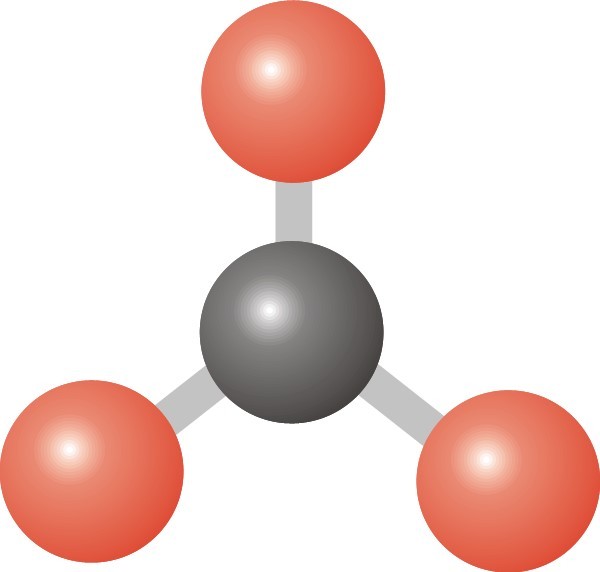
Molecules such as boron trichloride that have three bonded atoms and no unshared pairs have what shape?

a)

trigonal planar

b)

trigonal pyramidal

c)

trigonal bipyramidal

d)

tetrahedral

5.
Which molecule would have this molecular geometry?
a)
BF3
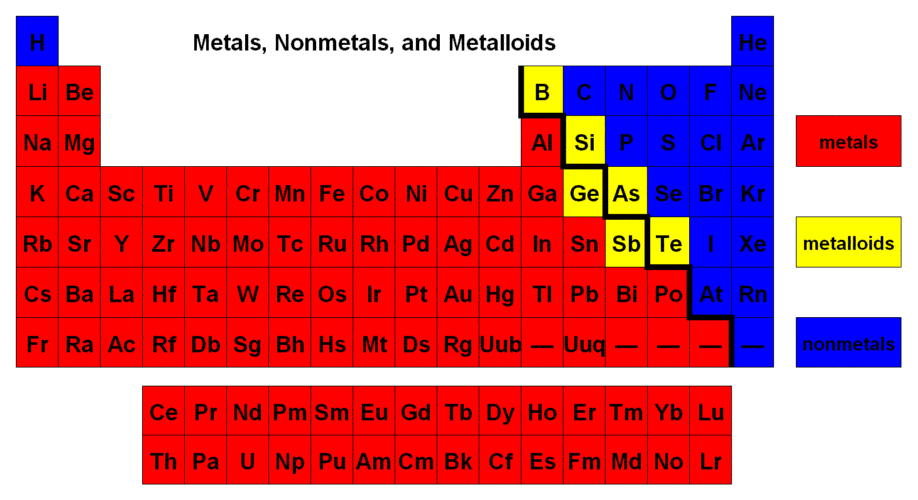
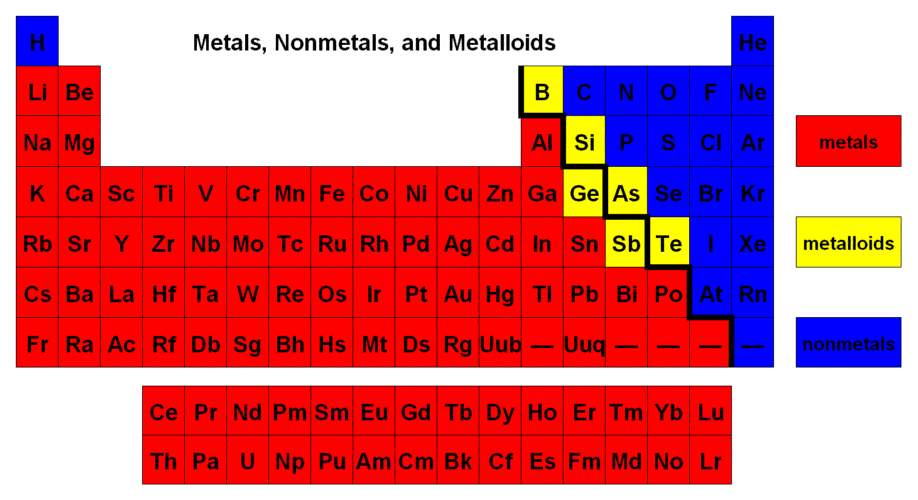
b)
CH4
c)
PCl5
d)
CO2
6.
What molecule could this be? 
a)
BF3
b)
CH4
c)
H2O
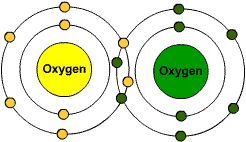
d)
CO2
7.
Who could this be? 
a)
CO2
b)
NH3
c)
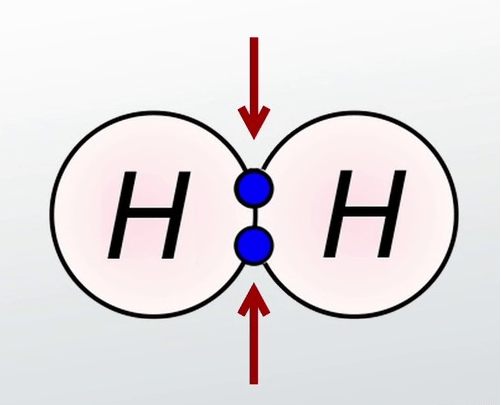
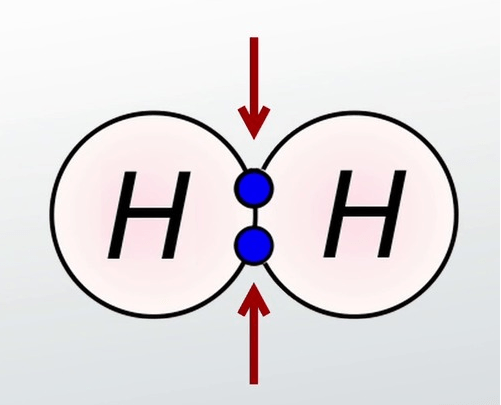
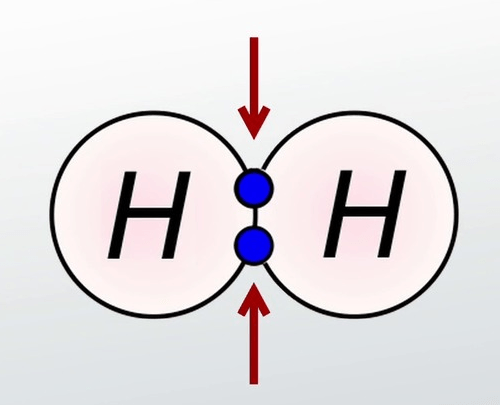
H2S
d)
CH4
8.

What molecular geometry would PH3 have?

a)

Trigonal Pyramidal

b)

Trigonal Bipyramidal

c)

Bent

d)

Linear

9.

What shape would this have?

a)

Trigonal planar

b)

Pyramidal

c)

Tetrahedral

d)

Bent

10.
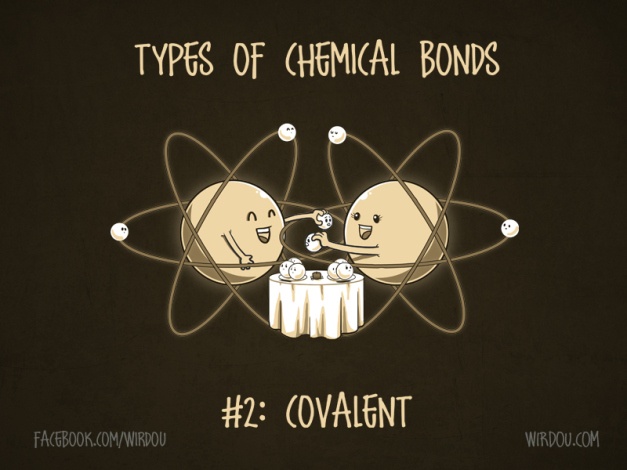
How many lone pairs are in this molecule's structure?
a)
6
b)
2
c)
0
d)
4
11.
According to VSEPR, molecules adjust their shapes to keep which of the following as far away as possible?
a)
Pairs of valence electrons
b)
Inner shell electrons
c)
Mobile Electrons
d)
Electrons closest to the nucleus
12.
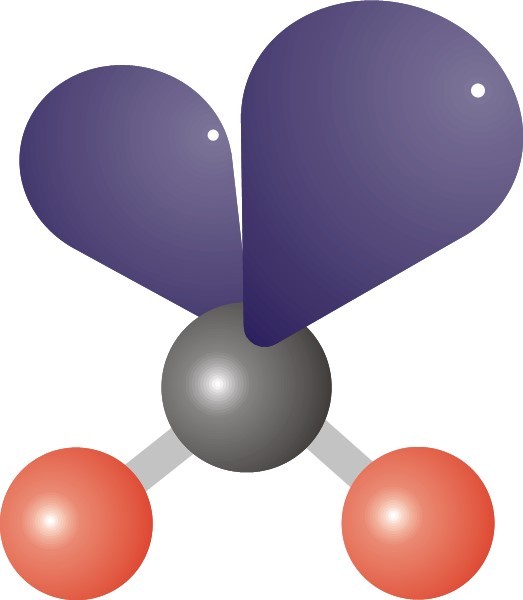
*
a)
linear
b)
trigonal planar
c)
trigonal pyramid
d)
bent of angular
13.
What is the measure of a tetrahedral bond angle?
a)
90 Degrees
b)
109.5 Degrees
c)
120 Degrees
d)
180 Degrees
14.
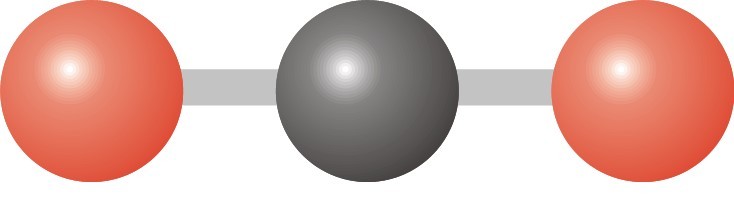
What molecular shape is the structure shown here? (BeCl2)
a)
linear
b)
bent
c)
trigonal planar
d)
tetrahedral
15.

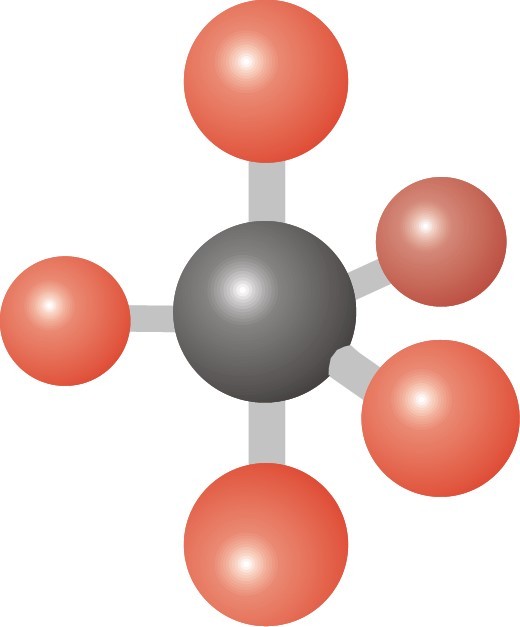
What shape is shown here?

a)

Octahedral

b)

Tetrahedral

c)

Trigonal bipyramidal

d)

Seesaw

16.

Identify the molecule structure

a)

Bent

b)

Linear

c)

Trigonal Planar

d)

Pyramidal

17.
 A lone pair is defined as
a)
A pair of bonding electrons
b)
One non-bonding electron
c)
A pair of non-bonding electrons
d)
A pair of electrons on the central atom
18.
What is the VSEPR theory used to predict?
a)
Bond Strength
b)
Polarity
c)
Molecular Shape
d)
Electronegativity
19.
Which of the following shapes has an unshared pairs of electrons on the central atom? 
a)
Bipyramidal
b)
Bent
c)
Trigonal Planar
d)
Tetrahedral
20.
Consider the molecule below.  Determine the molecular geometry at each of the 2 labeled carbons.
a)
C1 = tetrahedral, C2 = linear
b)
C1 = trigonal planar, C2 = bent
c)
C1 = bent, C2 = trigonal planar
d)
C1 = trigonal planar, C2 = tetrahedral
21.
What molecular shape is the structure shown here? (BCl3)
a)
linear
b)
trigonal planar
c)
tetrahedral
d)
trigonal pyramidal
22.
How many electrons are shared in a triple bond?
a)
6
b)
3
c)
6 pairs
d)
5
23.

AB3 is a symbol for molecular shape __________________

a)

Tetrahedral

b)

Linear

c)

Trigonal planar

d)

Trigonal pyramidal

24.

The general formula for TETRAHEDRAL shape is __________

a)

AB2

b)

AB3

c)

AB4

d)

AB

25.

This could be the dot diagram of

a)

Mg

b)

Cl

c)

C

d)

O

26.

What is the goal of the Lewis Dot Structure?

a)

To determine the electron position.

b)

To show the element's valence electrons & bonding capabilities.

c)

To find the atomic mass of an element.

d)

To search for the number of electrons in an individual atom.

27.

How many valence electrons should Lithium have in its Lewis dot model?

a)

1

b)

2

c)

3

d)

4

28.

How many valence electrons should Oxygen have in its Lewis dot model?

a)

5

b)

6

c)

7

d)

8

29.

How many valence electrons should Magnesium have in its Lewis dot model?

a)

1

b)

2

c)

3

d)

4

30.

This is a correct dot diagram for nitrogen (N)

a)

true

b)

false

31.

This is a correct dot diagram for carbon (C)

a)

true

b)

false

32.

This is a correct dot diagram for neon (Ne)

a)

true

b)

false

33.

How many electrons should Boron have around its Lewis dot model?

a)

1

b)

2

c)

3

d)

4

34.
How many valence electrons does chlorine (Cl) have?
a)
2
b)
5
c)
6
d)
7
35.
How many valence electrons does carbon (C) have?
a)
3
b)
4
c)
5
d)
6
36.
Which of these elements has 8 valence electrons?
a)
P
b)
Be
c)
O
d)
Ar
37.
This is a correct dot diagram for oxygen (O)
a)
true
b)
false
38.
Which of the following is the correct Lewis dot structure for the molecule fluorine (F2)?
a)
A
b)
B
c)
C
d)
D
39.
Which is the correct structure for ammonia?
(Top picture is A, bottom picture is D.)
a)
Option A
b)
Option B
c)
Option C
d)
Option D
40.
Which of the following is the correct Lewis structure for the compound PBr3?
a)
structure A
b)
structure B
c)
structure C
d)
structure D
41.
What is the correct formula for this molecule?
a)
NH
b)
N3H
c)
NH3
d)
NH4
42.
According to the octet rule most elements need _______ valence electrons.
a)
2
b)
8
c)
6
d)
18
43.

What do the dots in a Lewis dot structure represent?

a)

Molecules.

b)

Protons.

c)

Valence electrons.

d)

Atoms.

44.

What is the Lewis dot structure for a neutral atom of bromine (35Br)?

a)

The element symbol Br with 7 dots around it.

b)

The element symbol Br with 8 dots around it.

c)

The element symbol Br with 5 dots around it.

d)

The element symbol Br with 35 dots around it.

45.

What is the Lewis dot structure for a neutral atom of sodium (11Na)?

a)

The element symbol Na with 11 dots around it.

b)

The element symbol Na with 8 dots around it.

c)

The element symbol Na with 1 dot around it.

d)

The symbol Na with 2 dots around it.

46.

What is the Lewis dot structure for a neutral atom of carbon (6C)?

a)

The element symbol C with 5 dots around it.

b)

The element symbol C with 4 dots around it.

c)

The element symbol C with 2 dots around it.

d)

The element symbol C with 8 dots around it.

47.

What is the Lewis dot structure for a neutral atom of iron (26Fe)?

a)

The element symbol Fe with 2 dots around it.

b)

The element symbol Fe with 8 dots around it.

c)

The element symbol Fe with 52 dots around it.

d)

The element symbol Fe with 26 dots around it.

48.

What is the Lewis dot structure for a neutral atom of phosphorus (15P)?

a)

The element symbol P with 15 dots around it.

b)

The element symbol P with 8 dots around it.

c)

The element symbol P with 3 dots around it.

d)

The element symbol P with 5 dots around it.

49.

What is the Lewis dot structure for a neutral atom of xenon (54Xe)?

a)

The element symbol Xe with 8 dots around it.

b)

The element symbol Xe with 6 dots around it.

c)

The element symbol Xe with 2 dots around it.

d)

The element symbol Xe with 54 dots around it.

50.

What is the Lewis dot structure for a neutral atom of boron (5B)?

a)

The element symbol B with 2 dots around it.

b)

The element symbol B with 8 dots around it.

c)

The element symbol B with 5 dots around it.

d)

The element symbol B with 3 dots around it.

51.

What are valence electrons?

a)

The innermost electrons

b)

The outermost electrons

52.

What is the octet rule?

a)

Elements can only have 8 electrons in its outermost shell

b)

The elements must form an octopus like structure

53.

How many valence electrons does Carbon have

a)

1

b)

4

54.

How many valence electrons does Argon have

a)

8

b)

11

55.

Electron dot notation is . . . .

a)

A representation of an element in which only valence electrons of an atom are shown

b)

A representation of how compounds are formed.

56.
How many electrons should Helium have around its Lewis dot model?
a)
1
b)
2
c)
7
d)
8
57.

Which of the elements in the picture has correct electron dot notation?

a)

1

b)

2

c)

3

d)

4

58.
What elements generally make an ionic bond?
a)
metal and nonmetal
b)
2 or more nonmetals
c)
metal
d)
none of the above
59.
When forming an ionic bond, a metal atom
a)
Gains electrons to form a cation
b)
Loses electrons to form a cation
c)
Gains electrons to form an anion
d)
Loses electrons to form an anion
60.
What elements generally make a covalent bond?
a)
metal and nonmetal
b)
2 or more nonmetals
c)
metal
d)
none of the above
61.
In chemical compounds, covalent bonds form when
a)
the electronegativity difference between two atoms is very large.
b)
electrons are completely transferred between two metals.
c)
pairs of electrons are shared between two nonmetal atoms.
d)
two nonmetal atoms are attracted to each other by opposite charges.
62.
An ionic bond forms when 
a)
Valence electrons are shared
b)
a sea of mobile electrons surround the cations
c)
valence electrons are transferred between atoms
d)
none of the above
63.
Predict the bond that will form between Be and F.
a)
Ionic
b)
Covalent
64.
Predict the bond that will form between Se and Cl.
a)
Ionic
b)
Covalent
65.
Predict the bond that will form between Sr and S.
a)
Ionic
b)
Covalent
66.
A chemical bond between oppositely charged ions.
a)
compound
b)
ion
c)
covalent bond
d)
ionic bond
67.
A chemical bond formed between shared atoms.
a)
chemical bond
b)
covalent bond
c)
oxidation #
d)
ionic bond
68.
Substance made from two or more combined atoms. 
a)
ion
b)
covalent bond
c)
ionic bond
d)
compound
69.
Force that holds together atoms in a substance.
a)
compound
b)
ion
c)
chemical bond
d)
ionic bond
70.
How many elements make up this compound?
a)
6
b)
4
c)
2
d)
3
71.

Is this compound Ionic or Covalent: Ca3(PO4)2

a)

ionic

b)

covalent

72.
What type of diagram is this?
a)
Electron Dot Diagram
b)
Bohr Model
c)
Alkali Diagram
d)
Chemical Diagram
73.
A positively or negatively charged particle.
a)
covalent bond
b)
compound
c)
ion
d)
chemical bond
74.
Shows an element's combining ability or how many electrons has been gained or lost.
a)
ionic bond
b)
superscript or oxidation number
c)
chemical bond
d)
chemical formula
75.
Tells what elements a compound contains and the number of those atoms.
a)
compound
b)
ion
c)
chemical formula
d)
ionic bond
76.
How many atoms of Oxygen are in this compound?
a)
4
b)
1
c)
12
d)
7
77.
How do covalent bonds form?
a)
Donating & receiving valence e- between atoms.
b)
Opposite slight charges attract each other between compounds.
c)
Scientists are still not sure how they form.
d)
Sharing valence e- between atoms.
78.
What two types of atoms make a covalent bond?
a)
2 Nonmetals
b)
1 Nonmetal and 1 Metal
c)
2 Metals
d)
2 Noble Gases
79.
Which of the following is NOT formed by a covalent bond?
a)
K2S
b)
H2O
c)
I2
d)
CO2
80.
What do we call a covalent bond where electrons are shared UNEVENLY or UNEQUALLY?
a)
Ionic
b)
Polar Covalent
c)
Nonpolar Covalent
d)
Van der Waals Force
81.
What type of bond is shown in this image?
a)
Ionic
b)
Polar Covalent
c)
Nonpolar Covalent
d)
Van der Waals Force
82.
Which of the following is NOT considered a diatomic element?
a)
Carbon
b)
Nitrogen
c)
Chlorine
d)
Iodine
83.
Diatomic elements are defined as IDENTICAL elements that bond with each other (i.e. Oxygen with Oxygen).  What type of bond should they form?
a)
Ionic
b)
Polar Covalent
c)
Nonpolar Covalent
d)
Van der Waals force
84.
Diatomic elements are defined as IDENTICAL elements that bond with each other (i.e. Oxygen with Oxygen).  What do we call it when this forms?
a)
Compound
b)
Molecule
c)
Atom
d)
None of the above
85.
In an electron dot diagram, two pairs of shared electrons represents a ...
a)
single bond
b)
double bond
c)
triple bond
d)
quadruple bond
86.
A Nitrogen molecule (N2) has one triple bond. How many electrons do the nitrogen atoms share?
a)
1
1
b)
3
c)
4
d)
6
87.
The chemical bond formed when two atoms share electrons  is called a(an) IONIC bond. 
a)
True
b)
False
88.
Covalent bonds usually form when a nonmetal combines with a(an) METAL.
a)
True
b)
False
89.
A(n) ION is a neutral group of atoms joined by covalent bonds.
a)
True
b)
False
90.
In a(an) POLAR bond, one atom pulls on the shared electrons more than the other atom. 
a)
True
b)
False
91.
what type of bond is the strongest
a)
single
b)
Double
c)
coordination
d)
triple
92.
How many are shared in a single bond?
a)
2 pairs
b)
4
c)
2
d)
1
93.
How many are shared in a double bond?
a)
2
b)
4 pairs
c)
6
d)
4
94.
How many electrons are shared in a triple bond?
a)
6
b)
3
c)
6 pairs
d)
5
95.
Covalent compounds
a)
Share electrons
b)
transfer electrons
c)
contain a sea of electrons
d)
conduct electricity
96.
How many valence electrons does oxygen have?
a)
2
b)
3
c)
6
d)
4
97.
How many valence electrons does nitrogen have?
a)
3
b)
2
c)
5
d)
1
98.
Which of these is not a real bond in chemistry?
a)
James
b)
Ionic
c)
Covalent
99.
A molecule with a single covalent bond is....
a)
HCl
b)
SO
c)
CO
d)
SO2
100.
A molecule with a double covalent bond is....
a)
HCl
b)
SO
c)
I2
d)
N2
101.
How many bonds does carbon have to create in order to satisfy the octet rule
a)
1
b)
2
c)
3
d)
4
102.
How many valence electrons does hydrogen have?
a)
4
b)
3
c)
2
d)
1
103.
What is it called if there are three-pairs of electrons being shared?
a)
Triple bond
b)
Bond length
c)
Tribond
d)
Chocolate Mousse
104.
Which element is most likely to form a covalent bond?
a)
Nitrogen
b)
Lithium
c)
Sodium
d)
Potassium
105.
Is this image an example of covalent bonding?
a)
Yes
b)
No
106.
Atoms want
a)
A full outer shell of electrons
b)
One electron short of a full shell
c)
kit kats
107.
Outer shell electrons are called
a)
outer electrons
b)
valence electrons
c)
negatives