
 Worksheets
Chemical and Physical Changes. Rxn Types. Acids and Bases
Total questions: 105
Worksheet time: 2hrs 38mins
Name
Class
Date
1.
Which of the following is a sign that a chemical reaction has occurred?
a)
change in shape
b)
melting
c)
formation of a gas
d)
dissolving
2.
A change in the size, shape, or state of matter.
a)
chemical change
b)
physical change
c)
chemical reaction
d)
electron change
3.
what is the definition of chemical change?
a)
any change that results in the formation of new chemical substances.
b)
changing clothes
c)
matter cannot be created or destroyed, only change form
d)
changes affecting the form of a chemical substance, but not its chemical composition.
4.
what is the definition of physical change?
a)
any change that results in the formation of new chemical substances.
b)
rusting
c)
changes affecting the form of a chemical substance, but not its chemical composition.
d)
any property that is measurable, whose value describes a state of a physical system
5.
Which of the following is NOT an example of chemical change?
a)
sour milk
b)
burning wood
c)
breaking a pencil
d)
rust
6.
In the equation, 2Mg + O2 ---> 2MgO, which are the reactants?
a)
Mg and O
b)
MgO
c)
Mg and MgO
d)
O and MgO
7.
Exothermic reactions...
a)
Absorb energy
b)
Release energy
c)
Release Color
d)
Absorb Color
8.
In chemical reactions, the law of conservation of mass is......
a)
disobeyed
b)
not true
c)
obeyed
d)
used sometime
9.
Which of the following is a chemical property of water?
a)
Reacts with pure sodium.
b)
Boils at 100 oC.
c)
Dissolves sugar easily.
d)
Has a density of 1 gm/mL
10.
Define a Chemical Property
a)
A property which depends on the objects size or matter.
b)
A property of matter not involving in its manifestation a chemical change
c)
A property or behavior of a substance which undergoes a chemical change or reaction.
d)
A property which makes the object smell or taste different.
11.
Define a Physical Property
a)
A property of matter not involving in its manifestation a chemical change
b)
A property in which stops a chemical reaction from occuring.
c)
A property or behavior of a substance which undergoes a chemical change or reaction.
d)
A property which makes the object smell or taste different.
12.

The smell your dog makes after eating to much people food.
a)
Chemical Change
b)
Physical Change
13.

a)
physical change
b)
chemical change
14.

separating sand and gravel
a)
physical change
b)
chemical change
15.
A mixture is the result of a physical change because...
a)
The parts can be separated
b)
A new substance is made
c)
There is a chemical reaction
d)
One part of the mixture disappears
16.
Which of these is a result of a physical change?
a)
A new odor
b)
A new gas
c)
A new chemical substance
d)
A solution
17.
Most chemical changes are difficult to...
a)
produce
b)
be formed
c)
reverse
d)
combine
18.
Some clues of a chemical change include..
a)
Melting, Breaking, Crushing
b)
Bending,Boiling, Foaming
c)
Evaporating, Cutting, production of heat
d)
Fizzing, Foaming, Change in color
19.
Chemical properties include......
a)
Breaking,Combustibility, and Reactivity
b)
Flammability,Cutting,and Bending
c)
Reactivity,Combustibility, and Flammability
d)
Crushing,Reactivity, and Freezing
20.
Friction wears away the treads on a tire after miles of driving. Physical or chemical change?
a)
Chemical change
b)
Physical change
21.
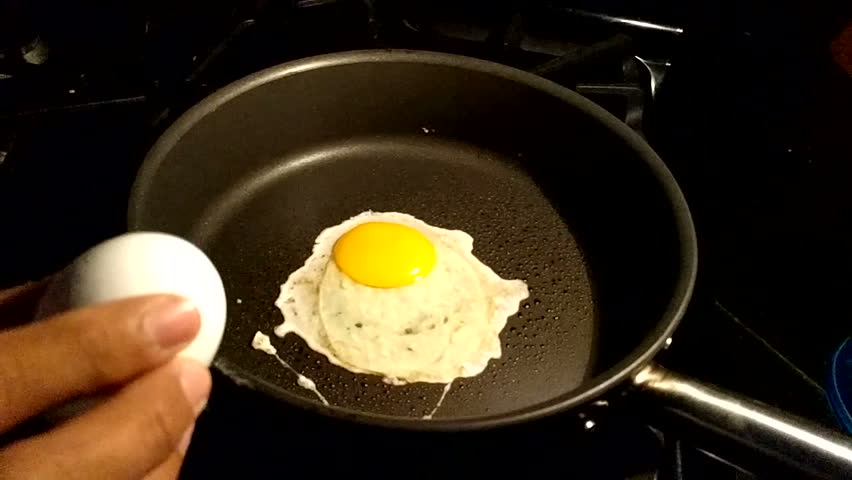
Baking bread and cooking an egg are examples of....?
a)
Endothermic processes
b)
Exothermic processess
c)
None of these
22.

If a chemical reaction is EXOTHERMIC, the temperature would....
a)
Stay the same
b)
Increase
c)
Decrease
23.

What happens in an Endothermic reaction?
a)
More energy is released
b)
Less energy is released
c)
The substance heats up
d)
The temperature of the substance stays the same
24.

What happens in an Exothermic reaction?
a)
More energy is released
b)
Less energy is released
c)
The substance's temperature stays the same
d)
The substance gets colder
25.
When you freeze water, it turns to ice. What process is this?
a)
Exothermic
b)
Endothermic
26.
Condensation and raining are examples of what?
a)
Exothermic
b)
Endothermic
27.
Evaporation is what kind of change?
a)
Endothermic
b)
Exothermic
28.

What kind of reaction is this?
a)
Endothermic
b)
Exothermic
c)
Cannot be determined
29.

Which letter corresponds to the activation energy of the forward reaction?
a)
A
b)
B
c)
C
d)
D
30.

Which letter corresponds to the activation energy of the forward reaction?
a)
A
b)
B
c)
C
d)
D
31.

What kind of reaction is shown in the picture
a)
Endothermic
b)
Exothermic
c)
Explosive
d)
Boring
32.
Is the combustion of gasoline endothermic or exothermic?
a)
Endothermic
b)
Exothermic
33.
Do reactants in an endothermic reaction have a higher or lower energy than the products?
a)
Higher
b)
Lower
34.
Do the reactants in an exothermic reaction have a higher or lower energy than the products?
a)
Higher
b)
Lower
35.
During an endothermic reaction in a beaker if we are part of the surroundings and touched the beaker, it would feel _______.
a)
Warm
b)
Cold
36.
A chemical reaction that requires energy is a
a)
exothermic reaction
b)
endothermic reaction
c)
over reaction
37.
Two Reactants and One Product
a)
Decomposition
b)
Synthesis
c)
Combustion
d)
Single Replacement
38.
One reactant into several products.
a)
Decomposition
b)
Synthesis
c)
Combustion
d)
Single Replacement
39.
One element replaces another in a compound.
a)
Synthesis
b)
Combustion
c)
Single Replacement
d)
Double Replacement
40.
Ions in two compounds switch.
a)
Synthesis
b)
Combustion
c)
Single Replacement
d)
Double Replacement
41.

What is the type of reaction shown at the top?
a)
Synthesis
b)
Decomposition
c)
Single Replacement
d)
Double Replacement
42.
H2O + C --> H2 + CO2
1. Balance the equation,
2. what type reaction is this
1. Balance the equation,
2. what type reaction is this
a)
4:2:4:2
Decomposition
Decomposition
b)
1:1:1:2
Single Replacement
Single Replacement
c)
2:1:2:1
Double Replacement
Double Replacement
d)
2:1:2:1
Single Replacement
Single Replacement
43.
Ca(OH)2 --> CaO + H2O
1. Balance the equation
2. What type reaction is this?
1. Balance the equation
2. What type reaction is this?
a)
1:1:1
Synthesis
Synthesis
b)
1:1:1
Double Replacement
Double Replacement
c)
1:1:1
Decomposition
Decomposition
d)
1:2:1
Decomposition
Decomposition
44.
H2O + C --> H2 + CO2
what are products here?
what are products here?
a)
CO2
Decomposition
Decomposition
b)
C
Single Replacement
Single Replacement
c)
H2O + C
Double Replacement
Double Replacement
d)
H2 + CO2
Single Replacement
Single Replacement
45.
What symbol is used to indicate a precipitation
a)
(p)
b)
(s)
c)
(g)
d)
(aq)
46.

What type of reaction is shown?
a)
synthesis reactions
b)
decomposition reactions
c)
double displacement reactions
d)
combustion reactions
47.

What type of reaction is shown?
a)
decomposition reactions
b)
single displacement reactions
c)
double displacement reactions
d)
combustion reactions
48.

What type of reaction is shown?
a)
synthesis reactions
b)
decomposition reactions
c)
double displacement reactions
d)
combustion reactions
49.

What type of reaction is shown?
a)
synthesis reactions
b)
decomposition reactions
c)
single displacement reactions
d)
double displacement reactions
50.

What type of reaction is shown?
a)
synthesis reactions
b)
single displacement reactions
c)
double displacement reactions
d)
combustion reactions
51.

What type of reaction is shown?
a)
decomposition reactions
b)
single displacement reactions
c)
double displacement reactions
d)
combustion reactions
52.

What type of reaction is shown?
a)
synthesis reactions
b)
single displacement reactions
c)
double displacement reactions
d)
combustion reactions
53.

What type of reaction is shown?
a)
decomposition reactions
b)
single displacement reactions
c)
double displacement reactions
d)
combustion reactions
54.

What type of reaction is shown?
a)
synthesis reactions
b)
decomposition reactions
c)
single displacement reactions
d)
double displacement reactions
55.

What type of reaction is shown?
a)
synthesis reactions
b)
decomposition reactions
c)
double displacement reactions
d)
combustion reactions
56.

What type of reaction is shown?
a)
synthesis reactions
b)
single displacement reactions
c)
double displacement reactions
d)
combustion reactions
57.
Zn + S8 ---> ZnS
a)
Synthesis
b)
Decomposition
c)
Single Replacement
d)
Double Replacement
58.
Al2S3 --> Al + S8
a)
Synthesis
b)
Decomposition
c)
Single Replacement
d)
Double Replacement
59.
in a reaction, aqueous barium chloride reacts with aqueous potassium carbonate to produce solid barium carbonate and aqueous potassium chloride. what is the correct balanced equation.
a)
Ba2Cl(aq) + KCO3(aq) --> BaCO3(s) + KCl(aq)
b)
BaCl2(aq) + K2CO3(aq) --> BaCO3(s) + 2KCl(aq)
c)
BaCl(aq) + K2CO3(aq) --> BaCO3(s) + K2Cl(aq)
d)
Ba2Cl2(aq) + KCO3(aq) --> Ba2CO3(s) + KCl2(aq)
60.

Which type of reaction is the following:
2Cu(s) + HS- + H+ → Cu2S(s) +H2
2Cu(s) + HS- + H+ → Cu2S(s) +H2
a)
single displacement
b)
double displacement
c)
combustion
d)
decomposition
61.

Limestone reacts in this manner in the presence of acids. Which reaction type best fits this behavior?
CaCO3(s) + HCl(aq) → CaCl2(aq) + H2(g)
CaCO3(s) + HCl(aq) → CaCl2(aq) + H2(g)
a)
decomposition
b)
single displacement
c)
double displacement
d)
synthesis
62.
Is the equation balanced?: 2H2O + O2 --> 4MgO + 3Fe
a)
Yes
b)
No
63.
When balancing equations a ____ can be placed to the left of a formula of a substance to make the equations balanced
a)
charge
b)
subscript
c)
random number
d)
coefficient
64.
What is the Law of Conservation of Mass?
a)
It states that no matter can be created or destroyed.
b)
It states that no energy can be created or destroyed.
c)
It states that matter can be created or destroyed.
d)
It states that no sound can be created or destroyed.
65.

The red numbers in the image below represent ________
a)
subscripts
b)
coefficients
c)
I don't know, and don't want to try
d)
None of the answers are correct
66.

The blue numbers in the image below represent ________
a)
I don't know, and don't want to try
b)
coefficients
c)
subscripts
d)
none of the answers are correct
67.
Feels slippery.
a)
Acids
b)
Bases
c)
neutral
d)
All
68.
Tastes bitter.
a)
Acids
b)
Bases
c)
Salts
d)
All
69.
Forms hydroxide ions (OH-) in water
a)
Acids
b)
Bases
c)
All
70.
pH less than 7.
a)
Acids
b)
Bases
c)
All
71.
pH greater than 7.
a)
Acids
b)
Bases
c)
All
d)
pure water
72.
The pH scale is based off of the concentration of _________ ions.
a)
Oxygen
b)
Hydrogen
c)
Nitrogen
d)
None of the others
73.
What is a solution that has an excess of hydroxide (OH-) ions?
a)
pH=6.5
b)
acid
c)
neutral
d)
base
74.
An acid/base reaction always produces:
a)
H2
b)
H2O
c)
NaCl
d)
H3O+
75.
BASE + ACID ----> SALT +?
a)
water
b)
oxygen
c)
hydrogen ion
d)
hydroxide ion
76.

This image represents
a)
Neutralization reaction
b)
synthesis
c)
decompostion
d)
single displacement
77.
An organic substance that changes color in the presence of an acid or base
a)
indicator
b)
inhibitor
c)
catalyst
d)
salt
78.
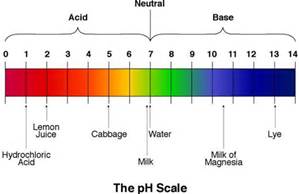
According to the pH range which substance is more acidic than lemon juice
a)
Hydrochloric acid
b)
cabbage
c)
milk
d)
lye
79.
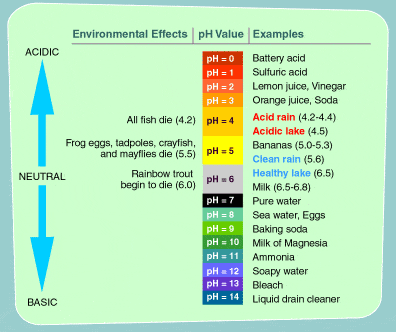
Which food is the most acidic?
a)
bananas
b)
lemon juice
c)
orange juice
d)
fish
80.
If a solution is basic which ion will be more present?
a)
H+
b)
K+
c)
OH-
d)
H-
81.
A solution contains the same number of H+ ions as it contains OH- ions, what will it be?
a)
Acid
b)
Base
c)
Neutral
82.
If you are burned with a strong base, what should you use to safely neutralize it
a)
vinegar (pH = 4)
b)
water (pH = 7)
c)
ammonia (pH = 9)
d)
baking soda (pH = 10)
83.
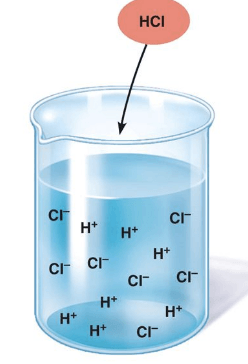
This is an image of a.....
a)
strong base
b)
strong acid
c)
weak base
d)
weak acid
84.
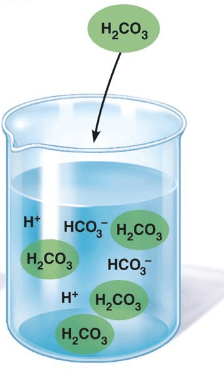
This is an image of a .....
a)
strong acid
b)
strong base
c)
weak acid
d)
weak base
85.
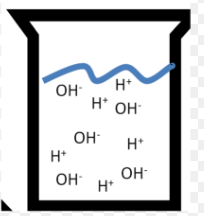
This is an image of....
a)
an acid
b)
a base
c)
a neutral solution
86.
The term alkaline represents....
a)
an acid
b)
a neutral solution
c)
a base
87.
The pH scale measures...
a)
...the strength of an acid.
b)
...the strength of hydrogen ions.
c)
...the concentration of hydrogen ions.
d)
...the concentration of an acid
88.
pH =10
a)
acid
b)
base
c)
neutral
89.
A basic solutions pH is
a)
7
b)
less than 7
c)
greater than 7
d)
between 0-14
90.
A solution is considered an acid if it's pH is
a)
equal to 7
b)
less than 7
c)
greater than 7
d)
greater than 14
91.
Salt water did not react with the Red or Blue litmus paper. This must mean
a)
Salt water is a Base
b)
Salt water is an Acid
c)
Salt water is neutral
d)
Salt water is charged
92.
Changes the color of indicators.
a)
Acids
b)
Bases
c)
All
93.
Turns litmus red
a)
Acids
b)
Bases
c)
All
94.
Turns litmus blue.
a)
Acids
b)
Bases
c)
Salts
d)
All
95.
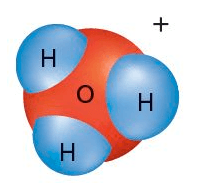
What is shown here?
a)
a hydronium ion
b)
a hydroxide ion
c)
a water molecule
d)
an acid
96.
Acid + Base ₋-->
a)
salt + hydrogen
b)
salt + water
c)
salt + carbon dioxide + water
d)
salt
97.
HCl + NaOH →
a)
NaH + ClOH
b)
NaCl + H2
c)
NaCl + H2O
d)
NaCl + Cl2
98.
The pH scale measures ____ and ____
a)
acidity and basic
b)
the temperature
c)
how fun a chemistry quiz is
d)
none of the above
99.
Ion
a)
A charged particle or atom
b)
Compound formed between a metal and a nonmetal
c)
Any group of compounds that produce H+
d)
Any group of compounds that produce OH-
100.
Acid
a)
Any group of compounds that produce H+ ions
b)
Any group of compounds that produce OH- ions
c)
Ionic compound formed between a metal and a nonmetal
d)
A charged particle, atom, or ion
101.
Base
a)
Any group of compounds that produce H+ ions
b)
Any group of compounds that produce OH- ions
c)
Ionic compound formed from a metal and a nonmetal
d)
A charged particle, atom, or ion
102.
Concentration
a)
The reaction between an acid and a base which produces salt and water
b)
Compound formed by a metal and a nonmetal
c)
The amount of solute per unit of solution
d)
Liquid indicator that changes pink in the presence of a base
103.
Indicator
a)
Liquid indicator that changes pink in the presence of a base
b)
A type of paper used to indicate the presence of acids and bases
c)
a chemical that changes color in the presence of acids and changes a different color in the presence of bases
d)
the amount of solute dissolved in solution
104.
Litmus Paper
a)
Liquid indicator that changes pink in the presence of a base
b)
A type of paper used to indicate the presence of acids and bases
c)
a chemical that changes color in the presence of acids and changes a different color in the presence of bases
d)
the amount of solute dissolved in solution
105.
Neutralization
a)
Compound formed by a metal and a nonmetal
b)
The reaction between an acid and a base which produces a salt and water
c)
A chemical whose color changes in the presence of acids and bases
d)
To decrease the amount of solute as compared to the amount of solvent in a solution
100 %

