
 Worksheets
Unit 3 Test Review (Atomic Theory)
Total questions: 75
Worksheet time: 1hrs 14mins

Which subatomic particle determines the type of element the atom represents and is called the 'atomic number'?
proton
neutron
electron
boron
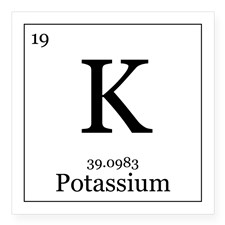
How many neutrons are in the atom Potassium-39"?
29
19
58
20
Atoms with the same number of protons, but a different number of neutrons are known as:
ions
mixtures
isotopes
compounds

When an atom loses an electron, it becomes a
Cation
Anion
neutral ion
neutral atom
An atom has 11 protons, 10 electrons, and 12 neutrons. What is the mass number of this element?
12
33
11
23
An atom has 27 protons, 25 electrons, and 26 neutrons. What is atom's charge?
+2
+1
0
-1
-2
An atom has 11 protons, 10 electrons, and 12 neutrons. What element is this?
Magnesium (Mg)
Sodium (Na)
Scandium (Sc)
Vanadium (V)


How many electrons are in this element if its electrically neutral?
35
45
0
80

What is the symbol and charge of a Calcium ion?
Ca1+
Ca2+
Ca1-
Ca2-

What is the symbol and charge of an Oxygen ion?
O-3
O-
O2+
O-2

What is the symbol and charge of a Nitrogen ion?
N-2
N-4
N3-
N+2
Which of the following tend to gain electrons when forming ions?
metalloids
metals
nonmetals
cations
Acids give away
H+ in water
OH− in water
Carbon in water
None of these
Bases generate this when added to water.
H+
OH−
Neutrons
Electrons

What are the vertical columns on the periodic called?
groups
periods
nonmetals
metals
metalloids
Which element is similar to Mg?
Ca
B
O
Cl
LiBr is called
lithium bromine
lithium (I) bromine
lithium bromide
lithuim (I) bromide
Which of these combinations is an ionic compound made of?
Metal and Metal
Nonmetal and Nonmetal
Metal and Nonmetal
Cation and Cation
The chemical formula of Iron (III) bromide is
Formula for barium sulfide
B2S3
BaS
Ba2S
BaS2
What is the name of AlF3 ?
aluminum fluorate
monoaluminum trifluoride
aluminum fluoride
aluminum trifluoride
Bromic acid

sodium chloride pentahydroxide
sodium chlorate pentahydrate
sodium chloride

contains water in the ionic compound
What is the name of the compound Na2(SO4)?
Sodium sulfate
Sodium sulfide
Sodium sulfur tetraoxide
Sodium sulfuroxide
a three-dimensional geometric arrangement of particles in which each positive ion is surrounded by negative ions and each negative ion is surrounded by positive ions
crystal lattice
delocalized electrons
electrolyte
electron sea model
The correct name for TiCl4 is:
titanium (IV) chloride
titanium tetrachloride
titanium (II) chloride
titanium (I) chloride
Name the following compound: Na2CO3
Disodium monocarbon trioxide
Sodium carbonate
Sodium carbide
Disodium carbonate
Rutherford's "gold-foil" experiment using alpha particle scattering concluded that
the center of the atom is empty
atomic mass is spread over the whole atom
the center of the atom has a negative charge
most of the atom is empty except for a very tiny nucleus
All of the following are true about John Dalton's atomic theory EXCEPT ______.
Everything is made up of atoms
Atoms of different elements vary in size and shape.
Atoms are composed of subatomic particles.
Atoms combine to form Compounds in fixed ratios
What did James Chadwick's irradiation of Beryllium foil discover?
Atoms
Electrons
Protons
Neutrons
What did Thomson's experiment with the Cathode Ray Tube discover?
Atoms
Neutrons
Electrons
Protons

The Law of Conservation of Mass says that matter can neither be __________ or __________.
created; destroyed
recycled; renewed
subtracted; added
joined; separated
What did Millikan's oil droplet experiment tell us about the atom?
Atom's have neutrons
Atoms' have a nucleus
Charge of an electron
Charge of a proton

How many electrons does the following particle have?
42
40
20
18
22
How many neutrons does the following particle have?
42
40
20
18
22
How many protons does the following particle have?
42
40
20
18
22
Which of the following is an Alkali Metal?
Rb
Ba
Fe
Al
Which of the following is an Alkaline Earth Metal?
Rb
Ba
Fe
Al
Which of the following is a Transition Metal?
Rb
Ba
Fe
Al
Ions come together in Ionic compounds to make the overall charge:
Neutral
Postive
Negative
Which of the following shows an Acid reacting with a Base?
4Fe + 3O2 → 2Fe2O3
HNO3 + NaOH
→ NaNO3 + H2O
HCl + K → KCl + H2
Ca(OH)2 + NiCl2 → CaCl2 + Ni(OH)2
What is different between the organic compounds: Hexane and Methane?
The presence of double bonds
The number of carbon atoms
The number of hydrogen atoms
The presence of functional groups
What is different between the organic compounds Hexane and Hexene?
The number of carbon atoms
The number of functional groups
The type of bond between carbon atoms.
What is a functional group in an organic hydrocarbon?
A group of atoms that determines the number of carbons.
A group of atoms that determines the presence of double bonds.
Which of the following elements is not diatomic?
True or False: Hydrate compounds can have their water removed by heating and then can reabsorb the water back into its crystal lattice.
True or False: Carbohydrates are a special type of Hydrate because they also give off water when heated.
What is different between the compounds Sodium Chlorate vs Sodium Chlorite?
The number of sodium atoms
The number of chlorine atoms
The number of oxygen atoms
The charge of the ion
True or False: The elemental oxygen in the air has a charge of -2.
True or False: The elemental nitrogen in the air is neutral.
True or False: Noble gases do not form chemical compounds.
True or False: Carbon tends to form a charge of -4 in compounds.
Which part of the periodic table would have elements that are similar?
Vertical columns
↓
Horizontal Rows
→
Up and to the Right diagonal
↗
Down and to the Right diagonal
↘
True or False: Isotopes of the same element have identical chemical properties.
True or False: Atoms and Ions of the same element have identical chemical properties.
What type of bonding is found in molecular compounds?
electrostatic bonding
Which of the following is an Ionic compound?
ZnS
Zn + Ni
SF6
H2SO4
What is the name of the following compound: H2SO4
Sulfuric acid
Hydrosulfuric acid
Hydrogen Sulfate
Hydrogen Sulfide
Which of the following is illustrated by Joseph Proust’s Law of Definite Proportions?
Helped explain why atoms of one element are different from atoms of another element.
Showed the total mass of chemical reactants was equal to the mass of products in a chemical reaction.
Elements always combine in the same relative mass quantities when forming compounds.
All small particles can be found to randomly tumble under a microscope (even when in dilute solutions).

