wayground logo

Free Printable Worksheets

Font size

S
M
L
XL
Worksheets

Chemistry Midterm Review Game

Total questions: 104

Worksheet time: 1hrs 1mins

Name
Class
Date
1.
Which hazard does this pictogram represent?
a)
Flammable
b)
Oxidizing
c)
Health Hazard
d)
Danger to the Environment
2.
Which hazard does this pictogram represent?
a)
Compressed Gas
b)
Health Hazard
c)
Corrosive
d)
Toxic
3.
Which hazard does this pictogram represent?
a)
Harmful/Irritant
b)
Explosive
c)
Health Hazard
d)
Toxic
4.

What is the abbreviation for the document that has 16 sections and lists all of the considerations and information about using a chemical including how to dispose of the chemical.

(a)  

5.

Type in the number for the most dangerous type of hazard on an NFPA Safety Diamond.

(a)  

6.
How many significant figures does the following number have: 0.002040
a)
6
b)
4
c)
3
d)
2
7.
How many significant figures does the following number have: 100.00210
a)
7
b)
5
c)
10
d)
8
8.
How many significant figures does the following number have: 1740200
a)
4
b)
7
c)
3
d)
5
9.
Where electrons are likely to be found as they travel around the nucleus
a)
Nucleus
b)
Electron Cloud
c)
Within a Proton
d)
Within a Neutron
10.

What is one way neutrons are different from electrons?

a)

they both are negative

b)

neutrons have no charge, while electrons have a negative charge

c)

Both are in the nucleus

d)

Electrons are inside nucleus and neutrons are outside the nucleus.

11.

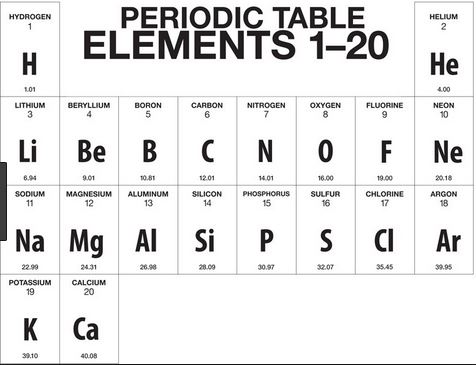
How many protons and electrons does this element have?

a)

35

b)

18

c)

17

d)

52

12.

How many neutrons does Chlorine-35 have?

a)

18

b)

17

c)

35

d)

52

13.

What is the atomic mass of Arsenic?

a)

33

b)

107

c)

75

d)

11

14.

Bohr's model of the atom was called

a)

Plum Pudding

b)

Billiard Ball

c)

Nuclear Model

d)

Planetary Model

15.
Adding or subtracting neutrons (charge = 0, mass = 1) makes the element change into an...
a)
ion
b)
mixture
c)
isotope
d)
neutral atom
16.

What is the charge on a lithium atom that loses 1 electron?

a)

+1

b)

0

c)

-1

d)

-2

17.

The average atomic mass on the periodic table is found from...

a)

calculating the weighted average mass of all the isotopes of that element

b)

Calculating different types of elements together

c)

calculations the average of all elements in that period together.

d)

making a guess about how much all the isotopes might wiegh together.

18.
What do carbon-12 and carbon-14 have in common?
a)
they have same number of protons
b)
they have the same number of neutrons
c)
they have the same atomic mass
d)
they have the same atomic weight
19.
In the modern periodic table elements are arranged by:
a)
atomic mass
b)
atomic number
c)
valence electrons
d)
number of isotopes
20.
Each column(up&down) in the periodic table is called a 
a)
period
b)
group
c)
cluster
d)
unit
21.
The yellow atoms are called 
a)
metals
b)
nonmetals
c)
metalloids
d)
noble gases
22.
The period for Bromine is ___________.
a)

3

b)

4

c)

Halogen

d)

NonMetal

23.
Beryllium is in group number______.
a)
Group 2
b)
Group 3
c)
Group 4
d)
Group 7
24.
An element's identity is determined by the number of
a)
electrons.
b)
protons.
c)
neutrons.
d)
valence.
25.
Which elements have the most similar chemical properties?
a)
K and Na
b)
K and Ca
c)
K and Cl
d)
K and S
26.
Which is an alkali metal?
a)
Magnesium
b)
Iron
c)
Sodium
d)
Europium
27.
Which is a halogen?
a)
Helium
b)
Chlorine
c)
Oxygen
d)
Neptune
28.
In what section would Transition Metals be found?
a)
purple
b)
light blue
c)
yellow
d)
red
29.
Which part is known as the atomic mass?
a)
Cu
b)
29
c)
63.546
d)
copper
30.

Elements running along the zigzag line on the periodic table are called?

a)

non metals

b)

metals

c)

metalloids

d)

rare earth metals

31.
In order of most to least penetrating radiation we have
a)
Alpha , Beta,  Gamma
b)
Beta , Gamma , Alpha
c)
Gamma, Beta, Alpha
d)
Gamma, Alpha, Beta
32.

Has a mass of 4 and a charge of +2

a)

Alpha

b)

Beta

c)

Gamma

d)

neutron

33.
Which type of nuclear radiation is being emitted here along with Rn
a)
alpha
b)
beta
c)
gamma
d)
none
34.

Which has the lower Electronegativity:

N or C?

a)

C

b)

N

35.

Which of the following will have a larger atomic radius than Zinc?

a)

Gallium

b)

Aluminum

c)

Magnesium

d)

Strontium

36.
Which atom has the largest atomic radius?
a)
potassium
b)
rubidium 
c)
francium
d)
cesium
37.

As you move across the periodic table from left to right, atoms tend to get _________. This is because ______________.

a)

larger: the atoms have more mass.

b)

smaller: the atoms have less mass

c)

smaller: the atoms have more protons.

d)

larger: the atoms have less electrons.

38.
Ionization energy is...
a)
the energy required to add an electron to a specific atom
b)
how much energy it takes to remove an electron from an atom
c)
the energy required to shield the outer electrons from the nucleus
d)
a measure of the ability of an atom to attract electrons
39.

Atomic radius generally _____________ as we move __________.

a)

increases: down a group and from right to left across a period

b)

increases: up a group and from left to right across a period

c)

decreases: up a group and from left to right across a period

d)

decreases: down a group and from left to right across a period

40.

Ionization energy __________ from left to right within a period and __________ from top to bottom within a group.

a)

decreases, increases

b)

increases, increases

c)

increases, decreases

d)

stays the same, increases

41.

Which of the following has the largest atomic size?

a)

Na

b)

Li+

c)

Li

d)

Ca

42.

What are the products of this reaction?


Cu2+ + AgNO3

a)

Cu(NO3)2 + Ag

b)

CuNO3 + Ag

c)

CuAg + NO3

d)

Cu + AgNO3

43.

What are the products for this reaction (unbalanced):


C2H4 + 2 O2 -->

a)

C2O2 + H4

b)

CO2 + HOH

c)

CO + H

d)

CO2 + H2O

44.

Predict the products for this reaction:


Ag3N + KCl →

a)

AgCl + K3N

b)

AgK + ClN3

c)

AgN3 + KCl

d)

KAg + N3Cl

45.

Predict the products for the decomposition of potassium chlorate: KClO3

a)

KCl + O2

b)

K2O + Cl2

c)

K + ClO3

d)

K + ClO2

46.

What are the products of the following equation?

F2 + Ca →

a)

FCa

b)

F2Ca

c)

CaF2

d)

FCa

47.

Balance this reaction:

____ RbNO3 + ____ BeF2 ----> ____ Be(NO3)2 + ____ RbF

a)

1,1,1,1

b)

1,2,1,1

c)

2,1,1,2

d)

2,1,2,1

48.

A metal hydroxide will decompose into?

a)

metal oxide + water

b)

metal oxide + carbon dioxide

c)

metal chloride + oxygen

d)

metal oxide + oxygen

49.

A metal carbonate will decompose into?

a)

metal oxide + water

b)

metal oxide + carbon dioxide

c)

metal chloride + oxygen

d)

metal oxide + oxygen

50.

How many valence electrons does Nitrogen Have?

a)

1 Valence electron

b)

2 Valence electron

c)

3 Valence electron

d)

4 Valence electron

e)

5 Valence electron

51.

What is the correct Lewis Dot Structure for ammonia NH3

a)
b)
c)
d)
52.

NH3 has how many lone pairs?

a)

0

b)

1

c)

2

d)

3

53.

Which is the correct molecular structure for carbon dioxide?

a)
b)
c)
d)
54.

CCl4 has how many double bonds?

a)

0

b)

1

c)

2

d)

3

55.
According to the octet rule most elements need _______ valence electrons.
a)
2
b)
8
c)
6
d)
18
56.
What is the correct structure for BF3?
a)
Option A.
b)
Option B. 
c)
Option C.
d)
Option D.
57.

When a covalent bond forms _______________ are shared.

a)

protons

b)

nutrons

c)

valence electrons

d)

quarks

58.

What type of elements form covalent bonds?

a)

Metals

b)

Non Metals

c)

Metalloids

d)

Nobel Gas

59.
In the chemical formula for an ionic compound, which item is written first?
a)
positive ion
b)
negative ion
c)
subscript
d)
the female
60.
Magnesium bromide is an ionic compound with the chemical formula MgBr₂.  What does the "2" tell you?
a)
There are 2 bromide ions for every magnesium ion
b)
Bromide has a 2- charge
c)
Bromide has a 2+ charge
d)
There are 2 magnesium ions to every bromide ion
61.
Which of the following is a characteristic property of ionic compounds?
a)
They form hard, brittle crystals with characteristic shapes
b)
They have low melting points
c)
They have low boiling points
d)
They contain no charged particles
62.
What is the formula of Sodium oxide?
a)
Na2O
b)
NaO2
c)
Na2O2
d)
Na2O
63.

What is the formula for tin(II) nitride?

a)

Sn3N2

b)

SnN2

c)

Sn3N

d)

SnN

64.

What is the name of the model that shows only the valence electrons of an element?

a)

Bohr diagram

b)

Orbital diagram

c)

Lewis-dot diagram

d)

Electron configuration

65.
What is the name for LiI?
a)
lithium oxide
b)
lithium iodide
c)
lithium monoiodide
d)
monolithium iodide
66.

What is the name of the following Compound? CuSO4⋄5H2O

a)

Copper Sulfide Pentahydrate

b)

Copper Sulfur Tetraoxygen Pentahydrate

c)

Copper(II) Sulfate Pentahydrate

d)

Copper(I) Sulfide hydrate

67.

This could be the dot diagram of

a)

Mg

b)

Cl

c)

C

d)

O

68.

How many valence electrons should Magnesium have in its Lewis dot model?

a)

12

b)

2

c)

1

d)

24

69.
2000 mg = ________ g
a)
2,000,000 
b)
c)
20 
d)
200,000 
70.
16 cm= _________ mm
a)
0.16
b)
1.6
c)
160 
d)
1600
71.

5.6 km = _________ cm

a)

0.056

b)

560000

c)

5,600

d)

0.000056

72.
Choose the correct shape for this molecule:
a)
Trigonal planar
b)
Trigonal pyramidal
c)
Bent
d)
Linear
73.

What types of forces exist between I2 molecules?

a)

dispersion forces

b)

dipole-dipole forces

c)

hydrogen bonding

d)

ion-dipole forces

74.
Does H2O have hydrogen bonding?
a)
yes
b)
no
75.

Rank these in order of strength from greatest to least:

dispersion forces

hydrogen bond

covalent bond

dipole-dipole

a)

dipole-dipole>covalent bond>hydrogen bond>dispersion

b)

dispersion>dipole-diple>hydrogen bond>covalent bond

c)

covalent bond>hydrogen bond>dipole-dipole>dispersion

d)

hydrogen bond>dipole-dipole>dispersion>covalent bond

76.
Choose the correct shape for this molecule:
a)
Bent
b)
Trigonal pyramidal
c)
Trigonal planar
d)
Linear
77.
What is the speed of light?
a)
3.0x10⁸ ms
b)
3.0x10⁸ m/s
c)
6.626x10⁻³⁴ Js
d)
6.626x10⁻³⁴ J/s
78.
What is Planck's Constant
a)
6.626x10⁻³⁴ Js
b)
6.626x10⁻³⁴ J/s
c)
3.0x10⁸ ms
d)
3.0x10⁸ m/s
79.

The frequency of violet light is 7.5x10¹⁴ Hz. What is its wavelength?

a)

4.0x10⁻⁷ m

b)

4.0x10⁷ m

c)

2.25x10²³ m

d)

2.25x10²³ Hz

80.
As the wavelength of light increases
a)
the frequency increases.
b)
the speed of light increases.
c)
the energy decreases.
d)
the intensity increases.
81.

Which color of visible light has the least amount of energy?

a)

orange

b)

green

c)

red

d)

blue

82.

What is the formula for silicon dioxide?

a)

SO2

b)

NaO2

c)

SiO2

d)

SiO

83.

What is the formula for diphosphorus pentoxide?

a)

P2O5

b)

PO5

c)

P5O2

d)

P2O6

84.
The name of P₄S₁₀ is
a)
phosphorous sulfide
b)
phosphorus sulfide
c)
tetraphosphorus decasulfide
d)
phosphorus (X) sulfide
85.

The formula is KNO3 . What is the name of this formula?

a)

monopotassium trinitrate

b)

potassium nitrate

c)

potassium mononitrogen trioxygen

d)

potassium nitric acid

86.
__Al + __Fe3N2 -->__AlN + __Fe
a)
already balanced
b)
4,2,4,6
c)
2,1,2,3
d)
1,2,1,3
87.
__H2O2 --> __H2O + __O2
a)
already balanced
b)
2,1,1
c)
2,2,1
d)
2,1,2
88.
Which is the name of the kind of solid substance formed in this figure?  
a)
aqueous 
b)
precipitate
c)
acid
d)
synthesis 
89.

Which of the following compounds will not dissolve in water?

a)

NaCl

b)

PbCl2

c)

MgNO3

d)

Na2SO4

90.
Which type of reaction takes place in the presence of oxygen and produces carbon dioxide and water?
a)
double replacement 
b)
decomposition 
c)
combustion 
d)
single replacement
91.
What type of chemical reaction takes place when fluorine reacts with sodium bromide?
a)
single replacement 
b)
double replacement 
c)
combustion
d)
synthesis 
92.

A chemical reaction that shows all of the ions in a reaction, the formation of a solid and shows the spectator ions

a)

net ionic equation

b)

double replacement

c)

complete ionic equation

d)

dissociation

93.
The word reduction describes 
a)
gain of electrons 
b)
loss of electrons 
c)
number of electrons remains the same
d)
transfer of electrons
94.
A metal is reacted with an acid to produce a salt and a hydrogen gas. What type of reaction has occurred? 
a)
neutralization 
b)
double replacement 
c)
single replacement 
d)
synthesis 
95.
How many Hydrogen are in 4H2O?
a)
6
b)
8
c)
2
d)
4
96.

Which of the following is a common sign that a chemical change has occurred?

a)

A chemical has turned a different color, bubbled, and/or changed temperature.

b)

A chemical has changed to a different state of matter, such as a liquid to a solid.

c)

A chemical has changed size.

d)

A chemical has become a different shape.

97.

What type of reaction is illustrated below? FeS + HCl --> H2S + FeCl

a)

synthesis

b)

decomposition

c)

single replacement

d)

double replacement

98.

chloric acid

a)

HCl

b)

HClO2

c)

HClO3

d)

H3ClO3

99.

phosphorous acid

a)

H3PO4

b)

H2PO4

c)

H3P

d)

H3PO3

100.
Mg(OH)2
a)
magnesium hydroxide acid
b)
hydromagnesium acid
c)
magnesium oxygen hydride
d)
magnesium hydroxide
101.

HF

a)

hydrofluoric acid

b)

Hypofluoric acid

c)

hydrogen fluorine acid

d)

monohydrogen monofluoride

102.
Is the following compound an acid or a base? 
Ca(OH)2
a)
Acid
b)
Base
103.

What determines the number of hydrogens in your acid?

a)

there are always just one

b)

its the same as the charge of hydrogen

c)

its the same as the charge of the anion

d)

there are never any

104.
HNO2
a)
hydronitrogen
b)
hydrogen nitrogen oxygen
c)
nitrous acid
d)
nitric acid