
 Worksheets
ES CA 2 Review
Total questions: 105
Worksheet time: 4hrs 34mins


The word that means how easily water can penetrate the soil is _______.
particle size
porosity
saturation
hydrosphere
_______ creates soil.
Lightning
Metamorphosis
Weathering
Woodland
The ideal soil is called _______.
loam
silt
clay
sand
Layers in the soil are called _______.
soil layers
orisons
horizons
surfaces
Physical weathering refers to _______.
physically putting a coat on during bad weather
acid rain dissolving away rock surfaces
anything that breaks rock into smaller pieces
anything that breaks the Rock's heart
Which of the following is a type of weathering that breaks down rocks and minerals?
Chemical
Mechanical
Biological
Permeable
The layer of soil in which the topsoil is found.
Horizon A
Horizon B
Horizon C
Horizon D or R
The rinsing of the topsoil from the Earth is called_________.
Chemistry
Irrigation
Weathering
Erosion
What are the 3 types of particle sizes in soil?
Sand, silt, and clay
Clay, mud, and dirt
Sand, gravel, and rocks
Silt, sand, and minerals
Which horizon or soil layer contains organic material, such as dead and dying material?
O
A
B
C
Biodiversity is greater
Near the poles
In the Tundra
In the desert
Near the equator
Select all of the correct answers that indicate ecological services provided by biodiversity.
Purification of air and water
Decomposition of wastes
Trash services
Control of pests
A stable ecosystem typically has high biodiversity.
True
False
Why is biodiversity important to ecosystems?
It helps populations adapt to ecological changes.
It increases at each level of the food chain.
Where are many critical biodiversity hotspots located?
islands, tropical rain forests, and coastal areas
cities and developed areas of the world
What is an example of a human disturbance?
Deforestation
Drought
Tsunami
Changing Seasons
Which process contributes carbon dioxide to the atmosphere?
anaerobic respiration
photosynthesis
protein synthesis
tree farms
Which of the following is correct?
There is as much carbon on earth as when it was formed
Carbon is being created whenever it is recycled
Carbon is lost every time it is recycled
Carbon changes to different forms and is never recovered
Which form of carbon is the most potent greenhouse gas?
CO2
CH4
C6H12O6
C3H8O3

What are two (2) ways to reduce the carbon emissions from passenger cars?
Use less expensive gas
Carpooling
Public Transportation
Driving only passenger cars

What does the diagram indicate regarding the carbon cycle?
Only terrestrial processes cycle carbon
Only aquatic processes cycle carbon
Terrestrial and aquatic processes are separate
Both terrestrial and aquatic cycles operate together
How do fossils form?
ancient biomass is converted to fossil fuels through cellular respiration
ancient biomass is converted to fossil fuels through time, heat and pressure
current biomass is under heat and pressure until they become fossils
atmospheric carbon diffuses into the soil and forms fossil fuels
Which of the following statements best describes the term photosynthesis?
When plants absorb the energy from the sun.
How plants reproduce.
The process by which plants make their own food.
The process by which animals make their own food.
The process of photosynthesis takes place in the:
Leaves of the Plant.
Stem of the plant.
Roots of the plant.
All of the above.
Select all that are raw materials for Photosynthesis.
Water
Carbon Dioxide
Oxygen
Sunlight (Light Energy)
Glucose (Sugar/food)
Exit: Carbon dioxide
Exit: Glucose
Exit: Oxygen
Exit: Water vapor
What is the pigment in chloroplasts that performs photosynthesis?
Chlorosynthesis
Chlorophyll
Chloroplast
Green
The number of females and males of each age contained in a population...
limiting factor
demography
age structure
logistic growth
Factors that are influential only when population density reaches a certain level...
density-dependent limiting factor
limiting factor
logistic growth
density-independent limiting factor
The maximum number of individuals of a particular species that an environment can support...
demography
emigration
exponential growth
carrying capacity
The larger a population gets, the faster it grows...
immigration
exponential growth
logistic growth
demography
The study of human populations...
emigration
age structure
demography
immigration
A dramatic change from high birth and death rates to low birth and death rates...
age structure
demographic transition
exponential growth
logistic growth
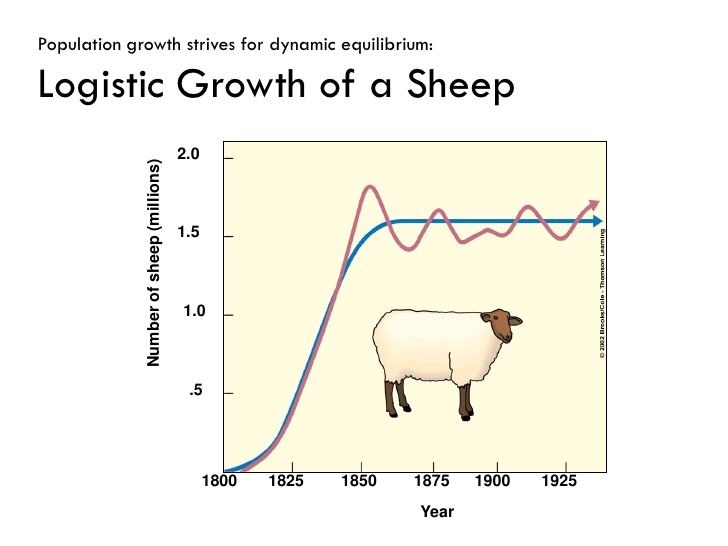


Which of the following are density dependent factors?
competition for resources
predation
disease
natural disasters
Which of the following are examples of a density independent factors?
forest fire
seasonal cycles
storms
disease
During a(n) ____ event, trade winds are much stronger than usual.
El Nino
La Nina
Normal
Partly sunny
During an El Nino, trade winds are typically...
about average
stronger
weaker

The picture represents a(n) ___ event.
El Nino
La Nina
Non-El Nino (normal conditions)
How often do El Nino events occur?
2-5 years
2-7 years
7-10 years

What process is shown in this picture?
(a)
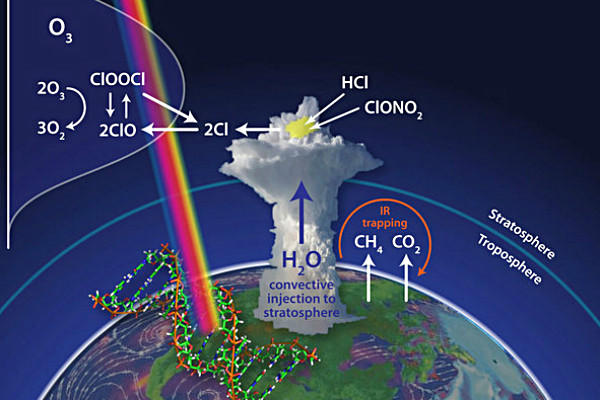
I. can originate from the emission of chlorofluorocarbons (CFCs).
II. is catalyzed through a free chlorine (Cl) atom.
III. prevents UV rays from reaching the earth’s surface.
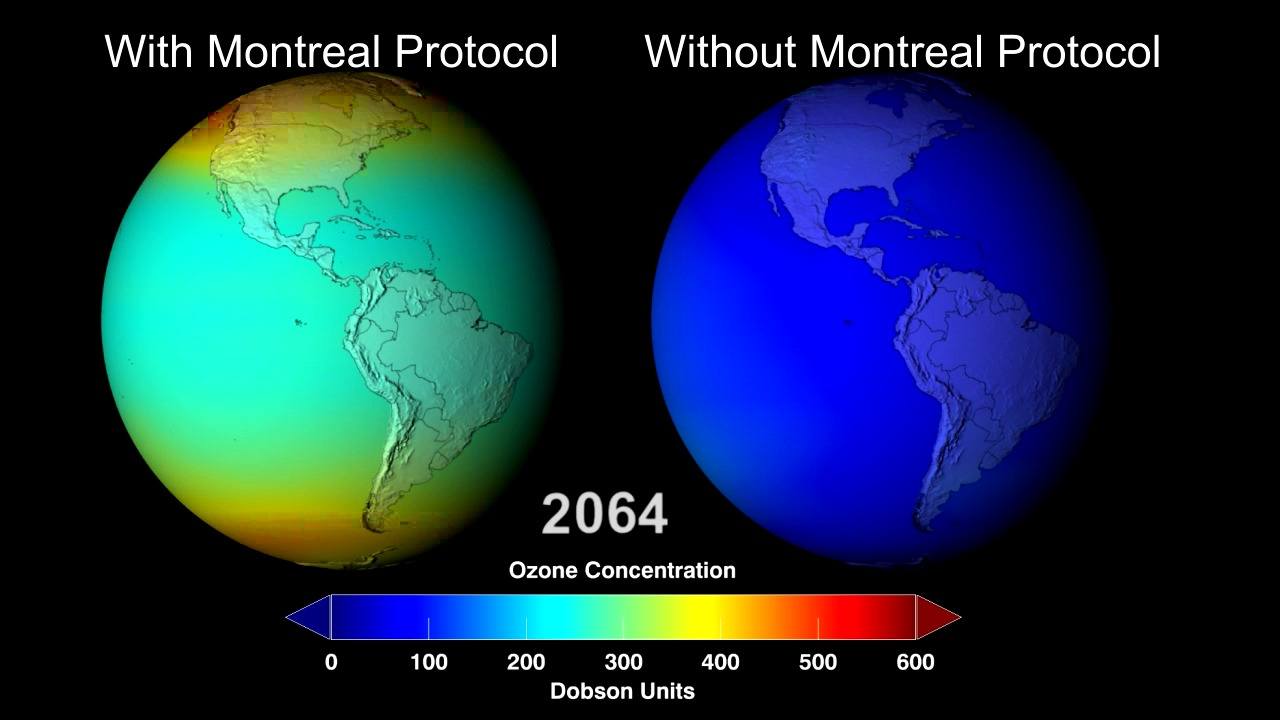
When is the ozone hole largest?
early Antarctic spring
late Antarctic summer
early Antarctic winter
late Antarctic fall
Which chemical that replaced CFCs in refrigerants is now a concern as a major greenhouse gas?
CFCs
HFCs
DDT
CFCl2
UV rays can cause obvious short term damage, such as sunburn, as well as long term damage that accumulates with each exposure to the sun.
True
False
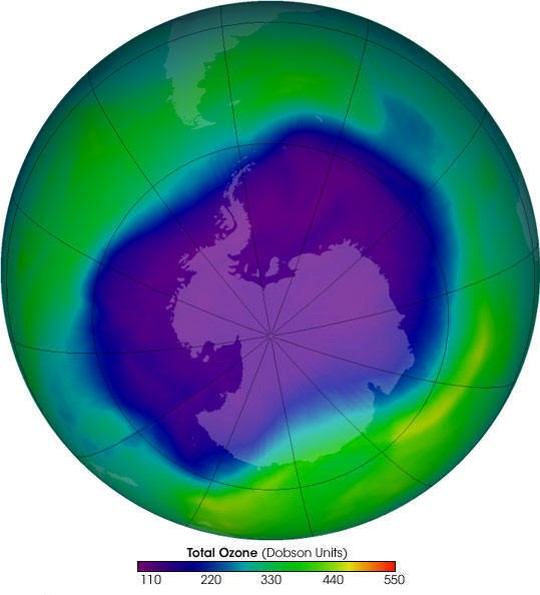
Location of the large whole in the ozone.
Antarctica
Artic
Iceland
Africa
Which is most strongly absorbed by ozone in the statosphere?
UV-A
UV-B
UV-C
UV-B and UV-C
UV-A and UV-B
Which 2 greenhouse gases contribute the MOST to global warming of Earth?
N2O and H2O
O3 and H2O
CO2 and CH4
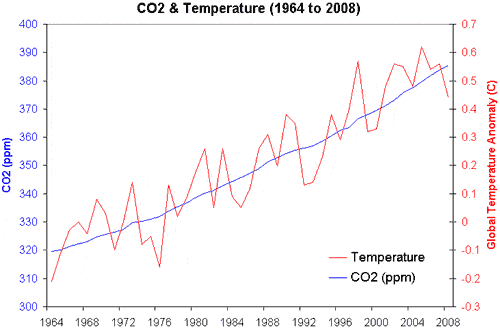
The graph below shows CO2 emissions and temperatures from 1909 to 1949. What conclusion is best supported by the graph?
There is no relationship between carbon dioxide concentrations and temperatures
As carbon dioxide concentrations increase, temperatures increase
As carbon dioxide concentrations increase, temperatures decrease
As carbon dioxide concentrations decrease, temperatures increase
What is the greenhouse effect?
A natural process where gases trap heat in the atmosphere.
A man-made process where gases trap heat in the atmosphere.
A natural process where the ocean traps heat in the atmosphere.
A man-made process where the ocean traps heat in the atmosphere.
What is Global Warming?
Increasing temperature in Earth's atmosphere
Decreasing temperature in a city
Increasing rain rates in Earth
Decreasing temperature rates
Which 2 greenhouse gases contribute the MOST to global warming of Earth?
N2O and H2O
O3 and H2O
CO2 and CH4
The graph below shows CO2 emissions and temperatures from 1909 to 1949. What conclusion is best supported by the graph?
There is no relationship between carbon dioxide concentrations and temperatures
As carbon dioxide concentrations increase, temperatures increase
As carbon dioxide concentrations increase, temperatures decrease
As carbon dioxide concentrations decrease, temperatures increase
What is the greenhouse effect?
A natural process where gases trap heat in the atmosphere.
A man-made process where gases trap heat in the atmosphere.
A natural process where the ocean traps heat in the atmosphere.
A man-made process where the ocean traps heat in the atmosphere.
Which of these is NOT a greenhouse gas?
Carbon Dioxide
Nitrous Oxide
Oxygen Gas
Methane

This is a simple diagram of the greenhouse effect. According to this diagram, the energy first comes from...
The Sun
The Earth
The Atmosphere
Which one is NOT a CAUSE of Climate Change?
Burning Fossil Fuel
Deforestation
Intensive Farming / Livestock Gas
South Pole Ice melting

Carbon Dioxide, CO2, comes from
Burning fossil fuels
Cold water
Animal manure
Plastic
Some ways to slow Global Warming are
Take lots of airplane trips
Making your bed and cleaning your room.
Buying food and items from far away (other countries)
Riding your bike, recycling, save energy, use less water
Carbon Dioxide, CO2, comes from
Burning fossil fuels
Cold water
Animal manure
Plastic
People don't typically live as long.
More developed
Less developed
Lower death rates
More developed
Less developed

What age groups does the bottom of a population pyramid represent?
The elderly
The working adults
The children
Males

What growth rate does this population pyramid represent?
Rapid Growth
Slow Growth
Negative Growth
Zero Growth

Is this country Developed or Developing?
Developed
Developing

Predict the future population growth of this country.
Negative Growth (the population will shrink)
Slow/No Growth (the population will stay about the same)
Growth (the population will definitely grow)
Fast Growth (the population will explode)

