
 Worksheets
Chemistry Exam #4 Review: Atomic Theory
Total questions: 100
Worksheet time: 5hrs 45mins
The Rows on the Periodic Table are known as
Periods
Groups/Families
Length
Width
The Columns on the Periodic table are known as:
Periods
Groups/Families
Length
Width
How many columns are there on the periodic table?
7
8
14
18
How many rows are there on the periodic table?
7
8
14
18
The elements in the first column are known as the
Halogens
Transition Metals
Alkali Earth Metals
Alkaline Earth Metals
Noble Gases
The elements in the in the second column are known as the:
Halogens
Transition Metals
Alkali Earth Metals
Alkaline Earth Metals
Noble Gases
The elements in the next to last column are known as the:
Halogens
Transition Metals
Alkali Earth Metals
Alkaline Earth Metals
Noble Gases
The elements in the middle columns are known as:
Halogens
Transition Metals
Alkali Earth Metals
Alkaline Earth Metals
Noble Gases
The elements in the last column are known as the:
Halogens
Transition Metals
Alkali Earth Metals
Alkaline Earth Metals
Noble Gases
The representative elements are in which groups?
Groups 1 and 2, 13-18
Groups 3-12
The transitional elements are in which groups?
Groups 1 and 2, 13-18
Groups 3-12
Define the term Valence Electrons.
Electrons in the inner most shell
Electrons in the middle shell
Electrons in the outermost shell
Electrons that do not participate in bonding

How many valence electrons are in group 1?
1
2
3
4
5
How many valence electrons are in group 2?
1
2
3
4
5
How many valence electrons are in group 13?
1
2
3
4
13
How many valence electrons are in group 14?
1
2
3
4
14
How many valence electrons are in group 15?
1
2
3
15
5
How many valence electrons are in group 16?
16
6
3
15
5
How many valence electrons are in group 17?
7
6
17
15
5
How many valence electrons are in group 18?
7
6
17
18
8
Metals are found in EXCLUSIVELY in which columns?
Group 1
Group 1-10
Group 1-12
Group 1-14
Select the properties of metals:
Mallabile
Ductile
Mostly not solids
Good conductors of heat and electricity
Shiny
Non-Metals are found MOSTLY in which columns?
Groups 10-18
Groups 13-18
Groups 14-18
Groups 1-18
Select the properties of Non-Metals:
Poor Conductor of electricity
Dull
Mostly Gases
Non-Malleable
Shiny
Name the only metal that is not a solid.
Bromine
Gold
Aluminum
Mercury
Name the only non-metal that is a liquid
Bromine
Gold
Aluminum
Mercury
How did Dimitri Mendeleev organize the periodic table?
By Atomic Number
By Electron Number
By Atomic Mass
By Neutron Number
What made Dimitri Mendeleev unique?
He was first to try to organize the periodic table
He was able to predict elements that were yet discovered and its properties
He organized the periodic table by atomic number
None of these
What was Henry Mosley’s contribution to the development of the periodic table?
Organized it by atomic number
Organized it by atomic mass
Organized it by neutron number
Organized it by electron number
Which experiment lead to the discovery of the electron?
Gold Foil Experiment
Beryllium Experiment
Cathode Ray Tube
TV Tube Ray
Which experiment lead to the discovery of the nucleus?
Gold Foil Experiment
Beryllium Experiment
Cathode Ray Tube
TV Tube Ray
Which experiment lead to the discovery of the neutron?
Gold Foil Experiment
Beryllium Experiment
Cathode Ray Tube
TV Tube Ray
Which scientist discovered the electron?
Neihls Bohr
Ernest Rutherford
James Chadwick
J.J. Thomson
Which scientist discovered the nucleus?
Neihls Bohr
Ernest Rutherford
James Chadwick
J.J. Thomson
Which scientist discovered the neutron
Neihls Bohr
Ernest Rutherford
James Chadwick
J.J. Thomson
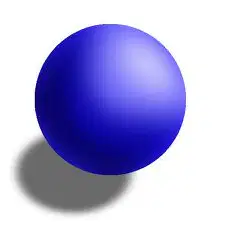
Which scientist proposed the billiard ball model of the atom?
Neihls Bohr
Ernest Rutherford
James Chadwick
J.J. Thomson
John Dalton
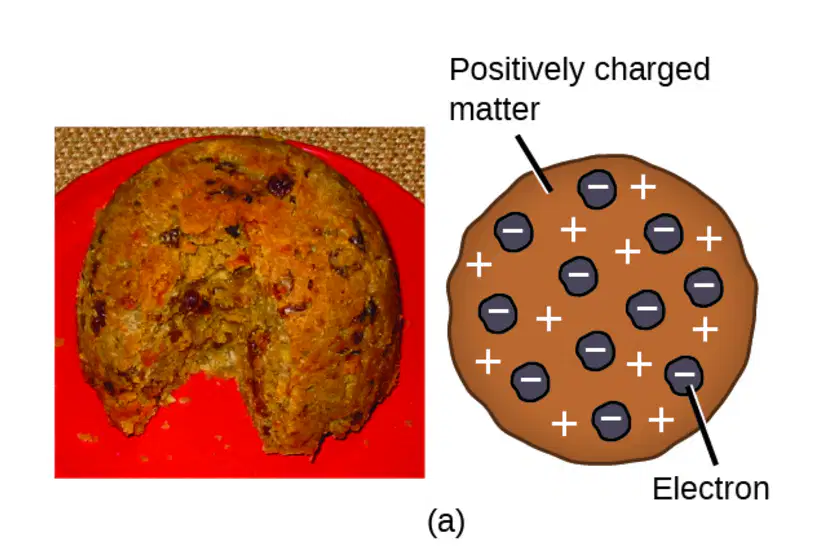
Which scientist proposed the pudding plum model of the atom?
Neihls Bohr
Ernest Rutherford
James Chadwick
J.J. Thomson
John Dalton
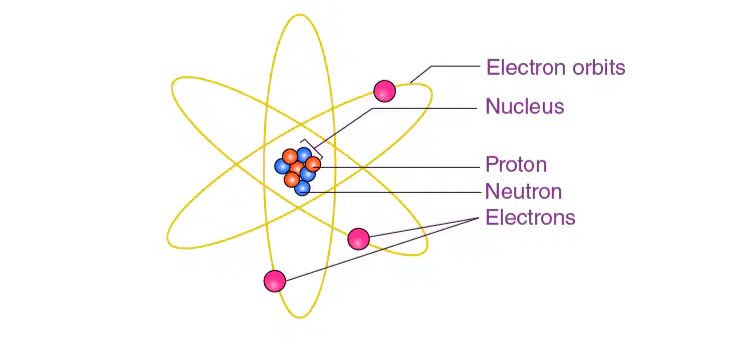
Which scientist proposed the model of the atom that has mostly empty space with electrons on the outside and protons and neutrons in the nucleus?
Neihls Bohr
Ernest Rutherford
James Chadwick
J.J. Thomson
John Dalton

Which scientist proposed the model of the atom that says that electrons exist in orbitals or shells?
Neihls Bohr
Ernest Rutherford
James Chadwick
J.J. Thomson
John Dalton
Who was the 1st to propose Atomic Theory?
Aristotle
Democritus
John Dalton
Isaac Newton
Democritus was the first to use the term:
Element
Atom
Molecule
Bonding
Which is NOT one of fundamental elements proposed by Aristotle?
Air
Water
Oxygen
Earth
Fire
Which is NOT a part of Dalton’s Atomic Theory?
Atoms of the same element can be different
Atoms combine in whole number ratios
All atoms of the same element are identical
Reactions occur when atoms combine, separate and rearrange
Atoms are indivisible
Which is parts of Dalton’s Atomic Theory were proven to be incorrect?
All Matter is made of atoms
Atoms combine in whole number ratios
All atoms of the same element are identical
Reactions occur when atoms combine, separate and rearrange
Atoms are indivisible
What is an isotope?
Same element with a different number of electrons
Same element with a different number of protons
Same element with a different number of neutrons
Same element with a same number of neutrons
Which is an alpha particle?
24He
−10β
00γ
42α
Which is a beta particle?
24He
−10β
00γ
42α
Which is a gamma ray?
24He
−10β
00γ
42α
An alpha particle consists of:
2 Electrons and 2 Neutrons
2 Protons and 2 Electrons
2 Neutrons and 2 Protons
One Electron
No Mass
A beta particle consists of:
2 Electrons and 2 Neutrons
2 Protons and 2 Electrons
2 Neutrons and 2 Protons
One Electron
No Mass
A gamma ray consists of:
2 Electrons and 2 Neutrons
2 Protons and 2 Electrons
2 Neutrons and 2 Protons
One Electron
No Mass

How many valence electrons?
2
3
4
5
Which Bohr model represents Neon?


This could be the dot diagram of
Mg
Cl
C
O

This could be the dot diagram of
Mg
Cl
C
O
How would you draw a Lewis dot diagram for Magnesium?


Which Lewis structure below could represent the element in this Bohr model?


What is the correct lewis dot diagram for Boron?


According to the Bohr model, what is the max number of electrons that each energy level can hold?
2, 8, 8 and 18
2, 4, 4 and 6
3, 6, 6 and 9
4, 16, 16 and 36
Energy Level 1 has how many electrons?
2
8
18
32
Energy Level 2 has how many electrons?
2
8
18
32
Energy Level 3 has how many electrons?
2
8
18
32
Energy Level 4 has how many electrons?
2
8
18
32
Write the hyphen notation for the element with 26 protons and 31 neutrons
Iron-57
Iron-26
Lanthanum-57
Lanthanum-26
Write the nuclear symbol notation for the element with 26 protons and 31 neutrons
2657Fe
5626Fe
5726Fe
5526Fe
Write the hyphen notation for the element with 19 protons and 21 neutrons
Scandium - 40
Potassium - 39
Potassium - 19
Potassium - 40
Write the nuclear symbol notation for the element with 19 protons and 21 neutrons
4019K
4019Ca
1940K
3919K
Write the nuclear symbol notation for the element with 79 protons and 120 neutrons
12079Au
20079Au
79199Au
19979Au
Write the hyphen notation for the element with 79 protons and 120 neutrons
Gold - 199
Gold - 79
Gold - 120
Gold - 41
An element has two naturally occurring isotopes. One is 10.013 amu and is 19.9% abundant. The other is 11.01 amu and is 80.1% abundant. What is the average atomic mass? What element is it?
9.012, Beryllium
6.941, Lithium
12.011, Carbon
10.812, Boron
Naturally occurring chlorine that is put in pools is 75.53 percent 35Cl (mass = 34.969 amu) and 24.47 percent 37Cl (mass = 36.966 amu). Calculate the average atomic mass.
35.46 amu
35.00 amu
37.00 amu
17.00 amu
85209At = ___ + 24He
614C = ___ + -10e
6027Co = ___ + 0-1e
Identify the missing substance in each of the following nuclear reaction.
_____→13756 Ba + 0−1 e
13755Ba
13757La
13856Ba
13755Cs

Ultimately, Schrodinger's model had electrons in ______ around the nucleus
Specific orbits
Nodes
Waves
Clouds
Which model is the Plum-Pudding Model


Which model is the Electron Cloud Model?
Which model is the Nuclear Model?
Which model is the Billiard Ball Model?
Which model is the Planetary Model?
How is the nature of electrons best described?
particle
wave
particle and wave
165 pounds into kilograms (2.2 pounds = 1 kg)
77 kilograms
75 kilograms
120 kilograms
132 kilograms
565,900 seconds into days ( 86,400 seconds = 1 day)
3.5 days
4 days
6.5 days
6 days
Changing the number of electrons of an atom would give you a(n):
New Element
Isotope
Ion
All of these
Changing the number of protons of an atom would give you a(n):
New Element
Isotope
Ion
All of these
Changing the number of neutrons of an atom would give you a(n):
New Element
Isotope
Ion
All of these

Letter A indicates the:
Atomic Mass
Symbol
Chemical Name
Atomic Number
Letter B indicates the:
Atomic Mass
Symbol
Chemical Name
Atomic Number
Letter C indicates the:
Atomic Mass
Symbol
Chemical Name
Atomic Number
Letter D indicates the:
Atomic Mass
Symbol
Chemical Name
Atomic Number
Which set of elements are special because they are called Rare Earth Elements, are essential for technology such as cell phones and laptops and are known to give off light as well?
Alkali Earth Metals
Lanthanides
Actinides
Noble Gases
Which set of elements are special because they are all radioactive and usually found in the context of nuclear reactions?
Lanthanides
Alkaline Earth Metals
Transition Metals
Actinides
Which set of elements are special because they are all soft, explosive in water, shiny, excellent conductors and form salts with the halogens?
Lanthanides
Alkali Earth Metals
Transition Metals
Actinides
Which set of elements are special because they are hard, extremely mallable, excellent conductors and form a variety of charges such as +2, +3, +4 and +5
Lanthanides
Alkali Earth Metals
Transition Metals
Actinides
Which set of elements are special because they are dull, non-conductors, brittle and non-reactive?
Lanthanides
Alkali Earth Metals
Transition Metals
Noble Gases
Which set of elements are special because they are extremely reactive, poisonous to humans, form salts with the Alkali Metals, dull and poor conductors?
Transition Metals
Actinides
Halogens
Noble Gases
Which set of elements are special because they are harder and denser than Group 1 elements, but still shiny, mallable, and good conductors of electricity?
Transition Metals
Halogens
Alkali Earth Metals
Alkaline Earth Metals
Mass Number =
Protons
Electrons
Neutrons + Electrons
Neutrons + Protons
Neutrons =
Proton Number
Mass Number - Proton Number
Proton Number + Electron Number
Proton Number + Mass Number

