
 Worksheets
Fall Biology Final Review
Total questions: 100
Worksheet time: 1hrs 17mins
Bonds between multiple water molecules are called ____________.
Hydrogen Bonds
Covalent Bonds
Ionic Bonds
Water Bonds
Bonds that hold a water molecule together are called ____________.
Covalent Bonds
Ionic Bonds
Hydrogen Bonds
Water Bonds

There are partial charges within a water molecule which cause water to have special properties. This makes water a ________ molecule.
Polar
Nonpolar
Hydrophobic
Ionic
When water rises up a thin straw or moves up a tree from the roots to the leaves, it is called _____________.
Capillary Action
Surface Tension
Heat of Vaporization
Density of Water
Very light insects can sit on top of water because of
Water's High Heat of Vaporization
Surface Tension
Water's High Specific Heat
Capillary Action
Why does ice float?
As water freezes, the molecules move farther apart (expands) and the density decreases.
As water freezes, the hydrogen bonds mix with air and create buoyancy.
As water freezes, the bonds break, making it float.
As water freezes, the molecules move closer together, causing the density to increase.
What makes water a universal solvent?
It is a polar molecule that can form hydrogen bonds, allowing it to dissolve many substances.
It is a nonpolar molecule that can form hydrogen bonds, allowing it to dissolve many substances.
It is a polar molecule with a low specific heat, allowing it to dissolve many substances.
It is a nonpolar molecule with a low specific heat, allowing it to dissolve many substances.
When it rains, water will stick to your clothes and get them wet. What property is this an example of?
Cohesion
Adhesion
High Specific Heat Capacity
Surface Tension
What property allows water molecules to stick to each other to form drops?
Cohesion
Adhesion
Surface Tension
Capillary Action
Large bodies of water help to keep nearby climates from being too hot or too cold because they
Absorb heat in the spring and slowly release that heat in the fall
Absorb heat in the fall and slowly release that heat in the spring
Absorb heat in the summer and slowly release that heat in the winter
Absorb heat in the winter and slowly release that heat in the summer
(No Charge)
(No Charge)
Which of the following is an element?
Sugar, C12H22O11
Salt, NaCl
Water, H2O
Oxygen, O2
What is the monomer of a lipid?
Amino Acid
Fatty Acid
Monosaccharides
Glucose
What is the function of carbohydrates?
Short term energy
Long term energy
Storing genetic information
Speeding up chemical reactions
What is one of the functions of lipids?
Storing genetic information
Long Term Energy
Short Term Energy
Acting as chemical signals
What is the function of nucleic acids?
Short Term Energy
Storing Genetic Information
Long Term Energy
Speeding Up Chemical Reactions

What macromolecule is shown?
Carbohydrate
Nucleic Acid
Protein
Lipid

A ______________ is a large molecule.
Micromolecule
Polymer
Amino Acid
Macromolecule
Which of the following elements are found in all macromolecules? (Select all that apply).


Which of the following is not one of the four major classes of macromolecules?
Lipids
Carbon
Protein
Carbohydrates
Nucleic Acid
Nucleic acids make up which of the two molecules listed below?
FDA
RNA
DNA
FDR

An avocado is an example of a which macromolecule?
Carbohydrate
Lipid/Fat
Protein
Nucleic Acid

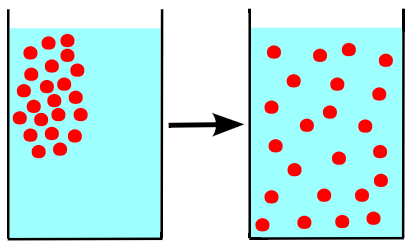
Which statement is true?
Simple sugars are made of polysaccharides.
Glycerol is made of fatty acids.
RNA molecules are made of nucleotides.
Amino acids are made of proteins.

It has a rough texture.
qualitative
quantitative

It makes a loud popping sound.
qualitative
quantitative

It is 9cm long.
qualitative
quantitative

The temperature of the room increased by 8 degrees Celsius.
qualitative
quantitative

The veins in the leaf are 3mm wide.
qualitative
quantitative

The leaves on the bottom are stiffer than the leaves on top of the plant.
qualitative
quantitative

It smells like flowers.
qualitative
quantitative

The mass of the beakers is 500mg.
qualitative
quantitative

We measured 12g of salt to place into the beaker.
qualitative
quantitative

The plant is 6 inches tall.
qualitative
quantitative

The plant is short.
qualitative
quantitative

About half of the class was late to school today.
qualitative
quantitative

It is light green in color.
qualitative
quantitative

The beaker was stirred for 32 seconds.
qualitative
quantitative

It took 10 seconds for the salt to dissolve in the water.
qualitative
quantitative

The chemical reaction produced heat.
qualitative
quantitative

There is approximately 120mL of water in the cylinder.
qualitative
quantitative

It tastes sour.
qualitative
quantitative

She tested four different types of plants.
qualitative
quantitative

There were 16 people in the room.
qualitative
quantitative
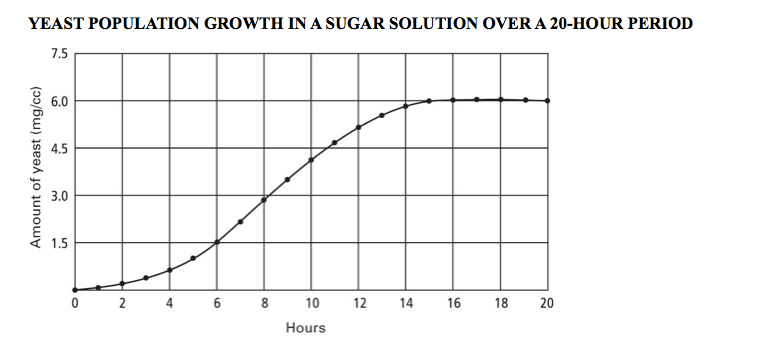
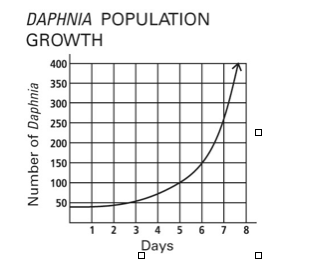

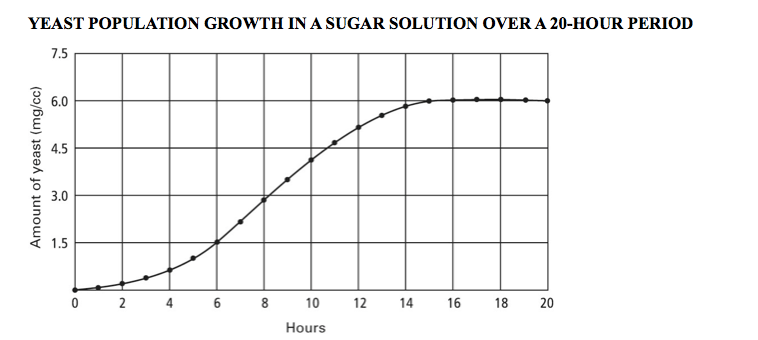


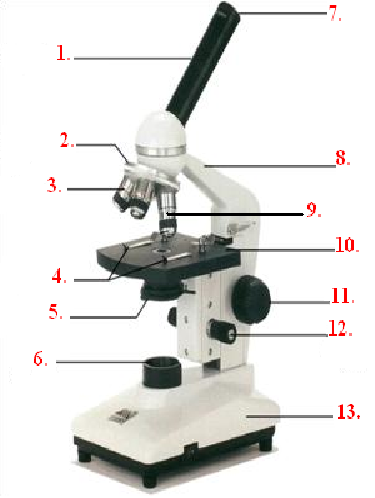
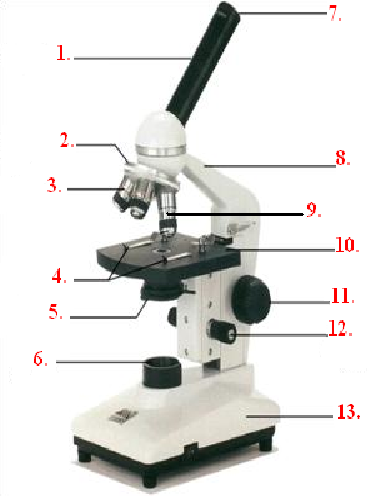


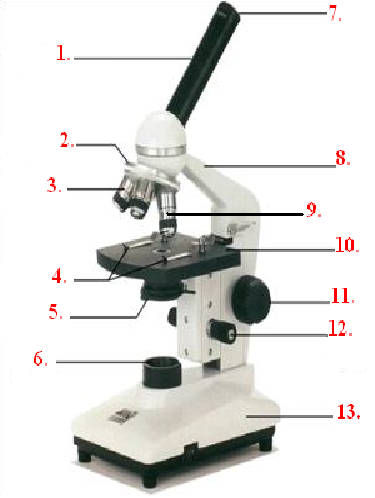


Eyepiece = 10X
Objective lens = 55X

The organelle that is the control center of the cell and contains nearly all of the cell’s DNA:
Ribosome
Centriole
Nucleus
Rough Endoplasmic Reticulum

The organelle that assembles proteins in the cytoplasm:
Ribosome
Nucleus
Mitochondrion
Rough Endoplasmic Reticulum

The organelle where lipids are synthesized along with proteins and other materials that are exported from the cell:
Endoplasmic Reticulum
Golgi Apparatus
Vacuoles & vesicles
Nucleus

The organelle that modifies, sorts, and packages proteins and other materials from the ER for storage in the cell or release from the cell:
Endoplasmic Reticulum
Golgi Apparatus
Vacuoles and Vesicles
Ribosome

The organelles that store materials like water, salts, proteins, and carbohydrates, and the other one that stores and moves materials between cell organelles, as well as to and from the cell surface:
Cytoskeleton
Lysosomes
Chloroplast
Vacuoles and Vesicles

The organelle that breaks down lipids, carbohydrates, and proteins into small molecules that can be used by the rest of the cell:
Lysosome
Cytoskeleton
Golgi Apparatus
Chloroplast

The organelle that helps the cell maintain its shape and is also involved in movement:
Mitochondrion
Lysosome
Cytoskeleton
Cell Membrane

The organelle that captures the energy from sunlight and converts it into chemical energy stored in food during photosynthesis:
Chloroplast
Mitochondrion
Cell Wall
Nucleus

The organelle that converts the chemical energy stored in food molecules into compounds that are more convenient for the cell to use:
Cell Wall
Cell Membrane
Mitochondrion
Centrioles

The organelle that acts as a strong supportive wall that shapes and protects the cell:
Cell Membrane
Cell Wall
Cytoskeleton
Centrioles

The organelle that regulates materials entering and leaving the cell, as well as supporting and protecting it:
Cell Wall
Cell Membrane
Centrioles
Cytoskeleton

The organelle that organizes cell division:
Nucleus
Centrioles
Cytoskeleton
Ribosome

