wayground logo

Free Printable Worksheets

Font size

S
M
L
XL
Worksheets

Alexander Earth & Space ACP Fall 2019

Total questions: 99

Worksheet time: 3hrs 52mins

Name
Class
Date
1.

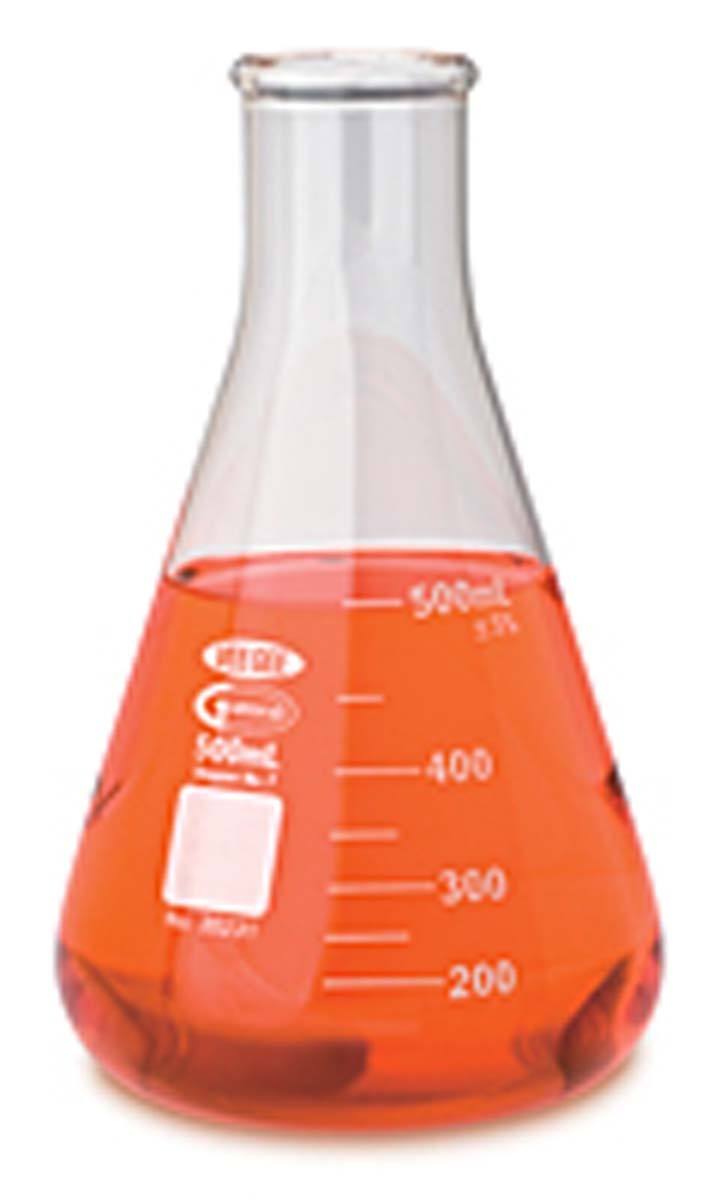
What is used to measure, heat, and mix large amounts of liquids?

a)

Beaker

b)

Flask

c)

Test Tube

d)

Graduated Cylinder

2.

What is used to swirl, mix, or store chemicals?

a)

Beaker

b)

Flask

c)

Test Tube

d)

Graduated Cylinder

3.
What is used to protect your eyes from chemicals, broken glass, and fire?
a)
Fire blanket
b)
Eye wash
c)
Goggles
d)
Flask
4.
What is used to measure mass of an object in grams?
a)
Triple beam balance
b)
Test tube rack
c)
Meter stick
d)
Graduated Cylinder
5.
What is used to measure the volume of liquids more precisely in milliliters?
a)
Beaker
b)
Flask
c)
Graduated Cylinder
d)
Test tubes
6.
Used to measure length and distance in the metric system
a)
Graduated cylinder
b)
Triple beam balance
c)
Thermometer
d)
Meter stick
7.
What is used to hold test tubes?
a)
Test tube rack
b)
Magnifying glass
c)
Petri dish
d)
Funnel
8.
What is used to measure time?
a)
Stopwatch/timer
b)
Thermometer
c)
Meter stick
d)
Test tube clamp
9.

What is used to pick up items?

a)

Clamps

b)

Tongs

c)

Hand lens

d)

Pipette

10.

What is used to transfer small amounts of liquid?

a)

Graduated Cylinder

b)

Medicine Dropper/Pipette

c)

Beaker

d)

Flask

11.

What is used to measure temperature?

a)

Triple Beam Balance

b)

Graduated Cylinder

c)

Stopwatch

d)

Thermometer

12.
If you spill or break something during an experiment, what is the FIRST thing you should do?
a)
Tell the teacher.
b)
Clean it up. 
c)
Cover it with a paper towel.
d)
Leave it for someone else.
13.
Identify the piece of lab equipment seen in the image.
a)
Microviewer
b)
Dissecting Scope
c)
Microscope
d)
Electron Imager
14.
a)
pan balance
b)
beaker
c)
magnet
d)
metric ruler
15.
That this animal has fur is an...
a)
inference
b)
conclusion
c)
observation
d)
opinion
16.
A possible explanation to a problem that has not yet been tested. 
a)
data
b)
theory
c)
hypothesis
d)
fact
17.
What step does every scientific experiment begin with?
a)
hypothesis
b)
question/problem
c)
procedures
d)
conclusion
18.
The summary at the end of an experiment that explains the results. 
a)
conclusion
b)
procedures
c)
materials
d)
responding variable
19.
Observations made during an experiment are called:
a)
data
b)
problems
c)
conclusions
d)
questions
20.
Testing a hypothesis often involves a(n):
a)
answer
b)
experiment
c)
problem
d)
safety check
21.

A galaxy is a large group of stars held together by gravity

a)

true

b)

false

22.

Astronomers use meter sticks to measure distance in space

a)

true

b)

false

23.

Nebulas are denser clouds formed within the interstellar medium

a)

true

b)

false

24.

Stars die.

a)

true

b)

false

25.

What is the process of nuclear fusion

a)

the process of carrying light

b)

the process of two atoms fusing

c)

the process of gravity and inertia keeping the universe together

d)

the process of fusing two stars

26.

The matter between stars is called

a)

asteroid belt

b)

space

c)

interstellar medium

d)

Kuiper Belt

27.

What does a light-year measure

a)

volume

b)

weight

c)

circumference

d)

distance

28.

Stars form from ______________.

a)

nebula

b)

oxygen

c)

interstellar medium

d)

black holes

29.
What is the name of the largest stars?
a)
Protostars
b)
Supergiants
c)
Red Giants
d)
Dwarf Stars
30.
Our galaxy is called the
a)
Earth Nebula
b)
The Hubble Galaxy
c)
The Milky Way
d)
The Snickers
31.
A black hole is an object so dense with so much gravity that even ________ cannot escape.
a)
gravity
b)
galaxies
c)
spaceships
d)
light
32.
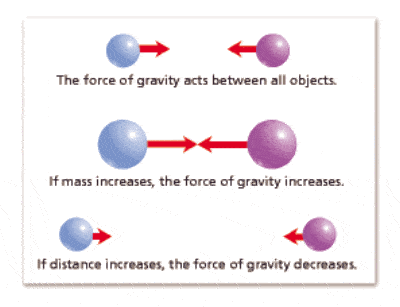
As mass increases, what happens to gravitational force?
a)
increases
b)
decreases
c)
stays the same
d)
i don't know
33.
The amount of matter in an object is 
a)
pressure
b)
weight
c)
mass
d)
force
34.
Without gravity we would________. 
a)
Float away
b)
Stay in the ground
c)
Nothing would happen.
d)
I don't know
35.
Pangaea was an ancient supercontinent made up of...
a)
America, Greenland, and Europe.
b)
Antarctica, India, and America.
c)
all of Earth’s continents.
d)
South Africa, India, Australia, and South America.
36.

Most geologists think that the movement of Earth’s plates is caused by _______

a)

convection.

b)

continental drift.

c)

subduction.

d)

conduction.

37.

The geological theory of _______ states that pieces of Earth’s lithosphere are in constant, slow motion.

a)

subduction

b)

plate tectonics

c)

deep-ocean trenches

d)

sea-floor spreading

38.

Below is a picture of sea-floor spreading. How are the ocean crusts moving?

a)

Converging

b)

Diverging

c)

Sliding

d)

No movement

39.
What are the two types of crust
a)
continental and oceanic
b)
ocean and upper
c)
lower and upper
d)
pizza and subway
40.
What are Tectonic Plates?
a)
A continent 
b)
The Trees in Vietnam 
c)
ThE PlaTES That MoVE uNdERGRound :)
d)
The Plates that move the Continents
41.
Mountains form from ...
a)
plates sliding past one another
b)
collision of plates
c)
plates moving away from each other
42.

What is the name of plate 1

a)

African plate

b)

North American plate

c)

Pacific plate

d)

Pacific plate

43.

What is the name of plate 1

a)

African plate

b)

North American plate

c)

Pacific plate

d)

Pacific plate

44.

What is the correct order (starting from the surface) of Earth’s layers?

a)

crust, outer core, inner core, mantle

b)

mantle, outer core, inner core, crust

c)

crust, mantle, outer core, inner core

d)

outer core, inner core, crust, mantle

45.
Who suggested the Continental Drift theory?
a)
Aldrin Weiner
b)
Alfred Wegener
c)
George Williams
d)
Dr Drift
46.
Earth's crust is broken up into several large rocky pieces called ...
a)
plates
b)
faults
c)
fossils
d)
puzzle pieces
47.
All of the following are units of speed except:
a)
Seconds
b)
m/s
c)
Km/s
d)
m/min
48.
What is the mean of these numbers?
4,5,5,2,3,3,2,8
a)
40
b)
24
c)
4
d)
256
49.
Find the mean:
28, 18, 19, 18, 17
a)
20
b)
18
c)
11
d)
19
50.

Calculate the mean.

10, 4, 5, 9

a)

7

b)

5

c)

8

d)

4

51.

Calculate the mean.

2, 9, 10, 6, 8

a)

8

b)

4

c)

7

d)

22

52.

Calculate the mean.

23, 18, 9, 10, 5

a)

55

b)

13

c)

14

d)

17

53.

Calculate the mean.

6, 9, 12, 5

a)

8

b)

13

c)

7

d)

3

54.

What is another word for AVERAGE?

a)

Mode

b)

Median

c)

Mean

d)

Not nice

55.

The basic support systems needed to keep an economy going, including power, communications, transportation, sanitation, and education form a country’s

a)

urbanization.

b)

infrastructure.

c)

industrialization.

d)

urban geography.

56.

Urban areas function as centers of

a)

employment

b)

education

c)

healthcare

d)

all of these

57.

Industrialization began where there was

a)

a sufficient supply of food.

b)

water for public use.

c)

raw materials for industry.

d)

all of these

58.
Which of these is not a reason why infrastructure is important?
a)
It makes a society more religious 
b)
It encourages economic activity 
c)
It makes transportation easier 
d)
It improves the health of society
59.
Which of these is an example of transportation infrastructure?
a)
Water Treatment Plants
b)
Solar Panels
c)
Airports
d)
Radio Antenna 
60.
Which of these is an example of transportation infrastructure?
a)
Water Treatment Plants
b)
Solar Panels
c)
Airports
d)
Radio Antenna 
61.
Which of these is an example of utility infrastructure?
a)
Roads
b)
Phone Lines
c)
Bridges 
d)
Fiber Optic Lines
62.
Which of these is an example of communication infrastructure?
a)
Roads
b)
Cell Phone Towers
c)
Sewage Systems
d)
Bridges
63.
A large wall built to stop water moving in a certain direction
a)
safeguard
b)
dam
c)
ecosystem
d)
criticism
64.
A magnet will pick up a nail, but not a penny because the nail
a)
has rust on it.
b)
is lighter than the penny.
c)
has a sharp point.
d)
contains iron.
65.
Which of these is attracted to a magnet?
a)
iron nail
b)
copper penny
c)
piece of paper
d)
notebook
66.
Magnets will stick to refrigerator doors because the doors are 
a)
Painted with plastic.
b)
Made of metal.
c)
Easy to open. 
d)
Heavy.
67.
The magnet's shown will
a)
not move
b)
attract
c)
repel
d)
all of the above
68.
The magnet's shown will
a)
not move
b)
attract
c)
repel
d)
all of the above
69.
The two poles on a magnet are
a)
north and east
b)
north and west
c)
south and north
d)
south and west
70.
The space around a magnet where the force of a magnet can attract best is called__________
a)
magnetism
b)
bar magnet
c)
horseshoe magnet
d)
magnetic field
71.

An area that deflects and traps harmful particles, and results from the interaction between Earth's magnetic field and solar winds is called...

a)

atmosphere

b)

ozone layer

c)

magnetic fields

d)

magnetosphere

72.

Which of these is a portion of the electromagnetic spectrum emitted by the Sun that can cause sun burns.

a)

Ultraviolet Radiation

b)

Ozone Layer

c)

Solar Winds

73.

A continuous stream of charged particles from the Sun, some variations cause aurorae displays and geomagnetic storms- these are called...

a)

ultraviolet radiation

b)

solar winds

c)

magnetospheres

d)

ozone layers

74.

Magnetic lines of force from Earth's polar north and south; they act like a giant magnet- known as...

a)

the magnetosphere

b)

Earth's Magnetic Field

c)

the Magna Doodle

d)

the magnetic poles

75.

charged particles from the sun collide with other elements in the atmosphere causing lights in the sky near the poles (Northern Lights)

a)

compass

b)

repulsion

c)

aurora

76.

Most scientists believe the Big Bang Theory explains which of the following questions?

a)

How our planets and moons formed

b)

How our universe began

c)

How the sun turns hydrogen into helium

d)

How fast light travels through space

77.

Cosmic Microwave Background Radiation is a form of _________.

a)

Matter

b)

Energy

c)

Visible Light

d)

Water

78.
The universe is expanding.  This means that:
a)
Galaxies are getting bigger.
b)
Atoms are getting bigger.
c)
The universe is creating more matter.
d)
The amount of space between galaxies is increasing.
79.
What shape do scientists think the universe is?
a)
Sphere
b)
Triangular
c)
Saddle Shaped
d)
Flat
80.
Which particles make up the nucleus of an atom?
a)
protons and neutrons
b)
electrons and protons
c)
electrons, protons, and neutrons
d)
electrons and neutrons
81.
_______________ is the process by which unstable atoms emit radiation until they become stable.
a)
Radiation
b)
Chemical Reaction
c)
Radioactive Decay
d)
Isotopes
82.
Negatively charged particles emitted from a nucleus at a high speed are ____ .
a)
protons
b)
neutrons
c)
electrons
d)
protons and neutrons
83.
Name the instrument used to detect radioactivity.
a)
voltmeter
b)
ohmeter
c)
seismograph
d)
geiger counter
84.
Where does radioactivity have application in our lives?
a)
Medicine
b)
Energy (electricity)
c)
Agriculture
d)
All of the above
85.
The rate at which a radioactive element decays is its ____.
a)
quarter life
b)
whole life
c)
wonderful life 
d)
half life
86.
If the half life of a radioactive element is 100yrs, how long would it take for the radioactivity to reduce by one half?
a)
200yrs
b)
100yrs
c)
50yrs
d)
300yrs
87.
Marie Curie was the first woman to win a...
a)
Golden Globe
b)
Nobel Prize
c)
Oscar
d)
 Emmy Award
88.

When nuclei decay, massive amounts of __________ is released.

a)

energy

b)

electrons

c)

protons

d)

neutrons

89.
What is Half-life?
a)
The amount of time it takes for some of the nuclei in a sample of the isotope to decay
b)
The amount of time it takes for half the electrons in a sample of the isotope to decay
c)
The amount of time it takes for half the nuclei in a sample of the isotope to decay
d)
the amount of time it takes to double the nuclei in a sample of the isotope to decay
90.
What do we use uranium for?
a)
DUCKS!
b)
Buildings
c)
Nuclear weapons
d)
Tools
91.
Cell Phones
a)
Ionizing Radiation
b)
Non Ionizing Raditation
92.
Microwaves
a)
Ionizing Radiation
b)
Non Ionizing Raditation
93.
CT Scans
a)
Ionizing Radiation
b)
Non Ionizing Raditation
94.
Nuclear Waste
a)
Ionizing Radiation
b)
Non Ionizing Raditation
95.
X RAYS
a)
Ionizing Radiation
b)
Non Ionizing Raditation
96.

Group of people with highest risk of developing lung cancer

a)

Nonsmokers

b)

Teenagers

c)

Smokers

d)

Adults from 20-40 years old

97.

Which of the following is the SI unit of the quantity of radiation received by radiation workers?

a)

Rad

b)

Gray

c)

Sievert

d)

Roentgen

98.

Marie Curie is mostly remembered as a famous

a)

baker

b)

student

c)

scientist

d)

reader

99.

What new theory did Marie invent when she was studying uranium?

a)

Science

b)

Uranium

c)

Radioactivity