wayground logo

Free Printable Worksheets

Font size

S
M
L
XL
Worksheets

Earth History Test Review

Total questions: 100

Worksheet time: 1hrs 27mins

Name
Class
Date
1.

Absolute Dating

a)

Method of measuring the age of an event or object using radioactive elements. Gives an exact date.

b)

Method to determine if an event or object is older or younger by comparing the rock layers.

c)

Principle that States that are above the rocks if the younger layers of oldest rocks have not been disturbed

2.

Relative Dating

a)

Method to determine if an event or object is older or younger by comparing the rock layers.

b)

Method of measuring the age of an event or object using radioactive elements. Gives an exact date.

c)

Principle that States that are above the rocks if the younger layers of oldest rocks have not been disturbed

3.

Law of Superposition

a)

Principle that States that are above the rocks if the younger layers of oldest rocks have not been disturbed

b)

Method to determine if an event or object is older or younger by comparing the rock layers.

c)

Method of measuring the age of an event or object using radioactive elements. Gives an exact date.

4.

Half Life

a)

The time required for half of a sample of a radioactive substance to undergo radioactive decay

b)

Principle that States that are above the rocks if the younger layers of oldest rocks have not been disturbed

c)

Method to determine if an event or object is older or younger by comparing the rock layers.

5.

Fossil

a)

The remains or evidence of a physical body preserved by geological processes.

b)

A fossil who only lived short time but was widely distributed. Ex. Trilobites

c)

The time required for half of a sample of a radioactive substance to undergo radioactive decay

d)

Method to determine if an event or object is older or younger by comparing the rock layers.

6.

Index Fossil

a)

A fossil who only lived short time but was widely distributed. Ex. Trilobites

b)

The remains or evidence of a physical body preserved by geological processes.

c)

middle life (245-144 million years ago); rise of mammals and dinosaurs; the rise of birds; extinction of dinosaurs, rise of flowering plants

7.

In what type of rock would a geologist MOST likely find evidence of ancient life?

a)

sedimentary

b)

igneous

c)

metamorphic

8.

Which method would be BEST for scientists to use to determine the absolute age of a Precambrian igneous rock?

a)

index fossils

b)

law of superposition

c)

radiometric dating

d)

relative dating

9.

Which method can BEST be used by the students to determine the relative age of rock layers?

a)

radiometric dating

b)

rock type evaluation

c)

the law of superposition

d)

principle of uniformitarianism

10.

Why do scientists use relative dating although it doesn't give you an exact age?

a)

radiometric and absolute dating only work on organic (things that have lived)

b)

law of superposition does give you an exact number

c)

radiometric dating is only done on intrusions (magma) because magma is very radioactive (dangerous)

11.

Which is a process that allows scientists to compare rock layers with others in a sequence to determine their age?

a)

radiometric dating

b)

absolute dating

c)

relative dating

12.

What can be used to find the exact age of a rock specimen?

a)

ice cores

b)

index fossils

c)

radioactive dating

13.

What role do faults play in the Law of Superposition?

a)

Faults create new types of rock.

b)

Faults are younger than the layers they cut through.

c)

Faults are the same age as the layers they cut through.

14.

Which is the best example of an index fossil?

a)

corals found in rock layers worldwide

b)

dinosaur bones found only in Australia

c)

footprints of different types of dinosaurs

d)

casts of bird feathers found in all layers of rock in an area

15.
The index fossil of a type of trilobite is discovered in layer A of a set of rock layers found at three different sites of a field investigation. Which conclusion can be made about the rocks in layer A at all three sites?
a)
The rocks are all different ages
b)
The rocks are all about the same age
c)
The rocks were formed from melting magma
d)
The rocks were formed during a catastrophic event
16.

What is the geologic time scale?

a)

a method to determine how old or young a fossil is

b)

a time frame of earth's history

c)

tells scientists the order of rock layers

17.

What is an intrusion?

a)

molten magma that goes through rock layers, is older than what it cuts through

b)

molten magma that goes through rock layers, is younger than what it cuts through

c)

lava that sits on the surface of the earth and has cooled down

18.

What is another term for the word "fault"

a)

intrustion

b)

earthquake

c)

magma

d)

fossil

19.

Which best represents the purpose of ice core drilling?

a)

to study changes in gravity

b)

to study changes in climate
c)

to determine the relative age of fossils

20.

What role do faults play in the Law of Superposition?

a)

Faults create new types of rock.

b)

Faults are younger than the layers they cut through.

c)

Faults are the same age as the layers they cut through.

21.

How are sedimentary rocks formed?

a)

by hardening and cementing of layers of sediment

b)

by fossils getting buried in various layers of sediment

c)

by cooling and hardening of hot molten rock from inside the Earth

22.

Where is evidence most often found to represent a record of Earth’s history?

a)

air, lava, and fossils

b)

water, air, and rocks

c)

lava, water, and ice cores

d)

rocks, fossils, and ice cores

23.

Which is used to find the relative age of a rock?

a)

composition of rock layers

b)

position of rock layers

c)

carbon-14 dating

d)

uranium dating

24.

Which provides the best evidence of Earth’s changing climate?

a)

ice cores

b)

volcanic ash

c)

metamorphic rocks

d)

sediment in river beds

25.

An irregularly shaped rock formation is found within a group of parallel rock layers. What most likely created this formation?

a)

thrust fault

b)

lava intrusion

c)

metamorphic rock

d)

sediment deposition

26.

Which is used in radioactive dating?

a)

carbon-14

b)

index fossils

c)

hydrochloric acid

d)

law of superposition

27.

Where would evidence of earthquakes most often be found throughout Earth’s history?

a)

in dry riverbeds

b)

along fault lines

c)

along the ocean shore line

d)

in desert sand dune formations

28.

Which type of rock forms from the cooling of lava?

a)

igneous

b)

limestone

c)

sandstone

d)

metamorphic

29.

Which best describes a fossil that helps determine the relative age of a rock layer?

a)

trace fossil

b)

index fossil

c)

radioactive fossil

d)

unconformity fossil

30.

Which is the most likely reason scientists would want to analyze the air trapped in an ice core?

a)

to study how much oxygen was in the ice

b)

to learn how the atmosphere changed over time

c)

to determine how many gas bubbles were present in the air

d)

to study how many animals lived on Earth when the ice was formed

31.

Scientists studying rock layers classify the top layer as the most recent, followed by older layers that are uncovered as they dig deeper. Which law explains this method of relative dating?

a)

law of geologic continuity

b)

law of universal position

c)

law of lateral continuity

d)

law of superposition

32.

formed through the cooling and solidification of magma or lava.

a)

igneous rock

b)

metamorphic rock

c)

The Rock

d)

minerals

33.

type of rock which has been changed by extreme heat and pressure

a)

metamorphic rock

b)

mold fossil

c)

volcano

d)

igneous rock

34.

the action or process of forcing a body of igneous rock between or through existing formations, without reaching the surface

a)

intrusion

b)

obstruction

c)

relative age

d)

rock layer

35.

states that younger rock is found above older rock when comparing undisturbed sedimentary rock layers

a)

law of superposition

b)

trace fossil

c)

matter can't be created or destroyed

d)

atoms

36.

Ice core

a)

A long cylinder of ice obtained from drilling through ice caps used to study past climates and atmospheres

b)

broken ice chips that are best used to cool grape soda

c)

atoms that don't move and remain electrons when exposed to nuclear physical changes

d)

a lot of reading. Did you read this one too? Good, cause the answer is all about climates and atmosphere

37.

Which is a process that allows scientists to compare different rock layers in a sequence to determine their age?

a)

radiometric dating

b)

absolute dating

c)

relative dating

d)

speed dating

38.

Scientists found two ammonite fossils in rock layers far across the ocean floor from each other. Ammonite fossils are a type of index fossil. Knowing this, which of the following could scientists infer about the rock layers containing the fossils?

a)

The rock layers are about the same relative age.

b)

Both rock layers formed because of volcanic activity.

c)

The rock layers experienced the same kinds of erosion.

d)

The same climate existed where both rock layers formed.

39.

Why are index fossils used as guides to determine the age of rocks?

a)

Each index fossil lived during a specific geologic time period.

b)

Index fossils are found in igneous rocks.

c)

Index fossils are very rare and are not commonly found in rocks.

d)

All index fossils lived during all the periods of geologic time.

40.

What is the primary reason a scientist would study an ice core sample?

a)

to study changes in gravity

b)

to study sedimentary rocks

c)

to determine the relative age of fossils

d)

to study changes in climate
41.
A rock formed from fragments of other rocks is a(n)
a)
Metamorphic Rock
b)
Sedimentary Rock
c)
Extrusive Rock
d)
Igneous Rock
42.
An igneous rock containing large crystals is most likely a(n)
a)
Chemical Rock
b)
Foliated Rock
c)
Extrusive Rock
d)
Intrusive Rock
43.
If heat and pressure inside the Earth cause a rock to melt, the material that formed would be
a)
Metamorphic
b)
Magma
c)
Sedimentary
d)
Igneous
44.
You find a rock in which the grains are arranged in parallel bands of white and black crystals.  The rock is probably a(n)
a)
Igneous rock
b)
Sedimentary rock
c)
Metamorphic rock
d)
Extrusive rock
45.
This rock was formed when molten rock cooled into a solid. What type of rock is it?
a)
Igneous Rock
b)
Metamorphic Rock
c)
Sedimentary Rock
46.
This rock formed when bits of other rocks became pressed into a solid. What type of rock is it?
a)
Sedimentary Rock
b)
Metamorphic Rock
c)
Igneous Rock
47.
What are the 3 major types of rocks?
a)
Igneous, Metamorphic, Sedimentary
b)
Metamorphic, Igneous, Cementation
c)
Brown, Red, Gray
d)
Streak, Hardness, Breakage
48.
When sediments are pressed together tightly, this is called ____________.
a)
Compaction
b)
Cementation
c)
Weathering
d)
Erosion
49.
The process when rocks break into smaller pieces due to exposure to natural elements is called
a)
erosion
b)
weathering
c)
sediments
50.
The movement of weathered material (sediment) is called?
a)
weathering
b)
erosion
c)
deposition
51.
Extreme Heat and Pressure creates a _________ rock.
a)
Igneous
b)
Metamorphic
c)
Sedimentary
d)
Mineral
52.
Each rock type can follow only one pathway of the rock cycle.
a)
True
b)
False
53.
Where the better adapted organisms survive to pass traits along to offspring.
a)
Evolution
b)
Natural Selection
c)
Extinction
d)
Artifical Selection
54.
Why are advantageous traits more likely to be passed onto offspring?
a)
Because they are more likely to survive and reproduce.
b)
Because they come from dominant alleles.
c)
Because they come from recessive alleles.
d)
Because the trait is an acquired phenotype.
55.
The geologic time scale is a record of___
a)
the thickness of sedimentary rock layers
b)
the rate of fossil formation
c)
the life forms and geologic evnts in Earth's history
d)
the time since the evolution of dinosaurs
56.
The fossil record shows that life on Earth has changed over time.  For example, paleontologists have found that older rocks contain fossils of
a)
organisms that are more complex than those alive today
b)
both simple and complex organisms
c)
only organisms that are alive today
d)
organisms that are simpler than those alive today
57.
How do most fossils form?
a)
Living things die and their remains are covered by sediment
b)
The hard parts of an organism dry out in the air
c)
The soft parts of an organism change to stone
d)
Freezing preserves the remains of an organism
58.
The Paleozoic, Mesozoic, and Cenozoic are divisions in the geologic time scale called ____
a)
centuries
b)
layers
c)
periods
d)
eras
59.
The presence of the same ________ on several continents supports the idea of continental drift.
a)
rocks
b)
fossils
c)
both fossils and rocks
d)
neither fossils nor rocks
60.
A lack of evidence for continental drift prevented many scientists from believing a single supercontinent called _________ existed.
a)
Glossopteris
b)
Pangaea
c)
Gondwanaland
d)
Mesosaurus
61.
Fossils are usually found in 
a)
igneous rock
b)
extrusions
c)
intrusions
d)
sedimentary rock
62.
Which layer is oldest?
a)
A
b)
W
c)
G
d)
Z
63.
Why don't all living things become fossils?
a)
because some living things are too small
b)
because some living things are too big
c)
because some are subject to catastrophism and others are not
d)
because environmental conditions have to be just right to prevent decay
64.
How do fossils form?
a)
Living things die and their remains are covered by sediment
b)
insects are covered in tree sap
c)
all of these are correct
d)
Freezing preserves the remains of an organism
65.
Which feature helps an animal hide from other animals?
a)
looking like a dangerous animal
b)
being the same color as the place it lives (camoflauge)
c)
having sharp claws or a strong shel
d)
having only a few young and caring for them
66.
Giraffes have long necks. This allows them to eat from the tops of trees where other animals cannot reach. This is a result of...
a)
Natural Selection 
b)
Adaptation 
c)
Variation
67.
Which statement is NOT a reason why trilobites are good index fossils?
a)
They are found in many different locations 
b)
They are found in many rock layers
c)
They lived for only a short period of time
d)
They are unique 
68.
Sedimentary rocks found high in the Himalayan Mountains have been found with fossils of clams and other marine life. What does this indicate about the origin of the Himalayan Mountains? 
a)
There was once a large ocean at top of the mountains.
b)
The Earth's crust that formed these mountains was once covered with an ocean.
c)
Animals that now live on the mountains once lived under water.
d)
Continental drift resulted two tectonic moving closer to each other over time.
69.
Fossils found in layers of sediment give us clues to Earth's past. Based on the fossil record of this area, we can assume that this area was
a)
once a desert.
b)
once underwater.
c)
the site of volcanic activity
d)
located in a different place on Earth.
70.
Several factors affect an organisms ability to fossilize. A sedimentary depositional environment allows organisms to be buried by sediment before ____________.
a)
decay, weathering, or scavengers destroy the remains.
b)
scavengers destroy the remains.
c)
before decay weathering the remains.
d)
decay or weathering destroy the remains.
71.
Fossil A is found in a layer of rock that is lower than the layer that Fossil B is found in. Based on this information, which statement is correct?
a)
Fossil A is older than Fossil B.
b)
Fossil B is older than Fossil A.
c)
Fossil A is younger than Fossil B.
d)
Fossil A is the same age as Fossil B.
72.
What is it called when better adapted organisms survive to pass traits along to their offspring.
a)
Evolution
b)
Natural Selection
c)
Extinction
d)
Artifical Selection
73.
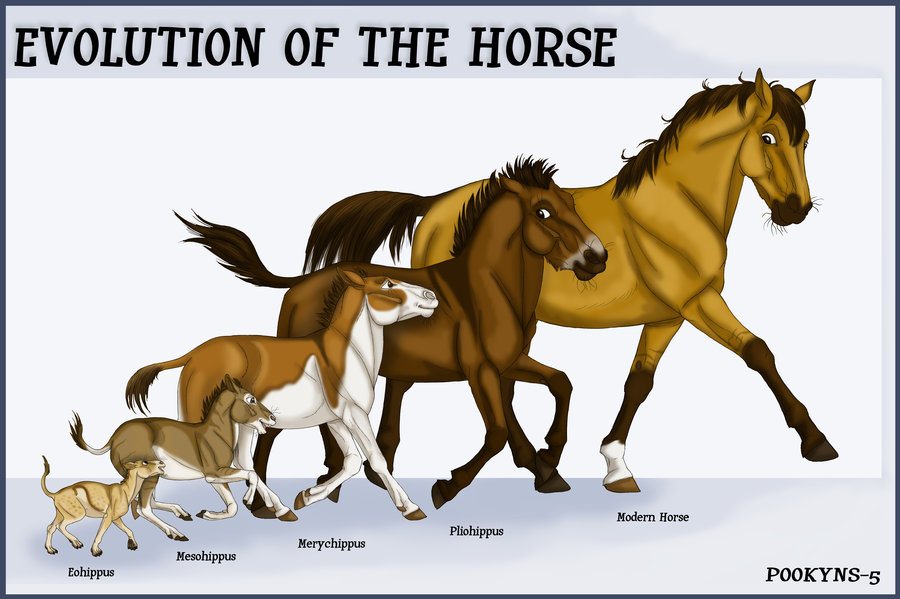
What is this an example of?
a)
diversity of species
b)
variation
c)
vestigial structures
d)
DNA studies
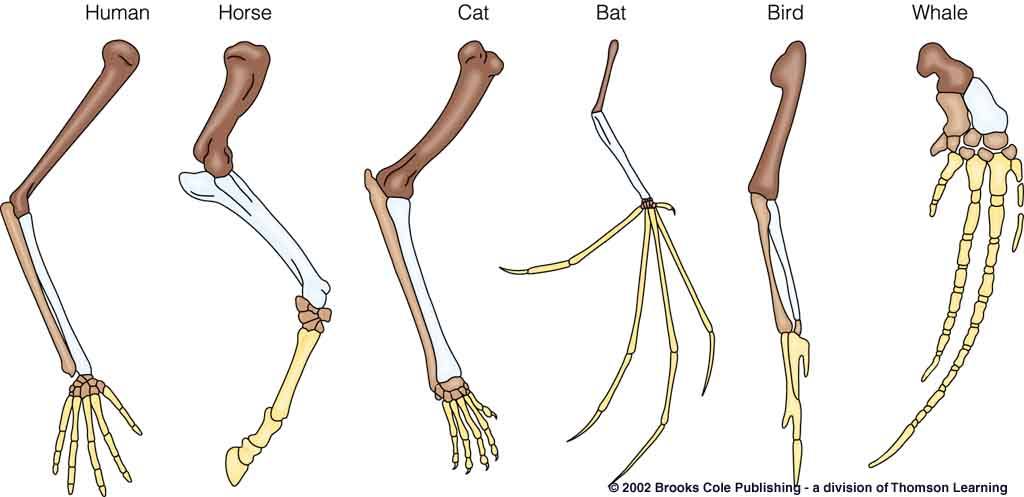
74.
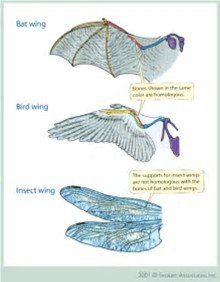
Structures with the same parts have different functions. This suggests that organisms 
a)
are the same species 
b)
share a common ancestry
c)
are the same organisms
d)
are have varations across species
75.
a)
Homologous
b)
Vesitigial
c)
Analogous
76.
a)
Homologous
b)
Vestigial
c)
Analogous
77.
a)
Homologous
b)
Vestigial
c)
Analogous
78.
a)
Homologous
b)
Vestigial
c)
Analogous
79.
Humans, birds, whales, and lizards all have similar arm bones. What is the reason for this?
a)
The function of these bones is the same in all animals
b)
They live in similar environments
c)
They have a common ancestor
d)
All organisms resemble humans
80.
Bird wings and butterfly wings are an example of
a)
Homologous structure
b)
Analogous structure
c)
Mimicry
d)
Camoflague
81.
Some organisms that share a common ancestor have features that have different functions, but similar structures.  These are known as
a)
vestigial structures
b)
analogous structures
c)
homologous structures
d)
fossil structures
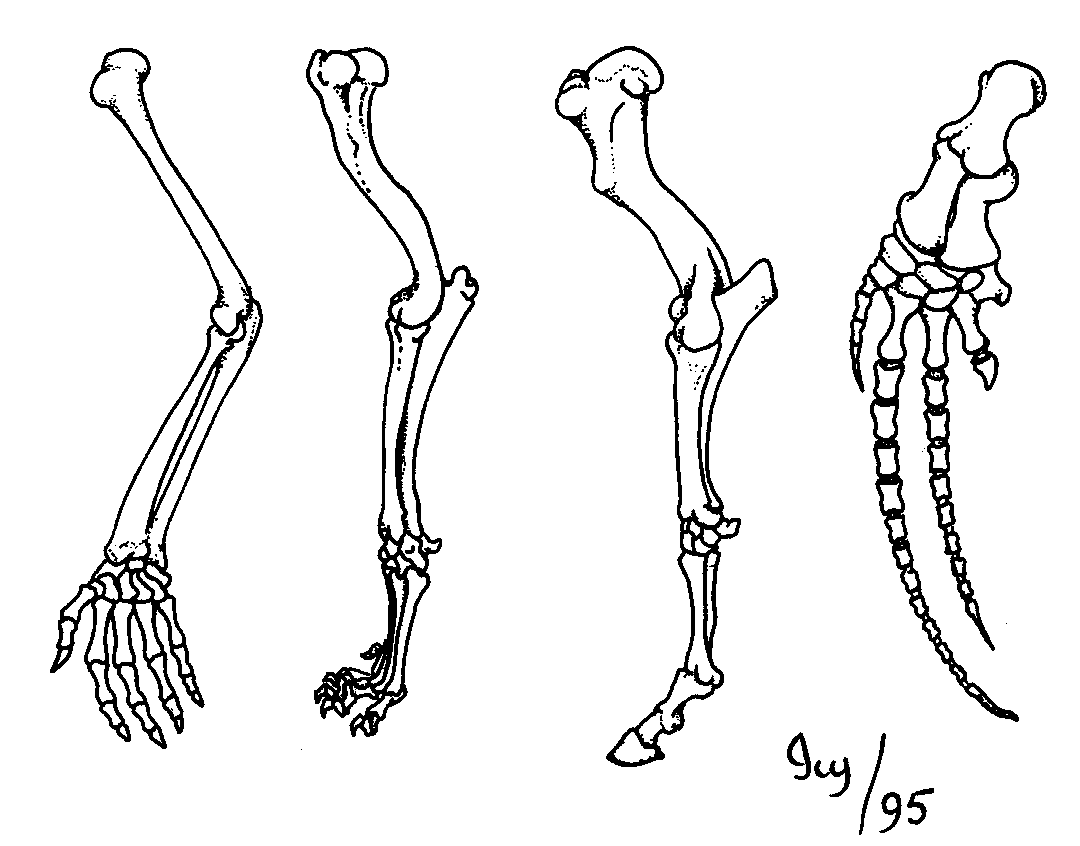
82.
The structures shown are_________
a)
homologous
b)
heterologous
c)
analogous
d)
vestigial
83.
The survival of the fittest 
a)
Natural selction
b)
Evolution 
c)
Mimic 
d)
Camouflage 
84.
The changes of species over time
a)
Embryonic 
b)
Natural selection 
c)
Mimicry 
d)
Evolution 
85.
Which layer is the youngest
a)
1
b)
2
c)
3
d)
4
86.
Which layer is the oldest
a)
B
b)
A
c)
E
d)
C
87.
  Notice the similarities of a shark and dolphin.  If these similarities developed by  common life experiences and not by common ancestry, which of the following vocabulary words would best describe them?
a)
a.  Vestigial Organ
b)
  b.  Embryological Similarities
c)
c.  Homologous Structures
d)
d.  Analogous Structures
88.
 The best definition for biological evolution is?
a)
A.  When Earth’s processes cause change overtime.
b)
B.  When rock’s change over time.
c)
C.  When a species changes      overtime.
89.

A Variation that makes an organism more suited to its surroundings

a)

adaptation

b)

variation

c)

evolution

d)

embryology

90.
2. A species is.....
a)
A type of DNA.
b)
A group of different colored frogs
c)
A group of organisms that can mate with each other.
91.
Which statement best describes the process of evolution?
a)
Populations can survive in different locations on earth
b)
Environmental conditions limit the number of species on Earth
c)
Populations grow when resources are abundant
d)
The traits of a species can change over time
92.
The white feathers of a snowy owl allow it to blend in with its environment during the winter months (snow). This is an example of ________________
a)
Species
b)
Environmental Change
c)
Adaptation
d)
Variation
93.
A fossil of an extinct dinosaur is found and the anatomy of the fossil shows similarities to that of a bird. What could this mean?
a)
This is purely by chance and isn't significant
b)
The extinct dinosaur and modern bird share a common ancestor
c)
All dinosaurs evolved into birds and that's why there aren't any dinosaurs alive today
d)
Dinosaurs choose to fly, and evolved into birds to escape predation and capture food
94.
What is the advantage of having different shaped beaks?
a)
To look different from other species.
b)
To be able to eat the food readily available in the environment.
c)
To protect itself against predators.
d)
To protect itself against prey.
95.
An example of a vestigial structure:
a)
bird wing and human arm
b)
bird wing and butterfly wing
c)
rat appendix and human appendix
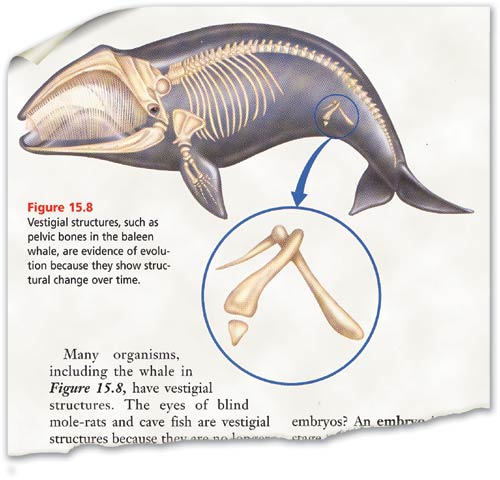
96.
The hind leg bones in a whale are examples of
a)
homologous structures
b)
analogous structures
c)
fossils
d)
vestigal structures
97.
What does the theory of continental drift state?
a)
The continents were once joined in a super-continent and have moved over time
b)
Continents are stationary and do not move
c)
The Earth is broken into lithospheric plates that move due to convection currents
d)
none of the above
98.

According to the continental drift hypothesis, the presence of similar fossils in South America and Africa supports which scientific idea?

a)

Animals easily and frequently travel from Africa to South America.

b)

Species of animals probably traveled between continents on natural rafts (such as trees destroyed in tsunamis).

c)

Land bridges once existed that connected the continents.

d)

South America and Africa were once connected together.

99.

What was the name of the supercontinent?

a)

Panorama

b)

Pangea

c)

Panamerican

d)

Wegener

100.

What is the theory that continents were all once together and have drifted apart?

a)

american movement

b)

continental plates

c)

continental drift

d)

memorial drift