wayground logo

Free Printable Worksheets

Font size

S
M
L
XL
Worksheets

8th Grade Science Review Game

Total questions: 105

Worksheet time: 1hrs 6mins

Name
Class
Date
1.

What causes spring tides?

a)

The Moon's and Sun's gravity

b)

Mar's and the Sun's gravity

c)

The Moon's and Mar's gravity

d)

The Sun's gravity

2.
Why does the Earth orbit the Sun and not a planet in the solar system?
a)
The Sun is more massive than the planets so it's mass causes the gravitational pull.
b)
It just happened that way.
c)
The Earth pulls the Sun toward it  because it is so massive.
d)
The Earth is closer than the other planets so the distance causes the gravitational pull.
3.
Which technology would be useful for studying moon phases
a)
Spectroscope
b)
Space Probe
c)
Telescope
d)
The international Space Station
4.

You are testing to see if music helps plants grow better. You divide the plants into four groups.

Plant Groups & Group Music Type:

Group A: jazz

Group B: classical

Group C: rock

Group D: none

What is group D called?

a)

the model group

b)

the control group

c)

the population group

d)

the experimental group

5.
Which states of matter have volume?
a)
solid and liquid
b)
solid, liquid, and gas
c)
liquid and gas
d)
solid and gas
6.
Which energy source is described as having the greatest impact on Earth's living environments?
a)
moving air
b)
moving water
c)
geothermal
d)
the Sun
7.
____________ is anything that has mass and takes up space.
a)
matter
b)
compound
c)
particle
d)
subatomic
8.
All mater is composed of __________.
a)
compounds
b)
atoms
c)
water
d)
H2O
9.
_____________ are the smallest unit of matter that retains the identity of the substance.
a)
compounds
b)
atoms
c)
water
d)
H2O
10.
All atoms have a ___________ in the center.
a)
electron
b)
cloud
c)
nucleus
d)
particle
11.
The nucleus of the atom has  the 
___________ and ___________ in it.
a)
protons and neutrons
b)
electrons and neutrons
c)
protons and electrons
12.
A proton has a ___________ charge.
a)
positive
b)
negative
c)
neutral
13.
The electrons are in the electron _________.
a)
region
b)
area
c)
cloud
14.
An electron has a ___________ charge.
a)
positive
b)
negative
c)
neutral
15.
Protons, neutrons, and electrons are called ____________ particles.
a)
atomic
b)
subatomic
c)
nucleus
16.

Plants use the sunlight to make their own food. Therefore, plants are

a)

Producers, which produce energy for the rest of the ecosystem

b)

Consumers, consuming other living things in an ecosystem

c)

predators, top of the food chain

17.

Which organisms make energy available to all other organisms in a food chain?

a)

consumers

b)

decomposers

c)

producers

18.
Measured by appearance, color, shape, or anything OTHER than numbers.
a)
Qualitative
b)
Quantitative
c)
Data
d)
Facts
19.
Measured by numbers.
a)
Control
b)
Theory
c)
Quantitative
d)
Chemistry
20.
Educated guess based upon evidence and used as a starting point for investigation.
a)
Guess
b)
Hypothesis
c)
Independent variable
d)
I don't know
21.
The variable that is changed by the scientist.
a)
Dependent Variable
b)
Independent variable
c)
Variable
d)
Law
22.
Variable being tested or measured.
a)
Independent variable
b)
Control
c)
Dependent Variable
d)
Physics
23.
Aspects of the experiment that remain unchanged in order to measure the dependent variable.
a)
Data
b)
Chemistry
c)
Physical Science
d)
Control
24.
Systematic observation, measurement, and experimentation to form, test, and modify a hypothesis.
a)
Scientific Method
b)
Law
c)
Chemistry
d)
Data
25.
Liquids take the shape of a container.
a)
False
b)
True
26.
Law of Conservation of Mass says that matter CAN be created and CAN be destroyed.
a)
True
b)
False
27.
Sugar Water is considered a ________________.
a)
solution
b)
heterogeneous mixture
c)
element
d)
compound
28.
Kinetic energy is energy in _____________. 
a)
Change
b)
Looks
c)
Motion
d)
Altitude
29.
Which is considered to be "Earth's Twin" because it is almost the same size?
a)
Uranus
b)
Mercury
c)
Mars
d)
Venus
30.
All of the inner planets--
a)
have rings
b)
are rocky
c)
have deep atmospheres
d)
are large
31.
What is the correct order of the planets from the sun? 
a)
Mercury, Venus, Earth, Mars, Jupiter, Saturn, Uranus, Neptune
b)
Mercury, Earth, Venus, Mars, Jupiter, Saturn, Uranus, Neptune
c)
Mercury, Venus, Earth, Mars, Saturn, Jupiter, Uranus, Neptune. 
d)
Mars, Venus, Earth, Mercury, Jupiter, Saturn, Uranus, Neptune. 
32.
The sun is a...
a)
planet
b)
star
c)
asteroid
d)
moon
33.
Which planet is the hottest?
a)
Mercury
b)
Venus
c)
Earth
d)
Neptune
34.
All of the outer planets--
a)
have many moons
b)
are small
c)
have a short orbit around the Sun
d)
are rocky
35.
What planet is the largest?
a)
Mercury
b)
Neptune
c)
Jupiter
d)
Uranus
36.
What is a STAR?
a)
A twinkle, like a diamond, in the night sky
b)
A ball of fire
c)
Glowing ball of hot gas that makes its own energy and light
d)
A large spherical object in space
37.
What is a PLANET?
a)
A large object in space that orbits a star, such as the sun.
b)
A small plan that is made ahead of time
c)
An object in space
d)
A natural satellite that orbits a planet
38.
What is the FASTEST moving planet?
a)
Earth
b)
Saturn
c)
Mercury
d)
Venus
39.
What is a SUNSPOT?
a)
A really bad sunburn
b)
A dark area on the sun's surface that gives off less energy than the rest of the sun
c)
The hottest part of the sun
d)
The shadow of another object on the sun's surface
40.
What is the HOTTEST planet?
a)
Earth
b)
Mercury
c)
Venus
d)
Mars
41.

Which statement best describes the motion of the object plotted in the graph?

a)

The object accelerated because the distance traveled increased at a steady rate.

b)

The object traveled at a constant speed because of forces acting on the object.

c)

The object accelerated because it traveled in the same direction throughout the investigation.

d)

The object slowed down as it traveled uphill because of the forces acting on the object.

42.

Which two pieces of data from the lab notebook show that matter is conserved in this investigation?

a)

Mass before is 471 g and mass after is 471 g

b)

Temperature before is 21.4 C and temperature after is 19.8 C

c)

Clear blue/light blue liquids before and blue liquid/dark blue solid precipitate after

43.

A model of Earth, the Moon, and Sun is shown.


Which movement of the model displays an event that takes about 28 days?

a)

Earth rotates once on its axis.

b)

The Moon revolves once around the Sun.

c)

The Sun rotates once on its axis.

d)

The Moon revolves once around Earth.

44.

Which of these is an example of a physical change?

a)

wood burned into ash

b)

baking soda mixed with vinegar

c)

rock salt broken into smaller pieces

d)

sugar in plants made by photosynthesis

45.

What is the biggest difference between the Geocentric Model and the Heliocentric Model?

a)

the shape of the planets' orbits

b)

the movement of the moon

c)

the center of the solar system

46.
  What does "geo-" mean?
a)
Earth
b)
sun
c)
Center
47.
This image shows the:
a)
Geocentric Solar System
b)
Heliocentric Solar System
48.
The earth centered view of the universe
a)
Galaxy
b)
Geocentric
c)
Astonomy
d)
Heliocentric
49.
The sun centered view of the universe
a)
Galaxy
b)
Geocentric
c)
Astonomy
d)
Heliocentric
50.

What is the name of this model?

a)

Heliocentric Model

b)

Geocentric Model

c)

Circle Model

d)

Aristotle Model

51.
A series of steps used by scientists to solve a problem or answer a question. 
a)
scientific method
b)
recipe
c)
data collection
d)
metric system
52.
Which is NOT a step in the scientific method?
a)
Make observation
b)
Form a theory
c)
Collect data
d)
Form a hypothesis
53.
Testing a hypothesis often involves a(n):
a)
answer
b)
experiment
c)
problem
d)
safety check
54.
What model does this represent?
a)
Geocentric 
b)
Heliocentric 
55.
I have two objects with the same volume but different masses.  Which object will be more dense?
a)
The object with less weight.
b)
The object with more weight.
c)
The object with more mass.
d)
The object with less mass.
56.
What is the formula for density?
a)
density = mass x volume
b)
density = mass / volume
c)
density = mass + volume
d)
density = mass - volume
57.
Why do ice cubes float in a  glass of water?
a)
the ice cubes are more dense than the water
b)
the water is more dense than the ice cubes
c)
the water is more dense than the glass
d)
the ice is more dense than the glass
58.
Why do some substances float on water?
a)
they are warmer than water
b)
they are cooler than water
c)
they are more dense than water
d)
they are less dense than water
59.
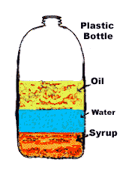
Which liquid is the least dense?
a)
oil
b)
water
c)
syrup 
d)
plastic bottle
60.
Volume is ...
a)
Mass/Volume
b)
The amount of matter in an object.
c)
The amount of space an object occupies.
d)
Anything that has mass and occupies space.
61.
Density is...
a)
the amount of mass in an object
b)
the amount of space an object takes up
c)
the amount of mass in a given space
d)
the weight of an object
62.
Which liquid is the most dense?  
a)
oil
b)
water
c)
syrup
d)
plastic bottle
63.
The middle of the Sun is called the
a)
Corona
b)
Photosphere
c)
Core
d)
Convection Zone
64.
Can we landed on the sun?
a)
Yes, If we use metal suits
b)
No, It doesn't have a solid surface
c)
Yes, but we can't stay very long
d)
No, Its against the law.
65.
Where does nuclear fusion occur?
a)
Space
b)
Radiation Zone
c)
Photosphere
d)
The Core
66.
What layer are you looking at when you take a picture of the sun?
a)
Core
b)
Photosphere
c)
Solar Wind
d)
Corona
67.
Why are sunspots darker than the surrounding areas?
a)
The hotter gas releases less light
b)
The Cooler gas releases less light
c)
They look that way because the light form the sun 
d)
They are created by shadows from the moon.
68.
Can only be seen during a solar eclipse; outer layer; looks like a white halo
a)
corona
b)
photosphere
c)
core
d)
fusion
69.
These can disrupt electronics on Earth.
a)
Sunspots
b)
Solar flares
c)
Comets
d)
Mars
70.
What is the name for this giant loop of energy leaping from the solar surface? 
a)
aurora
b)
prominence
c)
solar flare
d)
sunspot
71.
What is an explosion on the sun that gives out huge amounts of energy?
a)
Sun Spot
b)
Solar Flare
c)
Sun Ray
d)
Sun Gases
72.
Which statement is true about the sun?
a)
It is a star.    
b)
It is the largest star in our galaxy. 
c)
It is a planet close to Earth.
d)
It is a moon. 
73.
Which layer of the sun is the hottest?
a)
Photosphere
b)
Chromosphere
c)
Corona
d)
Core
74.
What is the sun made out of?
a)
fire and lava
b)
gases
c)
magma
d)
flames
75.
How does the sun keep all of the planets in orbit?
a)
The pull of its gravity
b)
the flames give it power
c)
the sun spots
d)
The solar flares guide them
76.
The Sun spins on its axis
a)
TRUE
b)
FALSE
77.
It takes the equator of the sun ___________ days to spin and near the poles it takes ____________ days to spin. 
a)
25, 35
b)
16, 18
c)
24, 36
d)
100, 200
78.
What is the correct order of the first five phases of the moon?
a)
full, crescent, quarter, gibbous, new
b)
new, crescent, gibbous, quarter, full
c)
new, crescent, quarter, gibbous, full
d)
full, quarter, gibbous, crescent, new
79.
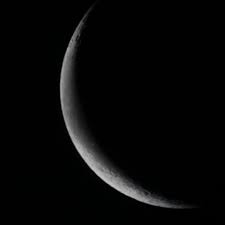
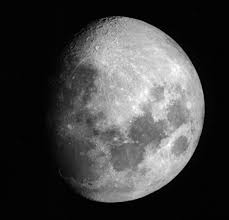
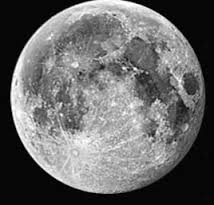
Name the moon phase
a)
waning crescent
b)
waxing crescent
c)
waning gibbous
d)
waxing gibbous
80.
Name the moon phase
a)
waning crescent
b)
waxing crescent
c)
waning gibbous
d)
waxing gibbous
81.
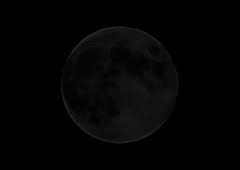
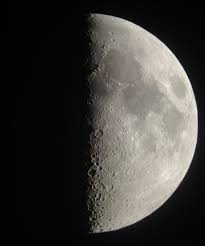
Name the moon phase
a)
First Quarter
b)
Last Quarter
c)
New Moon
d)
Full Moon
82.
Name the moon phase
a)
First Quarter
b)
Last Quarter
c)
New Moon
d)
Full Moon
83.
Name the moon phase
a)
First Quarter
b)
Last Quarter
c)
New Moon
d)
Full Moon
84.
Name the phase of the moon for letter f
a)
Waning Gibbous
b)
Waxing Gibbous
c)
Waning Crescent
d)
Waxing Crescent
85.
Name the moon phase
a)
waning crescent
b)
waxing crescent
c)
waning gibbous
d)
waxing gibbous
86.
What is illuminating the Moon?
a)
Nuclear Fusion
b)
Sunlight
c)
Mirrors
d)
Flood Lights
87.
The cycle of the moon lasts about a _.
a)
day
b)
year
c)
week
d)
month
88.
What are the three states of matter?
a)
solid, volume, mass
b)
density, volume, mass
c)
solid, liquid, gas
d)
density, gas, volume
89.
A state of matter that has a definite volume and shape.
a)
solid
b)
liquid
c)
gas
d)
matter
90.
A watermelon has more matter than a grape, so it has more
a)
mass
b)
eat
c)
solid
d)
greater
91.

Which example is a compound?

a)

N2

b)

O2

c)

Cu

d)

H2O2

92.

Two or more atoms joined together for a(n)...

a)

Element

b)

Compound

c)

Molecule

d)

Mixture

93.
Salt has a chemical formula of NaCl.  Salt is a...
a)
Compound
b)
Element
c)
Mixture
d)
None of the Above
94.
What cannot be broken down into other substances?
a)
Compound
b)
Mixture
c)
Solids
d)
Element
95.
A combination of substances that are not chemically combined is called a(n)____________. 
a)
mixture
b)
compound
c)
physical
96.
Mixtures are separated through ___________changes.
a)
mixture
b)
compound
c)
physical
97.
An element is made up of only one kind of _____.
a)
isotope
b)
plastic
c)
atom
d)
metal
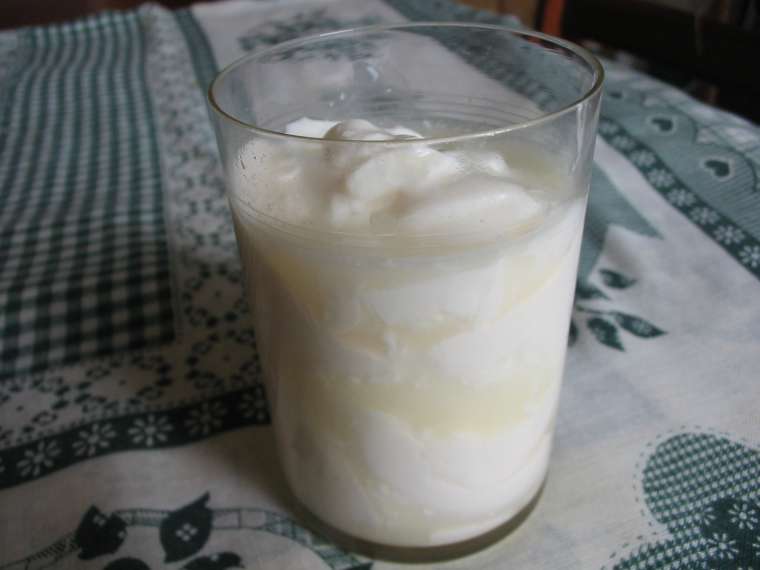
98.

Is milk going sour a physical or chemical change?

a)

Physical

b)

Chemical

99.
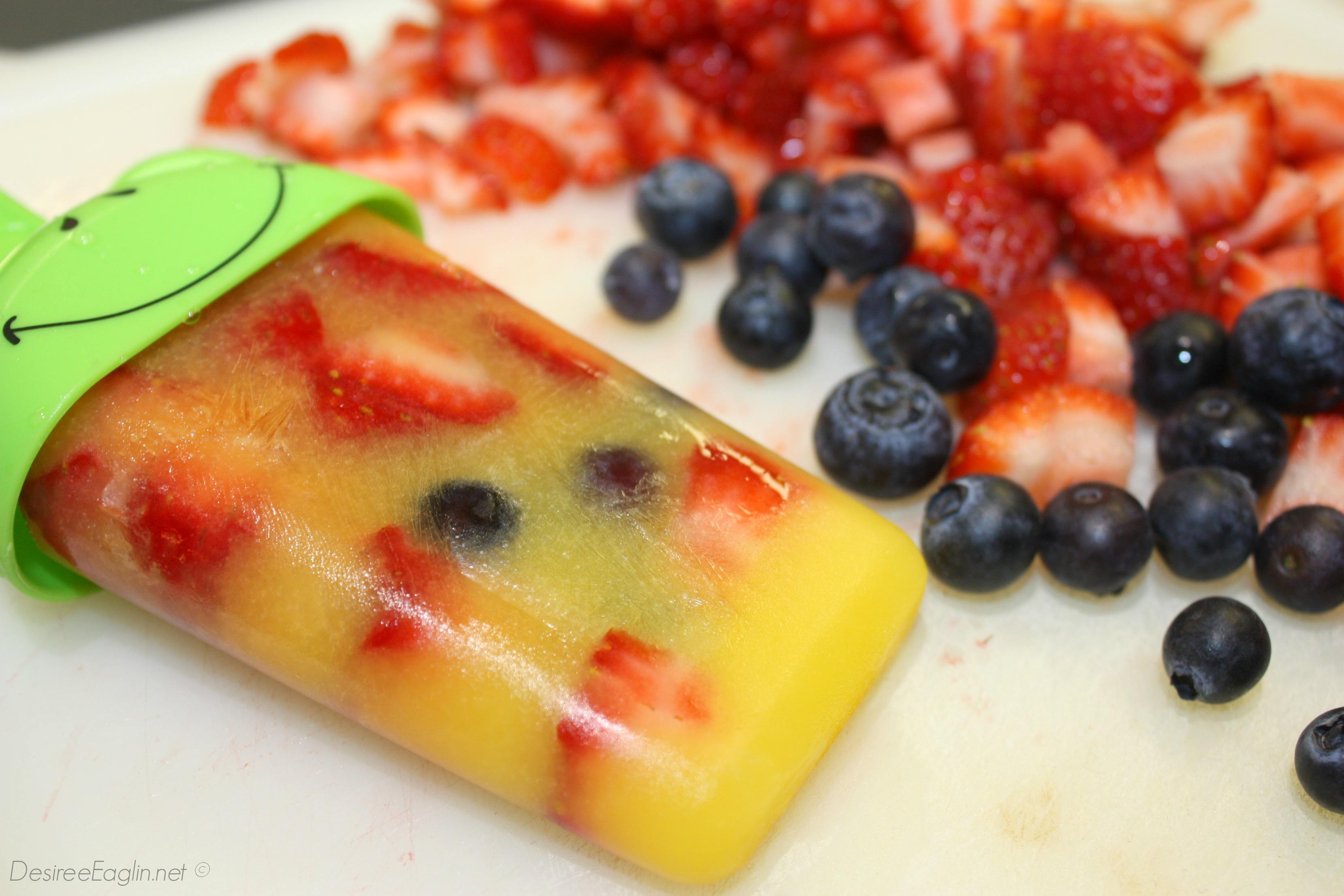
Is freezing juice a physical or chemical change?
a)
Physical Change
b)
Chemical Change
100.
Is this an example of a physical or chemical change? 
a)
Physical because it is a mixture.
b)
Chemical because the parts have changed shape.
101.
In which of these do particles move slowest?
a)
matter
b)
gas
c)
liquid
d)
solid
102.
What is a mixture?
a)
Pennies
b)
2 or more different things combined.
c)
Ice
d)
Marbles
103.
What happened to change the state of the butter?
a)
More energy was added.
b)
Heat was taken away.
c)
More chemicals were added.
d)
The particles of the butter slowed down.
104.
Which is NOT a physical change?
a)
Cutting a pizza into equal slices.
b)
Ice cubes melting back into liquid. water
c)
Baking cupcakes.
d)
A chocolate bar melting.
105.

Which of the following is a physical change?

a)

Dissolving

b)

Rapid release of heat

c)

Fizzing (release of gas)

d)

Rusting