wayground logo

Free Printable Worksheets

Font size

S
M
L
XL
Worksheets

The Everything Quiz

Total questions: 100

Worksheet time: 1hrs 29mins

Name
Class
Date
1.
What do atoms contain?
a)
elements, neutrons, and bonds
b)
protons, neutrons, and electrons
c)
protons, molecules, and elements
d)
electrons, protons, and bonds
2.

The summary at the end of an experiment that explains the results.

a)

conclusion

b)

procedures

c)

materials

d)

hypothesis

3.

A prediction that can be tested by an experiment

a)

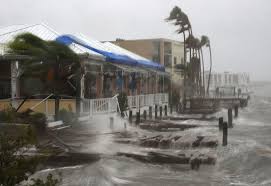
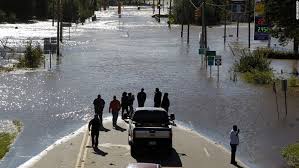
data

b)

theory

c)

hypothesis

d)

fact

4.
What type of correlation does this graph have?
a)
positive
b)
negative
c)
none
d)
all of the above
5.
Which letter represents the x-axis?
a)
letter A
b)
letter B
c)
letter C
d)
letter E
6.
What type of graph shows change over time?
a)
Circle Graph
b)
Bar Graph
c)
Trend Graph
d)
Line Graph
7.
A graph is a ___________ of your data
a)
description
b)
variable
c)
answer
d)
picture
8.

Earth's gravity pulls all objects towards the planet's center

a)

False

b)

True

9.

The prefix "bio" comes from a Greek word that means what?

a)

Life

b)

Water

c)

Earth

d)

Ground

10.

How much of the planet is covered by water?

a)

20%

b)

50%

c)

70%

d)

90%

11.

Which of the following is found in the earths Geosphere

a)

Soil

b)

Rocks

c)

Minerals

d)

All of the Above

12.

Which layer of the Atmosphere contains most of the air we breathe?

a)

Stratosphere

b)

Atmosphere

c)

Troposphere

d)

Exosphere

13.

Of the earth's water how much of it is considered SALT water?

a)

80%

b)

97%

c)

3%

d)

30%

14.

How much of the earth's water is considered FRESH water?

a)

90%

b)

97%

c)

3%

d)

30%

15.

Most of the earth's FRESH water is contained where?

a)

Lakes

b)

Rivers

c)

Glaciers

d)

Oceans

16.

Which is the highest layer of our atmosphere

a)

troposphere

b)

stratosphere

c)

mesosphere

d)

exosphere

17.
Hydro = 
a)
Sphere
b)
Earth
c)
Life
d)
Water
18.
Geo = 
a)
Earth
b)
Sphere
c)
Life
d)
Water
19.
Wind is part of what sphere of Earth?
a)
Windosphere
b)
Atmosphere
c)
Hydrosphere
d)
Airosphere
20.
An example of a connection between ATMOsphere and HYDROsphere is:
a)
rain
b)
rivers
c)
lakes
d)
rocks
21.
The Four Spheres of Earth
a)
are all connected
b)
have nothing to do with one another
c)
exist on Venus and Mars
d)
don't affect human life
22.
This picture best describes which connection?
a)
Atmosphere-Biosphere
b)
Hydrosphere-Atmosphere
c)
Hydrosphere-Geosphere
d)
Geosphere-Biosphere
23.
This sphere is composed of all the living things 
a)
Hydrosphere 
b)
Biosphere 
c)
Atmosphere 
d)
Geosphere 
24.

Atmo=

a)

Water

b)

Earth

c)

Life

d)

Gases

25.
Which of the following lists the layers of the atmosphere in order from Earth’s surface to space?
a)
Thermosphere, Stratosphere, Mesosphere, Thermosphere, Exosphere
b)
Troposphere, Stratosphere, Mesosphere, Thermosphere, Exosphere
c)
Thermosphere, Stratosphere, Mesosphere, Exosphere, Thermosphere
d)
Troposphere, Mesosphere, Stratosphere, Thermosphere, Exosphere 
26.

78% of the Earth's atmosphere is ___________ and 21% of the Earth's atmosphere is _____________.

a)

Oxygen, Nitrogen

b)

Nitrogen, Oxygen

c)

Nitrogen, Carbon Dioxide

d)

Oxygen, Carbon Dioxide

27.

In what layer of the atmosphere do all weather events occur?

a)

Stratosphere

b)

Exosphere

c)

Mesosphere

d)

Troposphere

28.

Why is the ozone layer vital to life on Earth?

a)

Planes fly in the ozone layer

b)

It is made up of oxygen (O2)

c)

It shields the Earth from ultraviolet (UV) rays from the sun

d)

It causes clouds to be created

29.

In which layer of the atmosphere do meteors burn up?

a)

Troposphere

b)

Mesosphere

c)

Thermosphere

d)

Exosphere

30.

This layer is the hottest layer of the atmosphere?

a)

Troposphere

b)

Stratosphere

c)

Mesosphere

d)

Thermosphere

31.

Which atmospheric layer is the Aurora Borealis located in?

a)

Troposphere

b)

Mesosphere

c)

Exosphere

d)

Thermosphere

32.
Where we live.
a)
stratosphere
b)
thermosphere
c)
troposphere
d)
mesosphere
33.

Which layer is the Mesoposphere?

a)

1

b)

2

c)

3

d)

4

34.

Which layer is the Troposphere?

a)

1

b)

2

c)

3

d)

4

35.

Which layer is the Thermosphere?

a)

1

b)

2

c)

3

d)

4

36.

Which layer is the Stratosphere?

a)

1

b)

2

c)

3

d)

4

37.

All of the following are natural disasters EXCEPT....

a)

Mudslide

b)

Breeze

c)

Tornado

d)

Flood

38.

Which natural disaster has had a greater impact on Florida throughout history?

a)

Earthquakes

b)

Tornadoes

c)

Avalanches

d)

Hurricanes

39.

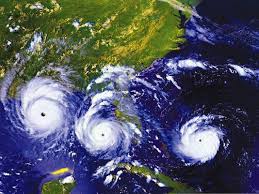
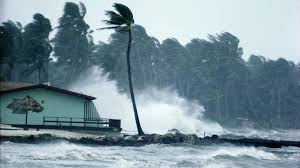
A ________________ is an intense storm with strong winds, heavy rain, lightning, and thunder.

a)

tornado

b)

hurricane

c)

thunderstorm

40.
Where do hurricanes form?
a)
In the warm waters of the Atlantic Ocean near the equator
b)
In the cool waters of the North Sea
c)
In the Pacific Ocean near Japan
d)
In
41.
What fuels a hurricane's strength?
a)
Wind
b)
Sunlight
c)
Warm Water
d)
Cold Water
42.
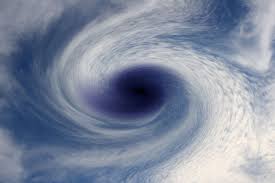
What is the calm area in the center of a hurricane called?
a)
Wall
b)
Eye
c)
Arm
d)
Hole
43.
What happens as a hurricane moves further in-land?
a)
It speeds up and gets stronger
b)
It turns around and goes back to sea
c)
It slows down and gets weaker
d)
It stalls
44.
Most of the damage from hurricanes happens because of - 
a)
Storm surge (flooding)
b)
wind
c)
hail
d)
lightning
45.
A series of steps used by scientists to solve a problem or answer a question. 
a)
scientific method
b)
recipe
c)
data collection
d)
metric system
46.
A testable explanation to a problem that has not yet been tested. 
a)
data
b)
theory
c)
hypothesis
d)
fact
47.
This variable in an experiment is the one being changed by the scientist. 
a)
dependent variable
b)
independent variable
c)
data
d)
control group
48.
If you increase the amount of spinach you eat, then you will increase the iron in your blood. 
What's the dependent variable?
a)
increase the amount of iron in your blood
b)
spinach you eat
49.
If I ride my bike to school instead of walking, then I will get to school faster. What is the dependent variable?
a)
True
b)
How fast you get to school
c)
Riding a bike or walking
d)
False
50.
Which of the following would be considered quantitative data?
a)
Color
b)
Smell
c)
6.84 cm
d)
texture
51.
Explaining the color of a chemical would be what kind of observation?
a)
Qualitative 
b)
Quanitative
52.
What is the part of the experiment that is left alone or “natural", and is used to compare back to?
a)
Independent Variable
b)
Dependent Variable
c)
Control Group
d)
Experimental Group 
53.
What is a factor that the experimenter has full control over and changes to see what happens?
a)
Dependent Variable
b)
Independent Variable
c)
Control group 
d)
Hypothesis
54.
What is a factor that changes because of what the experimenter does?
a)
Dependent Variable
b)
Independent Variable
c)
Control Group
d)
Hypothesis
55.
Temperature _____________________ as you go deeper into the earth.
a)
increases
b)
decreases
c)
goes up and down depending on the layer
d)
stays the same
56.
What is the correct order (starting from the surface) of Earth's layers?
a)
crust, mantle, inner core, outer core
b)
mantle, outer core, inner core, crust
c)
inner core, outer core, mantle, crust
d)
crust, mantle, outer core, inner core
57.
When living things breathe, they interact with which of Earth's spheres? 
a)
Geosphere 
b)
Hydrosphere 
c)
Atmosphere 
d)
Biosphere 
58.

The lithosphere combines what two layers?

a)

Athenosphere & Crust

b)

Crust & Upper Mantle

c)

Mantle & Athenosphere

59.
What are the two types of crust
a)
continental and oceanic
b)
ocean and upper
c)
lower and upper
d)
pizza and subway
60.

The spheres of the Earth system are called

a)

the upper sphere and the lower sphere.

b)

the living sphere and the non-living sphere.

c)

the atmosphere, geosphere, biosphere, and hydrosphere.

d)

the inner sphere, middle sphere, outer sphere, and space sphere.

61.
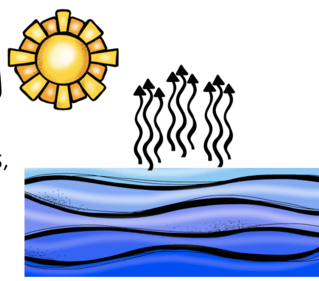
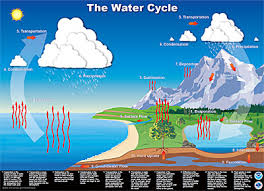
What part of the water cycle does this picture show?
a)
condensation
b)
precipitation
c)
evaporation
62.
Snow, sleet, hail, and rain are all examples of  ________________. 
a)
evaporation
b)
condensation
c)
accumulation
d)
precipitation
63.
What is the energy source for the water cycle?
a)
the sun
b)
the earth
c)
water
d)
the moon
64.
Precipitation happens when clouds of water droplets are too ______________.
a)
cold
b)
light
c)
heavy
d)
hot
65.
Evaporation happens when the sun ___________ water and turns it into vapor.
a)
cools
b)
heats up
c)
freezes
d)
lights up
66.
During which stage do clouds form?
a)
condensation
b)
evaporation
c)
precipitation
67.

Which of the following is an example of precipitation?

a)

sleet

b)

hail

c)

snow

d)

all of the above

68.
Should experiments be repeated over and over to see if the results are the same each time?
a)
yes
b)
no
69.
Every living organism is made up of one or more cells
a)
True
b)
False
70.
A cell is...
a)
the basic unit of structure and function in living organism
b)
an organism
c)
a basic part of everything that we see
d)
found only in animals, not plants
71.
What is the function of a cell wall?
a)
to protect and support the cell
b)
to perform different functions in each cell
c)
to prevent water from passing through it
d)
to prevent oxygen from entering the cell
72.
In what part of the plant cell does the process of photosynthesis take place?
a)
nucleus
b)
mitochondria
c)
chloroplasts
d)
vacuoles
73.
Cells with a nucleus and membrane-bound organelles are called ____________________.
a)
prokaryotes
b)
eukaryotes
c)
bacteria
d)
protists
74.

What type of cell lacks a nucleus?

a)

eukaryotic

b)

prokaryotic

c)

human

d)

animal

75.

Many celled organisms are called

a)

unicellular

b)

multicellular

c)

bicellular

d)

tricellular

76.

Single celled organisms are called

a)

unicellular

b)

multicellular

c)

bicellular

d)

tricellular

77.
How does freezing water cause the weathering of rocks?  The freezing water—
a)
keeps the rocks in place
b)
makes the rocks last longer
c)
expands cracks and breaks rocks
d)
causes rocks to fall in landslides
78.

What is the process of moving sediments from location to another?

a)

Deposition

b)

Erosion

c)

Weathering

d)

Compaction

79.
Which agents  break down earth materials?
a)
wind only
b)
earthquakes and gravity
c)
ice and 007
d)
wind, water, and ice
80.

How do sandy beaches form?

a)

Waves pounding pebbles int smaller and smaller peices

b)

Wind eroding pebbles into smaller pieces

c)

Water freezing and thawing the cracks of pebbles

d)

Rain wearing away rocks into smaller and smaller pieces

81.
How do plants weather rocks?
a)
during photosynthesis
b)
when roots grow into cracks of rocks and expand the rock
c)
when the plant moves water from the roots to the leaves
d)
Plants don't weather rocks
82.

Which of the following was formed through erosion?

a)

Eiffel Tower

b)

The Grand Canyon

c)

Mt. Rushmore

d)

The Pyramids of Giza

83.
What force is responsible for erosion and deposition in landslides?
a)
gravity
b)
ice
c)
wind
d)
temperature
84.
What is a type of mass movement by gravity?
a)
dune
b)
loess
c)
glacier
d)
mudslide
85.
What is responsible for the formation of sand dunes?
a)
Wind
b)
Water
c)
Gravity
d)
Ice
86.
Which of the following symbiotic relationships is considered parasitic?
a)
Ticks feeding on a dog
b)
Bees transporting pollen from flowers
c)
Pilotfish swimming under sharks
d)
Birds eating the insects fromo the back of hippo
87.
Maria and her classmates are observing animals at the pond. They notice that wood storks and ibisies both feed on fish. Which of these describes the relationship between these two birds.
a)
Parasitism
b)
Competition
c)
Predator and prey
d)
Producer and consumer
88.
An organism that is killed and eaten by another organism
a)
Predator
b)
Prey
c)
Parasite
d)
Host
89.
Relationship where one organism benefits and the other is neither harmed nor helped
a)
Commensalism
b)
Parasitism
c)
Mutualism
d)
Competition
90.
A relationship between two organisms in which one organism benefits and the other is unharmed...
a)
Mutualism 
b)
Competition
c)
Parasitsm 
d)
Commensalism 
91.

Adaptations can be:

a)

camouflage

b)

ability to survive cold weather

c)

hunting skills

d)

all of the above

92.
When every organism of a species has died.
a)
Evolution
b)
Natural Selection
c)
Extinction
d)
Artificial Selection
93.
Change over time
a)
Natural Selection
b)
Selective Breeding
c)
Homeostasis
d)
Evolution
94.
Which of the following is a term for a group of similar organisms that can reproduce fertile offspring?
a)
individual
b)
population
c)
species
d)
fossil
95.
"Survival of the Fittest" describes which theory
a)
a) natural selection
b)
b) gravity
c)
c) heredity
d)
d) string theory
96.
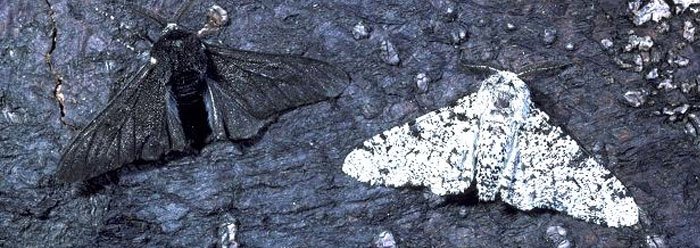
The trees these moths used to live on were white, but have been covered in soot from coal factories. Which moth will be more successful in this environment?
a)
Dark moth
b)
Light moth
c)
Both will be equally successful
d)
Neither will be successful
97.
What is the shape of a DNA?
a)
Double Helix
b)
Base Pairing
c)
The shape of you
d)
Hydrogen Bonding
98.
What is a DNA molecule made of?
a)
Base, sugar, phosphate
b)
Base, sugar, coffee
c)
Base, roof, height
d)
DNA, sugar, phosphate
99.

How many chromosomes do human cells have?

a)

46

b)

23

c)

2

d)

44

100.
What kind of information does DNA carry?
a)
genetic
b)
nuclear
c)
cell structure
d)
it doesn't carry any info