wayground logo

Free Printable Worksheets

Font size

S
M
L
XL
Worksheets

Natural Selection Quiz Practice

Total questions: 101

Worksheet time: 56mins

Name
Class
Date
1.

Sequence of DNA that determines structures of proteins

a)

Mutation

b)

Gene

c)

Molecule

d)

Protein

2.

Complex molecules that are responsible for traits

a)

Protein

b)

Sugar

c)

Genes

d)

H2O

3.

The way in which traits are shared in the population

a)

Predominant

b)

Resistance

c)

Distribution

d)

Heritable

4.

The ability to be unaffected by something usually harmful

a)

Resistance

b)

Mutation

c)

Natural Selection

d)

Adaptation

5.

Changes in a species over generations, due to changes in the environment

a)

Distribution

b)

Mutation

c)

Adaptation

d)

Resistance

6.

Process in which traits become more/less common due to some traits making it more likely for individuals to survive and reproduce

a)

Natural Selection

b)

Mutation

c)

Distribution

d)

Adaptation

7.

A random and permanent change to a gene

a)

Protein

b)

Gene

c)

Natural Selection

d)

Mutation

8.

When nearly all individuals in a population have a certain trait

a)

Predominant

b)

Resistance

c)

Adaptation

d)

Mutation

9.

What needs to be true for adaptation to occur?

a)

A trait exists in a population

b)

Organism's ability to survive and reproduce are increased

c)

Trait is heritable

d)

The trait needs to be predominant in a population

10.

Which statement(s) are true about mutations, Mutations....

a)

are not necessary for adaptation to occur

b)

can lead to a new predominant trait in a population

c)

only happen when the environment changes

d)

are very common

11.

Why/how do population change over time?

a)

The environment changes

b)

There is a heritable trait which doesn't help survival

c)

Natural selection causes a trait to become more common in the population

d)

The organism decides to have a mutation occur

12.

What does it take for organisms to change? Response should be in the correct order.

a)

New trait, mutation, protein structure, protein function

b)

Mutation, protein structure, protein function, new trait

c)

Protein structure, protein function, mutation, new trait

d)

New trait, protein structure, protein function, mutation

13.

Mutations are...

a)

beneficial when it helps survival and reproduction

b)

neutral when it doesn't help or hinder survival and reproduction

c)

harmful when it lowers the chance for survival and reproduction

14.

In our fork and beans investigation, the spoon becomes the predominant trait when...

a)

beans are the resource

b)

marshmallows are the resource

c)

when there was an even amount of forks and spoons

d)

when spoons were almost all gone

15.

Mutations happen

a)

when the environment changes

b)

when the animal needs to adapt

c)

at random

d)

after adaptation

16.

Why is it beneficial for a species to have varying traits?

a)

They can't be seen by predators

b)

It is helpful in asexual reproduction

c)

If the environment changes, the population might be better able to adapt

d)

They don't recognize each other.

17.

Traits become more common in a population when it increases the probability of

a)

survival

b)

mutations

c)

reproduction

d)

dying

18.

Peppered moths were able to adapt to their environment because

a)

They decided to change colors in order to survive

b)

The population had varying traits

c)

Pollution covered the trees

d)

The trees camouflaged all moths

19.

New traits usually occur due to:

a)

Random genetic mutations

b)

An organism adapting

c)

Effects from the environment

20.

Check all of the options below that are SELECTION FACTORS, which determine whether a trait helps or hurts an organism. (choose more than one)

a)

Obtaining food

b)

Surviving climate changes

c)

Escaping predators

d)

Moving fast

21.

If a new trait DOES help an organism survive, what may happen to it?

a)

It dies and its DNA is not passed on

b)

It survives and its DNA is passed on

c)

It changes its traits to adapt and survive

22.

What happens to new traits that HELP organisms survive over time?

a)

They become MORE COMMON

b)

They become LESS COMMON

c)

They are EQUALLY COMMON

23.

What happened to the peppered moth population after the Industrial Revolution?

a)

There were MORE LIGHT moths because the bird couldn't see them on the DARK TREES

b)

There were MORE DARK moths because the bird couldn't see them on the DARK TREES

c)

There were MORE DARK moths because the bird couldn't see them on the LIGHT TREES

24.

Which traits were selected for in whale ancestors?

a)

Traits that helped them walk on land

b)

Traits that helped them move in water

c)

Traits that helped them give birth

25.

Which trait was selected for in therapod dinosaurs which led to modern day birds?

a)

Feathers - for warmth or mating

b)

Feathers - for flying

c)

A wish bone - for flying

26.

Which trait was selected for in Tiktaalik which led to the evolution of tetrapods?

a)

Fins so it could swim in water

b)

Four limbs so it could walk on land

c)

Lungs so it could breathe air

27.

If a new trait DOES NOT help an organism survive, what may happen to it?

a)

It dies and its DNA is not passed on

b)

It survives and its DNA is passed on

c)

It changes its traits to adapt and survive

28.
Behavioral changes of individuals of a species that allow for better survival. (Acquired traits)
a)
Variation
b)
Adaptation
c)
Behavior
d)
Environment
29.
Where the better adapted organisms survive to pass traits along to offspring.
a)
Evolution
b)
Natural Selection
c)
Extinction
d)
Artifical Selection
30.
What are the most studied animals in the galapagos?
a)
Finches
b)
Tortoises
c)
Turtles
d)
Lizards
31.
What is the advantage of having different shaped beaks?
a)
To look different from other species.
b)
To be able to eat the food readily available in the environment.
c)
To protect itself against predators.
d)
To protect itself against prey.
32.
Why are advantageous traits more likely to be passed onto offspring?
a)
Because they are more likely to survive and reproduce.
b)
Because they come from dominant alleles.
c)
Because they come from recessive alleles.
d)
Because the trait is an acquired phenotype.
33.
The differences among a species, like different bird beaks, are called
a)
genes.
b)
variations.
c)
traits.
d)
theories.
34.
This scientist developed the theory of evolution as he studied the finches.
a)
Charles Darwin
b)
Isaac Newton
c)
Albert Einstein
d)
Marie Curie
35.
Organisms with the most beneficial traits will survive.  This is commonly known as
a)
theory of evolution.
b)
variations.
c)
survival of the fittest.
d)
ecosystems.
36.
Drawn observed several different types of finches.  Why are there so many different types?
a)
Finches live in different places, but eat the same food.
b)
Finches live in the same place, but eat different types of food.
c)
Finches live in different habitats and eat different types of food.
d)
Finches are found all over the world.
37.
Do organisms "decide" to evolve and change?
a)
Yes, they know they need to change to survive 
b)
No, they change because of natural selection
38.

What word describes a trait that helps an organism survive in its environment?

a)

natural selection

b)

mutation

c)

camouflage

d)

adaptation

39.
Which organisms are most likely to survive?
a)
the best adapted
b)
the fastest
c)
the strongest
d)
the most domesticated (tamed)
40.
Survival of the Fittest and Evolution were proposed by what scientist?
a)
Charles Darwin
b)
Albert Einstein
c)
Steven Hawking
d)
Isaac Newton
41.
What is the advantage of having different shaped beaks?
a)
To look different from other species.
b)
To be able to eat the food readily available in the environment.
c)
To protect itself against predators.
d)
To protect itself against prey.
42.
Do organisms "decide" to evolve and change?
a)
Yes, they know they need to change to survive 
b)
No, they change because of natural selection
43.
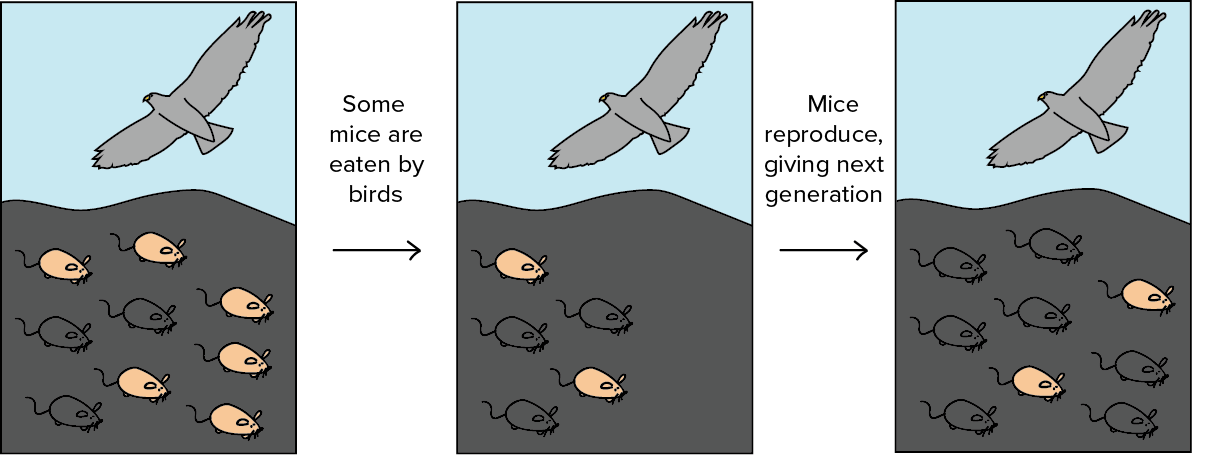
What process is being shown in this image?
a)
Variation
b)
Natural Selection
c)
Selective Breeding
d)
Homeostasis
44.
Why is the mouse population changing over time?
a)
The light mice can reproduce more successfully than the dark mice
b)
The hawks eat more dark mice than light mice because the dark mice taste better
c)
The hawks eat more light mice than dark mice because they can see the light mice more easily
d)
The hawks eat more dark mice than light mice because they can see the dark mice more easily
45.

What is natural selection?

a)

process in which helpful traits become more common over time

b)

a trait that helps an organism survive better

46.

Adaptations can be:

a)

camouflage

b)

ability to survive cold weather

c)

hunting skills

d)

all of the above

47.

Differences in traits are called:

a)

natural selection

b)

genetic variations

c)

artificial selection

d)

adaptations

48.

A species could go extinct if:

a)

food becomes more plentiful.

b)

members of the species have adaptations to enhance survival.

c)

the environment changes drastically and no one can adapt.

d)

there is less competition for resources.

49.

Natural selection occurs during the lifetime of a single organism.

a)

True

b)

False

50.

What type of environment do you think this data was collected from?

a)

forest with primarily white-bark trees

b)

forest with primarily dark-bark trees

51.

TRUE or FALSE: Natural selection will still occur if each individual has the same exact traits

a)

TRUE

b)

FALSE

52.

How do you "win" at natural selection?

a)

survive

b)

go extinct

c)

survive & reproduce

53.

Due to pollution, a pond becomes darker over time. Which trait variation became more common?

a)

light fish

b)

dark fish

54.

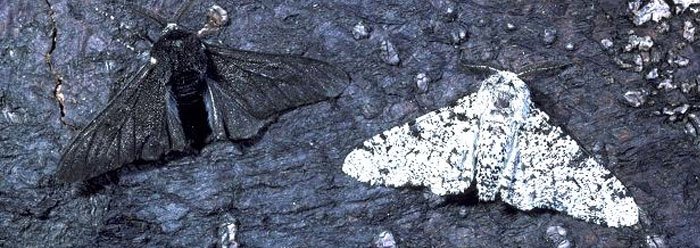
What is most likely to happen to moth populations in the picture shown?

a)

Light moths--hunted easily, dark moths--population increase

b)

Dark moths--hunted easily, dark moths--population increase

c)

Light moths--hunted easily, light moths--population increase

d)

Lights moths will change their color to match dark moths.
55.

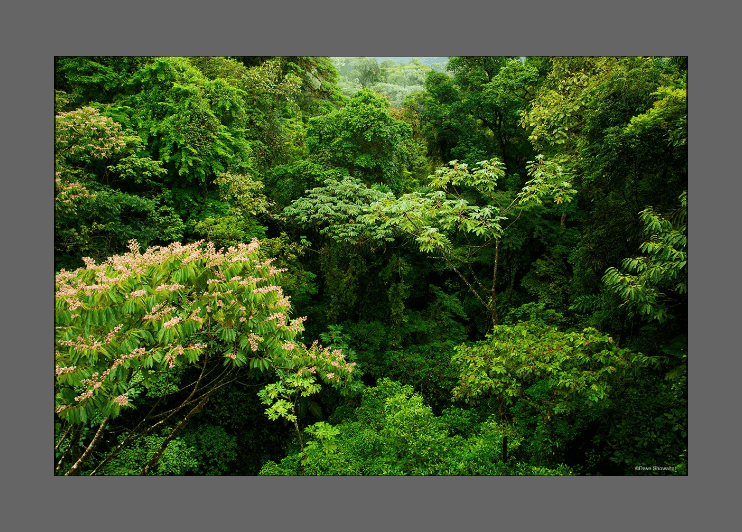
A yellow morph and green morph of an insect lives in the rainforest canopy. You would expect:

a)

the green population to increase and the yellow to decrease

b)

both populations should stay the same

c)

both populations will increase

d)

the green population to decrease and the yellow to increaseThis is a wrong answer

56.

In a cold environment what would be some adaptive traits? Sellect all that apply.

a)

thick blubber

b)

thick fur

c)

thin fur

d)

strong muscles

57.

What is a trait?

a)

a color

b)

the quality or characteristic of an organism

c)

the DNA of an organism

d)

when mutatuons cause extra limbs.

58.
These cause variations.
a)
mutations
b)
adaptations
c)
a desire to change
d)
injuries
59.
A slight difference in an inherited trait between individual members of the same species.
a)
variations
b)
adapatations
c)
homologous structures
d)
analogous structures
60.
An inherited trait that increases an organism's chance of surviving and reproducing.
a)
variation
b)
adaptation
c)
vestigial structure
d)
mutation
61.
The discovery of DNA and genes proved that
a)
Darwin was wrong
b)
mutations create variations and come from genes
c)
we are all the same species
d)
bats and butterflies have a very close common ancestor
62.
The study of the similarity and differences in body structures between species.
a)
comparative anatomy
b)
embryology
c)
molecular biology
d)
archaeology
63.
Body parts of organisms that are the same in structure and position but different in function.
a)
embryos
b)
homologous structures
c)
analogous structures
d)
vestigial structures
64.
Body parts that function like each other, but are different in structure.
a)
embryos
b)
homologous structures
c)
analogous structures
d)
vestigial structures
65.
Body parts that have lost their original function.
a)
embryos
b)
homologous structures
c)
analogous structures
d)
vestigial structures
66.
Organisms with these structures are believed to be closely related.
a)
analogous structures
b)
homologous structures 
c)
mutated DNA
d)
gills
67.
Organisms with these structures are NOT believed to be closely related.
a)
analogous structures
b)
homologous structures
c)
vestigial strucutres
d)
gills
68.
Organisms with these are believed to be related to an organism who once used the body part.
a)
analogous structures
b)
homologous structures
c)
vestigial structures 
d)
gills
69.
Studying the development of ____ can provide scientists with evidence that certain species are related.
a)
fish
b)
embryos
c)
Tiktaalik
d)
vestigial structures
70.
What structure on Tiktaalik links fish to humans?
a)
gills
b)
limbs
c)
embryos
d)
brain
71.
When an organism of a species has an adaptation, it will compete for resources better, survive longer and pass that adaptation on to it's offspring. This process is called
a)
evolution by natural selection
b)
artificial selection
c)
inbreeding
d)
outbreeding
72.
What is it called when humans decide which traits of an organism are the most desirable and only allow those organisms with the specific, desired traits to breed.
a)
biological evolution
b)
evolution by natural selection
c)
artificial selection
d)
inbreeding
73.
When an organism has a trait that allows it to blend in with its environment, we call that ____.
a)
mimicry
b)
camouflage
c)
lucky
d)
sonic hedgehog gene
74.
When an organism has a trait that makes it resemble another species, either in looks or behavior, we call that ____
a)
mimicry
b)
camouflage
c)
copycatting
d)
sonic hedgehog gene
75.
The English naturalist that developed the theory of how evolution works.
a)
Charles Darwin
b)
Charles M. Schulz
c)
Charles Dickens
d)
Charles Norris
76.
The change over time in populations of related species.
a)
biological evolution
b)
transition
c)
variation
d)
adaptation
77.
When an organism of a species is born with a variation in a trait that gives it an advantage in its environment, we call that trait an adaptation.
a)
true
b)
false
78.
What word describes the process of having the advantageous traits that helps an organism survive  and reproduce?
a)
natural selection
b)
adaptation
c)
mutation
d)
genetic engineering
79.
Which organisms are most likely to survive?
a)
the best adapted
b)
the fastest
c)
the strongest
d)
the most domesticated (tamed)
80.
Which of the following is a term for a group of similar organisms that can reproduce fertile offspring?
a)
individual
b)
population
c)
species
d)
fossil
81.
What is it called when better adapted organisms survive to pass traits along to their offspring.
a)
Evolution
b)
Natural Selection
c)
Extinction
d)
Artifical Selection
82.
"Survival of the Fittest" describes which theory
a)
a) natural selection
b)
b) gravity
c)
c) heredity
d)
d) string theory
83.
Why did the population of peppered moths in England change from light to dark after the Industrial Revolution?
a)
Light moths were easy to see against sooty trees and were eaten
b)
Light moths were killed by soot
c)
The birds that ate the dark moths were killed by soot
d)
Dark moths were produced by industrial processes
84.
The example of the peppered (brown) moths living near English industrial cities demonstrates that
a)
A change in an environment can result in the evolution of species living there
b)
Evolution occurs so slowly that is it not possible to determine that it has happened in less than a million years
c)
The environment near these cities has always favored dark colored moths
85.
Why are advantageous traits more likely to be passed onto offspring?
a)
Because they are more likely to survive and reproduce.
b)
Because they come from dominant alleles.
c)
Because they come from recessive alleles.
d)
Because the trait is an acquired phenotype.
86.
Which is not an example of an adaptation?
a)
A bird's beak allows it to crack open hard nuts.
b)
A zebra's stripes allow it to confuse its predators.
c)
A frog's large hind legs allow it to jump from danger.
d)
A cat sleeps on the sofa to avoid the vacuum cleaner.
87.
Any inherited trait that gives an organism an advantage in its environment is called ___.
a)
a mutation
b)
an adaptation
c)
evolution
d)
natural selection
88.
Natural selection is where ___________ decides which traits should be passed on
a)
Nature
b)
A human
c)
Mr. Holt
d)
The illuminati
89.
Since the 1800s humans have stopped burning coal, and the trees have returned to their original color. Which moth will be more successful in this environment?
a)
Dark moth
b)
Light moth
c)
Both will be equally successful
d)
Neither will be successful
90.
When every organism of a given species has died
a)
Natural Selection
b)
Homeostasis
c)
Extinction
d)
Selective Breeding
91.
The trees these moths used to live on were white, but have been covered in soot from coal factories. Which moth will be more successful in this environment?
a)
Dark moth
b)
Light moth
c)
Both will be equally successful
d)
Neither will be successful
92.

What word describes a trait that helps an organism survive in its environment?

a)

natural selection

b)

mutation

c)

camouflage

d)

adaptation

93.
Almost all adaptations started off as?
a)
selective breeding
b)
physiological
c)
structural
d)
mutation
94.
Survival of the Fittest and Evolution were proposed by what scientist?
a)
Charles Darwin
b)
Albert Einstein
c)
Steven Hawking
d)
Isaac Newton
95.
Behavioral changes of individuals of a species that allow for better survival. (Acquired traits)
a)
Variation
b)
Adaptation
c)
Behavior
d)
Environment
96.
Where the better adapted organisms survive to pass traits along to offspring.
a)
Evolution
b)
Natural Selection
c)
Extinction
d)
Artifical Selection
97.
What are the most studied animals in the galapagos?
a)
Finches
b)
Tortoises
c)
Turtles
d)
Lizards
98.
What is the advantage of having different shaped beaks?
a)
To look different from other species.
b)
To be able to eat the food readily available in the environment.
c)
To protect itself against predators.
d)
To protect itself against prey.
99.
Why are advantageous traits more likely to be passed onto offspring?
a)
Because they are more likely to survive and reproduce.
b)
Because they come from dominant alleles.
c)
Because they come from recessive alleles.
d)
Because the trait is an acquired phenotype.
100.
Mutations are a change in what?
a)
DNA
b)
tRNA
c)
genotype
d)
phenotype
101.
Do organisms "decide" to evolve and change?
a)
Yes, they know they need to change to survive 
b)
No, they change because of natural selection