
 Worksheets
Wave Properties and Energy Transfer
Total questions: 100
Worksheet time: 8hrs 49mins
What is transferred from place to place by waves?
matter
energy
particles
waves

What does this picture represent?
wavelength
echolocation
amplitude
peak
When energy increases, amplitude _______?
increases
decreases
stays the same
When placed in water, a ball moves from one place to another with the waves.
True
False
Waves are a pattern of motion that transfer energy.
True
False
Waves DO NOT transfer ______?
Matter
Energy
The highest point of a wave is called what?
Trough
energy
peak or crest
amplitude

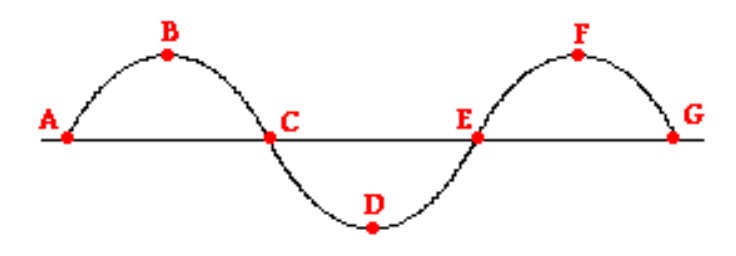
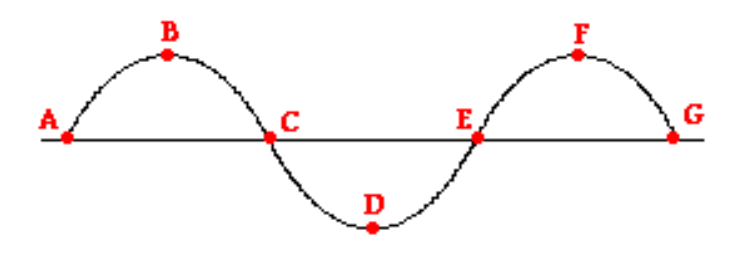
The distance from one crest to the next crest in a wave is
wavelength
crest
trough
amplitude
The number of wavelengths that pass a point per second is:
amplitude
frequency
wavelength
crest
A wave is defined as a regular disturbances that carries (a) through matter or space.

What is a wavelength?
How many waves pass a certain point
The distance from one wave crest to another
The entire length of a wave
What does a wave carry from place to place?
energy
matter
people

How are patterns on the metal plate created?
Salt
Air
Sand
Vibration
What is a back and forth movement of something?
wave
vacuum pump
vibration
volume

Which transverse wave has the highest frequency?
1
2
3
4
Which diagram shows the wavelength of a wave?


What does a wave carry from place to place?
energy
matter
people
The highest point on a transverse wave is the
compression
crest
rest position
trough
The lowest point on a transverse wave is the
compression
crest
rest position
trough
If the wavelength of a wave increased, what would happen to the frequency?
decrease
increase
stay the same
A wave that can travel through matter and empty space is a:
electromagnetic wave
longitudinal wavy
transverse wave
mechanical
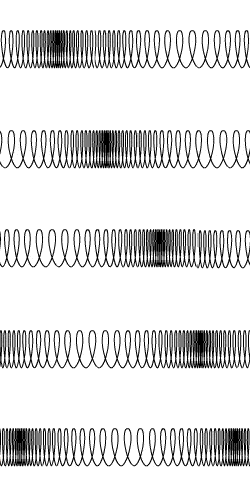
What type of wave is this?
Longitudinal
Transverse
Electromagnetic
x ray


You can't hear sounds in outer space because there is no
medium
light
energy
heat
A build-up of electrical charges on an object is called what?
electrical energy
static electricity
current electricity
magnetism
_______ is an energy that is made of charged particles.
magnet
electricity
magnetism
insulator
_______ is a material that does NOT allow electricity to flow easily through it.
A circuit
A magnet
A conductor
An insulator
_______ is a material that attracts and repels certain objects.
A circuit
An insulator
Electricity
A magnet
_______ are magnets that are created using electric currents.
Electromagnets
Permanent magnets
Circuits
Conductors
_______ is a material that DOES allow electricity to flow easily through it.
A magnet
A conductor
An open circuit
An insulator
Which of these objects is usually attracted to a magnet?
Glass
Rubberband
Crayon
Paperclip
Which of these objects would NOT be attracted to a magnet?
Iron nail
metal binder clip
wooden chair leg
gold bar
Which of these items do you NOT need to complete an electric circuit?
device to power on/off (like a light bulb)
conductor (like wire)
a switch
power source (like a battery)
Which of these items would make a good insulator of electricity?
plastic
copper wire
aluminum foil
steel
Is metal wire an insulator or conductor?
Insulator
Conductor
Is wood an insulator or conductor?
Insulator
Conductor
Is plastic an insulator or conductor?
Insulator
Conductor
Is water an insulator or conductor?
Insulator
Conductor

Would this lightbulb light up?
Yes
No

Would this light bulb light up?
Yes
No

What is static electricity?
a buildup of electric charge on something
a repelling between electrons
an electric circuit
a flow of protons

If a copper wire is attached to the positive and negative ends of the battery, what will be the effect?
an electrostatic discharge
an electric current
a power source
static electricity

The illustration shows an electric circuit consisting of a battery and three light bulbs.
What type of circuit is shown in the diagram?
series circuit
parallel circuit
double circuit
open circuit

The picture shows a device made of a battery, a nail, and a long piece of copper wire. It converts electrical energy into a different form of energy.
Which term describes the device in the illustration?
electric generator
electric motor
electromagnet
electric switch

Hector rubs a comb with a wool cloth. Next, he holds the comb near, but not touching, some bits of paper.
Which of the following is most likely to happen?
A spark jumps between the paper bits and the comb.
The paper bits move away from the comb.
The paper bits are not attracted to the comb.
The paper bits are attracted to the comb and stick to it.

This diagram shows the particles that make up an atom.
What is the charge of the atom shown?
static
positive
neutral
negative

An electron is the particle most easily removed from an atom. Suppose this atom lost an electron.
What electric charge would the atom then have?
static
positive
neutral
negative

What happens when an object with a negative charge comes near another object with a negative charge?
The objects neither repel nor attract each other.
The objects both gain electric charges.
The two objects attract each other.
The objects repel each other.

Curtis uses a wool cloth to give a balloon a negative charge. What will happen if he holds the balloon near the wall, and why?
The balloon will not stick to the wall because the negatively charged balloon is repelled by the negatively charged wall.
The balloon will stick to the wall because a negatively charged object is attracted to the negatively charged wall.
The balloon will stick to the wall beacuse the negatively charged balloon is attracted to the uncharged wall. (It pushes the negatives away and is attracted to the positives)

What happens when the north and south poles of different magnets get close to each other?
nothing
They repel each other.
They attract each other.

What is the purpose of the battery in the circuit?
to slow the flow of electricity
to be a power source
to connect the components
to use electric current

Ryan has a circuit made up of a battery, a light bulb, some wires, and a metal rod as a switch. Ryan replaces the metal rod with a wooden rod. When he closes the new switch, what will Ryan most likely observe?
brighter bulb
unlit bulb
warmer bulb
flashing bulb

Clayton tries to build an electric circuit using a battery, a light bulb, a paper clip, and copper wire. The diagram shows what he builds.
Which statement best explains why the circuit would not conduct electricity
The paper clip stops the electric current.
The light bulb uses the electric current.
The circuit is not a complete loop or circle.
The circuit lacks a power source.

In the electric circuit below, light bulbs are placed at A, B, and C. When the switch is closed, all three light bulbs are lit.
What happens to light bulbs A and C if bulb B burns out?
Both bulbs A and C will stay lit.
Bulb C will go out, but bulb A will stay lit.
Bulb A will go out, but bulb C will stay lit.
Both bulbs A and C will go out.

Which is NOT a way to increase an electromagnet's strength?
flip the battery so it is in the other direction
use a stronger battery
add more wire coils

The magnetic field is strongest...
at the south pole
at the north pole
in the center
at both of the poles

Erica looked at a group of objects and classified them as conductors or insulators. She made the table below to show her results.
What object is classified incorrectly?
wodden craft sticks
silver bracelet
plastic bottle
glass bead
Which of the following items would work best to complete a circuit?
wooden toothpick
plastic straw
glass bead
metal coin
Why are electrical cords covered in plastic or rubber?
because plastic and rubber are insulators which keeps us safe
because it looks nicer
because plastic and wire help conduct electricity
because wires are color coded based on voltage

A series circuit will continue to work if one of the light bulbs is unscrewed.
true
false

These magnets will...
attract
repel
nothing will happen

This is an example of what type of circuit?
simple
series
parallel

What is part C considered in the circuit?
power source
conductor
load/resistor
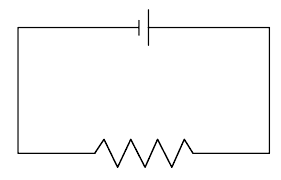
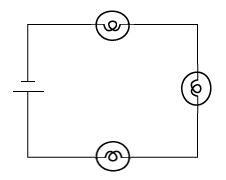
The picture shows an electrical circuit. This circuit is a series circuit because:
It has 3 light bulbs.
The same current flows through all three light bulbs.
It uses a single battery.
The electrical current has more than one path to flow through

To complete the circuit, a wire should be placed from —

When the switch is closed the buzzer will sound because -
Mrs. Ellis rubbed two balloons with a piece of wool. What will happen when the balloons are brought near each other?
The balloons will repel each other.
The balloons will attract each other.
The balloons will become positively charged.
The balloons will pop.
When socks get stuck to towels in your dryer, this is an example of __________________________.
current electricity
static electricity
magnetism
electromagnetism
What is the major difference between static electricity and current electricity?
Current electricity involves a continuous flow of neutrons; static electricity is a sudden transfer of protons.
Current electricity can be dangerous, while static electricity is always safe.
In current electricity, there's a single transfer of electrons; in static electricity, there's a steady flow of electrons.
Current electricity involves a flow of electrons; static electricity involves a single transfer of electrons.
What is the continuous movement of electrons called?
static eletricity
current electricity
friction
magnetism
A magnet created by an electric current is called a(n) ________________________.
current
electricity
electromagnet
circuit

Look at the drawing. If you tried to move these two magnets closer together, what would happen?
They would move together quickly and easily because like charges attract.
They would try to push apart because like charges repel.
They would try to push apart because magnets always push apart at the poles.
They would neither push apart nor attract because magnets do not have any effect on other magnets.
Which of these materials will a magnet attract?
plastic
iron
rubber
wood
The area around a magnet where the magnet's force can pull on other objects is called its _________________________.
magnetic field
force field
magneticism
gravity
Which of the following is caused by static electricity?
a stove getting hot when it is turned on
a magnet being attracted to a refrigerator
a lightning strike during a storm
a light bulb coming on when a switch is turned
What happens to the strength of an electromagnet when you add more coils?
The electromagnet becomes weaker.
The electromagnet becomes stronger.
There is no change to the electromagnet's strength.
The electromagnet becomes stronger in the middle, and the poles become weaker.

Which of these statements is true about the picture?
The lightbulbs will turn on because this is a closed circuit.
One of the lightbulbs will come on but the other will not work.
The lightbulbs will not work because this is an open circuit.
The lightbulbs will not work because there is no power source.
Which of these would be the best material to make a wire for a simple circuit?
rubber
wood
glass
copper

What causes two balloons to attract to each other?
Two of the same charges
Two positive charges
They are the same color.
One negative charge and one positive charge.
What can an electromagnet do that a permanent magnet cannot do?
It is stronger than any permanent magnet.
It can be turned on and off
They can glow in the dark
They can stay magnetic for a longer time.

