
 Worksheets
CFE Review Q1 and Q2 2024 honors
Total questions: 96
Worksheet time: 2hrs 27mins
This part of the experiment serves as a basis of comparison: (a)
This variable in an experiment is the one being deliberately changed by the scientist. (a)
An experiment is performed on plants to see how different liquids affect plant growth. Each plant in the experiment is given a different liquid; water, apple juice, or milk. Each plant has the same amount of soil, sunlight, and listens to the same music. In this investigation, the independent variable is ...
type of plant
the amount of sunlight
the type of music
the type of liquid
A student wants to test the effects of type of exercise on heart rate. What is the dependent variable? (a)
An experiment is performed on plants to see how different liquids affect plant growth. Each plant in the experiment is given a different liquid; water, apple juice, or milk. Each plant has the same amount of soil, sunlight, and listens to the same music. In this investigation, what are the controlled variables?
type of plant, amount of music, and sunlight
plant growth
water, apple juice, milk
An experiment was carried out to determine whether drinking caffeinated soda increases pulse rate. The pulse rates of two groups of people at rest were measured. Group A was then given caffeinated soda and group B was given caffeine-free soda. One hour after drinking the soda, the pulse rates were measured. The participants in the experiment were all the same age, and they were all given the same amount of soda. The dependent variable in this experiment is the (a)
Students measure how changing the amount of salt in the water affects plant growth in an aquarium. (a)
Students investigate the difference between the number of swings of a 3cm and 5cm string in a 1 minute time period. (a)
Students document features on Earth, such as a earthquake fault. (a)
Students identify types of organisms eaten by a praying mantis. (a)
In which type of investigation would you compare the growth of pants given different amounts of fertilizer to a plant that was not given any fertilizer? (a)
In which type of investigation would you look for similarities between 2 different plants? (a)
Which type of investigation has a control group? (a)
Which type of investigation does not have a hypothesis? (a)
Heat is radiated back to space from earth as (a)

The energy coming in to from the sun minus the energy being radiated out is known as (a)

If greenhouse gases increase and build up in our atmosphere, what happens?
They trap more heat and global temperatures rise.
They trap more heat and global temperatures decrease.
They trap less heat and global temperatures rise.
They trap less heat and global temperatures decrease.

The way in which heat is trapped close to the surface of Earth by gases in our atmosphere is known as (a)

According to the diagram, what can happen when solar energy hits clouds in Earth's atmosphere?
it can be reflected or absorbed
it can only be absorbed
it can only be reflected
it is neither reflected nor absorbed
What is precipitation?
The part of the water cycle when the sun heats up water, turning it from a liquid into water vapor or steam. It rises from the ground into the air.
The part of the water cycle when the water vapor in the air gets cold. The water turns back into a liquid and forms clouds.
The part of the water cycle when clouds get heavy and can no longer hold the liquid water. This causes the water to fall from the sky to the earth as rain, snow, sleet, or hail.
What is condensation?
The part of the water cycle when the sun heats up water, turning it from a liquid into water vapor or steam. It rises from the ground into the air. Energy is absorbed.
The part of the water cycle when the water vapor in the air gets cold. The water turns back into a liquid and forms clouds. Energy is released.
The part of the water cycle when clouds get heavy and can no longer hold the liquid water. This causes the water to fall from the sky to the earth as rain, snow, sleet, or hail. Energy is released.
The part of the water cycle when the water vapor in the air gets cold. The water turns back into a liquid and forms clouds. Energy is absorbed..
What is evaporation?
The part of the water cycle when the sun heats up water, turning it from a liquid into water vapor or steam. It rises from the ground into the air. Energy is absorbed.
The part of the water cycle when the sun heats up water, turning it from a liquid into water vapor or steam. It rises from the ground into the air. Energy is released.
The part of the water cycle when clouds get heavy and can no longer hold the liquid water. This causes the water to fall from the sky to the earth as rain, snow, sleet, or hail. Energy is released.
The part of the water cycle when the sun heats up water, turning it from a liquid into water vapor or steam. It rises from the ground into the air. Energy is released or absorbed.

What is it called when plants give off water vapor as a waste product? (a)
What is the energy source for the water cycle? (a)
Which of the following is an example of human impact on the carbon cycle?
The increased production of methane gases from cattle farms
The burning of fossil fuels
The cutting down of trees for lumber
Driving automobiles
All of the above
How does the human body return carbon to the atmosphere in the carbon cycle? (a)
The largest sink of Carbon on Earth is (a)
During the process of evaporation in which water is transformed from liquid to a gas, how is energy changing? (a)
If a forest fire occurs, what will happen to the carbon in the forest?
It will go into the soil
It will go into the atmosphere
It will runoff into nearby streams and rivers
It will be destroyed
In the carbon cycle, animals can release carbon back into the cycle through (a) or through (b) .
By what method is the majority of carbon moved from the lithosphere (upper part of Earth's crust) to the atmosphere?
Weathering
Deposition
The burning of fossil fuels
Respiration
What kind of organism takes out the most carbon from the atmosphere? (a)
Which of the following are some of the major carbon stores on Earth? You can choose multiple answers
The ocean
The lithosphere (upper part of Earth's crust)
The atmosphere
Which of the following removes carbon from the atmosphere? (a)
Which air is less dense? (Which air will rise) (a)
The same air mass will have the same characteristics including (a)
How are air masses moved?
by the temperatures around them
by the humidity of the air mass
based on the temperature of the air mass
by high level winds
What are jet streams?
The trail left from an airplane.
Bands of strong wind.
The winds that push jets through the air.
Wind made from tornadoes.
Which direction do jet streams generally blow? (a)
If a storm started in California, due to the jet stream, which direction would the storm eventually move? (a)
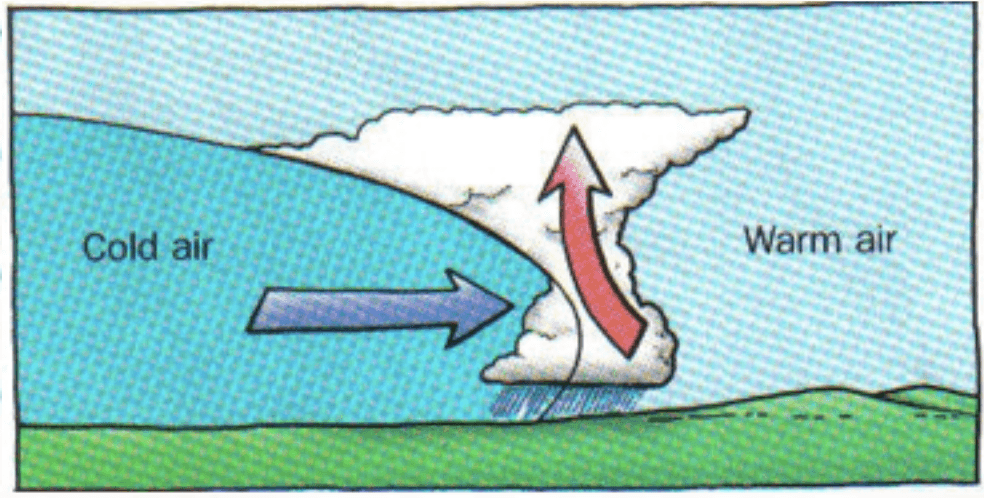
Name that front. (a)
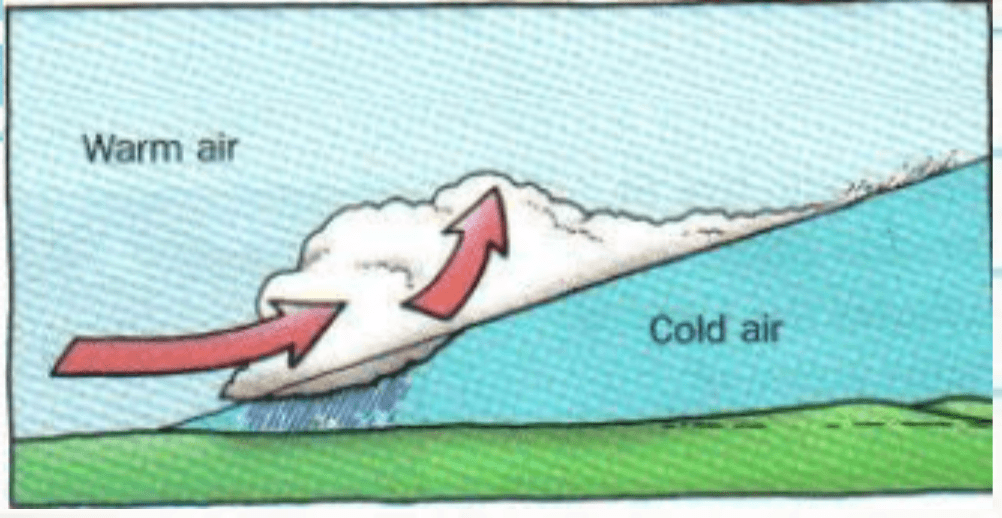
Name that front. (a)

Brings some clouds and gentle rains. (a)

Cold dense air slides underneath warm air. The warm air is forced up, cools, and condenses. (a)

This is the symbol for which type of front? (a)

This is the symbol for which type of front? (a)
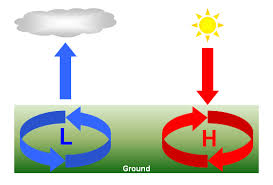
Which system results in drier, fairer weather? (a)
What type of weather will you see along a cold front? (a)
Located at the leading edge of a warm air mass. Brings gentle rain or light snow, followed by warmer, milder weather. (a)


Low pressure will usually bring what kind of weather? (a)
High pressure will usually bring what kind of weather? (a)

Cold front

Warm front

Occluded front

Stationary front

What is the instrument used to measure air pressure? (a)
Wind always blows from areas of (a) towards areas of (b) .

Determine the winds associated with the image below: (a)

Which best describes the type of weather associated with low air pressure? (a)

Which most likely produces clear, cool weather? (a)

Aliyah observes the air pressure daily. Over the last couple of days the air pressure has been increasing. What weather will Aliyah most likely observe as a result?
increasingly clear skies and more wind
increasingly clear skies and dry weather
increasingly cloudy skies and dry weather
increasingly cloudy skies and humid weather
When plants draw nutrients from the soil, the interaction is between which two spheres? (a)
Which spheres would feel volcanic eruptions and earthquakes? (a)

This picture best describes which connection? (a)

Polar Bears hunt seals on ice: (a)

A thunderstorm is a connection between: (a)
Water evaporating from the surface of a lake moves from the (a)
When carbon dioxide dissolves from the air into the ocean- the interaction is between (a)
Movements of ocean water in a continuous flow are called? (a)
The Coriolis Effect is caused by (a)
Due to the Coriolis Effect, water in the northern hemisphere moves (a)
Due to the Coriolis Effect, water in the southern hemisphere moves (a)
Warm ocean currents generally come from (a)
Deep Ocean currents are a result of (a)
(a) causes surface currents.
The more scientific name of the Global Conveyor Belt is (a) .

Temperature and salinity differences in ocean water cause: (a)
When water evaporates, residues of (a) and other minerals that will not evaporate are left behind, making water (b) .
What is a thermocline?
A rapid change in temperature with depth
A rapid change in temperature with latitude
A rapid change in salinity with depth
A rapid change in density with depth
The gradual increase in density as depth increases is the (a)
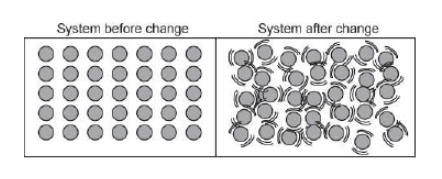
The picture below shows a closed system before and after undergoing a change. (a)
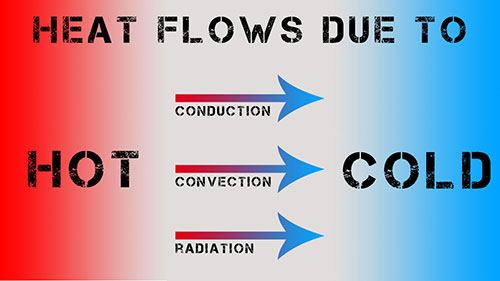
Jeriah places two metal cubes in contact with each other. Energy transfers as heat flows from Cube A to Cube B. What conclusion can you draw regarding Cube A? (a)
At room temperature water is a liquid. How could the water be changed to a solid? (a)
On a hot day the lake water warms and the temperature increases. How does the movement of the particles change? (a)
Thermal energy always moves from (a) to (b) .
The transfer of thermal energy between objects of different temperatures is called (a)
What is temperature?
a form of heat
a form of energy
a measure of kinetic energy
something to measure how hot or cold an object is

Hot water rises and cold water sinks. Is this: (a)
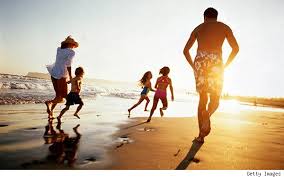
The sun shines down on this family as the play on the beach. (a)
Heat transfer is also called (a)
The rising and sinking in fluids is called a (a)

