
 Worksheets
Water Cycle Review
Total questions: 95
Worksheet time: 1hrs 8mins
What is the energy source for the water cycle?
the Sun
the Earth
water
the Moon

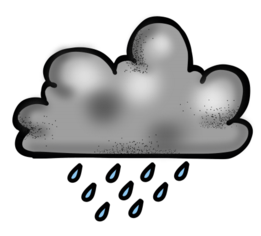
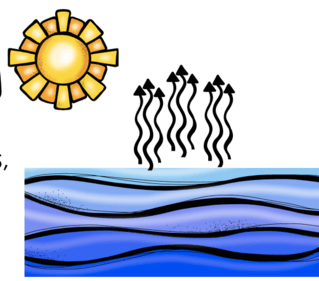



The water cycle has no start or end
True
False
In our Water Cycle Game/Simulation, where did most students end up spending their time? (2 answers)
Lake
Ocean
Atmosphere
Soil
When water travels through soil and rock
condensation
infiltration
evaporation
transpiration
Water cycle
the process in which a liquid turns to a gas
the giving off of water vapor by plants
to unload or empty the contents of something
the repeated changes that water goes through on the earth; includes precipitation, evaporation, condensation and collection
Evaporation
the process in which a liquid turns to a gas
the giving off of water vapor by plants
to unload or empty the contents of something
the repeated changes that water goes through on the earth; includes precipitation, evaporation, condensation and collection
Transpiration
the process in which a liquid turns to a gas
the giving off of water vapor by plants
to unload or empty the contents of something
the repeated changes that water goes through on the earth; includes precipitation, evaporation, condensation and collection
The process by which water vapor turns from a gas to a liquid
evaporation
condensation
collection
precipitation

The diagram shows the movement of water on Earth.
What part of the water cycle is represented by number 1?
transpiration
infiltration
evaporation
condensation

The diagram shows the movement of water on Earth.
What part of the water cycle is represented by number 2?
transpiration
infiltration
evaporation
condensation

The diagram shows the movement of water on Earth.
What part of the water cycle is represented by number 3?
transpiration
infiltration
precipitation
condensation

The diagram shows the movement of water on Earth.
What part of the water cycle is represented by number 4?
transpiration
surface runoff
precipitation
condensation
What is the primary energy source driving evaporation?
Lightning
solar radiation
hydrothermal vents
convection in Earth's mantle

What process is demonstrated by the picture?
precipitation
water discharge
surface runoff
evaporation
Put each state in order from particles closest together to particles farthest apart.
Solid
Liquid
Gas
In which state of matter are the particles the moving the fastest?
solid
liquid
gas
What is the process that turns a solid into a liquid?
melting
freezing
evaporation
condensation
What is the process that turns a gas into a liquid?
melting
freezing
evaporation
condensation
What is the process that turns a liquid into a gas?
melting
freezing
evaporation
condensation
What is the process that turns a liquid into a solid?
melting
freezing
evaporation
condensation
Which process requires that energy is removed from a substance for the change to occur?
melting
freezing
evaporation
Which process requires that more energy is added to a substance for the change to occur?
melting
freezing
condensation
If a liquid turns into a gas, what is happening to the amount of energy in the liquid?
It is decreasing
It stays the same
It is increasing
If a liquid turns into a solid, what is happening to the energy in the liquid?
It is decreasing
It stays the same
It is increasing
Where does the energy that powers the water cycle come from?
the sun
plants
animals
electrical outlets
What is the correct term for moisture that falls to the ground from clouds?
condensation
evaporation
precipitation
When gas changes to a liquid it is called __________.
evaporation
condensation
precipitation
Mark notices a puddle of water on his way home from school.The next day the puddle is gone.What most likely happened to the puddle of water?
it melted
it evaporated
it precipitated
it condensed
As time goes by, and water goes through the water cycle again and again, the amount of water on Earth__________.
increases
decreases
stay the same
goes up and then down
Snow, rain and hail are example of_________.
runoff
condensation
water vapor
precipitation
The constant movement of water from Earths surface to the atmosphere and back to Earths surface
water cycle
condensation
precipitation
water vapor
Where is most of Earths fresh water found?
the ocean
glaciers
rivers and streams
underground

Look at the image posted. Identify letter A
HINT: water that is pulled by gravity across land's surface, replenishing groundwater and surface water.
EVAPORATION
TRANSPORATION
CONDENSATION
PRECIPITATION
RUNOFF

Look at the image posted. Identify letter D
HINT: water beneath the surface of the ground
CONDENSATION
PRECIPITATION
RUNOFF
INFILTRATION
GROUNDWATER

Look at the image posted. Identify letter E
HINT: evaporation of water through the leaves of plants
EVAPORATION
TRANSIRATION
CONDENSATION
PRECIPITATION
RUNOFF
What is the process that causes clouds to form?
Evaporation
Condensation
Precipitation
Runoff
Which scenarios will not happen to a drop of water after it falls as rain on the ground.
It can runoff a slope to a pond or river.
It can instantly become groundwater.
It can be stored as ice or snow.
It can slowly filter through the soil.
Most of Earth's surface is covered with water. Only 2.5% of Earth's global water is freshwater. Of all the freshwater on Earth, 78% is frozen. Where is most of Earth's water found?
glaciers
lakes
oceans
rivers
Which part of the ocean would have the lowest salinity?
in areas near melting glaciers
in areas near the equator
in areas with the highest temperatures
in areas where there is little rainfall
Aquifers are sources of
freshwater, which is used for drinking, bathing, and watering crops.
saltwater, which is pushed through turbines to make energy.
oil, which is drilled from the aquifer and used to power homes.
silica, which is used to make glass and paper products.
Why are oceans a major part of the water cycle?
because they are large bodies of salt water that easily evaporate salt into the air
because they are large bodies of salt water that fresh water can be evaporated from
because the salt water condenses easily to become a gas in the air
because the salt water runs off onto land to fill lakes and streams

Tanya makes a table with the weather conditions at a body of water for five days. What day did the body of water most likely evaporate the fastest?
Friday
Thursday
Tuesday
Monday
Where does most drinking water come from?
reservoirs
lakes
groundwater
oceans
Which pie chart shows the relative proportions of Earth's water in each location?


The graph shows the distribution of water on Earth's surface. What can be concluded from this image?
Most of the freshwater on Earth is found in groundwater.
Most of the the water available on Earth is drinkable.
Most of the water available on earth is not drinkable
Most of the freshwater on Earth is found in oceans.

The picture below shows the polar ice caps in the Arctic sea. What will happen to the ice caps if the Sun's energy gets stronger?
The ice will become much colder, causing
clouds to form less rainfall.
The ice will become much harder, causing
clouds to form more rainfall.
The ice will become water, then the water will
become vapor.
The ice will become vapor, then the vapor will
become water.

Why is the ice melting in picture Y, but not picture
X?
The Sun's energy is heating the ice and turning
it into water.
The Sun's energy is heating the water and
turning it into ice.
The clouds are heating the ice and turning it into
water
The clouds are heating the water and turning it
into ice.

If the sky was clear in picture X, then the snow on
top of the mountain would
take in heat energy from the Sun and turn into
ice.
give off heat energy to the Sun and turn into a
liquid.
give off heat energy to the Sun and turn into a
gas.
take in heat energy from the Sun and turn into a
liquid.

The model below shows the water cycle. What is the purpose of this model?
to show how severe weather forms in the water
cycle
to illustrate how water travels from Earth's
surface into the atmosphere and back to Earth's
surface again
to show how Earth's water formed billions of
years ago
to illustrate how some water is lost on Earth as
some of it never returns to Earth's surface once
it evaporates
Which of the following terms refers to all of
Earth's water?
hydrosphere
dew point
water cycle
precipitation
Where does most of the water evaporation on
Earth come from?
surface lakes
transpiring plants
oceans
rivers
Wyatt takes a bottle of juice out of the
refrigerator. He notices that water begins to form
on the outside of the bottle. Which of the
following explains why the water started to form?
Evaporation occurs on the bottle because the
room is cooler than the bottle.
The bottle is freezing because the room is
cooler the bottle.
The bottle is melting because the room is
warmer than the bottle.
Condensation forms on the bottle because the
room is warmer than the bottle.

Which of the following is the cup in the picture
NOT modeling?
condensation caused by cooled water
clouds
the heat produced by the Sun
rainfall

What would happen if the lamp were removed
from this model?
The clay in the mountain would harden more
quickly.
The ice would continue to stay frozen in the cup
and not change states.
The water at the bottom of the aquarium would
evaporate more slowly.
The temperature of the aquarium would greatly
increase.

What would NOT happen if another lamp were
added to the model?
The ice would melt more quickly because of the
extra heat.
More clay would form and the mound would get
higher.
The temperature inside the aquarium would
increase.
More water in the aquarium would turn into a
gas more quickly.
Rain, snow melt, or other water that flows in surface streams, rivers, or canals.
condensation
surface runoff
humidity
evaporation

What process is happening in number 6?
transpiration
evaporation
condensation
accumulation

What is number 1 in the diagram?
condensation
evaporation
runoff
precipitation

The process in which some water within plants evaporates into the atmosphere.
evaporation
transpiration
condensation
precipitation

The process by which molecules of water vapor become liquid water.
transpiration
evaporation
condensation
accumulation
The movement of water between the atmosphere and Earth’s surface.
rock cycle
continental drift
water cycle
humidty
A measure of the amount of water vapor in the air.
humidity
precipitation
evaporation
transpiration
Any form of water that falls from clouds and reaches Earth’s surface.
accumulation
precipitation
condensation
surface runoff
The process by which water molecules in liquid water escape into the air as water vapor.
surface runoff
condensation
evaporation
precipitation
When warm, evaporated air rises, it cools and begins to turn into liquid again. This part of the water cycle is called:
a: transpiration
b: precipitation
c: runoff
d: condensation
When moisture is released from the leaves of trees into the air it is called:
a: transpiration
b: evaporation
c: precipitation
d: runoff
What does condensation look like in the sky?
It looks like rain
It looks like clouds
It looks like a tornado
I see it on my windows

What process is happening step A?
transpiration
evaporation
condensation
accumulation
Besides precipitation, what other step of the water cycle is driven by Gravity?
Evaporation
Condensation
Run-off

