
 Worksheets
PMA 2 Review
Total questions: 100
Worksheet time: 2hrs 43mins


What is mass?
The amount of matter in an object
The amount of water in an object
The amount of fat in an object
The amount of gravity in an object
What is weight?
The magnetic force acting on the body
The electric force acting on the body
The amount of matter in a body
The gravitational force acting on the body
What is the formula for density?
density = mass / volume
density = volume / mass
density = mass x volume
density = mass + volume


What is MATTER?
Anything that has MASS
Anything that takes up SPACE
Anything that has MASS and takes up SPACE
Anything that DOES NOT have mass or take up space
These have a FIXED volume, but NOT a fixed shape, taking the shape of their container.
Solid
Liquid
Gas
In which state of matter will there be the LARGEST space between molecules?
Solid
Liquid
Gas
Neutral solutions have a pH of:
0
1
7
14

Vinegar, fruit juice, and cola are examples of:
strong acids
strong bases
strong bases
weak acids

Is laundry detergent an acid or a base?
Acid
Base
Neither (Neutral)
Ammonia is found in many household products, including window cleaner. What is the pH of ammonia?
It's acidic.
It's basic.
It's neutral.

Vinegar is an example of:
An acid.
A base.
Neither an acid nor a base.


The parts of the experiment that are kept the same for all groups are called...
Controls
Constants
Test Variables
Outcome Variables
The variable that the scientist changes on purpose is..
Constant
Control
Test Variable
Outcome Variable
The variable that is being counted, or measured at the end of the experiment is known as ...
Control
Constant
Test Variable
Outcome Variable
In an experiment testing the melting time of ice cream with different toppings. Which of these would be the control group?
vanilla ice cream
vanilla ice cream with sprinkles
vanilla ice cream with hot fudge
vanilla ice cream with caramel
Mrs. Szerdy wants to see if studying time affects test scores...She gives all 6 classes the same test but assigns different study times. What is the constant?
Study Times
Test Scores
The Test
Mrs. Szerdy wants to see if studying time affects test scores. She gives all 6 classes the same test but assigns different study times. What is the test variable?
Study time
Test score
The test
The subject
Mrs. Szerdy wants to see if studying affects test scores. She gives all 6 classes the same test but assigns different study times. What is the outcome variable?
Study time
Test Score
The test
The subject
A student wants to test the hypothesis of "If salt is added to water then the boiling point of water will decrease." What is the test variable?
Amount of salt
Boiling Point
Amount of water
When experimenting with the growth of a plant, a scientist uses three (of the same type of) plants, equal light, equal water, and two different fertilizers. What type of variable is the fertilizer?
Outcome
Test
Control
Constant

A student wants to test the effects of different types of exercise on heart rate. What is the outcome variable?
heart rate
type of exercise
amount of exercise
time of day exercise occurs
When you predict an outcome of an experiment you are ....
Hypothesizing
Experimenting
Analyzing
Concluding
This is a test to see if your hypothesis is correct.
Observe
Experiment
Analyze
Conclude

Zack is testing whether temperature affects the distance a rubber band can be stretched before it breaks. He tests three rubber bands at room temperature. He heats three rubber bands in a microwave oven. He puts three in the refrigerator and three in the freezer.
Which is the control group?
rubber bands at room temperature
rubber bands in the freezer
rubber bands in the refrigerator
rubber bands in the microwave

The picture showing the energy conversion
Light → chemical
is:


The picture showing the energy conversion
Chemical → kinetic
is:


What causes the seasons?
Ethan is observing chemical and physical properties of a substance. He heats a
substance and observes that the substance turns from a brown solid to a black
powder. He refers to several chemistry journals that claim this represents a chemical
reaction. From his observation and research, he concludes that the substance goes
through a chemical change when heated. How can Ethan best defend his conclusion?
A. by demonstrating that the substance will eventually melt if the temperature
continues to increase
B. by verifying that the substance is now made up of different molecules than
before it was heated
C. by verifying that the substance is made up of only one type of element
D. by demonstrating that the substance is less dense after it is heated


Keesha did an experiment to study the rate of photosynthesis in the water plant Elodea. She placed a piece of Elodea in a beaker of water and set the beaker 10 centimeters (cm) from a light source. Keesha counted the bubbles released from the plant every minute for five minutes (min). She repeated the process two more times. First, she moved the light to 20 cm from the beaker, and then she moved the light to 30 cm from the beaker. Keesha’s setup and data are shown below.What is the is the test variable (independent variable) in this experiment?
the number of bubbles produced
the type of plant placed in the beaker
the distance of the light source from the plant
the amount of time the bubbles were counted
Methane + 2O2 --> CO2 + 2H2O
what is the chemical formula for methane based on this equation? (hint: remember that the number of atoms of each elements has to match on both sides)
C2H4
CH4
CH4O
CH2
which of the following is not an example of a chemical change?
Burning wood
sawing wood
baking a cake
digesting food
which of the following is not an example of a physical change?
Mixing and pouring concrete
Melting ice
burning wood
tearing paper
The Law of Conservation of Mass says that matter can neither be __________ or __________.
created; destroyed
recycled; renewed
subtracted; added
joined; separated
How many oxygen atoms are in the products for the chemical reaction below? 4Fe + 3O2 → 2Fe2O3
2
3
5
6
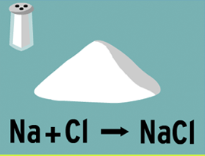
When sodium and chlorine combine to form sodium chloride, sodium chloride is the:
Originator
Reactant
Product
Produce

What type of elements are malleable and ductile?
noble gases
nonmetals
metals
halogens


Majority of an atom is made up of?
Empty space
a lot of water
a lot of air
Stable atom has the same number of _______ and _________.
proton and neutrons
protons and electrons
neutrons and protons
Electrons and neutrons

2. Which element has the most similar properties with boron?
A) Silicon
B) Gallium
C) Carbon
D) Fluorine
Weaker bases have a pH closer to...
8
0
14
4
Stronger acids have a pH closer to...
7
0
14
9
The pH scale is a range from:
1-7
0-14
1-5
1-14
What is the only substance with a neutral pH of 7?
Milk
Orange Juice
Pure water
Bleach
Tastes sour
acid
base
neutral
both acids & bases
The products of a neutralization reaction are always
an acid and a base
an acid and a salt
salt and water
salt and base
Latoya adds sugar molecules to the cells she is studying. The cell will use the sugar to produce energy by the process of cellular respiration. Toward which organelle is Latoya likely to find the sugar molecules moving?
chloroplast
mitochondria
lysosome
nucleus
Living systems obey the Law of Conservation of Mass. Which of the following BEST summarizes this law?
Matter cannot be changed in form during a chemical reaction.
Matter can be created or destroyed during a chemical reaction.
Energy cannot be created or destroyed; it can only change in form.
Matter cannot be created or destroyed; it can only change in form.
The gravitational pull of the Moon has the greatest influence on the water levels of the Earth’s ocean tides. If the distance between the Moon and Earth were to decrease steadily for one week, which water-level changes would be expected to occur?
High tides would get higher and low tides would get lower
Both high tides and low tides would get higher
Both high tides and low tides would get lower
High tides would get lower and low tides would get higher
While watching a popular science fiction movie, space vehicles loudly shoot each other with lasers and explode with a booming sound. Students of science know that sound does not travel through space and these movie scenes showing space sounds are factually incorrect. Why are there no sounds in space?
Sound waves travel as transverse waves
Sound waves require a medium
Sound waves can only travel through air particles
Sound waves have high frequencies
A television converts electrical energy into light and sound energy. Not all energy that enters the television is converted into light and sound, however. What happens to the energy that enters a television, but is not converted to light or sound?
The energy returns to the electrical socket.
The energy is stored in the wires of the television.
The energy is changed into heat.
The energy is destroyed in the conversion process.
Patrice slides a textbook across a table. Shortly after the book is released from her hand, it begins to slow down and appears to lose energy. Which statement BEST explains where the energy goes as the book slows down?
It is transferred to the air in the form of potential energy.
It is transferred to the table in the form of thermal energy.
It is transferred to the book in the form of potential energy.
It is transferred to Patrice’s hand in the form of thermal energy.
In a lab, a scientist has a beaker of pure water with a battery at the bottom. When she places a lightbulb in the water, the light bulb does nothing. She then adds salt to the water and places the lightbulb in the water with the salt in it, and the lightbulb lights up. What physical property was produced in the water when salt was added to the water?
solubility
flammability
malleability
conductivity
John knows that any atom that has 19 protons is a potassium (K) atom. Which statement BEST describes what would happen if a proton was added to the potassium atom?
The atom will lose electrons.
The atom would have a negative charge.
The atom would no longer be potassium.
The atom would have a smaller atomic number.
Atoms and molecules are constantly in motion. The more energy the atom or molecule contains, the faster they move about. In which state of matter do the atoms and molecules have the MOST energy?
in a gas
in a liquid
in a solid
in both a liquid and a solid
Which statement is the BEST argument for a hypothesis that has evidence to reinforce its claim?
The results prove the hypothesis is correct.
The results create the hypothesis.
The results support the hypothesis.
The results change the hypothesis.

Keesha did an experiment to study the rate of photosynthesis in the water plant Elodea. She placed a piece of Elodea in a beaker of water and set the beaker 10 centimeters (cm) from a light source. She counted the bubbles released from the plant every minute for five minutes. She repeated the process two more times. First, she moved the light to 20 cm from the beaker, and then she moved the light to 30 cm from the beaker. Keesha’s setup and data are shown below. What is the dependent variable (outcome variable) in this experiment?
The number of bubbles produced.
The type of plant placed in the beaker.
The distance of the light source from the plant.
The amount of time the bubbles were counted.

According to the Law of Conservation of Mass, matter is not created or destroyed during ordinary chemical processes. Instead, chemical reactions rearrange atoms into different chemicals. The word equation below summarizes the process of cellular respiration. Based on the information provided, what molecule provides the hydrogen that forms water during cellular respiration?
glucose
oxygen
carbon dioxide
water

