
 Worksheets
Semester 1 Final Practice Test
Total questions: 100
Worksheet time: 1hrs 17mins
An example of a physical/structural adaptation is...
a turtle hiding inside its shell
The spikes on a porcupine fish
a rabbit burrowing underground
a viper biting when threatened
A lion has pointed teeth to help it tear meat off of the bone.
Behavioral Adaptation
Physical/Structural Adaptation


I am a polar bear who lives in the arctic. My fur is a beautiful white, just like the snow I live in. What adaptation is this adaptation called?
camouflage
mimicry
migration
hibernation
I am a grey goose who loves to fly. Every fall when it starts to get cold, I fly south for the warmth. Once my home warms up, I know it is safe to go back home. What adaptation is this?
hibernation
mimicry
camouflage
migration
Which result is likely to happen to a species that cannot adapt to changes in its environment?
Grow and reproduce
Decrease in numbers or become extinct
Only hunt at night
Only eat one type of food.
If you were organizing a timeline of important events that occurred in the history of life, how would you order life forms from earliest to latest?
simple celled -> multicellular -> complex-celled
multicellular -> complex-celled -> simple-celled
simple celled -> complex celled -> multicellular
multicellular -> simple celled -> complex celled

Fossil horses are very different from the horses of today. Based on the evidence shown in the picture, which of the following conclusions is supported?
Horses became larger in size, with fewer toes
Horses became larger in size, with more toes
Horses became smaller in size, with fewer toes
Horses became smaller in size, with more toes
Trace fossils reveal much about an animal's appearance. They are the evidence of animal activity. Which of the following is not an example of a trace fossil?
footprints
a burrow
feces/animal waste
tail bone
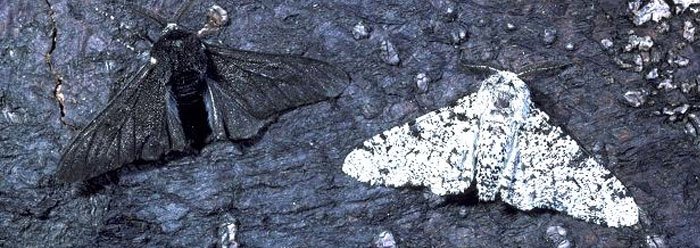
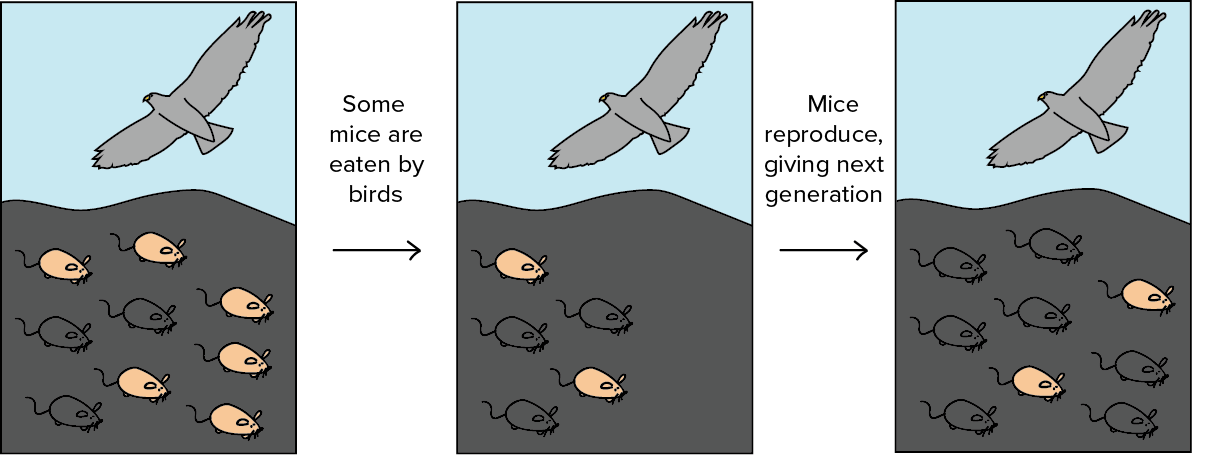

What is most likely to happen to moth populations in the picture shown?
Light moths--hunted easily, dark moths--population increase
Dark moths--hunted easily, dark moths--population increase
Light moths--hunted easily, light moths--population increase
Lights moths will change their color to match dark moths.
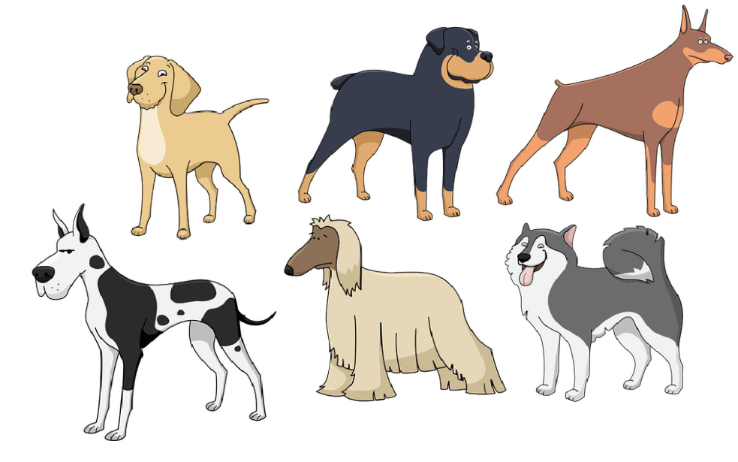
Genetic diversity in a species makes long term survival of some members
impossible
improvable
more likely
less likely
In a cold environment what would be some adaptive traits? Sellect all that apply.
thick blubber
thick fur
thin fur
strong muscles
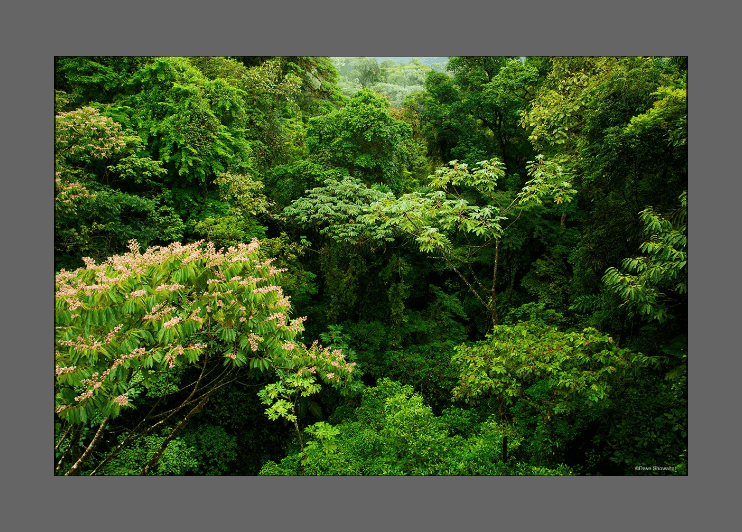
A yellow morph and green morph of an insect lives in the rainforest canopy. You would expect:
the green population to increase and the yellow to decrease
both populations should stay the same
both populations will increase
the green population to decrease and the yellow to increaseThis is a wrong answer
What are the 3 factors that affect the process of natural selection?
Underproduction
Variation
Overproduction
Competition
Crabs eat thin-shelled oysters. Oysters are ____.
prey
predator
variation
adaptation
Crabs eat thin-shelled oysters. Crabs are _____.
predator
prey
characteristic
variation
Crabs eat thin-shelled oysters. Thin-shelled is _______.
variation
trait
adaptation
evolution
Brightly colored male birds have a better chance to mate, but lesser chance to avoid predators. Which of these is true?
Female birds are color blind.
Male birds are not interested in mating.
Brightly colored male birds must avoid predators in order to mate.
Female birds protect brightly colored male birds from predators.
A drought causes finches with small beaks to starve. Beak size is __________.
a trait
irrelevant to survival
a cause for selection
advantageous to finches
Body part you have that use to have a purpose but now has little or no function
vestigial organ
embryology
homologous structures

Why are there more animal fossils than plant fossils?
Animals are smaller than plants, so they break down faster.
Animals eat plants.
Plants have harder bodies than animals, so they break down.
Plants have softer bodies than animals, so they break down.

A scientist drew some diagrams of ancestors of elephants based on fossil evidence. Which is the BEST conclusion that can be made from comparing the diagrams?
(Model Description: The first elephant ancestor is 50 million years old and very small, the second elephant ancestor is 30 million years old and much larger. The trunk is also short. The last ancestor is 20 million years old and taller, but shorter width wise. The trunk is also longer.)
Ancient elephants were better adapted than modern elephants.
Elephant habitats have remained the same over time.
Elephant fossil evidence is widespread and complete.
Elephant species have changed over time.

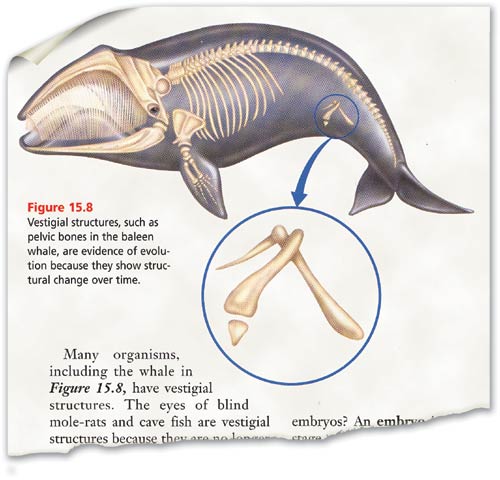
This image illustrates what type of structure
Homologous
Analogous
Vestigial
Bone
There are 13 species of Galapagos finches with 13 varieties of beaks. When a drought affected the Galapagos Islands in 1977, seeds became scarce. Some finch species survived while other finch populations decreased. Which is the most likely explanation for their survival?
Finches with less colorful beaks were able to easily hide from predators.
Finches with smaller beaks were able to change their diet to eat soft fruits.
Finches with more colorful beaks had a greater chance to mate and produce offspring.
Finches with beaks that were able to eat the types of seeds that survived, were more likely able to survive and reproduce.
Imprints of the shells of ocean clams are often found in the rocks of the Appalachian Mountains. What do these imprint fossils most likely indicate?
These mountains were once under the ocean.
These mountains once had a more rainy climate.
Mountain river clams evolved from ocean clams.
Ocean clams evolved from mountain river clams.
A new predator moves into an area with a population of rabbits. The rabbits with longer back legs have an advantage because they can run faster and escape the predator. Which will be the most likely effect on the rabbit population?
The population will become extinct due to stress.
The rabbit population will produce fewer offspring.
The rabbits with shorter back legs will learn to hide.
The future generations of rabbits will have longer legs.


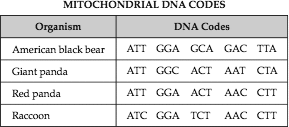
What conclusions can be made based on this table shown?
the American black bear and the giant panda are most closely related
the giant panda and the red panda are most closely related
the red panda and the racoon are the most closely related
the giant panda and the racoon are most closely related
The ___________ is a chart that divides Earth's history into different time units.
relative-age dating
geologic time scale
absolute-age dating
theory of evolution
Approximately how old is the Earth?
3.4 billion years old
6 billion years old
4.6 billion years old
1.2 million years old
A ______ is a fossil copy of an organism in a rock.
mold
trace fossil
cast
carbonization
A _______ is an impression of an organism in a rock.
cast
carbonization
mold
trace fossil

This picture is an example of a:
carbonization
mold
cast
trace fossil

This type of fossil is tree sap hardened and replaced by minerals.
Petrified wood
Imprint
Amber
Mold
Which organism is most likely to become fossilized in the next million years?
a butterfly
a giraffe
an octopus
an earthworm
Which is the most recent era of time- the one that we are currently in?
Cenozoic
Pre-Cambrian
Cambrian
Paleozoic
The era that dinosaurs ruled the Earth's land, air and oceans.
Pre-Cambrian
Cenozoic
Mesozoic
Paleozoic
The end of the Mesozoic Era was most likely caused by?
An ice age
Rising oxygen levels
A meteor
Too much oxygen

What type of fossil is this?
Cast fossil
Mold fossil
Petrified fossil
Trace fossil


Which of the following offers a possible list of the layers in order from oldest to youngest?
A, B, C, D, E
E, C, B, D, A
E, D, C, B, A
C, B, A, D, E

What is the youngest layer in the diagram?
A
B
C
D

Most scientists believe the Big Bang Theory explains which of the following questions?
How our planets and moons formed
How our universe began
How the sun turns hydrogen into helium
How fast light travels through space
Which statement is true?
The galaxies are moving toward us.
The galaxies are moving away from us.
The universe remains static or unchanged in motion.
None of the above
Which elements are most
abundant in the visible
universe?
Hydrogen and Carbon
Carbon and Helium
Hydrogen and Oxygen
Hydrogen and Helium
A DATE that is commonly accepted by Big Bang theorists for the Big Bang is ____ years ago.
100,000
250 million
13.8 billion
10 trillion
RED shift of light means the star is moving
toward Earth
away from Earth
not moving
When you paddle a canoe, the canoe goes forward.
Newton's first law
Newton's second law
Newton's third law
Match the following Law of motion with the correct example
Newton's 1st law of motion
Roll a ball across smooth/rough surfaces. The ball rolls faster on smooth because less fiction
Newton's 2nd law of motion
Hit a ball with 2 different forces, the ball will have greater acceleration due to larger force
Newton's 3rd of motion
Bouncing the ball on the court is the action, the floor pushing the ball back up is the reaction


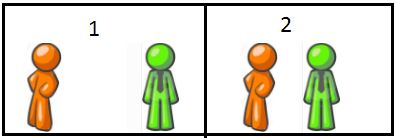
The Earth's rotation takes.....
1 year
24 hours
12 months
3 years
If the Earth's rotation INCREASED what would happen?
the day would be longer
the day would be shorter
the Year would be longer
the Year would be shorter
When you are located on an area of Earth that is facing AWAY from the Sun, you are experiencing....
day
night
How long does it take Earth to REVOLVE around the sun?
about a 1 day
about 24 hours
about 3 years
about 1 year
The day of the year with the longest amount sunshine
winter solstice
summer solstice
vernal equinox
fall equinox

Rotation movement causes....
Days
Days and nights
Nights
Seasons

When in the Northern hemisphere is summer in the Southern hemisphere is...
Winter
Autumn
Spring

Which hemisphere is having winter?
Northern
Southern

What Season is letter A (in the southern hemisphere?
Summer
Spring
Fall
Winter

What type of eclipse is shown in the picture?
Solar
Lunar

What type of eclipse is shown in the drawing?
Solar
Lunar

What type of tide would this arrangement of earth-moon-sun create?
full moon tide
new moon tide
neap tide
spring tide

What is the independent variable in an experiment?
The variable that is measured
The variable that is changed or controlled
The variable that remains constant
The variable that is dependent on others
Which of the following is a dependent variable in an experiment?
The variable that is changed or controlled
The variable that is measured
The variable that remains constant
The variable that is independent
A hypothesis is formed...
Before you perform the experiment
After you record and analyze the data
After you state the conclusion
Before you state the problem
A scientist decided to test whether temperature had any effect on how quickly sugar would be dissolved in water. She cooled 500 ml of water in the refrigerator, kept 500 ml of water at room temperature, and heated 500 ml of water on a hot plate. She placed 50 ml of sugar in each sample of water and used a stopwatch to see how long it took for the sugar to dissolve.
In this experiment, what is the INDEPENDENT variable?
The amount of sugar
The time it took the sugar dissolve
The temperature of the water
The amount of water
What science skill are you using if you are looking at different salts and noticing color and crystal size?
Observing
Communicating
Hypothesizing
Researching

A teacher displayed this poster of the Sun and the planets in the solar system. What was the teacher trying to model to the students?
The size relationship of the sun and planets
The type of atmosphere of the sun and planets
The composition of the sun and planets
The rotation relationship between the sun and planets

Which of the following statements best interprets the data in the pie chart?
Most water was used to flush toilets
More water was used showering than washing clothes
Leaks and Faucet made up 25.4% of water usage
Leaks were the source of the least amount of water used


How long is the red line?
2.2 cm
22 mm
2.7 cm
2.7 inches

Based on the photo, what is the volume of the liquid?
35 mL
24 mL
25 mL
30 mL

The mass of the chocolate cake is 250 g.
qualitative
quantitative

Which of the following is an accurate observation that you could make based on what this graph shows.
There was no change to the gummy bear after 24 hours of being submerged in water.
The gummy bear changed the most in length from being submerged in vinegar
The gummy bear that has the greatest mass is the one that was submerged in vinegar.
Gummy bears change color when they are submerged in different liquids.
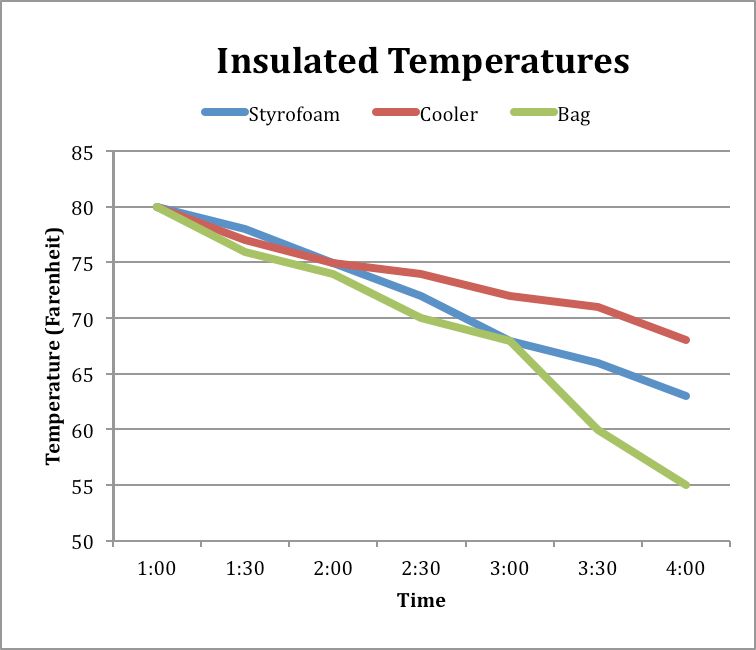
What was the temperature of the liquid in the Styrofoam container at 4:00?
55 degrees
68 degrees
73 degrees
63 degrees

