wayground logo

Free Printable Worksheets

Font size

S
M
L
XL
Worksheets

SSA-Physical Science Review

Total questions: 108

Worksheet time: 2hrs 10mins

Name
Class
Date
1.
Blue liquid and yellow liquid mixed to make a green liquid
a)
Chemical Change
b)
Physical Change
2.
Is melting butter for popcorn a chemical or physical change?
a)
chemical
b)
physical
3.
Is making salt water to gargle with a physical or chemical change?
a)
physical
b)
chemical
4.
An gel ice pack getting cold after you put it in the freezer for an hour.
a)
Chemical Change
b)
Physical Change
5.
Using dye to change the color of a shirt green.
a)
Chemical Change
b)
Physical Change
6.

Which of the following could indicate that a chemical change took place?

a)

Change in color

b)

Production of Energy

c)

Formation of Gas

d)

All are correct

7.

The difference between a Physical change and a Chemical change is…

a)

Physical change is only a change to the outside appearance.

b)

Chemical change is when matter is changed into something new.

c)

Atoms are rearranged in chemical changes & not in physical.

d)

All are correct.

8.

What does a chemical change result in?

a)

A change in state of the substance (ex. liquid to solid)

b)

A change in texture of the substance.

c)

A change in the way atoms are bonded to each other.

d)

A change in the appearance of the substance.

9.

During Chemical Reactions, the substances that are used are called?

a)

Precipitate

b)

Corrosion

c)

Reactants

d)

Products

10.

During Chemical Reactions, the new substances created are called?

a)

Precipitate

b)

Corrosion

c)

Reactants

d)

Products

11.

Which is not a clue that could indicate a chemical change has occurred?

a)

Change in color

b)

Change in shape

c)

Release of energy

d)

Formation of an odor

12.

If the chemical properties of a substance remain unchanged & the appearance or shape of an substance changes it is a...

a)

Chemical Change

b)

Physical Change

c)

Both a physical and chemical change.

d)

Neither a physical or chemical change.

13.
In physical changes, substances might change in __________ but not in __________.
a)
appearance, composition
b)
volume, state of matter
c)
texture, color
d)
weight, mass
14.

Which elements are to the right of the zig zag?

a)

metals

b)

nonmetals

c)

metalloids

15.

Which elements are to the LEFT of the zigzag?

a)

metals

b)

nonmetals

c)

metalloids

16.
Which of the following is a physical characteristic of a metal?
a)
texture
b)
malleable
c)
brittle
d)
semi-conductor
17.
An element has properties of BOTH metals and nonmetals. WHERE would it be found in the periodic table? 
a)
To the right 
b)
To the left 
c)
on the zig zag line
18.
What does luster mean?
a)
Breaks into pieces
b)
can be hammered into thin sheets
c)
No shine
d)
reflects light, shiny 
19.

The temperature at which a gas turns into a liquid

a)

Melting point

b)

Freeing point

c)

Boiling point

d)

Condensation point

20.
Frank has an eraser. It has a mass of 4g, and a volume of 2cm3. What is its density?
a)
8 g/cm3
b)
2 g/cm3
c)
1/2 g/cm3
d)
24 g/cm3
21.
What is the volume of Object X?
a)
10.0 cm3
b)
15.0 cm3
c)
20.0 cm3
d)
25.0 cm3
22.
Helium balloons rise on earth because
a)
helium is less dense than air
b)
helium is more dense than air
c)
helium is cooler than air
d)
helium is warmer than air
23.
Subatomic particles with a positive charge
a)
neutrons
b)
atomic mass
c)
protons
d)
isotopes
24.
Subatomic particles that are neutral in charge
a)
Neutrons
b)
Protons
c)
Nucleus 
d)
Electrons
25.
A tiny but very dense, positively charged portion of the atom that holds most of the atomic mass
a)
Electron Shells
b)
Orbitals
c)
Electron Cloud
d)
Nucleus
26.
Where electrons are likely to be found as they travel around the nucleus
a)
Nucleus
b)
Electron Cloud
c)
Within a Proton
d)
Within a Neutron
27.
Elements can be broken down into simpler substances. 
a)
false 
b)
true 
c)
sometimes 
28.
Classify the picture with the correct label.
a)
Element
b)
Compound
c)
Mixture of Elements
d)
Mixture of Compounds
29.
Classify the picture with the correct label.
a)
Element
b)
Compound
c)
Mixture of Elements and Compounds
d)
Mixture of Elements
30.
Classify the picture with the correct label.
a)
Element
b)
Compound
c)
Mixture of Elements & Compounds
d)
Mixture of Compounds
31.
As particles are exposed to warmer temperatures they __________
a)
speed up
b)
slow down
c)
stay the same
d)
vibrate
32.
These can only be separated by chemical means. 
a)
element 
b)
compound 
c)
mixture 
d)
stuff 
33.
The things in a mixture always retain their........
a)
smell properties 
b)
physical and chemical properties 
c)
shape 
d)
color 
34.
A compound is made of ________ atoms. 
a)
big 
b)
similar 
c)
different 
35.
This can be separated physically. 
a)
mixture 
b)
element 
c)
compound 
36.
Carbon Dioxide is a ______ 
a)
compound 
b)
element 
c)
mixtures 
d)
Battle of Bunker Hill 
37.
Of these mixtures, which one is a solution?
a)
A
b)
B
c)
C
d)
D
38.
A pure substance that cannot be broken down into other substances by chemical or physical means. 
a)
compound          
b)
atom
c)
mixture 
d)
element
39.

Can be either a single atom or multiple atoms

a)

Element

b)

Molecule

c)

Compound

40.

_____ waves have vibrations that run parallel to the direction the wave travels, and _____ waves have vibrations that run perpendicular to the direction the wave travels.

a)

transverse, longitudinal

b)

longitudinal, transverse

41.

Waves transfer _______.

a)

particles

b)

matter

c)

energy

42.

The _______ is the size or height of a wave, measured from the equilibrium to the crest or trough.

a)

Amplitude

b)

Wavelength

c)

Frequency

43.

_______ is the distance between waves, measured from one crest to the next crest.

a)

Wavelength

b)

Frequency

c)

Amplitude

44.

The _______ of a wave is how many waves pass a given point every second.

a)

Frequency

b)

Wavelength

c)

Amplitude

45.

Waves that can travel through empty space are called _____ waves. Waves that require a medium to travel, such as air or water, are called _____ waves.

a)

mechanical, electromagnetic

b)

electromagnetic, mechanical

c)

crest, trough

d)

compressional, rarefactional

46.

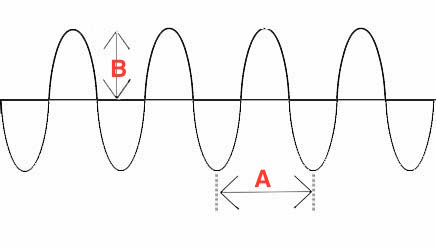
What property of this wave is represented by the letter "A"

a)

amplitude

b)

crest

c)

trough

d)

wavelength

47.
When the frequency of a wave increases, what happens to the wavelength?
a)
The wavelength is not directly affected by the frequency of a wave.
b)
The wavelength increases.
c)
The wavelength decreases.
d)
More specific information is needed to form a conclusion about the wavelength.
48.
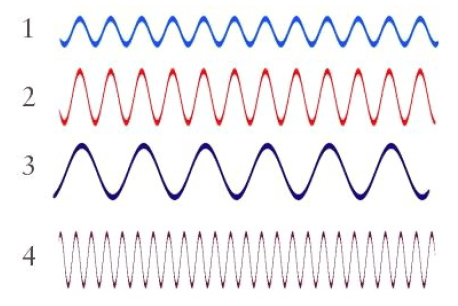
Which wave in the diagram has the greatest frequency?
a)
1
b)
2
c)
3
d)
4
49.
Which of these describes how light travels through an empty space?
a)
It travels straight but may change direction to avoid objects.
b)
It changes direction often even if there are no objects. 
c)
It comes to a stop after it travels a certain distance. 
d)
It travels in a straight line without stopping. 
50.

Which has more energy than visible light?

a)

Microwaves

b)

Radio waves

c)

Infrared light

d)

Gamma rays

51.

Which has less energy than visible light?

a)

Radio waves

b)

Gamma rays

c)

X-Rays

d)

UV light

52.
What is happening when you see something Black?
a)
All light is getting absorbed by the object and no light is reflected
b)
No light is getting absorbed by the object and all light is reflected
c)
The object is just black
d)
The object is being reflected
53.
What is happening when you see something White?
a)
All light is getting absorbed by the object and no light is reflected
b)
No light is getting absorbed by the object and all light is reflected
c)
The object is just white
d)
The object is just black, but looks white
54.
Define REFRACTION
a)
When light bounces off something smooth at the same angle it hits the object
b)
When light bends as it passes through an object
c)
When light bounces off a rough surface at the same angle it hits the object
d)
When light looks green but is actually white.
55.
What are some examples of refraction
a)
When looking through a glass of water things are backwards
b)
When looking through a glass of water things are bent
c)
When a prism changes the direction of light
d)
All of the above
56.
Electrons are not factored into atomic mass because:
a)
They are so small their mass is negligible
b)
They're not in the nucleus
c)
They're too big
d)
They move so quickly their mass is zero
57.

What is the number of complete waves passing a fixed point in a given amount of time?

a)

Amplitude

b)

Intensity

c)

Wavelength

d)

Frequency

58.

Period of a wave refers to...

a)

how long it takes for the event to repeat.

b)

how strong a wave is.

c)

how long a wave is.

d)

how much energy a wave has.

59.

Shorter wave lengths can carry more energy. Which of these probably carries the MOST energy:

a)

Infrared light

b)

Visible light

c)

X-rays

d)

UV light

60.

What is the distance between the calm sea and the highest wave called?

a)

Wave

b)

Frequency

c)

Amplitude

d)

Magnitude

61.

What does #1 represent?

a)

Period

b)

Frequency

c)

Wavelength

d)

Amplitude

62.

What does #2 represent?

a)

Period

b)

Frequency

c)

Wavelength

d)

Amplitude

63.

What does #3 represent?

a)

Period

b)

Frequency

c)

Wavelength

d)

Amplitude

64.

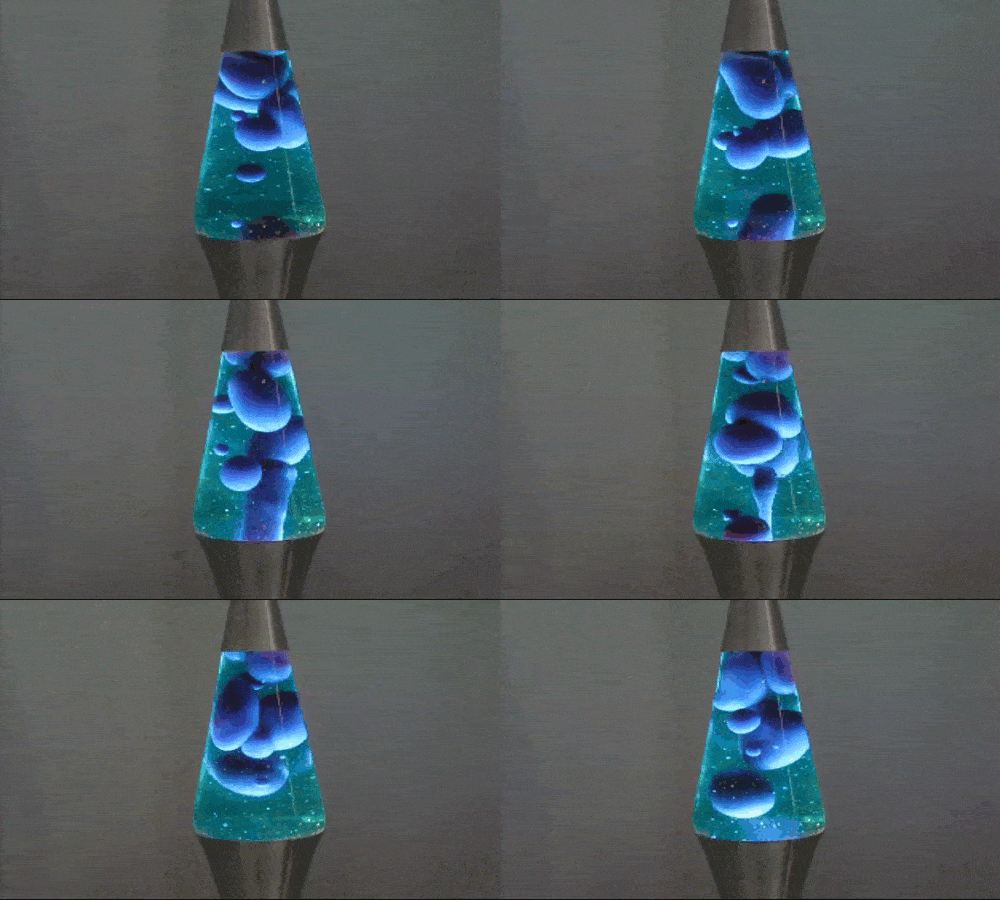
A certain type of decorative lamp contains colored liquids. These liquids form globs that break off and rise to the top of the liquid. The globs rise due to

a)

Convection

b)

Conduction

c)

Radiation

d)

Globulation

65.

Near the ceiling of a room, the air is warmer. The warmer air is rising because of

a)

Convection

b)

Conduction

c)

Radiation

d)

It was told to by this crazy fool!

66.

In a swimming pool, the water near the surface is slightly warmer. The temperature of the water near the top rises because of

a)

Convection

b)

Conduction

c)

Radiation

d)

Too many dogs being in the pool!

67.

In heat transfer, heat always flows from the _______________ object to the _______________ object.

a)

hotter / colder

b)

colder / hotter

c)

hotter / hotter

d)

colder / colder

68.

Which of the following statements is true regarding heat energy?

a)

The quicker a molecule moves, the colder it is.

b)

The slower a molecule moves, the warmer it is.

c)

The quicker a molecule moves, the warmer it is.

d)

The faster you dance, the quicker you get tired.

69.

The flow of heat due to a temperature difference is called...

a)

Heat Transfer

b)

Conduction

c)

Convection

d)

Radiation

70.

This picture is an example of...

a)

Conduction

b)

Convection

c)

Radiation

71.

When heat energy can travel in space by infrared or thermal radiation it is called...

a)

Conduction

b)

Convection

c)

Radiation

72.

A type of heat transfer that does not rely on physical contact of substances is called...

a)

Conduction

b)

Convection

c)

Radiation

73.

The higher the temperature the higher the...

a)

Kinetic Energy

b)

Potential Energy

c)

Sound Energy

d)

Chemical Energy

74.

The more heat the more the particles...

a)

Stay in a fixed psoition

b)

Vibrate

75.
Which direction will the heat flow while this ice cap melts?
a)
there is no heat transfer
b)
from the icecap to the water
c)
from the water to the icecap
76.

What will happen to the temperature of the water?

a)

Cup A temperature will increase and Cup B temperature will decrease

b)

Cup A temperature will decrease and Cup B temperature will increase.

c)

Cup A temperature will stay the same and Cup B temperature will stay the same.

d)

Both cups temperature will decrease.

77.
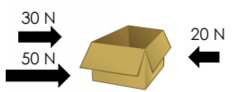
What is the net force?
a)
20 N 
b)
0 N 
c)
400 N 
d)
40 N 
78.

What is the unit to MEASURE force?

a)

Kilogram

b)

Meter

c)

Pounds

d)

Newton

79.

A ____________ is a push or a pull on an object.

a)

friction

b)

force

c)

magnet

d)

gravity

80.
What is the net force?
a)
10 N
b)
0 N
c)
25 N
d)
1 N
81.
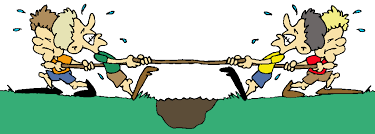
If these teams are pulling with the same amount of force what will happen?
a)
The boy in blue will win.
b)
They will not move at all.
c)
The boy in red will win.
d)
Both will fall down.
82.
Balanced or unbalanced?
a)
balanced
b)
unbalanced
83.
Balanced or Unbalanced?
a)
Balanced 
b)
Unbalanced
84.
When forces are _________ the object DOES NOT move.
a)
unbalanced
b)
balanced
c)
heavy
d)
light
85.
When forces are ___________ the object will move.
a)
unbalanced
b)
balanced
c)
light
d)
gravity
86.
Calculate the Net Force. 
a)
60N, Left 
b)
40N, Right 
c)
0N
d)
60N, Right
87.
You and your dad are moving the couch from one side to another. Your dad pushes with a force of 35 N to the right and you push with a force of 25 N right. What is the net force on the couch?
a)
60 N right
b)
10 N left
c)
60 n right
d)
50 N left
88.
Which could be an example of an unbalanced force?
a)
A plate sitting on a dining table
b)
A ball at the top of a hill that is not moving
c)
Earth orbiting the Sun 
d)
A baseball that has been thrown to home plate.
89.
What is the net force?
a)
400 N Up
b)
400 N Down
c)
- 400 N Down
d)
800 N Down
90.

Which example would be a balanced force?

a)

Train moving at a constant speed in the same direction.

b)

A skier going down a hill.

c)

A basketball being passed to a teammate.

d)

An apple falling to the floor.

91.
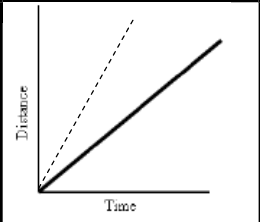
What does this graph represent?
a)
Constant Speed
b)
Acceleration
c)
Not moving
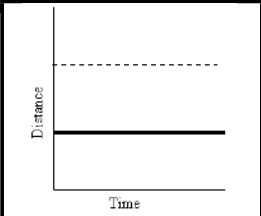
92.
What does this graph represent?
a)
Constant speed
b)
Acceleration
c)
Not moving
93.

Match the description to the graph:

"The car is stopped."

a)
b)
c)
94.

Match the description to the graph:

"The car is coming back."

a)
b)
c)
d)
95.

Segment A-B The bus is _________________.

a)

at rest

b)

returning (to original position)

c)

moving forward

96.

Which of the graphs shows that one of runners started in the same place?

a)
b)
97.

In which of the following graphs below did one runner overtake (run past) the other?

a)
b)
c)
d)
98.

Describe the motion in the graph:

a)

Constant Speed (positive slope)

b)

Stopped (at rest)

c)

Acceleration (increasing speed)

d)

Return Home (negative slope)

99.

Describe the motion in the graph:

a)

Constant Speed (positive slope)

b)

Stopped (at rest)

c)

Acceleration (increasing speed)

d)

Return Home (negative slope)

100.

Which of these graphs do not show the object staying still?

a)
b)
c)
d)
101.

Which scene matches the graph?

a)

Jonathon walked to his girlfriends house - stayed a while then walked home

b)

Justice rode her bike to the mall

c)

Yeshua walked home from school

102.
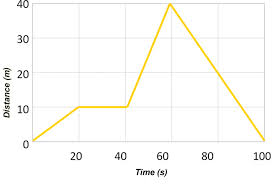
How long did it take this object to travel back to its reference/starting point?
a)
20 s
b)
30 s
c)
60 s
d)
100 s
103.

What are the two factors that gravity depends on?

a)

Mass and Type of surface

b)

Distance and Width

c)

Mass and Distance

d)

Distance and Type of surface

104.

What is the difference between Weight and Mass?

a)

Weight stays the same; Mass depends upon gravity

b)

Mass and Weight both stay the same

c)

Mass and Weight both change due to gravity

d)

Mass stays the same; Weight depends upon gravity

105.

TRUE OR FALSE: Inertia can be described as, " the tendency of an object to resist any change in its motion."

a)

True

b)

False

106.

TRUE OR FALSE: Inertia only applies to objects that are moving

a)

True

b)

False

107.

A leftward force is applied to a crate to push it across the floor at a constant speed. Which is the correct force diagram?

a)
b)
c)
d)
108.

A rightward force is applied to a dresser to accelerate it to the right across the bedroom floor.

a)
b)
c)
d)