
 Worksheets
Earth Space Honors CFE Review
Total questions: 100
Worksheet time: 2hrs 39mins
Mrs. Brownlee wants to see if studying time affects test scores...She gives all 6 classes the same assignment but assigns different study times. What is the dependent variable?
Study time
Test Score
Same Assignment
If plants are exposed to sunlight, then they will grow taller.
What part of the scientific method is this an example of?
Procedure
Hypothesis
Question
Results
What is the dependent variable?
what we are changing or testing
what we are observing or measuring
what we are keeping the same to make the experiment fair
Most scientists believe the Big Bang Theory explains which of the following questions?
How our planets and moons formed
How our universe began
How the sun turns hydrogen into helium
How fast light travels through space
Which statement is true?
The galaxies are moving toward us.
The galaxies are moving away from us.
The universe remains static or unchanged in motion.
None of the above
Where is the center of the universe located?
There is no center of the universe.
At the center of the Milky Way galaxy.
14.5 billion light years away from Earth.
In a large singularity near the Andromeda Galaxy.
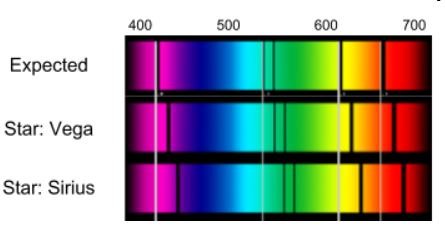
As galaxies move away from our galaxy
a shift on the electromagnetic spectrum is noticed. This phenomena is
called _____________.
redshift
blueshift

Our sun is known as a middle-aged, stable star. Also known as a ____________________.
Gas Giant
Nebula
Pulsar
Main Sequence Star
In some areas of the world, like California and Japan, earthquakes are a common occurrence. How can this best be explained?
The strong ocean currents are undermining both areas causing earthquakes.
Both areas are located near the edge of the Pacific Ocean, the unstable sand causes earthquakes.
Both areas are subjected to strong ocean wind and waves that causes earthquakes.
Both areas are on the boundary of active plates, the motion of the plates causes earthquakes.
The movement of the tectonic plates is caused by
the rotation of the Earth.
convection currents in the Asthenosphere
the gravity of the iron-nickel core.
the Moho discontinuity.
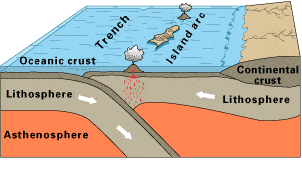
Observe this diagram of a plate boundary. One statement BEST describes what is happening. It is that
the oceanic crust is melting.
the denser ceanic crust is subducting under the less dense oceanic crust
volcanic islands are forming.
the tectonic plates are moving away from each other.
The 2004 Indian Ocean tsunami was caused by a shift in two plates that pushed one section of the sea floor under another section of the sea floor by 5 meters. What type of boundary is this?
divergent
convergent
transform
metamorphic

Below is a picture of sea-floor spreading. How are the ocean crusts moving?
Converging
Diverging
Sliding
No movement
As a part of the water cycle, water from Earth's surface enters the clouds and finally falls back to the ground in the form of rain. What is the correct sequence of processes water undergoes?
Evaporation, Condensation, Precipitation
Precipitation, Condensation, Evaporation
Condensation, Evaporation, Precipitation
Evaporation, Precipitation, Condensation
What would happen if the Sun is removed from the water cycle?
The water cycle would not include precipitation but would continue with groundwater flow.
The water cycle would no longer occur because the Sun provides the energy for evaporation and transpiration.
The water cycle would no longer occur because the Sun provides energy for the formation of clouds.
The water cycle would not include evaporation and transpiration but would continue with condensation.


This Image represents...
Downwelling
Upwelling
Thermohaline circulation
Rip Current

______ causes surface currents.
The Coriolis Effect
gravity
density differences
wind
The more scientific name of the Global Conveyor Belt is _____.
halinethermal circulation
thermohaline circulation
thermodensity circulation


Which 2 spheres interact when a tree is blown down by wind?
atmosphere
biosphere
cryosphere
geosphere
hydrosphere

Which 2 spheres interact when hail damages a crop?
atmosphere
biosphere
cryosphere
geosphere
hydrosphere

Which 2 spheres interact when air next to the ground becomes warm?
atmosphere
biosphere
cryosphere
geosphere
hydrosphere

Which 2 spheres interact when a volcano erupts, causing dust and ash particles to be ejected into the air, blocking the sun?
atmosphere
biosphere
cryosphere
geosphere
hydrosphere


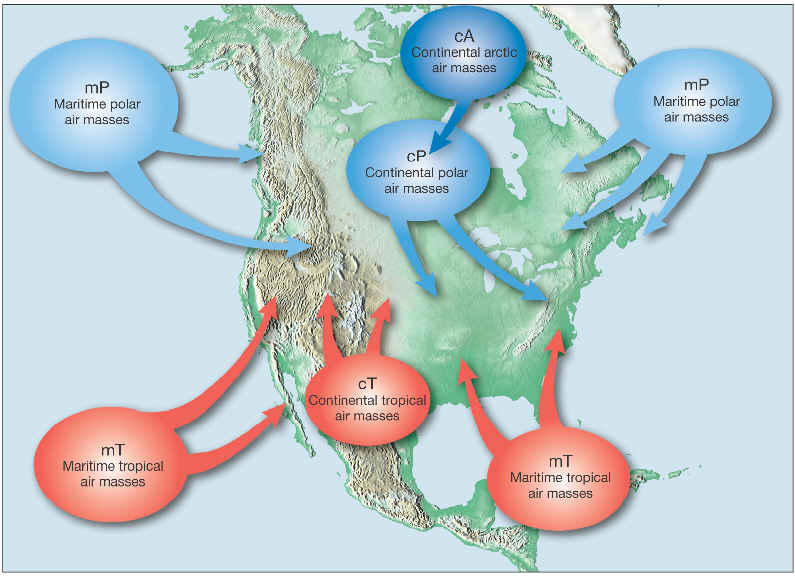
An air mass is a large mass of air that is defined by its temperature and ____________________.
Elevation (altitude)
Water vapor content (humidity)
Strength
Weather

An astronomical unit is...
The average distance between the Earth and the Sun
The average distance between the Sun and Neptune
The diameter of the sun
The time it takes light to travel across our solar system
Astronomical units are used for
Distances within a solar system
Distances between solar systems
Distances within galaxies
Distances between galaxies
A light year is approximately.....
59,987,812 kilometers
8,522,846,507 kilometers
9,460,730,472,581 kilometres
377,160,825,209,412,592 kilometers
_____________ would be the best to use to measure the distance between galaxies
Astronomical units
Light seconds
Light years
Parsecs
_______________ would be the best unit to use to measure the distance between the asteroid belt and Pluto
Astronomical units
Light seconds
Light years
Parsecs
_______________ would be the best unit to use to measure the distance between the our sun and Proxima Centauri (our nearest star neighbor).
Astronomical units
Light seconds
Light years

What types of telescopes have to be placed in space? (Choose all that apply)
X-ray Telescopes
Gamma ray Telescopes
Infrared Telescopes
Radio Telescopes
Who is famous for inventing the telescope (even though he didn't really invent it)?
Galileo
James Webb
Newton
Hubble
The main advantage of using orbital observatories like the Hubble Space Telescope is that __________.
they are easier to use than land-based telescopes.
they are cheaper to build than land-based telescopes.
they can look anywhere in the universe at any time.
they avoid the distortion and absorption of electromagnetic waves by the atmosphere.
than in hot things.


This landform is formed by
water erosion
wind erosion
deposition
glaciers

What is this landform?
delta
canyon
valley
sand dune

This landform is formed by
water erosion
weathering
deposition of sediments
glaciers
Hills formed by wind blowing, moving and depositing sand.
Valley
Dune
Delta
Canyon
The build up of land by the settlement of sediments and soil in a new location.
Weathering
Erosion
Deposition
River
The movement of sediment down a fast-moving river.
Weathering
Erosion
Deposition
River

Floods and storm surges can erode the land. Which landform can protect inland areas from floods and storm surges?
deltas
dunes
plateaus
rivers

The Appalachian Mountains are believed to have been as high as the Himalayas at one time. Which two processes are responsible for the fact that they are now much smaller?
A. deposition and tectonics
B. cementation and tectonics
C. weathering and deposition
D. weathering and erosion

One type of lake that can be found in Florida is perfectly round in shape. These lakes are formed when the acid in groundwater dissolves limestone underground, forming a cave. Eventually, the cave roof weakens and collapses, and then the cave fills with water. Which of the following is this type of landform called?
an oxbow lake
an volcanic lake
a glacial lake
a sinkhole lake
Most cities in Florida depend on water stored underground in a water-bearing rock layer called
an aquifer
a cavern
a sinkhole
a wetland
Which is TRUE of Florida's topography?
It has a great deal of relief.
It has many locations with high elevations.
It has many plateaus, mountains and steep valleys
It has many areas with elevations 50 feet or less above sea level.
Through food chains, the carbon that is in plants moves to the animals that eat them. When an animal eats another animal, carbon is ___________________.
released
transferred
dissolved
gone
Respiration is the process by which animals take in _____ and release _____ to make energy.
CO2 +light+H2O --> O2 + glucose
CO2 + glucose + H2O --> O2 + light
O2 + light + H2O --> CO2 + Glucosg
CO2 + O2 + H2O --> Light+ glucose
Evaporation is a state change from?
Ice to liquid.
Liquid to gas.
Gas to solid.
Crystals to water.
The __________ is all the water on the surface of the Earth, underground, and in the atmosphere.
Hydrosphere
Asthenosphere
Geosphere
Atmosphere
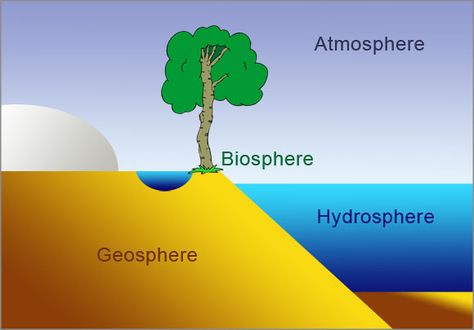
Earth is divided into four different spheres. Which statement is true about the interaction between two of these spheres?
Weather is an interaction between the hydrosphere and the geosphere.
A plant receiving water from precipitation is an interaction between the biosphere and the hydrosphere.
An ice cap providing shelter for an arctic animal is an interaction between the biosphere and the hydrosphere.
The formation of the Grand Canyon is an example of an interaction between the geosphere and the atmosphere.

What is the atmosphere's function?
a recycling planet powered by the flow of solar energy to support a network of life.
sustains various life forms and plays an important role in ecosystems and regulating heat on earth.
sustains life forms on the surface of the earth, absorbs and interacts with harmful solar rays.It protects the earth from natural and human-caused space debris.
controls the distribution of minerals, rocks and soils and generates natural hazards that shape the land and impact humans

