
 Worksheets
G7 - Chapter 11 Final Revision Practice
Total questions: 96
Worksheet time: 54mins

What is the theory of plate tectonics?
The theory that describes how Earth's outer layers is broken up into moving tectonic plates
Tectonic plates stay in one place
All of the continents were once apart of a Super Continent called Panthalassa
All of the plates were once a solid plate until they broke up and moved to their current position

Which below is a possible cause of tectonic plate motion?
ocean tides
the sun
convection currents
current weather patterns
Which picture below represents a convection current?
GPS


The German meteorologist who came up with the continental drift theory is?
Albert Einstein
Marie Currie
Alfred Wegener
Isaac Newton

What evidence did Alfred Wegener use to prove the Theory of Continental Drift?
he used the moon's rotation and revolution as evidence
he looked at the clouds and noticed continental drift
he looked at the fossils, land forms and how continents fit together like puzzle pieces
he studied the weather patterns for Africa and South America

When tectonic plates collide into one another, which type of boundary is this?
convergent
divergent
transform
all of the above

When tectonic plates move away from each other, this boundary is:
convergent
transform
divergent
none of the above

When a continental plate collides with another continental plate what type of land form will be created?
mid ocean ridges
mountain ranges
islands
deep see trenches

When oceanic plate and continental plate collide, what type of land form will be created?
mid ocean ridges
ocean trenches
islands
earthquakes

What type of phenomena/event is created at a transform boundary?
Hurricanes
Tornados
Earthquakes
Volcanic Eruption
The deeper you go into the earth, the greater the pressure.
Which layer of Earth flows slowly and causes the crust to move?
Crust
Mantle
Inner Core
Outer core
What is a physical classification of the outer core (hint: state of matter)?
gas
solid
liquid
plasma
The thinnest and outermost layer of Earth is called...
crust
mantle
outer core
inner core
Convection currents occurs in which of Earth's layers?
crust
mantle
outer core
inner core
Which of the following is responsible for Earth's crust moving?
Convection Currents
Dynamo Effect
Great Pressure
Gravitational pull from the Sun

What boundary does this picture show?
Divergent
Transform
Convergent
Select the landforms that form at a convergent boundary.
mountains
volcanoes
deep ocean trenches
mid ocean ridges
What occurs at a transform boundary?
Faults
deep ocean trenches
earthquakes
mountains

What boundary does the picture show?
Transfrom
Divergent
Convergent

What boundary does this picture show?
Convergent
Divergent
Transform
What drives the movements of Earth's plates?
Convection currents in the mantle
Earth's rotation
sea floor spreading
subduction
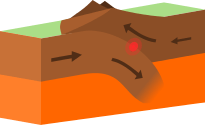

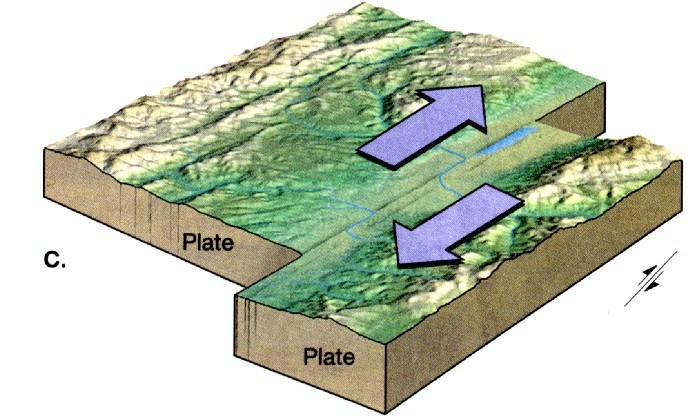
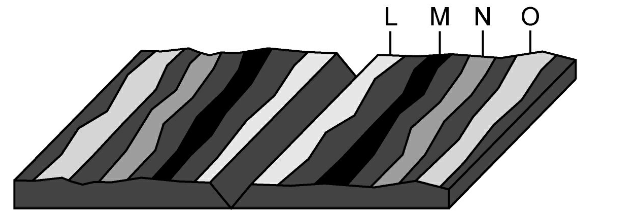

What type of plate boundary is shown in the picture?
Convergent
Divergent
Transform

What type of plate boundary is shown in the picture?
Convergent
Divergent
Transform

What type of plate boundary is shown in the picture?
Convergent
Divergent
Transform
What geologic event would most likely be found at a transform boundary?
Volcano
Mountain
Earthquake
Mid-Ocean Ridge
What landform would you most likely find at a divergent boundary between two pieces of oceanic crust?
Rift Valley
Mountain
Mid-Ocean Ridge
Volcano
Which type of boundary do plates move away from each other?
Convergent
Divergent
Transform
Plates slide past one another at ____ boundaries.
Convergent
Divergent
Transform
When plates collide together, this boundary occurs...
Convergent
Divergent
Transform
Plate movement is caused by ____________.
the rotation of the Earth
convection currents in the mantle
ocean tides
the moon's gravity
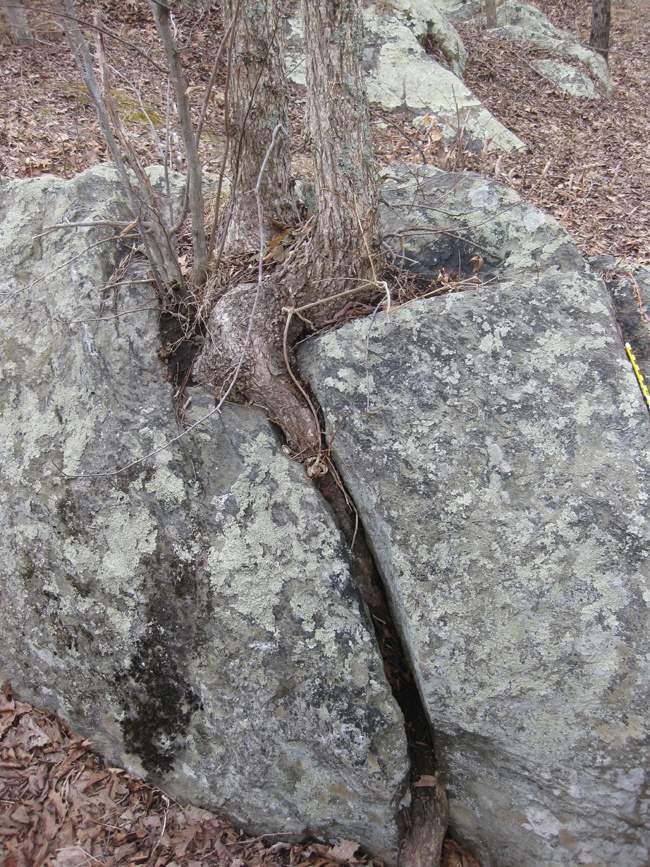
What type of weathering is this?
Ice
water
Wind
biological activity
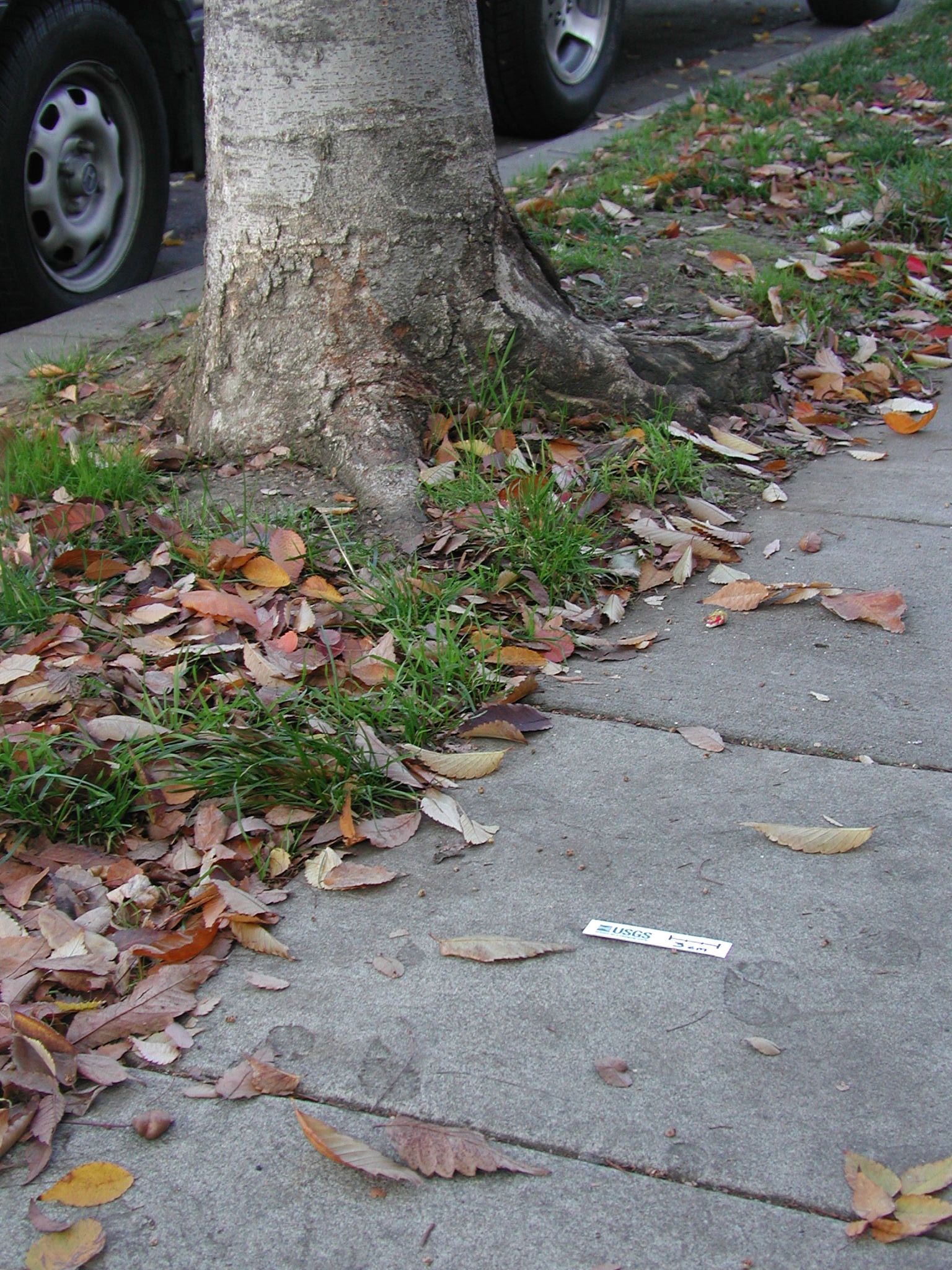
What will happen to this sidewalk if the tree continues to grow?
The roots will grow away from the sidewalk
The roots will grow and break the sidewalk into pieces.
The roots will stop growing
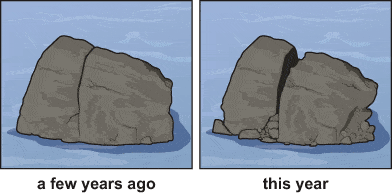
What most likely caused this rock to change?
Water got into the crack and froze many times
Wind quickly blew sand into the crack
sunlight made the rock get hot and burst
a karate chop (don't pick this)
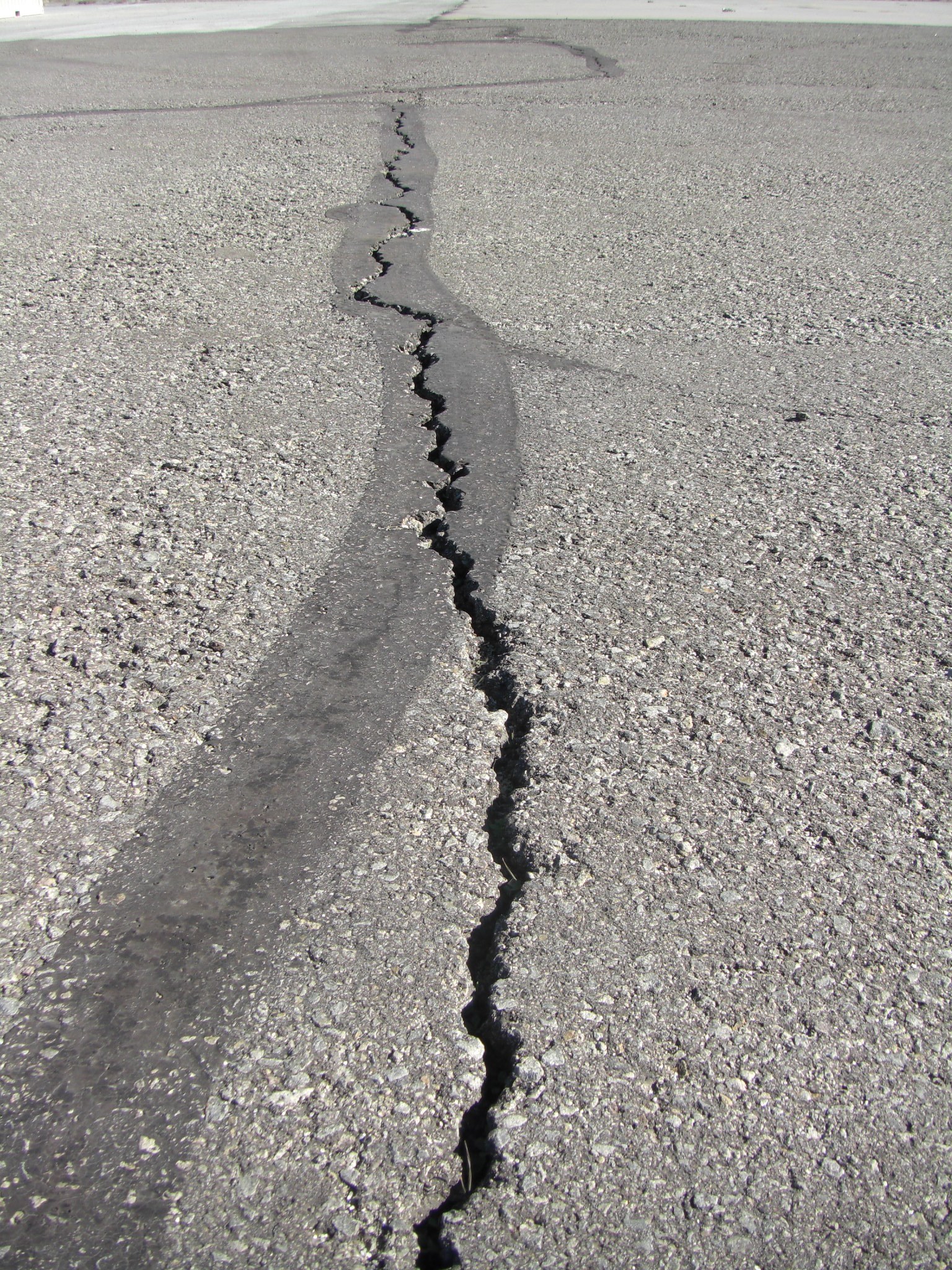
What most likely caused this crack in the road?
Tectonic Shift
Acid Rain
Ice Wedging
Root Wedging
Which is an example of wind weathering?
A rock cracking in half
A root breaking a sidwalk
A road cracking in winter
A desert rock changing shape over many years
What is the correct sequence?
Deposition, Erosion, Weathering
Weathering, Erosion, Depostion
Erosion, Deposition, Weathering
Erosion, Weathering, Deposition
Wind blowing rocks away is an example of....
Weathering
Erosion
_____________________ happens when rocks on Earth's surface break apart or change without moving anywhere.
Erosion
Weathering
Deposition
_____________________ is the movement of soil and rock by wind, water, ice, and gravity.
Weathering
Erosion
Deposition
______________________ occurs when eroded materials stop moving and begin to build up.
Weathering
Erosion
Deposition
Eroded materials are called _______________________.
constructive
chemical weathering
sediments
_______________ moves material from one place to another.
Weathering
Erosion
Deposition
__________________ is a process that weathers rock without a chemical reaction or change.
Physical weathering
Chemical weathering
Deposition
_____________________ changes the identity of rocks and it involves a chemical reaction or change.
Physical weathering
Chemical weathering
Deposition

This is an example of _____________________________.
physical weathering
chemical weathering

This is an example of __________________________.
physical weathering
chemical weathering

A ______________ is a hill of sand created by the wind.
dune
delta
sediment
3 elements needed to produce a _____________________.
- Abundant loose sand
- Wind source
- Object ( such as a boulder, tree, or shrub) that obstructs the wind force and causes the sand to pile up in drifts.
sand dune
delta
deposition hill


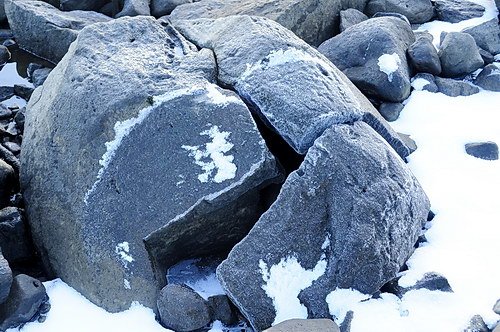
How does freezing water cause the weathering of rocks? The freezing water—
keeps the rocks in place.
makes the rocks last longer.
expands cracks and breaks rocks.
causes rocks to fall in landslides.

Over long periods of time, deposition may change the Earth’s surface by _____.
forming new land features.
breaking down large rocks into smaller ones.
washing away beaches.
moving topsoil.


What is an enormous mass of ice moving over land, causing weathering of rock and soil?
A glacier
An iceberg
An ice wedge
A sand dune
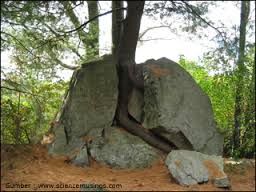
How do plants weather rocks?
During photosynthesis
When roots grow into cracks of rocks and expand the rock breaks.
When the plant moves water from the roots to the leaves, the rock breaks.
Plants don't weather rocks.
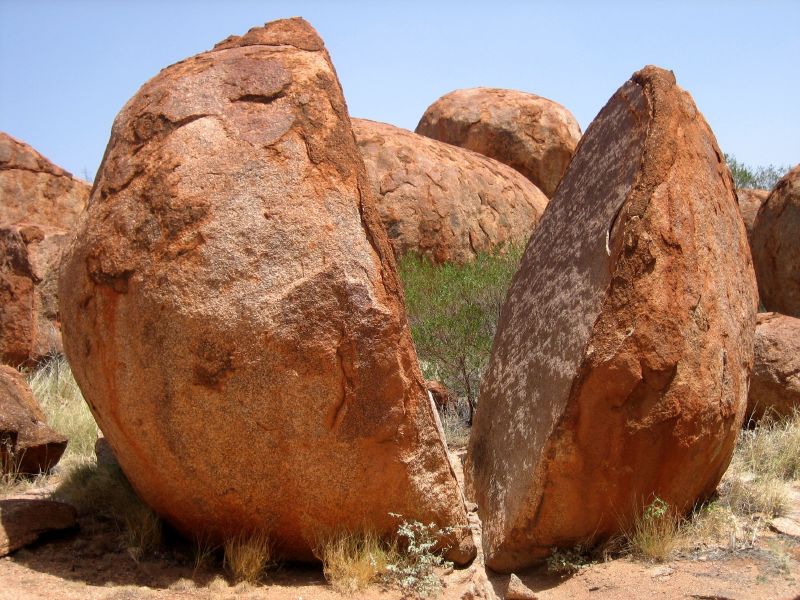
What is the wearing away or breaking down of rocks called?
Deposition
Erosion
Glaciers
Weathering
Some agents of weathering are water, wind, ice, temperature and plant roots.
true
false

_____ is the process by which soil and sediment (weathered rock) are transported (moved) from one place to another by water, wind, glaciers, and gravity
Erosion
Deposition
Weathering
Running Water

A farmer's topsoil is blown away during a hurricane is an example of ___________.
weathering
erosion
deposition
The process by which rock and soil are moved from one place to another is called-
Chemical weatherin
Erosion
Mechanical weathering
Deosition
This type of weathering in which rock is physically broken into smaller pieces.
Chemical weathering
Erosion
Mechanical weathering
Deposition
What do we call the process in which rock is broken down by changes in its chemical makeup.
Chemical weathering
Mechanical weathering
Erosion
Deposition

The image above depicts the effects of chemical weathering breaking down limestone. Which type of chemical weathering causes this reaction?
Acid rain
Oxidation
Exfoliation
Abrasion
Over millions of years, the shape of mountains on Earth's surface can change to low hills and then rolling plains. These changes are most likely caused by-
Folding and faulting
Volcanoes and Earthquakes
Human activity
Weathering and Erosion


How do you Evaluate your learning about this chapter


What are the points you still need help to understand
ما النقاط التي لازلتي تحتاجين لمساعدة حتى تتمكنين من فهمها

