
 Worksheets
🤗HW9: 9.7
Total questions: 99
Worksheet time: 53mins

Which of the following best describes an endothermic process during a phase change?`
Heat is released as a substance freezes.
Heat is absorbed as a substance melts.
Heat is released as a substance condenses.
Heat is absorbed as a substance cools.

When looking at a heating curve, what does a flat (horizontal) line indicate?
The temperature is increasing rapidly.
The substance is undergoing a phase change.
The substance is cooling down.
The substance is a gas.

Which phase change is exothermic?
Melting
Boiling
Condensation
Sublimation

On a cooling curve, what happens to the energy of the particles as a substance freezes?
The energy increases.
The energy stays the same.
The energy decreases.
The energy disappears.

Which of the following correctly matches the phase with its location on a typical heating curve (from left to right)?
Gas, Liquid, Solid
Solid, Liquid, Gas
Liquid, Solid, Gas
Gas, Solid, Liquid

Which statement best describes what happens at the boiling point on a heating curve?
The substance is changing from liquid to gas.
The substance is changing from gas to liquid.
The temperature decreases.
The substance is changing from solid to liquid.

If a substance is at its condensation point, what phase change is occurring?
Gas to liquid
Liquid to gas
Solid to liquid
Liquid to solid

Which of the following is an example of an exothermic reaction?
Ice melting in your hand
Water boiling on a stove
Water freezing in a tray
Solid carbon dioxide (dry ice) turning into gas

A student observes a heating curve and notices two flat sections. Explain what is happening to the substance during these flat sections and why the temperature does not increase.
The substance is cooling down rapidly.
The substance is undergoing two different phase changes, and energy is used to break intermolecular bonds rather than increase temperature.
The substance is evaporating and condensing at the same time.
The substance is losing energy to the environment.

A student claims that during boiling, the temperature of the liquid increases until all the liquid has turned to gas. Use your understanding of heating curves to explain whether this claim is correct or incorrect.
Correct, because energy always increases temperature.
Incorrect, because during boiling, the temperature remains constant as energy is used for the phase change.
Correct, because boiling is an endothermic process.
Incorrect, because the temperature decreases during boiling.

Analyze a heating curve and determine at which points the substance is a mixture of two phases. Explain your reasoning.
Only at the beginning of the curve
At the flat sections, because the substance is transitioning between phases (e.g., solid and liquid, or liquid and gas)
At the sloped sections, because temperature is changing
Only at the end of the curve

Suppose you are given a heating curve for an unknown substance. How could you use the curve to estimate the melting and boiling points of the substance?
By finding the highest and lowest points on the curve
By identifying the temperatures at the flat sections of the curve
By measuring the length of the curve
By looking at the steepest slope

A student is analyzing a cooling curve and notices that the temperature remains constant at a certain point even though the substance is still losing energy. What is the best explanation for this observation?
The thermometer is broken.
The substance is undergoing a phase change, and energy is being released as bonds form.
The substance is not losing energy.
The substance is evaporating.

If you wanted to design an experiment to show the difference between endothermic and exothermic phase changes, which two processes would you choose and why?
Melting and freezing, because melting absorbs energy (endothermic) and freezing releases energy (exothermic)
Boiling and condensation, because both are endothermic
Melting and boiling, because both are exothermic
Freezing and condensation, because both absorb energy

Explain how energy transfer is different during the sloped (slanted) and flat portions of a heating.
Energy is only transferred during the sloped (slanted) portions.
During sloped (slanted) portions, energy increases temperature; during flat portions, energy changes the phase without changing temperature.
Energy is not transferred during the flat portions.
Energy is lost during sloped (slanted) portions and gained during flat portions.

A sample of a substance is heated and its temperature is recorded over time. The temperature graph shows two plateaus. What can you infer about the substance from this observation?
The substance has two different melting points.
The substance undergoes two phase changes, likely melting and boiling.
The substance is impure.
The substance is not changing phase.

A student is given a graph of a cooling curve and asked to label the sections where the substance is solid, liquid, and gas. What strategy should the student use to accurately label these sections?
Label the sections based on the order they appear on the graph.
Use the temperatures at the flat sections to identify phase changes, then label the sloped (slanted) sections between them as solid, liquid, or gas.
Guess based on the length of each section.
Label all sections as liquid.

Which of the following best describes what happens to the temperature of a substance during a phase change, such as melting or boiling?
The temperature increases rapidly.
The temperature remains constant.
The temperature decreases steadily.
The temperature fluctuates randomly.

What is the main difference between evaporation and boiling?
Evaporation occurs only at the boiling point, while boiling can happen at any temperature.
Boiling occurs throughout the liquid, while evaporation happens only at the surface.
Evaporation requires more energy than boiling.
Boiling does not involve energy transfer.

During which phase change does a substance absorb energy but does not increase in temperature?
Freezing
Condensation
Melting
Deposition

Which process describes a solid changing directly into a gas without becoming a liquid first?
Condensation
Sublimation
Deposition
Freezing

What happens to the particles of a substance as it freezes?
They move faster and spread apart.
They stop moving completely.
They slow down and arrange into a fixed pattern.
They gain energy and move more freely.

Which of the following is an example of deposition?
Water boiling to form steam
Frost forming on a cold window
Ice melting into water
Dew forming on grass

When a liquid evaporates, what happens to the energy of the remaining liquid?
It increases.
It stays the same.
It decreases.
It fluctuates.

Which phase change requires the removal of energy from a substance?
Melting
Evaporation
Freezing
Sublimation

Which statement best explains why sweating cools your body?
The sweat absorbs heat from the air.
The sweat evaporates, taking heat away from your skin.
The sweat freezes on your skin.
The sweat condenses, releasing heat.

What must happen for condensation to occur?
Energy must be added to the gas.
The gas must cool and lose energy.
The gas must be heated.
The gas must be compressed without changing temperature.

A student observes that when ice melts in a glass of water, the temperature of the water remains at 0∘ C until all the ice has melted. Explain why the temperature does not increase until all the ice is gone.
The ice absorbs energy, which is used to break the bonds between particles rather than increase temperature.
The water cools down as the ice melts.
The glass absorbs all the heat.
The air temperature keeps the water at 0∘ C.

A wet shirt dries faster on a windy day than on a calm day. Using your knowledge of phase changes and energy transfer, explain why this happens.
Wind increases the temperature of the shirt.
Wind removes water vapor, increasing the rate of evaporation.
Wind causes condensation on the shirt.
Wind freezes the water in the shirt.

If you place a sealed container of water in a freezer, describe the energy transfer that occurs as the water freezes.
The water absorbs energy from the freezer.
The water releases energy to the surroundings as it changes to ice.
The water neither gains nor loses energy.
The water gains energy from the air inside the container.

A student notices that dry ice (solid carbon dioxide) disappears without leaving a liquid behind. What phase change is occurring, and what energy transfer is involved?
Deposition; energy is released.
Sublimation; energy is absorbed.
Melting; energy is released.
Freezing; energy is absorbed.

During which phase change does a substance release energy to its surroundings?
Melting
Evaporation
Condensation
Sublimation

A student places a beaker of water in a refrigerator. After some time, ice forms at the top while water remains at the bottom. What does this observation suggest about the freezing process?
Freezing starts at the bottom and moves upward.
Freezing occurs evenly throughout the beaker.
Freezing starts at the surface where heat is lost first.
Freezing only happens in the center.

If you observe frost forming on the outside of a cold can taken out of the freezer, which phase change is occurring and why?
Condensation, because water vapor turns into liquid.
Deposition, because water vapor turns directly into solid ice.
Sublimation, because ice turns into vapor.
Melting, because ice turns into water.

A student heats a sample of ice at −10∘ C until it becomes steam at 110∘ C. At which points does the temperature remain constant, and why?
Only while the ice is melting, because energy is used to break bonds.
Only while the water is boiling, because energy is used to form bonds.
During both melting and boiling, because energy is used for phase changes, not temperature increase.
The temperature never remains constant.

Why does adding salt to ice cause the ice to melt faster, even though the temperature is below 0∘ C?
Salt increases the freezing point of water.
Salt lowers the freezing point, so ice absorbs energy and melts at a lower temperature.
Salt makes the ice warmer.
Salt prevents energy transfer.
Place these labels in the appropriate spots.
melting
boiling
liquid
Which area represents a melting?
Label the phase changes

When you change the amount of (a) energy in a substance, it will change from one (b) to another.

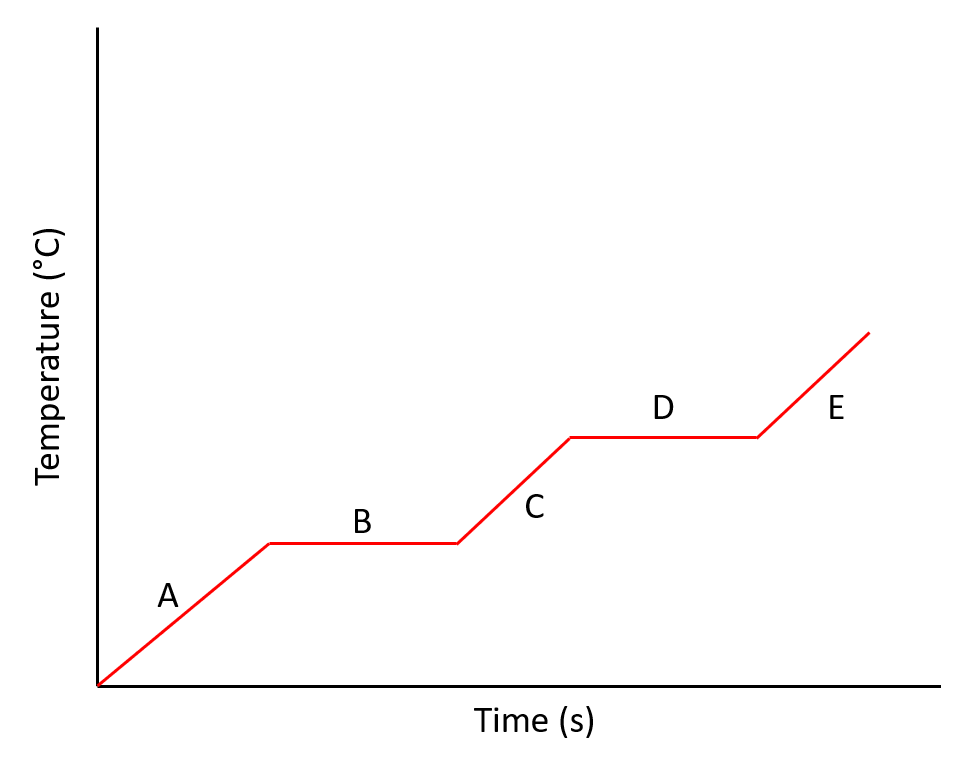
The diagram shows a heating curve for water. Which line segment represents the water boiling?
A
B
C
D
E

The diagram shows a heating curve (a graph that shows temperature changes when heat is added) for ice. Which line shows the ice melting?
A
B
C
D
E

Label the correct blanks:

In which region(s) does a phase change take place? (a)
In which region(s) does temperature increase?
(a)
Region C only
Regions B and D
Regions A and B
Regions A, C, and E

Which of the following best describes a chemical reaction?
A process where substances change into new substances with different properties
A process where substances are mixed but do not change
A process where substances are separated physically
A process where substances are dissolved in water

What is the term for a reaction that absorbs energy from its surroundings?
Exothermic
Endothermic
Combustion
Neutralization

Which law states that matter is not created or destroyed in a chemical reaction?
Law of Gravity
Law of Conservation of Mass
Law of Energy
Law of Motion

When wood burns in a campfire, what type of reaction is taking place?
Endothermic
Exothermic
Neutralization
Physical change

Which of the following is an example of an endothermic reaction?
Freezing water
Burning gasoline
Photosynthesis in plants
Lighting a match

A student mixes two clear solutions and observes the test tube becoming warm. What does this indicate about the reaction?
The reaction is endothermic
The reaction is exothermic
No chemical reaction occurred
The solutions are neutral
Which statement best explains why the mass of the products in a chemical reaction equals the mass of the reactants?
Atoms are destroyed during reactions
Atoms are rearranged but not lost or gained
Energy is converted into mass
Some mass is always lost as heat

A cold pack becomes cold when activated. Which of the following best explains this observation?
The reaction releases energy to the surroundings
The reaction absorbs energy from the surroundings
The reaction does not involve energy change
The reaction is a physical change only

If you start with 10 grams of reactants in a closed system and a chemical reaction occurs, what should be the total mass of the products?
5 grams
10 grams
15 grams
20 grams

A student observes that when two substances are mixed, the temperature increases and a gas is produced. How can the student determine if the law of conservation of mass is followed?
By measuring only the temperature before and after
By weighing the closed system before and after the reaction
By observing the color change
By measuring the volume of gas produced

A student is given two unknown reactions. In Reaction 1, the temperature of the solution increases. In Reaction 2, the temperature decreases. How should the student classify these reactions?
Both are exothermic
Reaction 1 is exothermic, Reaction 2 is endothermic
Both are endothermic
Reaction 1 is endothermic, Reaction 2 is exothermic
You are given a chemical reaction that produces a solid and releases heat. How would you design an experiment to show that mass is conserved during this reaction?
Perform the reaction in an open beaker and measure the mass of the solid only
Perform the reaction in a closed container and measure the total mass before and after
Measure only the temperature change
Weigh the reactants but not the products
A scientist observes that a reaction in a sealed container causes the temperature to drop and the mass remains unchanged. What can the scientist conclude about the energy and mass changes in this reaction?
Energy was released and mass was lost
Energy was absorbed and mass was conserved
Energy was absorbed and mass was lost
Energy was released and mass was conserved
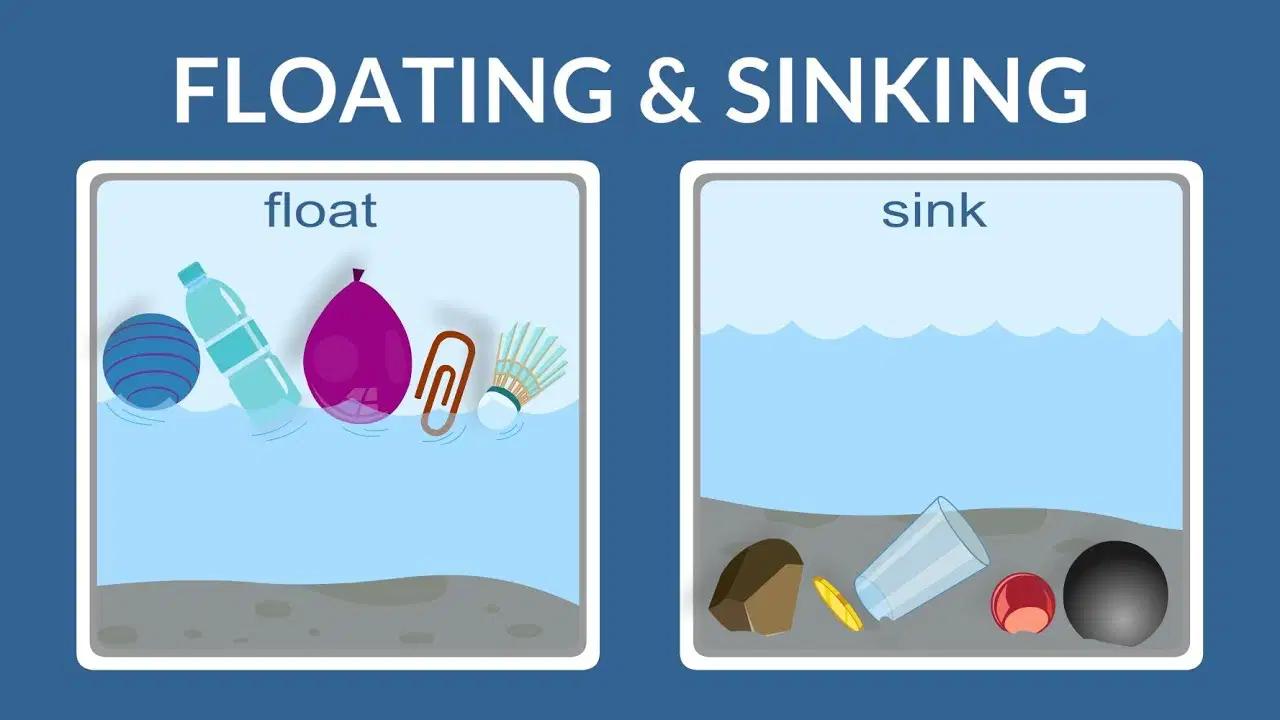
There are 4 objects listed with their densities. Which of the following will float on water (SELECT 2)? Water has a density of 1g/cm3
Object A:
0.7 g/cm3
Object B:
1.2 g/cm3
Object C:
0.25 g/cm3
Object D:
11.4 g/cm3

The amount of water displaced is the same as the volume of the object. What is the VOLUME of the object?

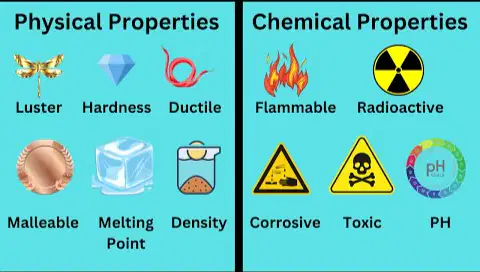
Which of these is a chemical property (Select all that apply)?
may react with oxygen

Which of these is a physical property (Select all that apply)?
state of matter (is it solid, liquid, or gas)
size

Which of these is a chemical change (Select all that apply)?
new substance is made

Which of these is a chemical change (Select all that apply)?
odor change
fizzing and popping

Match each of these terms with its definition.
Anything that has mass and volume.
Matter
Description of matter that indicates its ability to participate in a chemical reaction.
Chemical Property
Action of matter that results in the creation of a new substance.
Chemical Change
Description of matter useful to indicate its size, shape, color, state of matter, etc.
Physical Property
Action of matter that may be reversible and could result in an alteration of its appearance, not its identity.
Physical Change

Match each of these terms with its definition.
The amount of atoms in an object.
Mass
The amount of space something takes up.
Volume
The distance measured between two points.
Length
A description of matter.
Property
An action of matter.
Change


Match each of the states of matter with its definition.
Definite Shape and Definite Volume.
Solid
Indefinite Shape and Definite Volume.
Liquid
Indefinite Shape and Indefinite Volume.
Gas
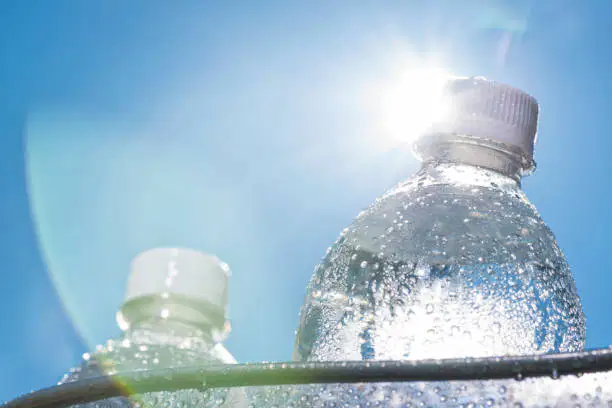

Brad is comparing a ceramic cup to the hot water inside the ceramic cup and the water vapor above the cup. What can she say about the motion of the particles in all of the substances?
They do not move.
They are all always moving.
They all move past each other slowly.
They all move very fast in all directions.

When thermal energy is increased in a solid, what change in state is happening?
Melting
Evaporation
Freezing
Condensation

When thermal energy is decreased in a liquid, what change in state is happening?
Melting
Freezing
Condensation
Evaporation

When thermal energy is increased in a liquid, what change in state is happening?
Melting
Evaporation
Condensation
Freezing

When thermal energy is decreased in a gas, what change in state is happening?
Melting
Freezing
Evaporation
Condensation

What happens to the movement of the particles in a substance when the thermal energy is decreased (Select all that apply)?
Speed Up
Slow Down
They Spread Out.
They Get Closer Together.

What happens to the movement of the particles in a substance when the thermal energy is increased (Select all that apply)?
Speed Up
Slow Down
They Spread Out.
They Get Closer Together.


Match each image with its meaning.

Solid Particles

Liquid Particles

Gas Particles

Graduated Cylinder

Triple Beam Balance

Sally described the pillow as blue and lumpy. What TWO physical characteristics is Sally describing?
size
mass
texture
volume
color

The smell and taste of vanilla is very strong. Odor and taste examples of a ___.
physical property
chemical property
physical change
chemical change

Dissolving sugar is a ___.
physical change
chemical change
physical property
chemical property


odor change

Which of these is a chemical property (Select all that apply)?
reactivity

Which of these is a physical property (Select all that apply)?
state of matter


Match each of these parts with its corresponding part.
State of Matter, definite Shape, definite Volume.
Solid
State of Matter, indefinite Shape, definite Volume.
Liquid
State of Matter, indefinite Shape, indefinite Volume.
Gas
One Form of Matter.
State of Matter
Exactly Measurable.
Definite
Match each of these parts with its corresponding part.
Outline of an object.
Shape
Amount of space something takes up.
Volume
Amount of amounts in an object.
Mass
Anything with mass and volume.
Matter
Exactly Measurable.
Definite

For each of these concepts match its corresponding meaning.
Density
The amount of mass per unit of volume of an object
Mass
The amount of atoms in an object.
Volume
The amount of space an object takes up.
Gravity
A measurement of the pull on an object's mass.
Water Displacement
Method used to determine the volume of an irregularly shaped object - uses graduated cylinder.

Properties and Changes
Sort each of these examples in the correct grouping. Physical and Chemical Properties & Physical and Chemical Changes.

Toxicity

Flammability

Corrosiveness

Reactivity

Combustibility

Green Color

Shapes

Size

Descriptions about Features

State of Matter

Measurements/ Number Descriptions
Description that indicates its ability to participate in a chemical reaction.
Description that remarks of features.

State Changes

Identity stays the Same

May be Reversible
Action that will not result in an altering of identity.

Cutting Hair

All Cooking

Has Signs (Indicators)

Changes
Sort each of these examples in the correct grouping. Physical and Chemical Changes.
State Changes
Identity stays the Same
May be Reversible
Action that will not result in an altering of identity.
Cutting Hair
All Cooking
Has Signs (Indicators)

Painting a Wall

Melting Ice Cream

Windows Condensating
Creates a NEW Substance

Grilling

Fizzing

Smoke Forming

Forming a Precipitate

pH Change

Automatic Color Change

Souring Milk

Rusting

Broken Glass

Properties
Sort each of these examples in the correct grouping. Physical and Chemical Properties.
Toxicity
Flammability
Corrosiveness
Reactivity
Combustibility
Green Color
Shapes
Size
Descriptions about Features
State of Matter
Measurements/ Number Descriptions
Description that indicates its ability to participate in a chemical reaction.
Description that remarks of features.
5,000 meters
Liquid


