
 Worksheets
7th Science - Review: SolSys, Gravity, Earth&Life 7.9(A,B,C)
Total questions: 100
Worksheet time: 59mins
What is an Asteroid?
Rocky or metallic object orbiting the Sun.
A type of comet with a tail.
A planet in the solar system.
A star that emits light.
What is a Comet?
Body of ice, dust, and rock with a glowing tail.
A type of star that emits light.
A planet with rings around it.
A large asteroid belt.
What is Gravity?
Force that attracts objects with mass toward each other.
A type of energy produced by the sun.
A chemical reaction between gases.
A process of plant growth.
Which planets are considered Inner Planets?
Mercury, Venus, Earth, Mars (rocky, few moons).
Jupiter, Saturn, Uranus, Neptune (gas giants, many moons).
Earth, Jupiter, Saturn, Neptune (mixed types).
Venus, Mars, Jupiter, Saturn (not all rocky).
Which planets are considered Outer Planets?
Jupiter, Saturn, Uranus, Neptune (gas giants, many moons).
Mercury, Venus, Earth, Mars (terrestrial planets, few moons).
Earth, Mars, Jupiter, Saturn (mixed types).
Venus, Neptune, Pluto, Mars (incorrect grouping).
What is the Kuiper Belt?
Region past Neptune with comets, asteroids, and Pluto.
A belt of asteroids between Earth and Mars.
A ring of gas around the Sun.
A group of stars near the center of the galaxy.
What is the Oort Cloud?
Spherical region of icy bodies farthest from the Sun.
A belt of asteroids between Mars and Jupiter.
A region of intense solar flares near the Sun's surface.
A cluster of stars at the center of the Milky Way.
What is a Meteor?
Rock burning in Earth’s atmosphere (“shooting star”).
A planet orbiting the Sun.
A type of comet found in the asteroid belt.
A star that has exploded.
What is a Meteoroid?
Rock still in space before hitting atmosphere.
A star that explodes in space.
A planet orbiting the sun.
A comet entering Earth's atmosphere.
What is a Meteorite?
Rock that survives atmosphere and lands on Earth.
A type of cloud found in the sky.
A plant that grows in deserts.
A type of fish found in oceans.
What is a Moon?
A body that orbits a planet.
A star in the galaxy.
A type of comet.
A planet in the solar system.
What is an Orbit?
Curved path of one object around another.
A straight line between two points.
A type of star in the galaxy.
A device used to measure time.
What is Mass?
Amount of matter in an object (does not change).
The force acting on an object due to gravity.
The space occupied by an object.
The speed at which an object moves.
What is Weight?
Measure of gravity’s pull on an object (changes by location).
Amount of matter in an object (remains constant everywhere).
The speed at which an object moves.
The color of an object.
What is Revolution?
Movement of an object around another.
Change in the color of an object.
Increase in the size of an object.
Decrease in the speed of an object.
What is Rotation?
Object spinning on its axis.
Object moving in a straight line.
Object changing its color.
Object increasing in size.
What is the Atmosphere?
Layer of gases held by gravity around a planet.
Solid surface of the Earth.
Core of the Earth.
Oceans and seas on the planet.
What is Ozone?
Gas in Earth’s atmosphere that blocks harmful UV radiation.
A type of metal found in the earth's crust.
A liquid used in car engines.
A mineral used in construction.
Which planet is the largest in the solar system?
Earth
Saturn
Jupiter
Neptune
Which planet has the most moons and visible rings?
Jupiter
Saturn
Uranus
Mars
What makes comets different from asteroids?
They are rocky
They orbit the Sun
List the order of the planets in the solar system starting from the Sun.
Mercury, Venus, Earth, Mars, Asteroid Belt, Jupiter, Saturn, Uranus, Neptune, Kuiper Belt (dwarf planet Pluto is here), Oort Cloud
Venus, Mercury, Earth, Mars, Jupiter, Saturn, Uranus, Neptune, Asteroid Belt, Kuiper Belt, Oort Cloud
Mercury, Earth, Venus, Mars, Jupiter, Saturn, Uranus, Neptune, Asteroid Belt, Kuiper Belt, Oort Cloud
Mercury, Venus, Mars, Earth, Jupiter, Saturn, Uranus, Neptune, Asteroid Belt, Kuiper Belt, Oort Cloud
Which of the following are considered inner planets?
a) Mercury, Venus, Earth, Mars
b) Jupiter, Saturn, Uranus, Neptune
Which of the following are considered outer planets?
Mercury, Venus, Earth, Mars
Jupiter, Saturn, Uranus, Neptune
Mercury, Saturn, Venus, Neptune
Venus, Earth, Jupiter, Uranus
What is the main difference between mass and weight?
Mass stays the same; weight changes with gravity.
Weight stays the same; mass changes with gravity.
Mass and weight are always equal.
Mass is measured in newtons; weight is measured in kilograms.
What are the requirements for life as listed in the study guide?
Liquid water, energy source, atmosphere, oxygen, protection from radiation, correct temperature range.
Solid water, sunlight, no atmosphere, carbon dioxide, extreme temperatures.
Liquid nitrogen, no energy source, thick ice layer, methane, high pressure.
No water, only sunlight, no atmosphere, sulfur, low temperatures.
Which of the following is a requirement for life on Earth?
Frozen water only
No atmosphere
Energy source
Extreme radiation
Which of the following decreases as you move farther from Earth?
Mass
Weight
Volume
Composition
The four inner planets are:
Mercury, Venus, Earth, Mars
Jupiter, Saturn, Uranus, Neptune
Earth, Mars, Jupiter, Saturn
Venus, Mars, Jupiter, Neptune
Select the correct difference between a meteoroid, meteor, and meteorite.
A meteoroid is in space, a meteor is when it enters Earth's atmosphere and burns up, and a meteorite is when it reaches the ground.
A meteoroid is on Earth, a meteor is in space, and a meteorite is in the ocean.
A meteoroid is a type of comet, a meteor is a type of asteroid, and a meteorite is a type of planet.
A meteoroid is always larger than a meteorite, and a meteor is always smaller than both.
Earth is able to support life, but Mercury and Neptune cannot, because:
Earth has suitable temperature, atmosphere, and water, while Mercury and Neptune do not.
Mercury and Neptune are closer to the Sun than Earth.
Earth is the largest planet in the solar system.
Mercury and Neptune have more oxygen than Earth.
Gravity affects the planets in our solar system by:
Keeping them in orbit around the Sun.
Making them spin faster.
Causing them to lose mass quickly.
Preventing them from having moons.
The difference between rotation and revolution is that rotation is the spinning of an object on its axis, while revolution is the movement of an object around another object. Which of the following is an example of rotation and revolution?
The Earth spinning on its axis is rotation; the Earth orbiting the Sun is revolution.
The Earth orbiting the Sun is rotation; the Earth spinning on its axis is revolution.
The Moon spinning on its axis is revolution; the Moon orbiting the Earth is rotation.
The Sun spinning on its axis is revolution; the Earth spinning on its axis is rotation.
Which planet is the largest in the solar system?
Earth
Saturn
Jupiter
Neptune
Which planet is known for its rings and has the most moons?
Uranus
Jupiter
Saturn
Neptune
Which of the following is NOT an inner planet?
Mercury
Venus
Jupiter
Mars
The Kuiper Belt is located:
Between Mars and Jupiter
Beyond Neptune
Around Saturn
Inside the Oort Cloud
Which of the following is made of ice, dust, and rock with a tail?
Asteroid
Comet
Meteorite
A meteorite is:
Rock still in space
Rock burning in Earth’s atmosphere
Rock that has landed on Earth
Rock in the Kuiper Belt
Which factor increases gravitational force?
Less mass
More distance
More mass
No atmosphere
Which of the following is necessary for life on Earth?
Extreme heat
No atmosphere
Ozone protection
Being far from the Sun
Earth’s rotation is responsible for:
Years
Seasons
Days and nights
Gravity
Which of the following stays the same everywhere?
Weight
Mass
Gravity
Atmosphere
The ______ Belt lies between Mars and Jupiter.
Asteroid
Kuiper
Van Allen
Oort
The ______ Belt lies between Neptune and the Oort Cloud.
Asteroid
Kuiper
Van Allen
Oort
The ______ is the star at the center of our solar system.
Sun
Moon
Earth
Jupiter
A ______ has a glowing tail made of dust and ice.
comet
asteroid
planet
star
A ______ is a small rock burning in Earth’s atmosphere.
meteor
comet
asteroid
planet
The ______ is a spherical cloud of icy bodies surrounding the solar system.
Oort Cloud
Asteroid Belt
Kuiper Belt
Heliosphere
______ is the force that pulls objects toward one another.
Gravity
Friction
Magnetism
Electricity
______ measures the amount of matter in an object.
Mass
Volume
Temperature
Length
Earth’s ______ layer protects life from harmful UV radiation.
ozone
mantle
core
crust
The presence of ______ water is necessary for life.
liquid
solid
gaseous
frozen
The main differences between inner and outer planets are:
Inner planets are rocky and closer to the Sun, while outer planets are gaseous and farther from the Sun.
Inner planets are larger and have more moons than outer planets.
Outer planets are rocky and have no atmospheres, while inner planets are gaseous and have thick atmospheres.
Inner planets have rings, while outer planets do not.
A meteoroid, meteor, and meteorite are different in the following way:
A meteoroid is in space, a meteor is in Earth's atmosphere, and a meteorite has landed on Earth.
A meteoroid is on Earth, a meteor is in space, and a meteorite is in the atmosphere.
A meteoroid is in the atmosphere, a meteor is on Earth, and a meteorite is in space.
A meteoroid is a type of comet, a meteor is a type of asteroid, and a meteorite is a type of planet.
Earth supports life while Mercury and Neptune cannot because:
Earth has suitable conditions such as atmosphere, water, and temperature.
Earth is closer to the Sun than Mercury and Neptune.
Earth is the largest planet in the solar system.
Earth rotates faster than Mercury and Neptune.
Your weight changes if you travel to the Moon because:
The Moon's gravity is weaker than Earth's, so you weigh less.
The Moon's gravity is stronger than Earth's, so you weigh more.
Your mass increases on the Moon, so you weigh more.
There is no gravity on the Moon, so you have no weight.
The strength of gravity changes with distance in which of the following ways?
It decreases as distance increases.
It increases as distance increases.
It remains the same regardless of distance.
It first increases, then decreases with distance.
The difference between rotation and revolution is:
Rotation is the spinning of an object on its axis, while revolution is the movement of an object around another object.
Rotation is the movement of an object around another object, while revolution is the spinning of an object on its axis.
Rotation and revolution both mean spinning on an axis.
Rotation and revolution both mean moving around another object.
Jupiter has stronger gravity than Earth because:
it has much more mass than Earth.
it is closer to the Sun than Earth.
it spins faster than Earth.
it has more moons than Earth.
A comet is made up of which three things?
Ice, dust, and gas
Rock, metal, and water
Lava, ash, and smoke
Sand, clay, and minerals
The requirements for life on Earth include:
Water, suitable temperature, and atmosphere
Only sunlight
Only oxygen
Only carbon dioxide
The two most important functions of the atmosphere for life are:
Protecting from harmful solar radiation and regulating temperature
Providing gravity and producing oxygen
Causing weather and creating landforms
Generating electricity and supporting photosynthesis
Which of the following describes an asteroid:
Rock burning as it enters Earth’s atmosphere
Icy dust ball with a tail of gas and dust
Rocky object orbiting the Sun
An object that orbits around a planet
If you land on the moon, which way would feel like it is down and which way would gravity pull you?
Towards the Earth
Towards the center of the moon
Towards the Sun
Half-way between Earth and the moon
How many known planets can support life?
1
2
3
4
Gravity is the _____ that causes objects with mass to attract:
belief
force
magnetism
light
Which of the following is not required for life on a planet:
Energy (food)
Liquid water
Tides
Oxygen in the atmosphere

True or False: Mercury has no atmosphere.
True
False
True or False: Magnetism is what creates gravity.
True
False
You are less influenced by Jupiter's gravity than the moon's gravity even though Jupiter is thousands of times bigger and has much more gravity. Why is this?
Because the asteroid belt cancels Jupiter's gravity.
Because Earth's gravity cancels out Jupiter's gravity
Because the moon is much more dense than Jupiter.
The moon is much closer to Earth than Jupiter
Which of the following is not a requirement for life?
Liquid water
Free oxygen in atmosphere
Oceans
Protection from UV and gamma radiation
What is a large celestial body that orbits a star and is capable of clearing it's own orbits.
Dwarf Planet
Asteroid
Planet
Moon
Which phenomenon helps to showcase how gravity works?
Nuclear reactions in the heliosphere of the Sun
Saturn's "rings" of tens of thousands of rocks orbiting the planet
An asteroid floating in space
A comet having a tail of dust and water vapor from the Sun's heat
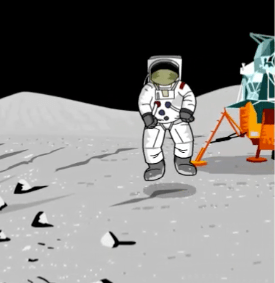


Which is true about Mercury, Venus, Earth, and Mars
they all have an atmosphere
they all have many moons
they all have rings made of rocks and ice
they all have a rocky surface


Which is the largest celestial body in our Solar System?
Jupiter
Sun
Saturn
Mars

What is the hottest planet?
Mercury
Venus
Mars
Jupiter


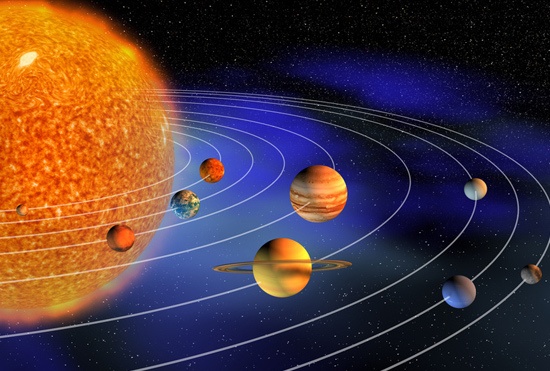
Why do all of the planets orbit the sun rather than Earth?
the sun has more mass
the sun is a star
the Earth is heavier
the sun is in the middle of the milky way

According to Newton, what kinds of objects are affected by gravity?
Only objects inside the earth's atmosphere, like apples.
Only objects that orbit the sun, like planets.
Only objects with a lot of mass, like human beings.
All objects in the universe.

Gravity is-
a force
a force of attraction
a force of attractions between two or more objects
a force of attraction between on object

If the man in the picture lets go of the rope, the barrel will fall to the ground. What force is acting to pull the barrel to the ground?
Magnetism
Friction
Gravity
Electricity

Will gravity pull this person down, out to space? Why?
No, because gravity will pull him towards the Earth
Yes, because gravity will pull him away from the Earth

What stops people from floating away into space?
electricity
gravity
heavy boots
magnets

What force pulls the marble toward the bottom of the ramp?
electricity
friction
magnetism
gravity


People visit Kennedy Space Center to observe rocket launches. These rockets are
powerful enough to escape the effects of Earth’s gravity and reach outer space.
What does this demonstrate about Earth’s gravity?
That gravity can be overcome.
That gravity changes from time to time.
That gravity changes from place to place.
That gravity is too powerful to be overcome.
What keeps planets in orbit around the Sun?
the Sun's mass
the Sun's period of rotation
the Sun's gravitational force
the Sun's color

Gravity is a _________ by which a planet or other body __________ objects towards it's ____________.

A skater falls off of his skateboard. The force of Earth's gravity pulls him to the ground.
What is the direction of this
pull?
Away from the center of earth
Toward the center of earth

A man standing on the South Pole of the Earth drops a ball. JC thinks that the ball will move away from the Earth, and Ximena thinks that the ball will move toward the Earth.
Which student do you agree with?
JC
Ximena

