
 Worksheets
Cells Super Review
Total questions: 96
Worksheet time: 1hrs 4mins
Scientists use what instrument to observe cells?
Telescope
Stethoscope
Borescope
Microscope
The first microscope is believed to have been made by accident because most people were making what at the time?
Stethoscopes
Microracers
Telescopes
Borescopes
What is the name of the English Scientist credited with building the first microscope?
Captain Hook
Robert Hooke
Matthias Schleiden
Theodor Schwann
Hooke observed ____ under the microscope, which came from the bark of a special kind of Oak tree.
Rubber
Paper
Sap
Cork
Robert Hooke observed small holes in cork that reminded him of what?
Jail Cells
Rabbit Holes
Small rooms where Monks lived
Ant Colonies
Once the microscope design was improved, this German scientist used it to observe...
Robert Hooke
Theodor Schwann
Matthias Schleiden
Rudolph Virchow
At around the same time, this German scientist used the microscope to observe animal cells.
Theodore Schwann
Matthias Schleiden
Robert Hooke
Rudolph Virchow
This German doctor proposed that all cells come from preexisting cells.
Matthias Schleiden
Rudolph Virchow
Theodor Schwann
Robert Hooke
Which of the following is not a part of the cell theory?
All living things are made of one or more cells
All new cells come from preexisting cells
All living organisms shed millions of dead cells everyday
The cell is the smallest unit of life
What is a macromolecule?
A swollen molecule
A large molecule that has taken in too much water
A molecule that has spent a lot of time in the gym
A large molecule formed when smaller molecules join
Macromolecules cannot function without what substance?
MOUNTAIN DEW!
COFFEE! COFFEE! COFFEE!
WATER!
Two all beef patties, special sauce, lettuce, cheese, pickles, onions, on a sesame seed bun
Water is the main ingredient in all cells. It makes up more than _________ of each cell!
90 percent
50 percent
70 percent
100 percent
Water does all of the following for a cell, except...
Surrounds the cell to insulate and help maintain homeostasis
Helps dissolve substances for the cell
Has a positive and negative end to attract other substances
Throws pretty dope pool parties on hot summer days
There are how many types of macromolecules in a cell?
2
3
4
5
Which of the following are types of macromolecules in the cell?
Nucleic Acids
Proteins
Carbohydrates
Lipids
All the Above
Nucleic Acids form when what type of molecules join?
High and low tides
Nuclear Missiles
Nukes
Nucleotides
Which of the following is the nucleic acid that holds genetic info for making proteins?
Ribonucleic Acid (RNA)
Butcher Shop
Deoxyribonucleic Acid (DNA)
Nucleic Acids are important for our cells because they contain...
Superpowers
Genetic info that's the roadmap for everything our bodies do
Energy
Protective barriers
These macromolecules are formed when chains of amino acids comes together.
Nucleic Acids
Carbohydrates
Proteins
Lipids
Which of the following is a function of proteins?
Helps cells communicate with each other
Helps transport things around the cell
Helps break down nutrients in food
Helps with structural support
All the above
These macromolecules do not dissolve in water.
Nucleic Acids
Carbohydrates
Lipids
Proteins
All of the following are examples of lipids, except...
Cholesterol
Phospholipids
Vitamin C
Vitamin A
Because lipids do not dissolve in water, they are a major part of which cell organelle?
Nucleus
Mitochondria
Cell Membrane
Cytoplasm
Sugar is an example of this macromolecule.
Nucleic Acid
Carbohydrate
Protein
Lipid
Carbohydrates do all of the following, except...
Fight infection
Help with communication between other cells
Help with energy storage
Help provide structural support
Fruits contain what type of carbohydrate?
STARCH!
WATER!
NUTRITION!
SUGAR!
Breads and pastas are mostly what type of carbohydrate?
SUGAR!
GRAIN!
FAT!
STARCH!
This is a carb that helps provide structural support in the cell wall.
Cellulitis
Glucose
Cellulose
Rubber Cement

This organelle is a flexible covering that protects the inside of the cell from the environment outside of the cell.
Cell Wall
Mitochondria
Cell Membrane
Lysosome

Fluid inside the cell that allows other organelles to move around and perform their jobs.
Cytoskeleton
Cytoplasm
Cell Membrane
Water

This is the control center of the ell It directs all cell activities and stores DNA.
Nucleolus
Nuclear Envelope
Nucleus
Vacuole

This is the layer around the nucleus that regulates what enters/exits the nucleus.
Nuecleolus
Nuclear Envelope (Nuclear Membrane)
Mitochondria
Cell Membrane

This organelle produces RNA inside the nucleus.
Nucleus
DNA
Lysosomes
Nucleolus

This comes in two forms, chromatin and chromosomes. It contains genetic information.
Nucleus
DNA
Nucleolus
RNA

This has ribosomes on it and is the site of protein production.
Vacuoles
Vesicles
Smooth ER
Rough ER

This organelle has no ribosomes and helps detoxify the cell of poisons.
Rough ER
Lysosomes
Ribosomes
Smooth ER

These organelles are in charge of making proteins when attached to the Rough ER.
Lysosomes
Vacuoles
Ribosomes
Vesicles

These are little saclike organelles that store water, nutrients, or waste.
Vacuoles
Vesicles
Ribosomes
Lysosomes

These organelles transport substances from one area of the cell to another.
Vacuoles
Mitochondria
Vesicles
Lysosomes

These organelles are packets of enzymes that break down materials in a cell.
Lysosomes
Smooth ER
Ribosomes
Mitochondria

These organelles produce ATP for the cell, which is used as energy for the cell.
Nucleus
Mitochondria
Nucleolus
Lysosomes

This organelle packages, labels, and ship proteins throughout the cell.
Vesicles
Vacuoles
Nucleus
Golgi Apparatus (Golgi Bodies)

This organelle provides support and structure for the cell in the same way your bones do.
Microtubules
Cytoskeleton
Cytoplasm
Mitochondria

These are tiny cylindrical organelles found in an animal cell that help with cell division.
Microtubules
Centrioles
Vesicle
Nucleus

Appendages off of the cell that help the cell move around or move things way from the cell.
Arms
Legs
Cilia and Flagella
Hands

This organelle, found in plant cells, helps create food fo r the cell through a process called photosynthesis.
Centriole
Sugar
Mitochondria
Chloroplast

This organelle found in plant/fungal cells provides stiff structure outside the cell membrane.
Cell Membrane
Nuclear Membrane
Cell Wall
Nuclear Envelope

Why are diffusion and osmosis important to cells?
It allows them to take in materials/substances without using energy.
It allows them to reproduce.
It allows them to absorb sunlight.
It allows cells to use all energy.

What does selectively-permeable mean?
Allow certain things to enter and leave the cell
Nothing gets through
The cell lets only large substances through

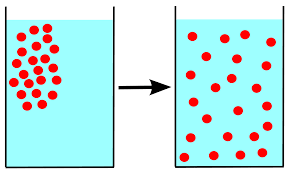
Passive transport requires ________________
concentration gradients
no energy
motion
energy
The movement of particles through the cell membrane without the use of a cell's energy, from high to low concentration is called ....
exocytosis
active transport
passive transport
osmosis
When the smell of perfume spreads throughout a room, it is an example of ....
passive transport
diffusion
active transport
osmosis
Active Transport Requires...
(a)

What process is being pictured here?
Endocytosis
Exocytosis
Facilitated Diffusion
Osmosis

What process is pictured here?
Endocytosis
Exocytosis
Facilitated Diffusion
Osmosis

Number 1 in the picture creates pores in the cell membrane in order to allow particles to go through during processes like facilitated diffusion.
Membrane Holes
Canals
Channel Proteins
Series of chemical reactions that require oxygen to convert food energy into ATP.
Lactic Acid Fermentation
Alcohol Fermentation
Photosynthesis
Cellular Respiration
All living things, from one celled to multicellular organisms, need _____________ to survive.
A nucleus
Energy
Milk
Sleep
Cells process energy from food into the energy storage compound called _______________________.
Mitochondria
Adenosine Triphosphate (ATP)
the Nucleus
glucose
Cellular Respiration occurs in which two parts of the cell?
Cytoplasm and Nucleus
Nucleus and Mitochondria
Cytoplasm and Rough ER
Cytoplasm and Mitochondria
The first step of cellular respiration is called ___________.
Glucose
Glycose
Glycolysis
Glucolysis
Glycolysis, the first part of cellular respiration, takes place in which part of the cell?
Cytoplasm
Nucleus
Mitochondria
Cell Membrane
Glycolysis is the process in which _____________________.
your cells get really hyper.
glucose, a sugar, is broken down into smaller molecules.
your cells fall asleep.
glucose, a flower, hops through the meadows like Bambi.
During glycolysis, it takes some ATP to create more ATP to keep the process going.
True
False
It takes ___________ to make ___________ !
(The same word fits into both blanks.)
(a)
The second step to Cellular Respiration is called ___________.
Mr. Krabs Cycle
Crabs Cycle
Krebs Cycle
Bi cycle
The Krebs Cycle takes place in what part of the cell?
Cytoplasm
Mitochondria
Nucleus
Cell Membrane
Cellular Respiration requires what to take place?
Carbon Dioxide!
Tasty Cheeseburger!
Water!
Oxygen!
During the Krebs Cycle, sugar is broken down even more, and lots of _____________ is produced!
PTA
ATP
TAP
PAT
The two waste products given off during cellular respiration are:
Water and CO2
Oxygen and CO2
Carbon Dioxide and HO2
Sweat and Stench
When oxygen levels are low, the process of _________ kicks in to help create energy.
Cellular Respiration
Fermentation
Photosynthesis
Break Dancing
Fermentation does not require _____________ to happen.
Cells
Oxygen
ATP
Curds and Whey
Because no oxygen is required, more ATP is produced.
True
False
This type of fermentation converts glucose into ATP and gives off lactic acid as a waste product.
Alcohol Fermentation
Lactic Acid Fermentation
Cellular Respiration
Photosynthesis
This type of fermentation converts glucose into ATP and gives off lactic acid as a waste product.
Alcohol Fermentation
Lactic Acid Fermentation
Cellular Respiration
Photosynthesis
Certain bacteria and fungi go through Lactic-Acid Fermentation and are used to create ________________.
kool aid, pixie sticks, and salt water taffy
hairspray, hair gel, and hair dye
sunscreen and hand lotion
cheese, yogurt, and sour cream
Your muscles use Lactic-Acid Fermentation to keep going when oxygen levels are low.
True
False
This type of fermentation makes ATP and gives off ethanol and carbon dioxide as waste products.
Lactic-Acid Fermentation
Cellular Respiration
Photosynthesis
Alcohol Fermentation
In the food industry, we use alcohol fermentation to make which of the products listed below?
Yogurt
Cheese
Sour Cream
Bread
Some organisms, such as plants, do not eat food, and therefore need to their own food through which process?
Cellular Respiration
Alcohol Fermentation
Photosynthesis
Lactic-Acid Fermentation
Photosynthesis requires which of the following?
Carbon Dioxide, Water, and Sunlight
Carbon Dioxide, Water, and Oxygen
Oxygen, Water, and Sunlight
Photosynthesis creates which two products?
Sugar and CO2
Sugar and Oxygen
Sugar and H2O
Oxygen and H2O
What pigment is used to absorb light energy in plant cells?
Chloroplast
Chlorophyll
Chlroform
Chlorine
Chlorophyll typically absorbs all colors, except __________.
Black
White
Green
Magenta
Which organelle is the leader of photosynthesis in plants?
Chlorophyll
Chloroplast
Chloroform
Chlorine
Photosynthesis, in plant cells, gives off oxygen, which is then used for what process in animal cells?
Lactic-Acid Fermentation
Cellular Respiration
Alcohol Fermentation
Photosynthesis

