wayground logo

Free Printable Worksheets

Font size

S
M
L
XL
Worksheets

Earth Science EOC Review

Total questions: 96

Worksheet time: 1hrs 9mins

Name
Class
Date
1.

What is the sun mostly made up of?

a)

hydrogen and oxygen

b)

hydrogen and helium

c)

helium and carbon

d)

helium and oxygen

2.

What is salinity?

a)

how soft or hard the water is

b)

dissolved salt in a sample of water

c)

how acidic or basic the water is

d)

freshwater

3.

What are the different parts of a comet?

a)

coma, nucleus, and meteor

b)

tail, back, and coma

c)

nucleus, tail, and corona

d)

nucleus, tail, and coma

4.

When the moon goes through Earth's shadow, we see a...

a)

lunar ellipse

b)

solar eclipse

c)

lunar eclispe

d)

solar ellipse

5.

NASA scientists recently discovered evidence of liquid water on...

a)

Jupiter

b)

The Sun

c)

Mars

d)

Pluto

6.

What is a naturally occurring, inorganic, solid, with a crystal structure, and definite chemical composition?

a)

Rock

b)

Mineral

c)

Meteor

d)

Comet

7.

The basic building blocks that make up rocks are called what?

a)

Sand

b)

Minerals

c)

Comets

d)

Asteroids

8.

What scale ranks ten minerals from softest to hardest?

a)

Moh's Hardness Scale

b)

Rock Hardness Scale

c)

Mineral Hardness Scale

d)

Approximate Hardness Scale

9.

What is the hardest known mineral to man?

a)

Topaz

b)

Diamond

c)

Talc

d)

Gypsum

10.

What is the softest mineral known to man?

a)

Topaz

b)

Diamond

c)

Gypsum

d)

Talc

11.

A rock deep within the Earth experiences extreme temperature and pressure. After a long period of time it becomes which rock?

a)

Magma

b)

Igneous

c)

Metamorphic

d)

Sedimentary

12.

Based on the law of superposition, what is the order of these rock layers, from oldest to youngest?

a)

1, 2, 3, 4

b)

2, 1, 4, 3

c)

3, 2, 1, 4

d)

4, 3, 2, 1

13.

Which is the correct order of the scientific method?

a)

Hypothesis, Conclusion, Experiment, Question, Analyze data, Observations

b)

Experiment, Question, Conclusion, Analyze data, Observations, Hypothesis

c)

Analyze data, Observations, Hypothesis, Question, Conclusion, Experiment

d)

Question, Hypothesis, Experiment, Observations, Analyze data, Conclusion

14.
The variable the is changed on purpose is..
a)
Constant
b)
Control
c)
Independent Variable
d)
Dependent Variable
15.
The variable that is being tested, counted, or measured and is responding to the independent variable is known as 
a)
Control
b)
Constant
c)
Independent Variable
d)
Dependent Variable
16.
Mrs. Goodwyn wants to see if studying time affects test scores...She gives all 6 classes the same assignment but assigns different study times. What is the independent variable?
a)
Study time
b)
Test score
c)
Same assignment
17.
Mrs. Goodwyn wants to see if studying time affects test scores...She gives all 6 classes the same assignment but assigns different study times. What is the dependent variable?
a)
Study  time
b)
Test Score
c)
Same Assignment
18.
A student wants to test the hypothesis of "If salt is added to water then the boiling point of water will decrease." What is the independent variable?
a)
Amount of salt
b)
Boiling Point
c)
Amount of water
19.
A student wants to test the hypothesis of "If salt is added to water then the boiling point of water will decrease." What is the dependent variable?
a)
amount of salt
b)
boiling point
c)
same amount of water
20.
Which brand of paper towel will absorb the most liquid? What is the independent variable?
a)
Brand of paper towel
b)
Amount of water absorbed
21.
Which brand of paper towel will absorb the most liquid? What is the dependent variable?
a)
brand of paper towel
b)
amount of water absorbed
22.
A rock formed from fragments of other rocks is a(n)
a)
Metamorphic Rock
b)
Sedimentary Rock
c)
Extrusive Rock
d)
Igneous Rock
23.
The three groups of rocks are classified by
a)
How they form
b)
Color
c)
Grain size
d)
Chemical Composition
24.
Fossils are only found in
a)
Sedimentary rocks
b)
Foliated Metamorphic rocks
c)
Igneous Rocks
d)
Nonfoliated Metamorphic rocks
25.
Which of the following are associated with volcanoes?
a)
Sediments and soil
b)
Crystals and sand
c)
Magma and lava
d)
Mica and granite
26.
Letter A is?
a)
evaporation
b)
transpiration
c)
condensation
d)
accumulation 
27.
Letter B is?
a)
evaporation
b)
transpiration
c)
condensation
d)
accumulation
28.
Letter C is?
a)
precipitation
b)
transpiration
c)
condensation
d)
accumulation
29.
Letter D is?
a)
precipitation
b)
transpiration
c)
condensation
d)
run off
30.
Letter F is?
a)
precipitation
b)
accumulation
c)
condensation
d)
run off
31.
A type of rock that forms from the cooling of molten rock at or below the surface of the earth
a)
Igneous Rock
b)
Metamorphic Rock
c)
Sedimentary Rock
d)
chemical Rock
32.
Igneous rock that forms from lava on Earth's surface
a)
Organic Rock
b)
Intrusive Rock
c)
Clastic Rock
d)
Extrusive Rock
33.
Igneous rock that forms when magma hardens beneath Earth's surface
a)
intrusive Rock
b)
compaction
c)
Chemical Rock
d)
Clastic Rock
34.
A slow cooling igneous rock will have _____ crystals
a)
large
b)
small
c)
average
d)
black
35.
Natural resources are
a)
renewable.
b)
nonrenewable.
c)
resources that exist without actions of humankind. 
d)
resources produced by humans from using biotic and abiotic factors found in nature.
36.
Which of the following is NOT a Natural Resource?
a)
Oil
b)
Natural Gas
c)
Plastic
d)
Water
37.
Renewable resources 
a)
can be replenished.
b)
cannot be replenished.
c)
are limited.
d)
are fossil fuels.
38.

Fossil fuels are nonrenewable because...

a)

they are used to produce heat.

b)

they take a long time to form.

c)

they can be found underground.

39.

Diamonds and other minerals

a)

nonrenewable.

b)

renewable.

40.
What is a true fact about the mesosphere?
a)
it is the hottest layer
b)
meteors burn up here
c)
the ozone layer is found here
d)
Northern Lights happen here
41.
What does a barometer do?
a)
measures air pressure
b)
measures temperature
c)
measures humidity
d)
measures length
42.
The weight of the atmosphere is ...
a)
temperature
b)
humidity
c)
air pressure
d)
weather
43.

How does air pressure change as you climb a mountain?

a)

it decreases (less air pressure)

b)

it increases (more air pressure)

c)

stays the same

d)

the temperature gets warmer

44.
Elevation, or how high up you are, is also called ...
a)
altitude
b)
atmosphere
c)
height
d)
decreasing
45.
A layer of air that surrounds Earth to keep us warm is called ...
a)
atmosphere
b)
Sun's rays
c)
ozone layer
d)
air pressure
46.

Which temperature of air weighs more?

a)

warm

b)

cold

47.

What protects Earth from ultraviolet rays from the sun?

a)

ozone layer

b)

mesosphere

c)

air pressure

d)

troposphere

48.
In what layer would you find the ozone layer?
a)
troposphere
b)
stratosphere
c)
mesosphere
d)
thermosphere
49.
What layer comes next:
Troposphere - 
stratosphere -
?????
a)
mesosphere
b)
exosphere
c)
thermosphere
d)
ionosphere
50.

What gas makes up the majority of the atmosphere?

a)

oxygen

b)

nitrogen

c)

water vapor

d)

carbon dioxide

51.

What layer of the atmosphere is closest to outer space?

a)

mesosphere

b)

exosphere

c)

troposphere

d)

stratosphere

52.
In what layer of the atmosphere would you find clouds and weather?
a)
troposphere
b)
stratosphere
c)
mesosphere
d)
thermosphere
53.

The second most abundant gas in the atmosphere?

a)

Nitrogen

b)

Neon

c)

Oxygen

d)

Water Vapor

54.

The driving force of the Water Cycle is?

a)

The troposphere

b)

The Sun

c)

The oxygen

d)

The clouds

55.

What heats or cools faster: land or water?

a)

Land

b)

Water

56.
They are highest clouds in the sky. They look wispy, white and feathery. Usually mean good weather.
a)
Cumulus
b)
Cumulonimbus
c)
Cirrus
d)
Stratus
57.
They are low in the sky and look soft and fluffy. They have flat bases that are usually a little darker than the heaping top.
a)
Cirrus
b)
Cumulonimbus
c)
Cumulus 
d)
Stratus
58.
These clouds are the closest to the ground. Their name means layer- or sheet like. They bring light & continuous rain or snow and cover most of the sky. 
a)
Cirrus
b)
Stratus
c)
Cumulonimbus
d)
Cumulus
59.
During which part of the water cycle do clouds form?
a)
condensation
b)
transpiration
c)
precipitation
d)
evaporation
60.
what type of cloud is shown?
a)
cumulus
b)
cirrus
c)
stratus
d)
nimbostratus
61.
what type of cloud is shown?
a)
cumulus
b)
cirrus
c)
stratus
d)
altostratus
62.
This is sometimes called a thunderhead cloud. It looks very tall like mountains and heavy rain/thunderstorms comes from it. 
a)
Cumulus
b)
Cirrus
c)
Stratus
d)
Cumulonimbus
63.
What type of front brings cool, cold weather to an area?
a)
cold front
b)
warm front
c)
stationary front
d)
occluded front
64.
What type of front brings warm and humid weather to an area?
a)
cold front
b)
warm front
c)
stationary front
d)
occluded front
65.
A warm and dry air mass is best described as...
a)
continental tropical
b)
continental polar
c)
maritime tropical
d)
maritime polar
66.
A cool and humid air mass is best described as...
a)
continental tropical
b)
continental polar
c)
maritime tropical
d)
maritime polar
67.
a cool and dry air mass is best described as...
a)
continental tropical
b)
continental polar
c)
maritime tropical
d)
maritime polar
68.
The type of plate boundary where two plates come together is a .....
a)
Convergent Boundary
b)
Divergent Boundary
c)
Transform Boundary
d)
Plate Boundary
69.
What type of plate boundary is this?
a)
Plate
b)
Divergent
c)
Convergent
d)
Transform
70.
What type of event will occur at this boundary?
a)
Earthquake
b)
Volcano Eruption
c)
Tornado
d)
Mountain Building
71.
A divergent boundary occurs when plates ....
a)
Pull apart
b)
Come together
c)
Slide past each other
d)
subducting
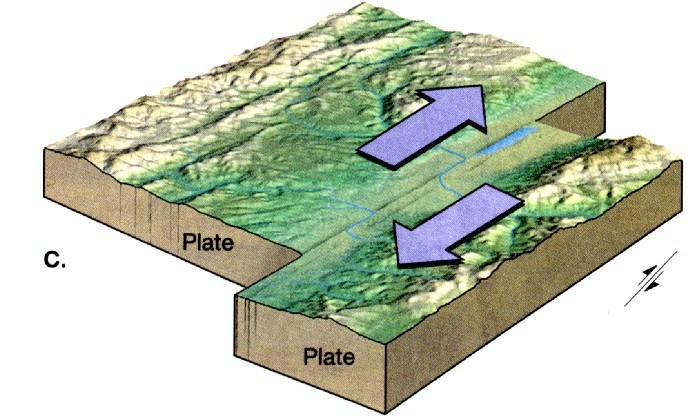
72.
What type of plate boundary is this?
a)
Transform
b)
Convergent
c)
Divergent
d)
Plate
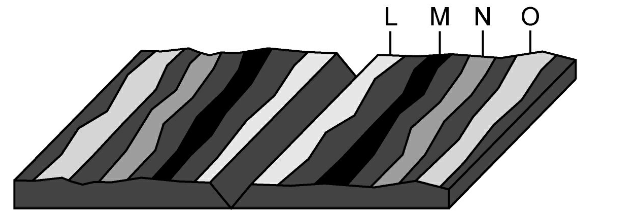
73.
Where would the oldest rock be found?
a)
L
b)
M
c)
N
d)
O
74.

Continental crust is made up of mostly what type of rock?

a)

Basalt

b)

Granite

75.

Oceanic crust is made up of mostly what type of rock?

a)

Basalt

b)

Granite

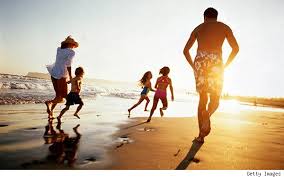
76.
The sun shines down on this family as the play on the beach.
a)
conduction
b)
convection
c)
radiation
77.
A group of friends gather around a fire to stay warm.
a)
conduction
b)
convection
c)
radiation
78.
Walking on the warm sand sand with your bare feet.
a)
conduction
b)
convection
c)
radiation
79.
Blow drying your wet hair.
a)
conduction
b)
convection
c)
radiation
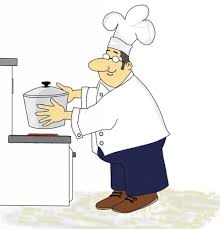
80.
The man goes to take the hot pot off the stove with his bare hands.
a)
conduction
b)
convection
c)
radiation
81.
These rocks were broken apart from the continuous freeze/thaw of water in the cracks of the rocks. This is an example of:
a)
ice wedging
b)
acid rain
c)
permeability
d)
abrasion
82.

Potholes forming in the road after a cold winter is an example of what type of weather?

a)

mechanical weathering

b)

chemical weathering

83.
Caves being formed by acid rain dissolving underground limestone
a)
Weathering
b)
Erosion
c)
Deposition
84.

Deltas forming at the mouths of rivers are an example of:

a)

Weathering

b)

Erosion

c)

Deposition

85.
Our solar system has several terrestrial planets.  They include:
a)
Jupiter, Earth, Mars
b)
Venus, Mercury, Mars
c)
Saturn, Neptune, Uranus
d)
Pluto, Jupiter, Earth
86.
The asteroid belt is located between which two planets?
a)
Earth and Mars.
b)
Venus and Earth.
c)
Mars and Jupiter.
d)
Mercury and Earth.
87.
A _______ is a burning body of matter that has entered Earth's atmosphere; "shooting star"
a)
Meteor
b)
Comet
c)
Asteroid
d)
Solar Flare
88.
Which phase of the Moon is this?
a)
Full Moon
b)
First Quarter
c)
Last Quarter
d)
New Moon
89.
When the moon is over 50% illuminated it is called a ____________.
a)
Full Moon
b)
New Moon
c)
Crescent
d)
Gibbous
90.
Longest day of the year
a)
Autumnal Equinox
b)
Summer Solstice 
c)
Winter Solstice
d)
Vernal Equinox
91.
Shortest day of the year
a)
Autumnal Equinox
b)
Summer Solstice 
c)
Winter Solstice
d)
Vernal Equinox
92.
What does the rotation of the earth cause us to experience?
a)
seasons
b)
year
c)
day & night
d)
eclipse
93.
How long does it take the earth to revolve once around the sun?
a)
12 hours
b)
24 hours
c)
30 days
d)
365.25 days
94.
Equinox means - 
a)
Equal light
b)
Longest day
c)
Shortest day
d)
Tilt
95.
How does a meteor compare to a meteorite? 
a)
A meteor is moving through Earth's atmosphere and the meteorite actually lands on Earth
b)
A meteorite is moving through the Earth's atmosphere and the meteor actually lands on Earth
c)
Meteors are made up of Carbon and meteorites are made of ice
d)
They are the same thing
96.
Which of the following describes a Comet?
a)
Shooting star
b)
Generally found between Mars and Jupiter
c)
Orbit the sun like a planet
d)
Composed of a nucleus, coma, and tail