wayground logo

Free Printable Worksheets

Font size

S
M
L
XL
Worksheets

ES Unit 4 Test LIFT 2023

Total questions: 100

Worksheet time: 3hrs 9mins

Name
Class
Date
1.
Relative dating of rock layers tells us that the deeper we dig, _______.
a)
the younger the rocks get
b)
the smellier the rocks get
c)
the harder the rocks get
d)
the older the rocks get
2.
The Geologic Time Scale is a record of what?
a)
old geologists
b)
sweet geology music
c)
the known history of rocks and fossils
d)
a list of every living thing ever
3.
Which of the following statements about the fossil record is true?
a)
all organisms become fossils
b)
organisms having soft body parts make up most of the fossils
c)
all organisms that have shells become fossils
d)
the fossil record is incomplete
4.
The Law of Superposition helps scientists to determine what?
a)
The absolute age of rock layers
b)
The age of fossils
c)
The relative age of rock layers
d)
the super powers of rocks
5.
Paleozoic, Mesozoic & Cenozoic are all
a)
Epochs
b)
Eras
c)
Periods
d)
Eons
6.
Which is the most recent era of time- the one that we are currently in?
a)
Mesozoic 
b)
Paleozoic 
c)
Cenozoic 
d)
Precambrian 
7.
No longer and never again existing as an organism on earth
a)
fossils
b)
extinct
c)
evolution
d)
mold
8.
True or False: Geologists subdivide periods into eras.
a)
False
b)
True
9.
The shortest units of time on the Geologic Time Scale are
a)
Periods
b)
Eons
c)
Eras
d)
Epochs
10.
Trilobites are good __________ fossils because they were abundant and widespread geographically.
a)
cast
b)
index
c)
preserved
d)
carbonized
11.
The dinosaurs and reptiles were dominant in which Era?
a)
Precambrian
b)
Mesozoic
c)
Paleozoic
d)
Cenozoic
12.
The Principle of Cross-Cutting Relationships states that an igneous intrusion is 
a)
always younger than the layers it cuts across
b)
always older than the layers it cuts across
c)
the same age as the rock it melted
d)
none of the answers are correct
13.
Which of the following correctly lists the layers in order from oldest to youngest?
a)
A, B, C, D, E
b)
E, B, C, D, A
c)
E, D, C, B, A
d)
C, B, A, D, E
14.
Choose the correct order of relative ages for the rock layers below, starting with the youngest, and finishing with the oldest layer.  
a)
A, E, B, C, D
b)
A, B, C, D, E
c)
E, A, D, C, B
d)
E, D, C, B, A
15.
Which is the most accurate form of absolute dating?
a)
radiometric dating
b)
erosion rate
c)
deposition rate
d)
index fossils
16.
The time it takes for half of a radioactive isotopes to decay into stable isotopes is called the
a)
isotope decay
b)
radiometric dating
c)
half life
d)
absolute age
17.
How is radioactive dating used to determine the absolute age of rocks?
a)
The percent of radioactive parent isotopes remaining in the rock is compared to the amount of stable daughter isotopes that are present
b)
it compares the radioactive isotope in a younger layer of rock to an older layer
c)
isotopes of different compounds are compared
d)
daughter isotopes are compared to sister isotopes
18.

When an unstable isotope breaks down, or decays, it is said to be _____.

a)

radioactive

b)

explosive

c)

stable

d)

none of the above

19.

If a fossil starts out with 100 grams of a radioactive isotope, how much will remain after 3 half lives?

a)

50 grams

b)

25 grams

c)

12.5 grams

d)

6.25 grams

20.

The half-life of a radioactive substance is the amount of time it takes for _____ of the parent atom to decay.

a)

1/4

b)

1/2

c)

3/4

d)

all

21.
How does absolute age differ from relative age?
a)
only absolute dating indicates which rock is older than another
b)
only absolute dating finds the age in years
c)
only relative dating finds the age in years
22.
If the half-life of a radioactive group of atoms is 100 years, then how old is the rock if there have been two half-lives?
a)
25 years
b)
200 years
c)
400 years
d)
800 years
23.
Which rock layer in the diagram seems to be the oldest?
a)
F
b)
E
c)
B
d)
A
24.
Which of the following is the oldest?
a)
Layer L
b)
Intrusion D
c)
Intrusion H
d)
Layer E
25.
How old is the Earth?
a)
4.6 billion years
b)
1.4 billion years
c)
4.6 million years
d)
6000 years
26.
Traces or remains of organisms that lived long ago
a)
Fossil
b)
Unconformity
c)
Superposition
d)
Column
27.

Earth's early atmosphere did NOT include which gas?

a)

N2

b)

H2O

c)

CO2

d)

O2

28.

Which species is the youngest?

a)

Ginko

b)

Calamites

c)

Sharks

d)

Archemides

29.
If a radioactive substance has a half life of 200 years, how much time has passed if ¼ (25%)  of the original isotope is left?  
a)
25 years
b)
600 years
c)
50 years
d)
400 years
30.
If a sample starts with 400 radioactive isotopes, how many are left after 3 half lives?
a)
200
b)
100
c)
50
d)
25
31.
A rock formed with 1000 atoms of a radioactive parent element, but only contains 250 radioactive parent atoms today. If the half-life of the parent element is one million years, how old is the rock?
a)
250,000 years old
b)
500,000 years old
c)
1,000,000 years old
d)
2,000,000 years old
32.
The original element that undergoes radioactive decay is known as the...
a)
daughter element
b)
half-life
c)
parent element
d)
carbon-14
33.

According to most scientists, what is the ultimate cause of most mass extinctions?

a)

overhunting

b)

evolution of new species to replace old ones

c)

major change in environment

d)

asteroid impact

34.
Which of these describes a species that has become extinct?
a)
fewer members of the species are dying than being born
b)
more members of the species are dying than being born
c)
very few members of a species are alive
d)
all members of a species have died
35.
What is a mass extinction?
a)
When all the species in a particular area on earth suddenly go extinct
b)
When multiple species from all over the earth suddenly go extinct 
c)
When one species goes extinct due to habitat changes
d)
When all life on earth is wiped out 
36.

What is an atmosphere?

a)

a mixture of liquids found on Earth's surface.

b)

a mixture of solids that make up Earth's crust.

c)

a mixture of gases that surrounds Earth.

37.

Earth's atmosphere is constantly changing due to:

a)

human impacts which include increased carbon dioxide and decreased ozone.

b)

biological impacts (living organisms) that can change the amount of carbon dioxide and oxygen available.

c)

Geologic impacts which change the amount of dust and gas.

d)

all of these options are correct.

38.

TRUE or FALSE?

Earth's first atmosphere was inhospitable due to the extremely hot temperatures and lack of oxygen. The first atmospheric gases included hydrogen and helium.

a)

true

b)

false

39.

TRUE or FALSE?

Earth's second atmosphere contained water vapor, carbon dioxide, sulfur dioxide, and nitrogen due to increased volcanic eruptions.

a)

true

b)

false

40.

Which of the following have provided us with evidence of Earth's past atmospheric conditions?

a)

remains of marine organisms and tropical plants that have turned into fossil fuels

b)

ice core data

c)

"Red Beds" or banded iron formations found in rock layers.

d)

prehistoric cave drawings

e)

cloud formations and patterns

41.

Where do MARITIME air masses form?

a)

Over water

b)

Over land

42.

Which type of air mass is COLD and DRY?

a)

Maritime Polar

b)

Maritime Tropical

c)

Continental Polar

d)

Continental Tropical

43.

Which type of air mass is HOT and HUMID?

a)

Maritime Polar

b)

Maritime Tropical

c)

Continental Polar

d)

Continental Tropical

44.

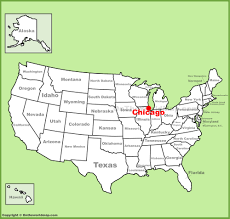
What type of air mass is found over CHICAGO?

a)

Maritime Polar

b)

Maritime Tropical

c)

Continental Polar

d)

Continental Tropical

45.
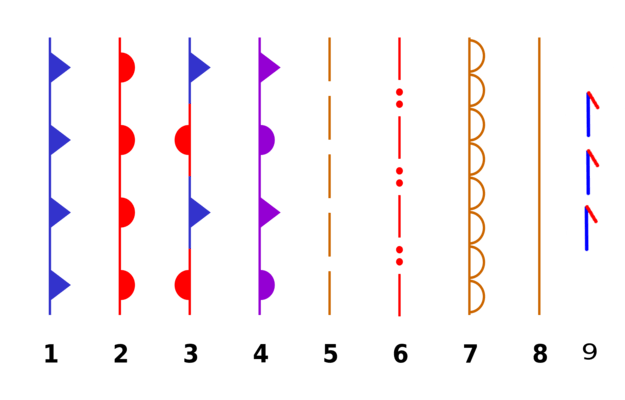
What does symbol # 3 mean?
a)
stationary front
b)
occluded front
c)
warm front
d)
cold front
46.
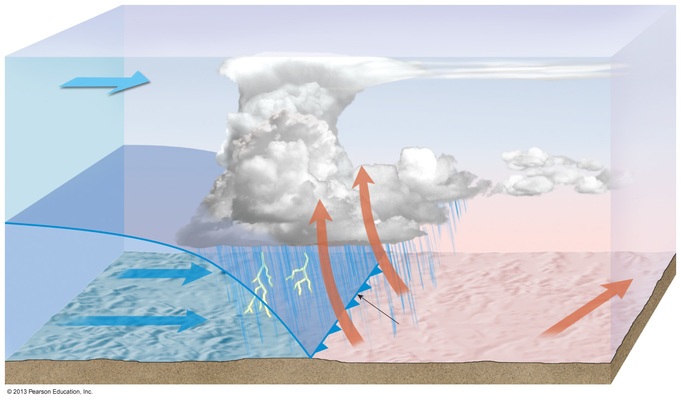
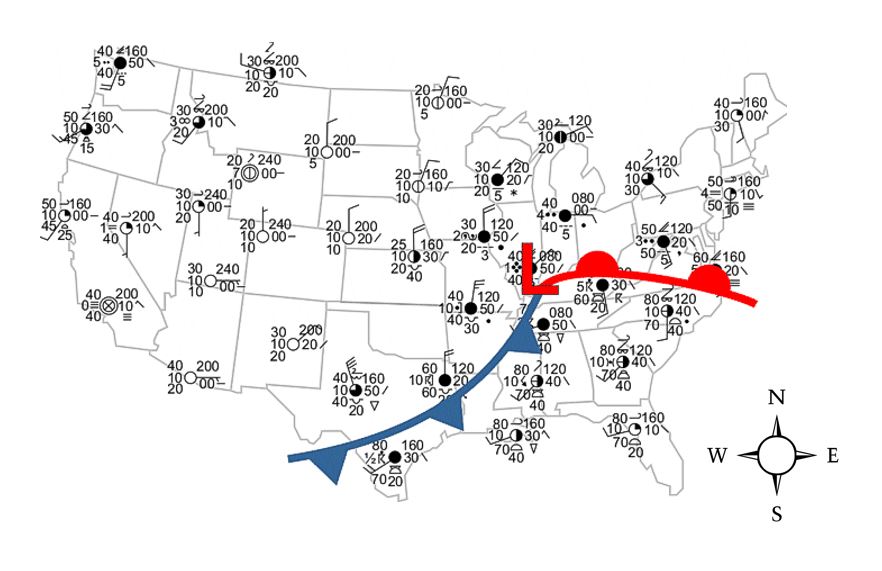
What type of storm front is this? 
a)
warm front
b)
cold front
c)
stationary front
d)
occluded front
47.
A front is
a)
where warm air is cooling at earth's surface
b)
a line where hot and cold air are separating
c)
a line where two different air masses meet
d)
where cold air is rising and forming rain clouds
48.
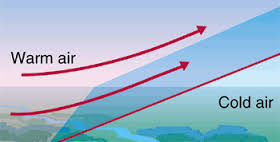
Which type of front is pictured?
a)
Cold front
b)
Warm front
c)
Occluded front
d)
Stationary front
49.
What direction is the warm front moving on the map? 
a)
North
b)
South
c)
East
d)
West
50.
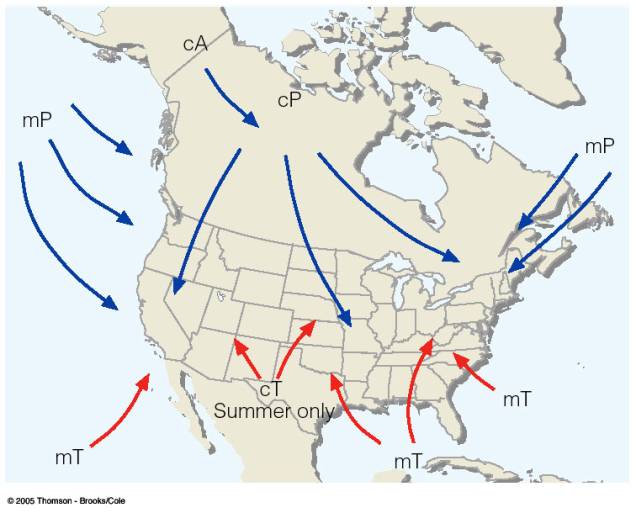
Which abbreviation of an air mass can be identified as cold and humid?
a)
cP
b)
mP
c)
cT
d)
mT
51.

Lines on a weather map that connect areas of equal pressure.

a)

warm front

b)

cold front

c)

isobar

d)

millibar

e)

barometer

52.

High pressure weather usually indicates what type of weather?

a)

fair

b)

cloudy

53.

An instrument that measures air pressure is a

a)

thermometer

b)

barometer

c)

hygrometer

d)

anemometer

e)

isobar

54.

Is this showing a high pressure area or a low pressure area?

a)

high pressure

b)

low pressure

55.

Is this showing a high pressure area or a low pressure area?

a)

high pressure

b)

low pressure

56.

In order to report information about the weather each meteorologist uses the symbols in the attached image to interpret what is going on in the atmosphere. This is called a

a)

isotherm

b)

isobar

c)

weather map

d)

station model

57.
the lines on a weather map connect equal areas of temperature
a)
contour lines
b)
isotherms
c)
isobars
d)
longitude
58.

Which will hold more water, warm air or cold air?

a)

Warm Air

b)

Cold AIr

59.
Which weather instrument is useful in measuring relative humidity?
a)
barometer
b)
anemometer
c)
psychrometer
d)
wind vane
60.
The amount of water vapor in the atmosphere compared to how much it could hold.
a)
Saturation
b)
Vaporicity
c)
Absolute Humidity
d)
Relative Humidity
61.
Dew Point is the
a)
temperature air cools down to reach condensation
b)
temperature where ice melts to liquid water
c)
temperature where ice turns directly into water vapor
d)
time of day when dew on the ground disappears
62.
During which part of the water cycle does a cloud form?
a)
Evaporation
b)
Precipitation
c)
condensation
d)
Run off
63.
What type of cloud is shown (in the pic behind the question)?
a)
cumulus
b)
cirrus
c)
stratus
64.
Identify this cloud type (in the pic behind the question)
a)
cirrus
b)
cumulus
c)
stratus
d)
cumulonimbus
65.
Identify this cloud type (in the pic behind the question)
a)
cirrus
b)
cumulus
c)
stratus
d)
cumulonimbus
66.
Clouds are classified by their
a)
color and size
b)
color and shape
c)
height and size
d)
height and shape
67.
High pressure creates sunny, clear skies.
a)
True
b)
False
68.
The temperature at which air becomes saturated
a)
Humidity
b)
Front
c)
Dew Point
d)
Cold Front
69.
Which type of cloud indicates fair weather?
a)
nimbus
b)
cumulus
c)
cirrus
d)
cumulonimbus
70.
As altitude increases, pressure __________.
a)
increases
b)
decreases
c)
stays the same
d)
rises
71.
Climate is determined by
a)
latitude and precipitation
b)
dew point and wind
c)
temperature and latitude
d)
precipitation and temperature
72.

What type of weather is associated with a cold front?

a)

Thunderstorms

b)

Clear skies

c)

Warmer temperatures and tornadoes

d)

Cool temperatures and thunderstorms, rain

73.
Which layer of the atmosphere do we live in?
a)
troposphere
b)
mesosphere
c)
thermosphere
d)
exosphere
74.
Which layer is known as the weather layer?
a)
stratopshere
b)
thermosphere
c)
mesosphere
d)
troposphere
75.
Which layer of the atmosphere contains both the ionosphere and the exosphere?
a)
troposphere
b)
stratosphere
c)
mesosphere
d)
thermosphere
76.
Which layer of the atmosphere contains a special form of oxygen called the ozone layer?
a)
mesosphere
b)
stratosphere
c)
thermosphere
d)
ionosphere
77.
What are the two most abundant gases in earth's atmosphere?
a)
nitrogen & oxygen
b)
carbon dioxide & water vapor
c)
hydrogen & oxygen
d)
oxygen and ozone
78.
What is the coldest layer of the atmosphere?
a)
troposphere
b)
mesosphere
c)
stratosphere
d)
thermosphere
79.
Which type of scientist studies the weather conditions on earth?
a)
atmospheric scientist
b)
climatologist
c)
hydrologist
d)
meteorologist
80.
Which layer is known to have "shooting stars"?
a)
mesosphere
b)
stratosphere
c)
thermosphere
d)
exosphere
81.

Any form of water that falls from clouds and reaches Earth's surface as rain, snow, sleet, or hail

a)

rain

b)

snow

c)

sleep

d)

precipitation

82.

precipitation falling from clouds in the form of ice crystals (occurs when temperature from sky to ground is below freezing)

a)

rain

b)

sleet

c)

hail

d)

snow

83.

What is a small particle of salt, dust, or other material around which water droplets can form?

a)

Condensation location

b)

Water collection

c)

Condensation nucleus

d)

Dust bunny

84.

Tall, heavy thunderstorm clouds are called...

a)

cirrus clouds

b)

cumulonimbus clouds

c)

altocumulus clouds

d)

stratus clouds

85.

If the air temperature is below freezing between the clouds and the ground, what kind of precipitation is likely to fall?

a)

rain

b)

sleet

c)

snow

d)

There will be no precipitation if it is below freezing.

86.
What is the greenhouse effect?
a)
warming of the earth due to gases in our atmosphere.
b)
cooling of the earth due to gases in our atmosphere
87.
What are tornadoes?
a)
a storm with thunder and lighting and typically also heavy rain or hail
b)
a storm that can be the same as thunderstorms, but can be even more dangerous
c)
a mobile, destructive vortex of violently rotating winds having the appearance of a funnel shaped cloud and beneath a large storm system.
d)
a huge storm with strong winds and storm surges
88.
A severe storm that involves high winds and forms over water is:
a)
tornado
b)
thunderstorm
c)
hurricane
d)
blizzard
89.
How many categories are there for a hurricane?
a)
10 Category's
b)
5 Category's
c)
None
d)
6 Categorys
90.
What do hurricanes feed on?
a)
warm tropical water
b)
hot water
c)
cold artic water
d)
rain
91.
Where is Tornado Alley located?
a)
Near the equator of the Earth
b)
Near the North Pole
c)
South Central Los Angeles
d)
Middle states of United States
92.
What is the scale used to measure hurricanes?
a)
MPH scale
b)
Fujita Scale
c)
Weight Scale
d)
Saffir/Simpson Scale
93.
What is the scale that is used to measure tornadoes?
a)
Mohs Scale
b)
Enhanced Fujita Scale
c)
Saffir Simpson Scale
d)
McDonalds Scale
94.
What is the meaning of Drought 
a)
The process by which land becomes more and more dry until it turns into desert.This may be caused by climate change,human activities, or both
b)
Groups of herders who move with their animals from place to place in search of pasture and water
c)
An unusually long period in which little or no rain falls  
d)
Selection of players for a team
95.
What happens if a hurricane moves over land or cold ocean water?
a)
it will get stronger
b)
it will get weaker
c)
it will upgrade its category
d)
it will morph into a typhoon
96.
This weather instrument is a...
a)
thermometer
b)
wind vane
c)
anemometer
d)
rain gauge
97.
What does this tool measure?
a)
Wind speed
b)
Wind direction
c)
Air pressure
d)
Temperature
98.
What is the name of this tool?
a)
Barometer
b)
Hygrometer
c)
Rain Gauge
d)
Thermometer
99.
This weather instrument is a...
a)
anemometer
b)
barometer
c)
wind vane
d)
thermometer
100.
This weather instrument is an...
a)
wind vane
b)
anemometer
c)
barometer
d)
thermometer