wayground logo

Free Printable Worksheets

Font size

S
M
L
XL
Worksheets

Ecology

Total questions: 105

Worksheet time: 4hrs 56mins

Name
Class
Date
1.
What is the definition of Biotic factors?
a)
Dead things
b)
plants
c)
Living things or organisms
d)
soil
2.
What is a example of a abiotic factor?
a)
Panda
b)
Turtle
c)
Butterfly
d)
weather
3.
What is an example of a biotic factor?
a)
skunk
b)
rocks
c)
soil
d)
water
4.

Temperature, light, air, water, and dirt are all  _____  parts of the environment

a)
alive
b)
biotic 
c)
abiotic
d)
living
5.
Can a abiotic factor kill a biotic factor?
a)
True
b)
False
6.
All living organisms that inhabit an environment are called?
a)
Biotic
b)
Abiotic
c)
Dead
d)
community
7.

Which two are NOT an example of a decomposer?

a)

mushroom & worms

b)

leaves & mushroom

c)

bacteria & mushroom

d)

worm & leaves

8.
Examples of a producer
a)
frog
b)
algae
c)
worm
d)
mouse
9.
Example of a consumer
a)
algae
b)
bacteria
c)
mushroom
d)
hawk
10.
Humans are considered...
a)
consumers
b)
decomposers
c)
producers
11.
Worms are considered...
a)
producer
b)
consumer
c)

detritivores

12.
How is the sun a part of a food chain?
a)
it is eaten
b)
it is the energy source
c)
it feeds animals
d)
it tastes good
13.
What do the arrows represent in a food chain?
a)
Stop
b)
Start
c)
"Gives energy to"
d)
who eats who
14.
An animal that gets energy from eating both plants and animals is a 
a)
herbivore
b)
carnivore
c)
omnivore
d)
autotroph
15.
What does a Primary Consumer eat?
a)
Tertiary Consumers
b)
Secondary Consumers
c)
Producers
16.
An animal that eats other animals is a....
a)
carnivore
b)
omnivore
c)
herbivore
d)
decomposer
17.
A producer is a____________.
a)
heterotroph
b)
autotroph
c)
omnitroph
d)
consumotroph
18.
A third-level consumer has to be which type?
a)
Carnivore.
b)
Decomposer.
c)
Producer.
d)
Herbivore.
19.
In the energy pyramid below, which organism has the least amount of energy available?
a)
Producers
b)
Herbivores
c)
Carnivores
d)
Top Predator
20.
This is an omnivore.
a)
True 
b)
False
21.
Living and nonliving things working together in their natural environment is 
a)
food web
b)
ecosystem
c)
food chain
d)
energy pyramid
22.
When only including living systems, what does every food chain start with?
a)
producers
b)
predators
c)
consumer
d)
sun
23.
Overlapping food chains in an ecosystem make up....
a)
food web
b)
food chain
c)
niche
d)
symbiosis
24.
True or False. In this Food Web Pyramid the consumers on each level only get about 10 percent of energy from the previous level.
a)
True
b)
False
25.
What is this called?
a)
Food Web
b)
Food Chain
c)
Abiotic Factors
26.
What is this called?
a)
Food Web
b)
Food Chain
c)
Abiotic Factors
27.
In the food web shown, the smaller bird would be considered....
a)
primary consumer
b)
secondary consumer
c)
tertiary consumer
d)
producer
28.
In the food web shown, the snail would be considered...
a)
primary consumer
b)
secondary consumer
c)
tertiary consumer
d)
producer
29.

In the food web shown, the fox is a...

a)

primary consumer

b)

Apex predator

c)

tertiary producer

d)

producer

30.
How many carnivores are shown in this food web?
a)
6
b)
4
c)
5
d)
3
31.
Succession that occurs in an area with NO SOIL
a)
ecological succession 
b)
primary succession 
c)
secondary succession
d)
pioneer speciles
32.
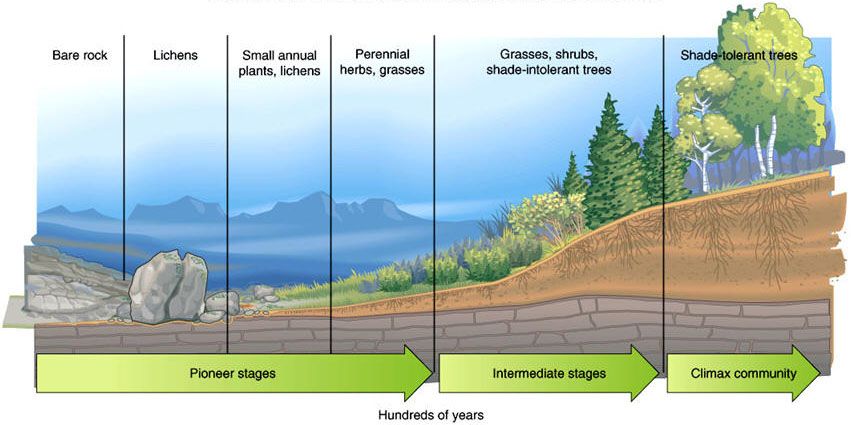
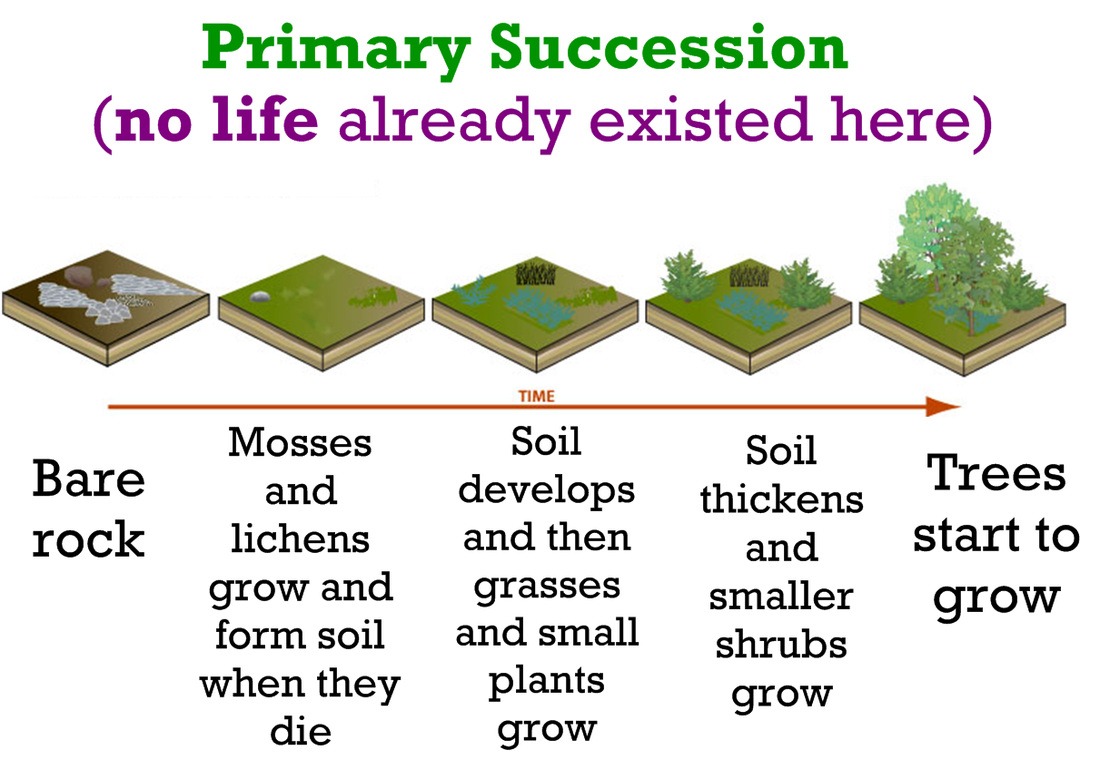
The picture shows what type of succession?
a)
primary
b)
secondary
c)
tertiary
d)
quadanary
33.
Starts with BARE ROCK followed by lichen
a)
primary succession 
b)
secondary succession
c)
both types of succession
34.
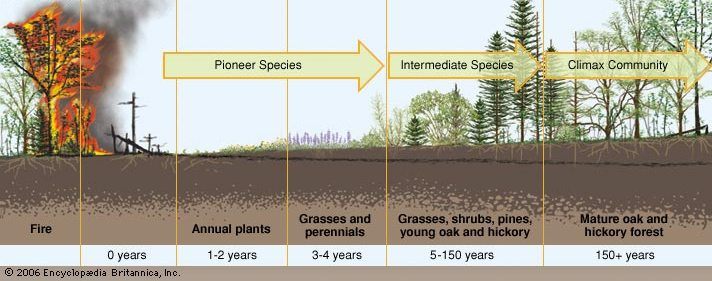
The picture shows what type of succession?
a)
primary
b)
secondary
c)
tertiary
d)
quadanary
35.
The final stable community of plants and animals is called:
a)
pioneer community
b)
farmland
c)
climax community
d)
old field
36.

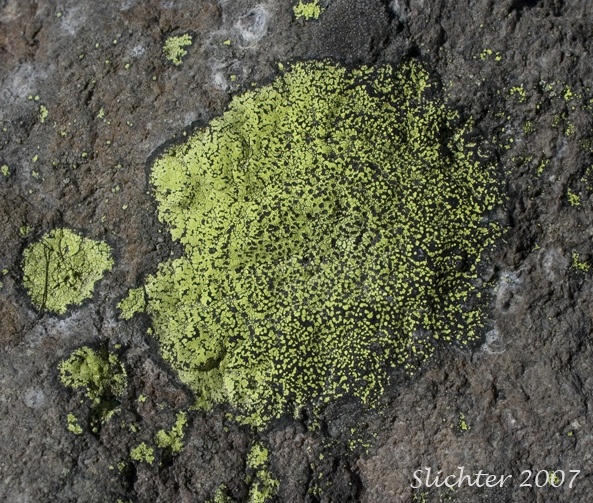
What is the lichens role in primary succession?

a)

Lichens decompose organic matter from animals and plants

b)

Lichens begin to break down rock to form soil

c)

Lichens are nitrogen fixing bacteria

d)

Lichens convert carbohydrates into fossil fuels.

37.

Occurs over long period of time

a)

primary succession

b)

secondary succession

c)

both types of succession

38.
Reaches a climax community quicker because soil is already present
a)
primary succession 
b)
secondary succession
c)
both types of succession
39.
What is the first species you will see after a primary succession? (in picture)
a)
lichens
b)
grasses
c)
small plants
40.

What is not the cause of primary succession?

a)

hurricane

b)

volcanic explosion

c)

melting glaciers

d)

sandstorm

41.
What are the pioneer species for secondary succession?
a)
lichen
b)
moss
c)
grass
d)
algae
42.
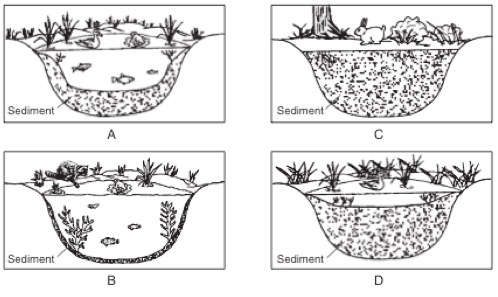
What is the correct order from oldest (happened first) to youngest (happened last) in this pond succession?
a)
A, B, C, D
b)
D, C, B, A
c)
B, A, D, C
d)
C, D, A, B
43.
Secondary succession occurs where an ecosystem has previously existed. 
a)
false
b)
true
44.
the process by which a new community forms where no community lived before 
a)
resource
b)
invasive (non- native) species
c)
primary succession
d)
competition
45.
If the grasshopper were to be removed completely from the food web, what organism would be most effected?
a)
The squirrel
b)
The shrew
c)
The deer
d)
The rabbit
46.

To keep an ecosystem in the climax community stage, we must keep our?

a)

limited organisms

b)

earth

c)

sun

d)

biodiversity

47.
After a volcanic eruption, lava covers the land. What is the order that plants grow to repopulate the area?
a)
Lichens → Shrubs → Grasses → Trees
b)
Lichens → tree → shrubs→Grasses
c)
Grasses → Lichens → Shrubs → Trees
d)
Lichens → Grasses → Shrubs → Trees
48.

What is the definition of ecological succession?

a)

The number of different species, different genetics, and ecosystems

b)

Biotic and abiotic factors working together in the same place

c)

When a student has success on an ecology exam

d)

A predictable process of ecosystem development
49.
In a pond, which of the following changes would most likely result in terrestrial succession?
a)
An increase in water plants growing in the pond.
b)
A decrease in the number of decomposers in the pond.
c)
An increased rate of deposition of sediments into the pond.
d)
A decreased oxygen content kills large fish in the pond.
50.
The following natural events will cause primary succession to occur:
a)
floods and hurricanes
b)
wildfires and controlled burns
c)
tsunamis and tornadoes
d)
glacier movement and volcanoes
51.
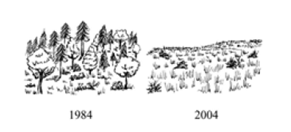
The figure shows the same ecosystem in Texas at two different times. Which of the following most likely caused the change of species shown in the figure?
a)
development of a parking lot
b)
passing through a glacier
c)
preservation of habitat
d)
occurrence of a forest fire
52.
A field consists of different species of herbivores. What would cause an increase in population within a area where crops are produced?
a)
right climate and an increase of crop production
b)
high biodiversity and below zero temperatures
c)
there is not enough information to determine if the ecosystem is sustainable
d)
abiotic factors will not affect the sustainability of an ecosystem
53.

A garden is abandoned for a year, what will most likely happen?

a)

The garden will spread to other areas

b)

The garden will stay the same

c)

Weeds will start to grow

d)

The garden turns into a desert

54.
Which biome is characterized by low temperatures and low amounts of rainfall?
a)
tundra
b)
desert
c)
temperate deciduous forest
d)
tropical rain forest
55.
Which biome covers most of the land mass near the Earth's equator?
a)
tundra
b)
desert
c)
grassland
d)
tropical rainforest
56.
Which biome is found on the mountain above the tree line?
a)
grassland
b)
deciduous forest
c)
tundra
d)
tropical forest
57.
Which biome, because of its climate, has the largest number of species of land plants and animals?
a)
tundra
b)
desert
c)
tropical rainforest
d)
pine forest
58.
One characteristic feature of tundra is that only the surface thaws in the summer and refreezes in the winter, leaving a layer of permanently frozen subsoil.  This characteristic is known as
a)
glaciation
b)
permafrost
c)
crystallization
d)
soilfrost
59.
Which type of trees is found in a temperate forest?
a)
deciduous
b)
evergreen
c)
ginko
d)
palm
60.
Which major biome is home to cacti, mesquite, white thorn, pack rats, small reptiles, and coyotes?
a)
desert
b)
taiga
c)
tundra
d)
grassland
61.
In which biome is Houston located?
a)
tropical rainforest
b)
temperate rainforest
c)
temperate deciduous forest
d)
alpine forest
62.
Which biome receives between 0 to 25 centimeters of rain per year, has a temperature range of 0 to 50 degrees Celsius, has poor soil, and is home to lizards, scorpions, and snakes?
a)
desert
b)
mountain
c)
taiga
d)
tundra
63.
Which biome receives between 0 and 25 centimeters of precipitation each year, has a temperature range from -27 to 5 degrees Celsius, has frozen soil, and is home to hares, caribou, and wolves?
a)
desert
b)
mountain
c)
savannah
d)
tundra
64.
Which of the following habitats probably has the greatest number of plant and animal species?
a)
the African savannah
b)
The ocean
c)
a temperate forest in China
d)
a temperate grassland in Kansas
65.
Which biome contains large populations of grazing herbivores, few species of birds, and deep, rich soil?
a)
taiga
b)
tundra
c)
deciduous forest
d)
grassland
66.
This biome contains mostly spruce trees and Douglas firs, which are both evergreen and produce cones.  The winters are long and cold and the summers are short and rainy.  The soil is very rich.  Moose and elk live here.  This biome is classified as a
a)
taiga
b)
tundra
c)
deciduous forest
d)
temperate forest
67.
The biome known for trees with broad leaves that fall off the trees in the winter.
a)
Coniferous Forests
b)
Deciduous Forests
c)
Deserts
d)
Tropical Rain Forests
68.
The most important abiotic factors when studying biomes are...
a)
Food and Water
b)
Water and Sunlight
c)
Temperature and Oxygen
d)
Water and Temperature 
69.
The greatest land biodiversity on earth is found in the __________ biome.
a)
taiga
b)
grassland
c)
temperate deciduous forest
d)
tropical rainforest
70.
Which biome is MOST LIKE the "desert" in terms of precipitation?
a)
tropical rainforest
b)
temperate deciduous forest
c)
tundra
d)
coniferous forest
71.
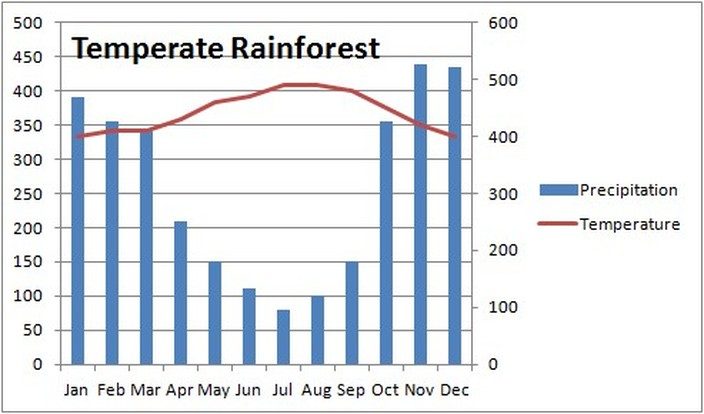
Which biome is represented by the rainfall amounts in letter C?
a)
desert
b)
prairie
c)
deciduous forest
d)
tropical rain forest
72.
A ________ is a forest biome consisting mostly of cone-bearing evergreen trees
a)
desert
b)
temperate deciduous forest
c)
boreal
d)
tundra
73.
Areas defined by their geographical location and ecological similarity are called?
a)
ecozones
b)
biotopes
c)
biomes
d)
biodomes
74.
Which answer is an INCORRECT name for this Biome
a)
Taiga
b)
Tundra
c)
Boreal
d)
Coniferous
75.

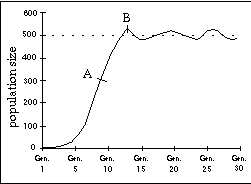
What is the average sustainability of the graph?

a)

around 500

b)

more than 500

c)

less than 500

d)

around 600

76.

If the amount of food or resources available increases, the sustainability:

a)

Stays the same

b)

Increases

c)

Decreases

d)

Fluctuates

77.

Which of the following would INCREASE the sustainability of an ecosystem?

a)

increase in predators

b)

disease

c)

increase in available food

d)

drought

78.
Limiting factors are sometimes helpful because they can keep the population from getting to large.
a)
True
b)
False
79.

The introduction of any harmful substance or form of energy into the environment at a faster rate than it can be cleansed out of it is ____.

a)

Sustainability

b)

Pollution

c)

Pest Control

d)

Deforestation

80.

The large-scale clearing of trees by humans who use the cleared land for growing crops or grazing livestock or the trees for timber and wood products would do what to biodiversity?

a)

increase it

b)

Sustain it

c)

have no effect

d)

decrease it

81.

What is one definition of biodiversity?

a)

Only one species in an area.

b)

The different amount of species in an area

c)

All abiotic life

d)

Nitrogen fixation

82.
A drought has hit this grassland biome. How will this effect the rabbit population?
a)
The rabbits will increase in number.
b)
The rabbit population will stay the same.
c)
The rabbit population will decrease.
d)
The rabbit population will become extinct immediately.
83.
In this tundra food web, if grasses were removed what would happen to the sustainability of the ecosystem?
a)
There would be an overpopulation of arctic hares and lemmings.
b)
Polar bears would move to a new ecosystem
c)
The ecosystem would collapse because it lost its main producer
d)
Wildflowers would die out from the ecosystem
84.

Which part of a food chain is the most important for sustainability?

a)

Carnivores

b)

Herbivores

c)

Producers

d)

Dcomposers

85.

If this bird likes trees and the red dots show the number of birds, what can you conclude from the graph?

a)

Many birds are dying

b)

There are more trees on the East coast of the island

c)

The birds are spread evenly throughout the entire island

d)

none of the above

86.

A certain area of the Indian ocean is expected to dry up and become a desert over thousands of years. What will happen to the sustainability of this ocean?

a)

Sustainability would increase because the number of species would increase

b)

Sustainability would remain the same

c)

Sustainability would decrease because the number of species would decrease

d)

Not enough information is given

87.
largest number of individuals of a population that the environment can support  
a)
carrying capacity
b)
primary succession 
c)
denitrification
d)
mutualism
88.

When there is higher biodiversity...

a)

more organisms are likely to die because they can't adapt to environmental changes.

b)

there is more diversity and higher sustainability of life.

c)

there is less diversity.

d)

there is more diversity and lower sustainability of life

89.

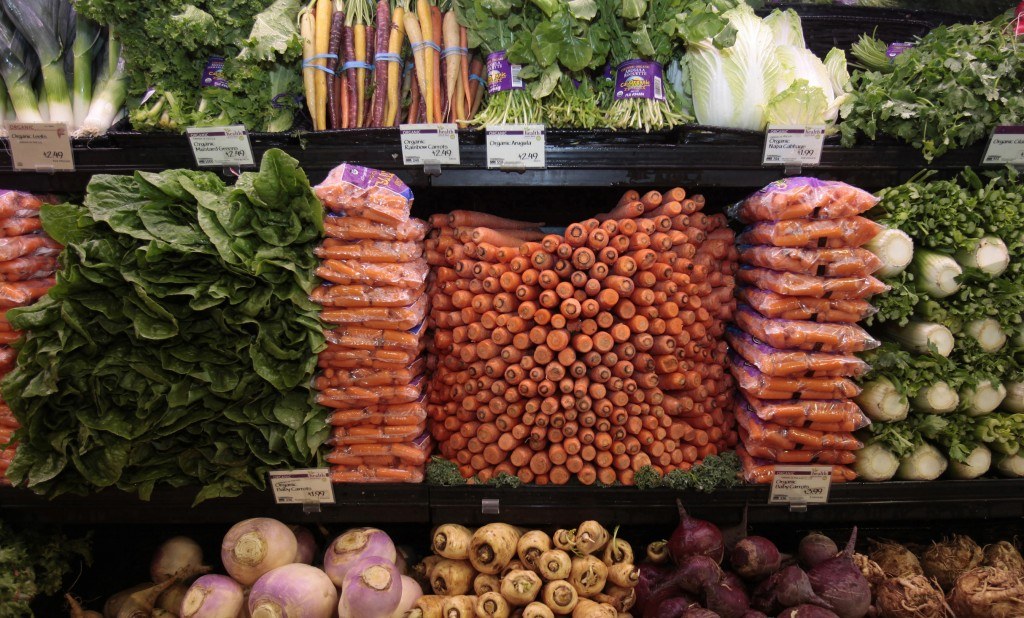
This picture is a great example of ____________ biodiversity.

a)

hhhmmmm there is no way to know without counting

b)

high

c)

low

d)

moderate

90.

What happened to the biodiversity in Yellowstone national forest with the addition of wolves to that temperate forest ecosystem?

a)

Increased

b)

Decreased

c)

Stayed the same

91.

Heterotrophs that “clean up” the ecosystem by eating dead and decaying organisms.

a)

Autotrophs

b)

Herbivores

c)

Ominvores

d)

Detritivores

92.

One organism consuming another organism.

a)

Producers

b)

Biotic factors

c)

Abiotic Factors

d)

Trophic Relationships

93.

The flow of nitrogen from the atmosphere to the soil, to plants, to animals and then back to the soil or back into the atmosphere.

a)

Nitrogen Cycle

b)

Carbon Cycle

c)

Trophic Cycle

d)

Abiotic Cycle

94.

The flow of carbon from the atmosphere to plants, to animals to the soil and back into the atmosphere.

a)

Bi-Cycle

b)

Nitrogen Cycle

c)

Carbon Cycle

d)

Abiotic Cycle

95.
Phosphorous is passed from plants to ____ who eat them
a)
plants
b)
animals
c)
scavengers
96.
Which of the following statements is true of the phosphorus cycle?
a)
Phosphorus enters the atmosphere as phosphates.
b)
The phosphorus cycle utilizes the processes of erosion, and weathering.
c)
Phosphates are used in carbohydrate and glucose storage.
d)
The phosphorus cycle utilizes bacteria to breakdown phosphates and make them available for plants.
97.

At what population was carrying capacity met?

a)

250

b)

1000

c)

400

d)

720

98.

Exponential population growth can be described as

a)

growth when resources are limited

b)

a j-shaped curve

c)

a s-shaped curve

d)

growth that reaches carrying capacity

99.

Logistic population growth can be described as

a)

growth when resources are limited

b)

a s-shaped curve

c)

reaching carrying capacity

d)

all of the above

100.

What limits Population Growth?

a)

birth rates increasing

b)

resources being used up

c)

natural selection taking place

d)

none of the above

101.

Which country will have the most rapid population growth?

a)

Sweeden

b)

United States

c)

Mexico

d)

None

102.

Density-independent limiting factors to population growth includes

a)

stress from overcrowding

b)

parasitism

c)

competition

d)

natural disasters

103.

What is a condition that halts population growth?

a)

limiting factors

b)

renewable resources

c)

climate

d)

conservation

104.

What could cause exponential growth in population in a community?

a)

people lifting heavy stuff

b)

a community leaving

c)

someone spreading a plague

d)

people moving to the community/unlimited resources

105.

Three factors can affect population size

a)

births, deaths,leaves or enters population

b)

deaths, birth, buildings

c)

photosynthesis, weather, deaths

d)

houses, weather, heath