
 Worksheets
Super Quizizz (Final Activity)
Total questions: 103
Worksheet time: 1hrs 10mins
Name
Class
Date
1.

What process is being shown by these images?
a)
DNA Replication
b)
Transcription
c)
Translation
d)
Checkpoints
2.

Antibodies are created by what body system?
a)
Immune system
b)
Endocrine system
c)
Vascular system
d)
Integument
3.
What can a karyotype not tell you?
a)
What gender someone is
b)
Whether they have a trisomy like Down syndrome
c)
Whether they have a monosomy
d)
Whether they have albinism (caused by a point mutation)
4.
A fertilized egg is called a...
a)
Zygote
b)
Pollen
c)
Sperm
d)
Archaea
5.
Nonmobile, heterotrophic, cell wall of chitin. This describes...
a)
Fungi
b)
Plants
c)
Animals
d)
Archaea
6.
Which of the following pairs both lack a nuclei?
a)
Bacteria & plants
b)
Bacteria & fungi
c)
Bacteria & archaea
d)
Bacteria & protists
7.
What is a reason why an invasive species might flourish in an environment?
a)
No natural predators in the new environment
b)
Carrying capacity is low
c)
Lots of limiting factors affecting the species
d)
It was really unfit in its last environment
8.
Which of the following would a virus have?
a)
Ribosomes
b)
Hormones
c)
Flagella
d)
Capsid
9.

What stage of mitosis is shown?
a)
Anaphase
b)
Metaphase
c)
Prophase
d)
Telophase
10.
Which kind of cell division creates the gametes?
a)
Meiosis
b)
Mitosis
c)
S phase
d)
G1 phase
11.
At what point in the cell cycle is the DNA replicated?
a)
Trans phase
b)
S phase
c)
G1 phase
d)
M phase
12.
What structure is indicative of cancer?
a)
Tumors
b)
Angiosperms
c)
Gametes with Down syndrome
d)
Metacarpels
13.
The taxa below family is...
a)
Genus
b)
Phylum
c)
Domain
d)
Species
14.
Humans are _________ organisms.
a)
aerobic
b)
anerobic
c)
prokaryotic
d)
autotrophic
15.
The scientific name for an organism is made from the:
a)
class and family name
b)
genus and species name
c)
domain and kingdom name
d)
kingdom and phylum name
16.
Which of the following organisms are LEAST closely related?
a)
organisms that share a domain
b)
organisms that share a family
c)
organisms that share a genus
d)
organisms that share a species
17.
Cells that do not have a true nucleus are called....
a)
eukaryote
b)
prokaryote
c)
unicellular
d)
multicellular
18.
What are the three domains?
a)
Archaea, Bacteria, and Eubacteria
b)
Archaea, Protista, and Eubacteria
c)
Archaea, Bacteria, and Eukarya
d)
Archaea, Fungi, Animalia
19.
This is referred to as the energy currency of the cell
a)
ADP
b)
ATP
c)
Mitochondria
d)
Nucleus
20.
This process releases chemical energy from sugars and other carbon-based molecules to make ATP when oxygen is present.
a)
photosynthesis
b)
light-independent reaction
c)
cellular respiration
d)
light-dependent reaction
21.
Cellular respiration takes place in the
a)
nucleus
b)
cytoplasm
c)
ribosomes
d)
mitochondria
22.
Glucose is broken down during which process
a)
Krebs cycle
b)
Calvin cycle
c)
Glycolysis
d)
Photosynthesis
23.
Which is not a waste product of cellular respiration?
a)
Water
b)
Heat
c)
Carbon Dioxide
d)
Oxygen
24.
Up to how many ATP molecules are made from the breakdown of one glucose molecule?
a)
2
b)
24
c)
38
d)
45
25.
This biomolecule is used for energy storage and insulation.
a)
Lipids
b)
Carbohydrates
c)
Protein
d)
Nucleic acids
26.
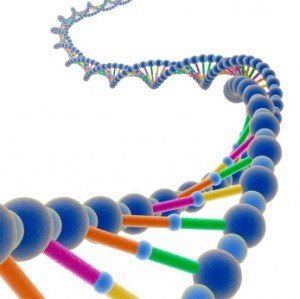
Which of the following best describes a DNA molecule?
a)
double helix
b)
contains ribose
c)
made of amino acids
d)
contains Uracil
27.
Which sequence of DNA bases would pair with this partial strand
ATG TGA CAG
ATG TGA CAG
a)
ATG TGA CAG
b)
TAC ACT GTC
c)
GTA AGT GAC
d)
CAT TCA CTG
28.
Guanine bonds with ______________.
a)
Adenine
b)
Guanine
c)
Cytosine
d)
Thymine
29.
DNA replication results in two DNA molecules,
a)
each one with two original strands
b)
each one with two new strands
c)
each one with one new strand and one original strand
d)
one with two new strands and the other with two original strands
30.

order of replication
a)
3, 2, 1, 4
b)
2, 1, 4, 3
c)
2, 3, 1, 4
d)
3, 4, 1, 2
31.
In what phase of the cell cycle does DNA replication take place?
a)
G1
b)
S
c)
G2
d)
M
32.
What are the three components of a nucleotide?
a)
sugar, hydrogen, nitrogen base
b)
sugar, oxygen, nitrogen base
c)
sugar, phosphate, nitrogen base
d)
sugar, phosphate, protein
33.
Which RNA bases would pair with TACGAA in transcription?
a)
AUGCUU
b)
ATGCTT
c)
GCATCC
d)
GCAUCC
34.
How many amino acids are coded for by this sequence of nucleotides:
ATG GGA ACT CCA
ATG GGA ACT CCA
a)
4
b)
2
c)
6
d)
12
35.

What process is being shown here?
a)
Replication
b)
Translation
c)
Transcription
36.

The process represented in the diagram produces a molecule that is complementary to the template strand of DNA. What type of molecule is produced?
a)
New DNA
b)
Polypeptide
c)
Messenger RNA
d)
Carbohydrate
37.
True or false: RNA is double-stranded.
a)
true
b)
false
c)
it depends on the type
38.

DNA codes for...
a)
cholesterol
b)
proteins
c)
fatty acids
d)
a sandwich
39.
Transcribe: ATC
a)
UAG
b)
TAG
c)
AAG
d)
UUG
40.

Which process is happening in this picture?
a)
Transcription
b)
Translation
c)
Replication
41.
This cannot leave the nucleus
a)
DNA
b)
RNA
c)
Both
42.
What is the term for a three-nucleotide sequence that codes for an amino acid?
a)
base
b)
codon
c)
amine
d)
serine
43.
Which of the following complementary base pairs are correct?
a)
A - T
b)
A - G
c)
T - C
d)
G - U
44.

Which process is used to make mRNA from the DNA in the nucleus?
a)
transcription
b)
translation
c)
replication
45.

When does DNA replication happen?
a)
Before Mitosis begins
b)
During prophase
c)
During metaphase
d)
During anaphase
46.
Which of the following units are repeatedly joined together to form a strand of DNA?
a)
amino acids
b)
nucleotides
c)
fatty acids
d)
polysaccharides
47.
What is not a type of carbohydrate?
a)
Fat
b)
Fiber
c)
Starch
d)
Sugar
48.

What type of carbohydrate is this?
a)
polysaccharide
b)
disaccharide
c)
monosaccharide
d)
it isn't a carbohydrate
49.
Sugars usually end with what three letter ending?
a)
-ote
b)
-ate
c)
-ase
d)
-ose
50.
The amount of energy that usually transfers from one trophic level to the next...
a)
10%
b)
20%
c)
80%
d)
50%
51.
The living portions of the ecosystem.
a)
Biotic factors
b)
Abiotic factors
52.
A collection of organisms that make up a community as well as all of the nonliving aspects of the environment.
a)
Population
b)
Community
c)
Habitat
d)
Ecosystem
53.
Type of ecological succession in which dirt is already present
a)
primary succession
b)
secondary succession
c)
tertiary succession
d)
quaternary succession
54.

Organisms that look similar and can produce fertile offspring
a)
Species
b)
Fish
c)
Community
d)
Trees
55.
Two or more members of a particular species living and interacting in the same area
a)
Community
b)
Population
c)
Organisms
d)
Biosphere
56.

Different populations living and interacting with each other in the same area
a)
Biome
b)
Ecosystem
c)
Community
d)
Niche
57.
There are...
a)
... 3 domains
b)
... 2 domains
c)
... 8 domains
d)
... 9 domains
58.
Crocodiles have the genes to be both female and male. Yet, they are only one gender. This is an example of...
a)
... gene regulation
b)
... random mutations
c)
... amphibian sorting
d)
... chromosomal abnormality
59.
Siamese cats produce dark pigments in the colder parts of their body. What is causing this variation?
a)
Gene regulation
b)
Denaturing of proteins
c)
Eulamin (black) pigment can only exist at low temperatures
d)
The DNA in their paws is difference from in their main bodies
60.

What is the function of the structure labeled A?
a)
Used to dock to host cell
b)
Can be fired for defense
c)
Contains the genetic code
d)
It has no function
61.

Other than "surface spikes," what is another name for the structure labeled "A"?
a)
Glycoprotein
b)
DNA
c)
Ribonucleic acids
d)
Triglyceride
62.
What is the first stage of mitosis?
a)
Prophase
b)
Metaphase
c)
Anaphase
d)
Telophase
63.
What is it called when the cell splits in two at the end of mitosis?
a)
Cytokinesis
b)
Brachioteria
c)
Meiosis
d)
Translation
64.
What causes Down syndrome?
a)
A trisomy of 21
b)
Gene regulation
c)
Primary succession
d)
A viral invasion
65.
The endosymbiotic theory explains the origin of...
a)
Mitochondria & chloroplasts
b)
Centrioles & vacuoles
c)
Cell walls of different compositions
d)
Archaea
66.
Mitochondria has _________ DNA, just like a bacteria.
a)
circular
b)
no
67.
Cephalopoda is a class of organisms that contains snails, squids, and octopi. What would be the most related to each other?
a)
Cephalopods of the same genus
b)
Cephalopods of the same family
c)
Cephalopods of the same order
d)
Cephalopods of the same domain
68.
Which of the following do viruses not have?
a)
Capsid
b)
Glycoproteins
c)
DNA (or sometimes RNA)
d)
Ribosomes
69.
This process occurs at the mitochondria.
a)
Cellular respiration
b)
Photosynthesis
c)
Translation
d)
Transcription
70.
Ribosomes are...
a)
... found in all viruses
b)
... the site of protein synthesis
c)
... not found in eukaryotic cells
d)
... unnecessary if a cell also has chloroplasts
71.
If you put a cracker on your tongue, it starts to taste sweet after a minute or two. Why? What is happening?
a)
Enzymes in your mouth are breaking the starch into simple sugars
b)
The cracker is made out of pure monosaccharides, but you don't realize right away
c)
The proteins within the cracker are getting denatured as the enzymes of your mouth twist them
d)
It takes between 2 to 4 minutes for the proteins from the cracker to reach the taste-receptors in your mouth
72.
A scientist is studying: zebra, giraffee, and wildebeast in an area. What is he studying, as far as ecology is concerned?
a)
A community of creatures
b)
A population of creatures
c)
A full ecosystem
d)
He is technically studying nothing
73.
What extra stuff would a scientist study if they are studying an "ecosystem" and not just a "community"?
a)
Abiotic factors
b)
Biotic factors
c)
Pathogenic factors
d)
Symbiotic relationships
74.
What sex chromosomes does a female have?
a)
XX
b)
XY
c)
YY
d)
Girls don't have sex chromosomes
75.

What is this picture called?
a)
Karyotype
b)
CRISPR
c)
Translation diagram
d)
Cladogram
76.

Which creature does not have jaws?
a)
Leopard
b)
Tuna
c)
Lamprey
d)
Salamander
77.

Dolphin flippers have bone structures similar to human hands. What does this indicate?
a)
Dolphins shared a terrestial common ancestor with humans
b)
Dolphins are evolving to use their fins for more than for swimming
c)
Dolphins are very closely related to the ray-finned fish (like tuna and halibut) in the ocean
d)
Humans will eventually evolve into dolphins
78.

What is the last stage of mitosis?
a)
Prophase
b)
Metaphase
c)
Anaphase
d)
Telophase
79.

What monomers are shown in the image?
a)
Amino acids
b)
Monosaccharides
c)
Fatty acids
d)
N
80.

This is showing water leaving a cell. The process by which water moves is...
a)
osmosis
b)
transcription
c)
S phase
d)
peptidoglycan
81.

The image pictured is a...
a)
Disaccharide
b)
Dipeptide
c)
Diglycerol
d)
Dinucleotide
82.

Vesicles, like the picture shows, can be used for...
a)
... getting rid of cellular waste
b)
... synthesizing new proteins
c)
... creating oxygen molecules
d)
... resisting electricity
83.

Sperm is propelled forward by its...
a)
... flagella
b)
... chloroplasts
c)
... vestigial arm
d)
... capsid
84.

Who determines your gender?
a)
Your dad
b)
Your mom
c)
Your siblings
d)
Your grandmother
85.

The picture is showing "antiparallel," a trait that is exhibited by....
a)
DNA
b)
Triglyceride
c)
Karyotypes
d)
RNA
86.

What is it called when a plant responds to gravity?
a)
Gravitropism
b)
Hydrotropism
c)
Phototropism
d)
Thigmotropism
87.

Someone with blood type AB has kids with a person with blood type O. What blood types are possible in their kids?
a)
A and B
b)
Just AB type
c)
Either AB or O type
d)
All the blood types
88.

Which two creatures evolved radial symmetry?
a)
Cnidarians and Echinoderms
b)
Chordates and Echinoderms
c)
Everything to the right of the flatworms
d)
Sponges and Cnidarians
89.

Why does hemophilia affect way more males than females?
a)
It's sex-linked
b)
It lives in lipids and men are fatter usually
c)
All of these men have just been very unlucky
d)
It's non-chromosomal
90.
A red dog (dominant) gives birth to 50% red and 50% cream (recessive) babies. What was the genotype of the mother?
a)
Rr
b)
rr
c)
RR
d)
There is not enough information to determine
91.
Two checkered chickens mate. The chicks are: 25% white, 50% checkered, and 25% black. What kind of gene is this color gene?
a)
Codominant
b)
Dominant/recessive
c)
Sex-linked
d)
Gene regulation
92.
A pink squid breeds with a green squid. All the babies are pink. What color is dominant?
a)
Green
b)
Pink
c)
Cannot be determined
d)
They are codominant
93.
A multicellular organism is heterotrophic, nonmobile, and has cell walls of chitin. What is it?
a)
Fungus
b)
Plant
c)
Animal
d)
Bacteria
94.
On what part of the plant would I find the male gamete?
a)
Anther
b)
Ovary
c)
Petal
d)
Chloroplast
95.
What are the main components of the plant vascular system?
a)
Xylem and phloem
b)
Veins and arteries
c)
Chloroplasts and stomata
d)
Spongey and palisade mesophyll
96.
A four legged organism has wet, slimy skin. It spends it's youth in a pond, but as it grows, spends more and more time on land. What kind of organism is it?
a)
Amphibian
b)
Strictly terrestial
c)
Avian
d)
Reptile
97.
What kind of relationship exists between a strawberry and the rabbits who eat them?
a)
Mutualistic
b)
Commensalism
c)
Parasitism
d)
They have no relationship
98.
A blood cell is placed in pure water. Due to osmosis, we expect that...
a)
... more water will enter the cell than exit
b)
... more water will exit the cell than enter
c)
... water will flow equally in and out
d)
... the semipermeable membrane will not allow anything to pass
99.
What will happen to a slug who has been salted?
a)
Osmosis will draw the water out of his cells
b)
Osmosis will push more water into his cells
c)
The salt will become lysogenic
d)
The salt will become lytic
100.
In passive diffusion, we expect molecules to travel from a _____ concentration to a _____ concentration.
a)
high, low
b)
low, high
c)
high, high
d)
There is no such thing as passive diffusion
101.
Which biomolcule can be "denatured" by raising the temperature?
a)
Proteins (including enzymes)
b)
Carbohydrates (including sucrose)
c)
Lipids (including triglycerides)
d)
Plastic (including polymers)
102.
Enzymes have an optimal temperature and pH that they work at. What does the word "optimal" mean?
a)
Best for performance
b)
Worst, slowest it'll be
c)
Fluctuates, changes a lot
d)
Means "zero"
103.
Which system is your epidermis part of?
a)
Integumentary
b)
Endocrine
c)
Vascular
d)
Nervous
100 %

