
 Worksheets
Biology: Ecology PreTest
Total questions: 100
Worksheet time: 1hrs 25mins
Name
Class
Date
1.
The way energy is passed from one organism to another
a)
food chain
b)
energy
c)
extinct
d)
habitat
2.
Which one is NOT an example of a decomposer?
a)
mushroom
b)
leaves
c)
mold
d)
worm
3.
Example of a consumer
a)
worm
b)
bacteria
c)
mushroom
d)
hawk
4.
Example of a decomposer
a)
fungus
b)
mouse
c)
plants
d)
frogs
5.
A tree is a ....
a)
composer
b)
decomposer
c)
producer
6.
Humans are considered...
a)
consumers
b)
decomposers
c)
producers
7.

What is a producer?
a)
an organism that gets energy from eating other organisms
b)
an organisms that uses sunlight to make its own food
c)
an organism that gets energy from eating dead organisms, non-living material or waste
d)
an organism that uses chemical energy to make its own food
8.

What is a herbivore?
a)
an animal that gets energy from eating other animals
b)
an organism that gets energy from eating only plants
c)
an animal that gets energy by eating both plants and other animals
d)
an animal that eats only herbs
9.

An organism that gets energy from eating other organisms is a ______________
a)
producer
b)
consumer
c)
decomposer
d)
prey
10.

A connection of food chains with many food energy paths in an ecosystem is a ____________
a)
ecosystem
b)
food web
c)
environment
d)
population
11.

An animal that is hunted and eaten for food is a
a)
predator
b)
prey
c)
population
12.

The shrew provides energy for the _______?
a)
cricket
b)
grasshopper
c)
frog
d)
snake
13.

Where do all life forms get their energy?
a)
Earth's Core
b)
Water
c)
Plants
d)
The Sun
14.

What is this called?
a)
Food Web
b)
Food Chain
c)
Abiotic Factors
15.
Which biome covers most of the land mass near the Earth's equator?
a)
tundra
b)
desert
c)
grassland
d)
tropical rainforest
16.
Which major biome is home to cacti, mesquite, white thorn, pack rats, small reptiles, and coyotes?
a)
desert
b)
taiga
c)
tundra
d)
grassland
17.
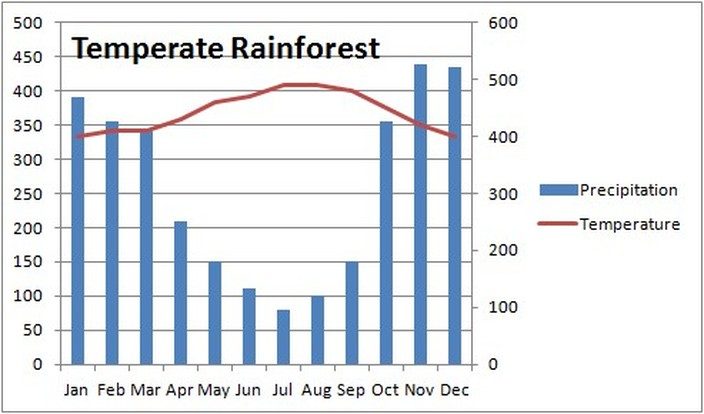
The most important abiotic factors when studying biomes are...
a)
Food and Water
b)
Water and Sunlight
c)
Temperature and Oxygen
d)
Water and Temperature
18.
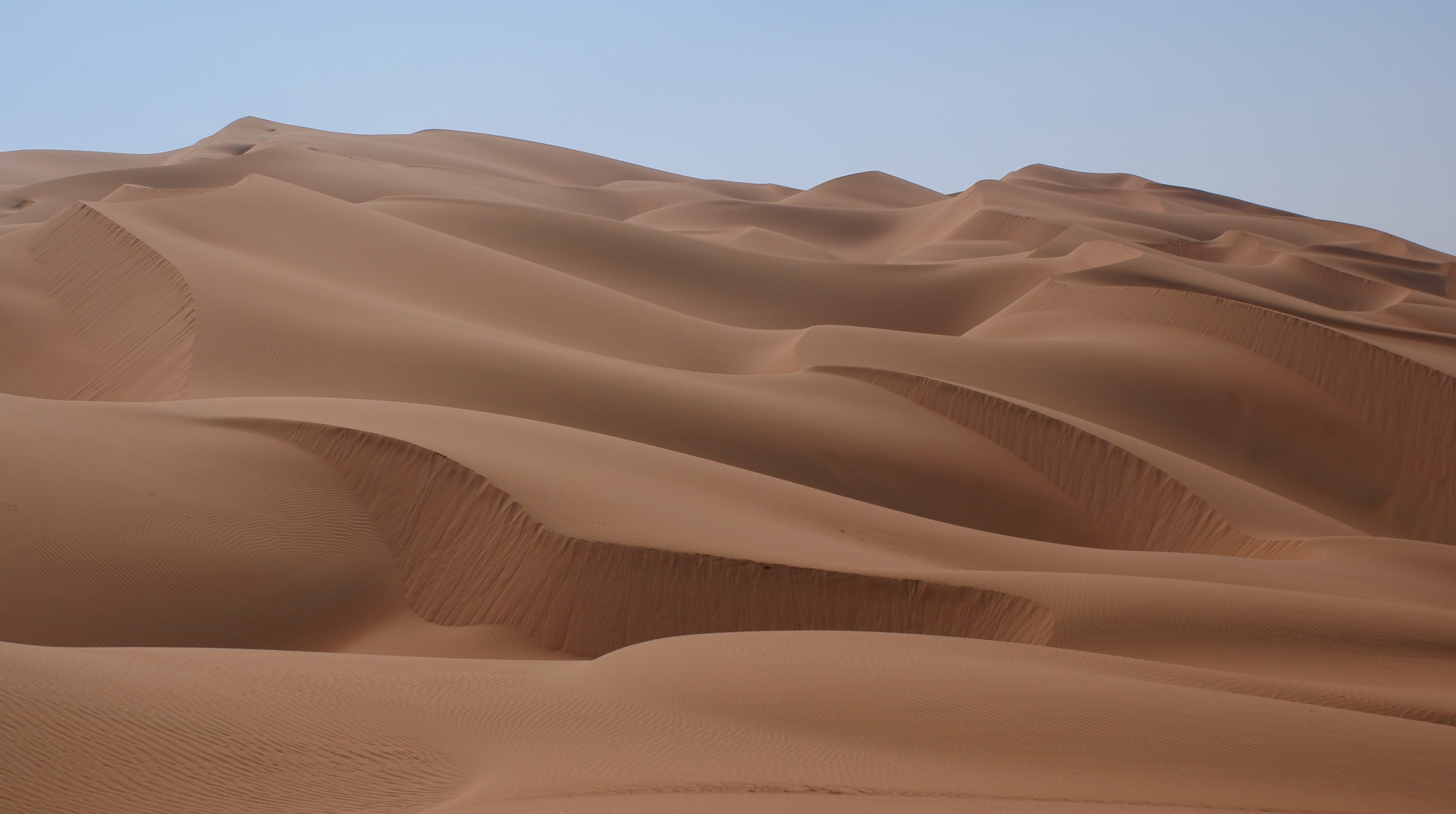
Which biome is MOST LIKE the "desert" in terms of precipitation?
a)
tropical rainforest
b)
temperate deciduous forest
c)
tundra
d)
coniferous forest
19.

Which biome is represented by the rainfall amounts in letter C?
a)
desert
b)
prairie
c)
deciduous forest
d)
tropical rain forest
20.
According to the Law of Conservation of Energy, energy cannot be _________ or ____________.
a)
destroyed, destroyed
b)
created, saved
c)
created, destroyed
d)
lost, found
21.
The living portions of the ecosystem.
a)
Biotic factors
b)
Abiotic factors
22.
The nonliving aspects of an ecosystem.
a)
Abiotic factors
b)
Biotic factors
23.
Water temperature would be an example of ...
a)
A biotic factor
b)
An abiotic factor
24.
A graphic illustration that shows each trophic level and the amount of useable energy contained within.
a)
Food chain
b)
Food web
c)
Energy Pyramid
d)
All of these
25.

In this Food Web Pyramid Which type of consumer gets only 10% of the energy stored in plants?
a)
Herbivore
b)
Carnivore
c)
Omnivore
d)
Secondary Consumer
26.
The amount of energy that usually transfers from one trophic level to the next...
a)
10%
b)
20%
c)
80%
d)
50%
27.

What are the Abiotic factors in this image?
a)
water, sunlight, dirt, air
b)
birds and plants
c)
birds, water, dirt
d)
plants, water
28.

The study of how living things interact with one another and with their environment.
a)
Biology
b)
Lithology
c)
Ecology
d)
Farmacology
29.

Organisms that look similar and can produce fertile offspring
a)
Species
b)
Fish
c)
Community
d)
Trees
30.
Two or more members of a particular species living and interacting in the same area
a)
Community
b)
Population
c)
Organisms
d)
Biosphere
31.

Different populations living and interacting with each other in the same area
a)
Biome
b)
Ecosystem
c)
Community
d)
Niche
32.

The area between the highest mountain and the deepest ocean where life can be found
a)
Biosphere
b)
Biome
c)
Farm
d)
Ecosystem
33.

An area where an organism finds food, shelter and water in a specific arrangement
a)
niche
b)
biosphere
c)
biome
d)
habitat
34.

All of the living and nonliving things in an area that interact with each other are called a/an ______.
a)
community
b)
habitat
c)
population
d)
ecosystem
35.

An individual belonging to a specific species
a)
Biotic
b)
Community
c)
Organism
d)
Reptile
36.

What part of the water cycle does this picture show?
a)
condensation
b)
precipitation
c)
evaporation
37.
Which of these is an example of precipitation?
a)
snow
b)
air
c)
clouds
d)
vapor
38.
Snow, sleet, hail, and rain are all examples of ________________.
a)
evaporation
b)
condensation
c)
accumulation
d)
precipitation
39.

What is it called when plants give off water vapor as a waste product?
a)
condensation
b)
evaporation
c)
sublimation
d)
transpiration
40.
Where is most water found on Earth?
a)
glaciers
b)
lakes
c)
rivers
d)
oceans
41.
Which one of these does not add CO2 to the atmosphere?
a)
cooking with gas
b)
planting trees
c)
burning wood
d)
riding in a bus
42.
What does not produce carbon dioxide?
a)
Photosynthesis
b)
Burning Fossil Fuels
c)
Animal respiration
d)
Plants decaying
43.

In the carbon cycle, producers take in the gas __
a)
carbon dioxide
b)
oxygen
c)
nitrogen
d)
carbon monoxide
44.
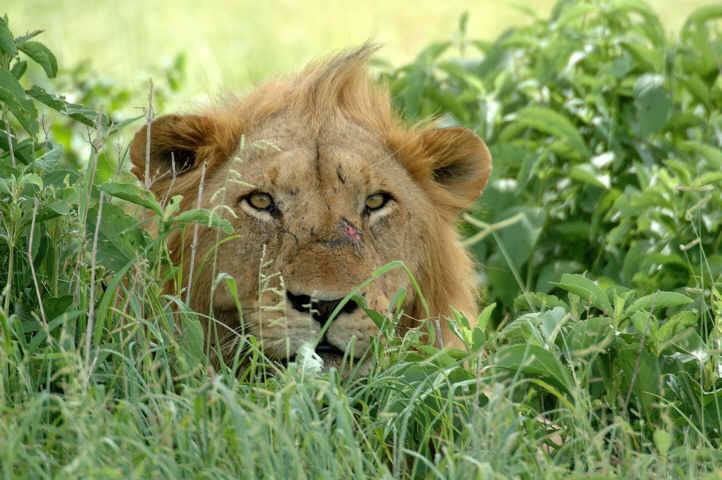
How does the carbon in grass become part of a lion?
a)
The lion eats the grass
b)
Carbon from grass doesn't end up in a lion.
c)
The carbon ends up in the lion's food chain.
d)
The lion breathes in carbon given out by the plant
45.
Which of the following removes carbon from the atmosphere?
a)
Combustion
b)
Respiration
c)
Photosynthesis
d)
Death
46.
All of the carbon in existence on earth is continually recycled in the carbon cycle
a)
True
b)
False
47.
How is the burning of fossil fuels related to global warming?
a)
Magic
b)
Fuels are hot
c)
Greenhouse effect
d)
Photosynthesis
48.
Which process converts carbon in the form of sugar into carbon dioxide gas?
a)
Bioremediation
b)
Photosynthesis
c)
Respiration
d)
Transpiration
49.
If the plant population decreased, the amount of carbon would _________.
a)
Stay the same
b)
Increase
c)
Decrease
50.
carbon dioxide is a gas produced by ________ and used by __________
a)
plants and animals
b)
carbon and photosynthesis
c)
animals and plants
d)
photosynthesis
51.
oxygen is a gas produced by _____ and used by ________
a)
plants and animals
b)
photosynthesis and carbon dioxide
c)
animals and plants
d)
carbon dioxide and photosynthesis
52.

How do plants get the nitrogen they need?
a)
from the air
b)
from the soil or water in which they live
c)
from the Sun
d)
from broken-down rocks
53.

How much of the atmosphere is composed of nitrogen gas?
a)
87%
b)
38%
c)
78%
d)
21%
54.

Why do all organisms need nitrogen?
a)
To live and grow
b)
To build phosphorus
c)
To make oxygen levels grow
d)
To help blood circulate better
55.
Which of the following describes the role of nitrogen-fixing bacteria in the nitrogen cycle? Nitrogen-fixing bacteria convert
a)
nitrates intro nitrogen gas
b)
ammonia into proteins
c)
nitrogen gas into ammonia
d)
proteins into nitrates
56.
Animals obtain the nitrogen they need directly from the
a)
soil in their habitat
b)
air they breathe
c)
plants they eat
d)
bacteria living within them
57.
Growing legumes such as alfalfa or soy beans increases
a)
denitrification
b)
nitrogen fixation
c)
ammonification
d)
ammonium oxidation
58.
Plants and animals cannot use nitrogen directly from the air.
a)
True
b)
False
59.
What converts nitrogen into a useable form for plants and animals?
a)
bacteria
b)
fungi
c)
rain
60.
A relationship in which one organism benefits and the other is unaffected.
a)
mutualism
b)
parisitism
c)
symbiosis
d)
commensalism
61.
A consumer that hunts is called:
a)
A producer.
b)
An omnivore.
c)
A predator.
d)
A herbivore.
62.

A feeder fish usually follows behind sharks to pick up food scraps that they leave behind. The fish gets food and the shark is unaffected. This is an example of:
a)
Mutualism
b)
Commensalism
c)
Parasitism
d)
Decomposition
63.

A relationship between two organisms where one benefits while the other is harmed is known as what?
a)
Decomposition
b)
Consummerism
c)
Mutualism
d)
Parasitism
64.

This is known as a relationship in which both organisms involved benefit.
a)
Predator-Prey
b)
Commensalism
c)
Mutualism
d)
Decomposition
65.

A clownfish uses a sea anenome as a safe place to live. While living there, the clownfish lures in food for the anenome. This is an example of what type of relationship?
a)
Predator-Prey
b)
Commensalism
c)
Mutualism
d)
Parasitism
66.

Cows and pronghorn both eat the same types of food in areas of Utah. What is the ecological relationship?
a)
Cooperation
b)
Parasitism
c)
Commensalism
d)
Competition
67.

What term best describes the vole, the small rodent, in this image?
a)
Prey
b)
Predator
c)
Producer
d)
Competition
68.

The nonliving factors in an ecosystem
a)
biotic
b)
competition
c)
abiotic
d)
commensalism
69.
the maximum population size that can be sustained by a given environment
a)
carrying capacity
b)
adaptation
c)
migration
d)
impact
70.

In which direction should an arrow be drawn to represent energy flow between these two organisms?
a)
To the Left
b)
To the Right
71.

What is the carrying capacity of the following graph?
a)
1000
b)
8000
c)
800
d)
600
72.
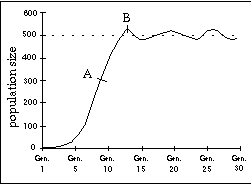
What is the carrying capacity of the graph?
a)
around 500
b)
more than 500
c)
less than 500
d)
around 600
73.

What are the biotic factors in this image?
a)
sunlight, elephants, and grasses
b)
sunlight, water, and air
c)
elephants, plants, trees
74.

If there are 100 Kcal of energy available in the producers, how much energy would be available in the herbivores?
a)
10 Kcal
b)
1 Kcal
c)
100 Kcal
d)
1000 Kcal
75.

The diagram below depicts the water cycle. Which process is represented by the number 2?
a)
precipitation
b)
evaporation
c)
surface runoff
d)
condensation
76.

An example of an abiotic factor is:
a)
Deer
b)
Grass
c)
Water
d)
Autotrophs
77.

What is the term for each step in the transfer of energy and matter within a biological community?
a)
energy path
b)
food web
c)
trophic level
d)
food pyramid
78.

The amount of energy that usually transfers from one trophic level to the next...
a)
10%
b)
20%
c)
80%
d)
50%
79.
What will happen to the population when the birth rate is larger than the death rate?
a)
grow
b)
shrink
c)
stay the same
80.
If predator populations decrease, what happens to the prey populations as a result?
a)
prey population will decrease as well
b)
prey population will remain the same
c)
prey population will increase
d)
whole food chain collapses
81.
Which level in the energy pyramid has the greatest amount of energy?
a)
first level consumers
b)
producers
c)
second level consumers
d)
third level consumers
82.

Identify the cycle pictured.
a)
The Water cycle
b)
The Carbon cycle
c)
The Nitrogen cycle
d)
The Phosphorus cycle
83.

This diagram is a __________
a)
food web
b)
food chain
c)
trophic pyramid
84.

The picture below shows a ____.
a)
population
b)
community
c)
ecosystem
d)
biome
85.

This graph shows changes in two populations. What relationships do you observe between the two populations?
a)
When the prey population decreases it is followed by a decrease in the predator population.
b)
When the prey population increases, it is followed by a decrease in the predator population
c)
When the predator population increases it is followed by an increase in the prey population.
d)
When the predator population decreases it is followed by a decrease in the prey population.
86.

Our planet is divided into large geographic areas based on differences in climate. These areas are called ____.
a)
biomes
b)
communities
c)
ecosystems
d)
habitats
87.

In this diagram, removing which living factor will have the MOST impact on this food chain?
a)
sun
b)
grass
c)
grasshopper
d)
robin
88.
An ecosystem is made up of all the ___________ and _____________ factors in an area.
a)
not/without
b)
Limiting Factor/ Carrying Capacity
c)
Living/ Nonliving
d)
life/ biotic factor
89.
An organism that produces its own food supply from inorganic compounds is called a(an)
a)
heterotroph
b)
consumer
c)
detritivore
d)
autotroph
90.
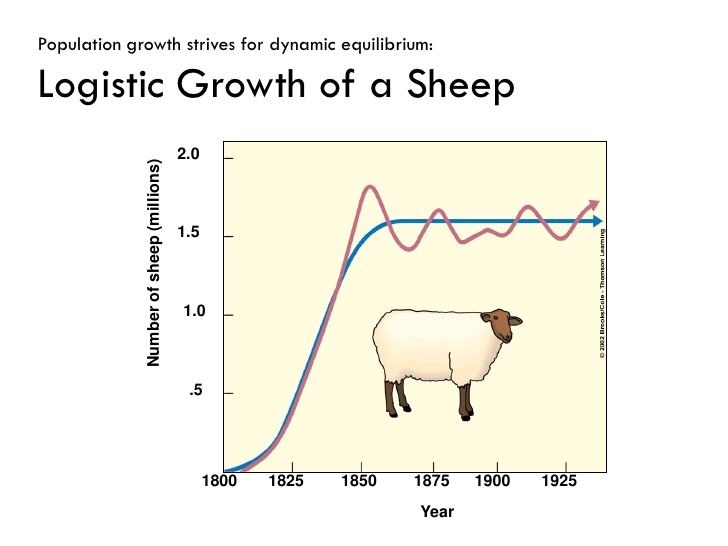
What is the carrying capacity for this sheep population?
a)
1.8 million
b)
1.25 million
c)
1.6 million
d)
1.o million
91.

What color line shows the predators?
a)
black
b)
red
92.

The photo is an example of which type of level of organization
a)
community
b)
individual
c)
population
d)
biosphere
93.

This graph represent what kind of relationship?
a)
Carrying Capacity
b)
Limiting Factors
c)
Predator Prey
94.
Population
a)
a group of on particular organism that live in the same area
b)
includes all animals living in the same environment
c)
includes both living and nonliving things in an ecosystem
d)
a deer, a frog, and a ducks are an example of a population
95.
Decomposers
a)
organisms that get their energy by breaking down dead organisms
b)
organisms that get their energy from the sun
c)
organisms that eat both plants and animals to get their energy
d)
are located at the top of the food chain
96.
Herbivore
a)
an organism that eats only plants
b)
is considered a producer
c)
an organism that eats only meat
d)
an organism that eats both plants and animals
97.
Carrying Capacity
a)
the largest population that an environment can support at any given time
b)
resources that are so scarce that it limits the size of a population
c)
the smallest population that an environment can support at any given time
d)
the amount of nuts a chipmunk can hold in its cheeks at one time
98.

Which image represents a population?
a)
A
b)
B
c)
C
d)
D
99.

Which organism recieves the least amount of energy from the producer?
a)
Owl
b)
Grasshopper
c)
Lilypad
d)
Mouse
100.
Nitrogen in the atmosphere is not available. Free nitrogen has to be changed into a usable form in a process called __
a)
nitrogen fixation
b)
transpiration
c)
precipitation
d)
respiration
100 %

