
 Worksheets
Final Exam Study Game
Total questions: 100
Worksheet time: 1hrs 26mins
Name
Class
Date
1.
Which sequence of DNA bases would pair with this partial strand
ATG TGA CAG
ATG TGA CAG
a)
ATG TGA CAG
b)
TAC ACT GTC
c)
GTA AGT GAC
d)
CAT TCA CTG
2.
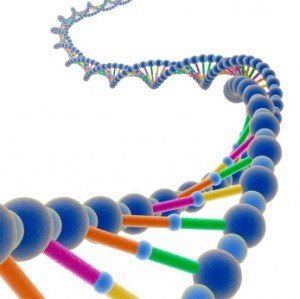
Which of the following best describes a DNA molecule?
a)
double helix
b)
contains ribose
c)
made of amino acids
d)
contains Uracil
3.

In a molecule of double-stranded DNA, the amount of Adenine present is always equal to the amount of
a)
cytosine
b)
guanine
c)
thymine
d)
uracil
4.
Adenine bonds with ______________.
a)
Guanine
b)
Thymine
c)
Cytosine
d)
Adenine
5.
Guanine bonds with ______________.
a)
Adenine
b)
Guanine
c)
Cytosine
d)
Thymine
6.
Why is DNA important?
a)
it is very small and very complicated
b)
it's in everything
c)
it serves as the blueprint for traits of all living things
d)
because we eat it every day for energy
7.
Which 2 molecules form the sides (backbone) of the DNA ladder?
a)
deoxyribose sugar and adenine
b)
deoxyribose sugar and a hydrogen bond
c)
deoxyribose sugar and the nucleus
d)
deoxyribose sugar and phosphate
8.
Which organelle is DNA usually found in?
a)
cell membrane
b)
vacuole
c)
chloroplast
d)
nucleus
9.

Replicate the following strand of DNA:
AATCATGGA
AATCATGGA
a)
AATCATGGA
b)
TTAGTACCT
c)
UUAGUACCU
d)
GGATAUCUA
10.
In what phase of the cell cycle does DNA replication take place?
a)
G1
b)
S
c)
G2
d)
M
11.
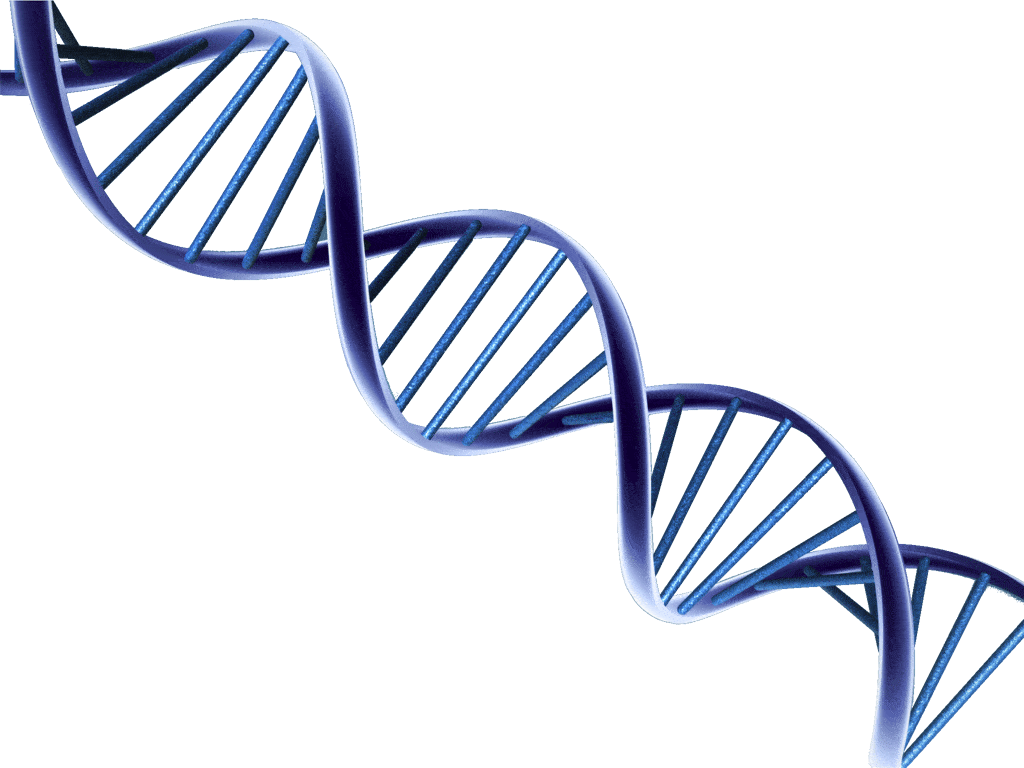
The drawing shows the structure of what molecule?
a)
A DNA molecule
b)
A lipid molecule
c)
A carbohydrate molecule
d)
A protein molecule
12.
A pandemic occurs when a virus spreads
a)
within a community
b)
in a specific region
c)
world-wide
d)
nation-wide
13.
An epidemic occurs when a virus spreads
a)
within a local area or community.
b)
within a region or regions.
c)
on a world-wide scale.
d)
on a specific continent.
14.
An outbreak occurs when a virus spreads
a)
within a community (locally).
b)
within a region.
c)
world-wide.
d)
nation-wide.
15.
Which of the following is the least realistic?
a)
The virus spreading so quickly around the world
b)
The CDC becoming involved
c)
A doctor researching the virus after being told to destroy his samples.
d)
A doctor contracting the virus while studying it.
16.
What was the movie REALLY about?
a)
A viral pandemic
b)
The degeneration of society in the face of fear
c)
The basic instincts of human beings in the face of danger
d)
All of the above
17.

What is the fomite capable of creating?
a)
A way the virus can be cured
b)
A way the virus can spread by touch
c)
A way the virus can spread through the air
d)
None of the above
18.
What does the word homeopathic mean?
a)
home-made medicine
b)
medicine from nature
c)
medicine from animals only
d)
medicine from plants only
19.
What does the acronym WHO stand for?
a)
World Helping Others
b)
World Hearing Organization
c)
World Health Organization
d)
World Hoping for Order
20.
At the end of the movie, Contagion, what did we learn about how the virus came to people?
a)
It originated with an infected pig
b)
It began with a fruit bat
c)
It started when Gwyneth Paltrow ate contaminated food
d)
It began with a virus released by the company Paltrow worked for
21.
How long can a virus live outside of a host?
a)
Between 24 hours and several days
b)
Nobody knows for sure because it depends on the virus
c)
No longer that 15 minutes
d)
It dies immediately
22.
What does Dr.Hextall do to speed up the development of the vaccine?
a)
Test it on herself
b)
Test it on her father
c)
Not follow the law
d)
Not test the vaccine at all
23.
Why doesn't Mitch Emhoff get sick?
a)
He washed his hands a lot.
b)
He took a vaccine.
c)
He was immune.
d)
He did not come into contact with the virus.
24.
Why are government officials so worried about blogger Alan Krumwiede?
a)
He was claiming he knew of a cure and caused public panic
b)
He was selling a cure
c)
He claimed the media was lying and there was no virus
25.
Infections that can be passed from animal to human are called:
a)
anthronosis
b)
sapronotic
c)
zoonotic
26.
What is a punnett square?
a)
graph used to predict the possible genotypes of offspring in a given cross
b)
a graph used to predict the possible birth rate of offspring.
c)
a graph used to predict the possible behavioral characteristics an offspring could have
d)
None of the above
27.
What is probabilty?
a)
is the mathematical chance of a specific outcome in relation to the total number of possible outcomes.
b)
is the mathematical formula to additional and subtraction of genotypes
c)
is the mathematical chance of a specific relationship between genotype and phenotype
d)
All of the above
28.

Each one of the boxes on the Punnett Square represents what probability of an offsprings' genotype?
a)
25%
b)
1%
c)
10%
d)
0%
29.
Which of the following genotypes is homozygous dominant?
a)
A
b)
Aa
c)
AA
d)
aa
30.
Which of the following genotypes is heterozygous?
a)
Bb
b)
BB
c)
bb
d)
B
31.
In a flowering plant species, red flower color (R) is dominant over white flower color (r). What is the genotype of any red-flowering plant resulting from this species?
a)
rr
b)
R
c)
RR
d)
RR or Rr
32.
Which of the characteristics is a lion least likely to pass on to its offspring?
a)
fur color
b)
length of tail
c)
scars on leg
d)
body size
33.
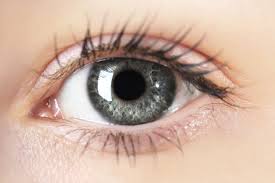
What you see, or the physical appearance.
a)
Genotype
b)
Phenotype
c)
Homozygous
d)
Heterozygous
34.
In a heterozygous genotype, the ___________ allele takes over in the phenotype.
a)
recessive
b)
dominant
c)
lower case letter
d)
both
35.
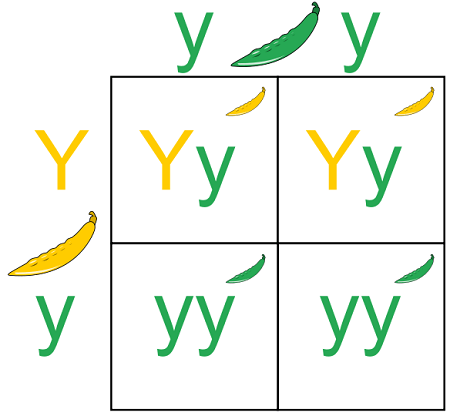
Which choice best represents the genotype of this cross?
a)
1 Yy: 2 yy: 0 YY
b)
2 Yy: 2 yy: 0 YY
c)
3 Yy: 1 yy: 0 YY
d)
1 Yy: 3 yy: 0 YY
36.
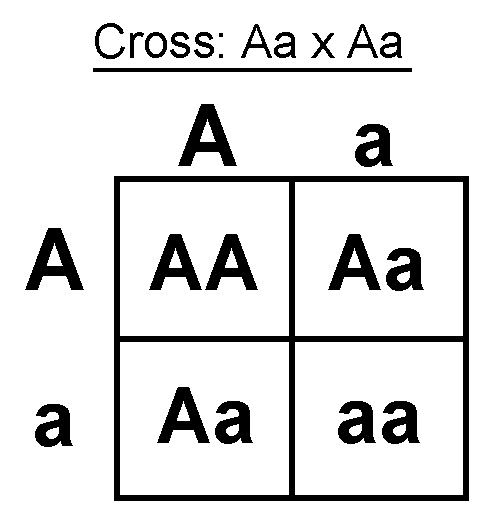
What is the phenotype of the offspring? (A-Brown hair; a-blond hair)
a)
50 % Brown Hair and 50% Blond Hair
b)
25 % Brown Hair and 75% Blond Hair
c)
75 % Brown Hair and 25% Blond Hair
d)
0% Brown Hair and 100% Blond Hair
37.
A red flower (Rr) is crossed with a white flower (rr). What is the genotype?
a)
0 RR; 0 Rr: 4 rr
b)
2 RR; 0 Rr: 2 rr
c)
4 RR; 0 Rr: 0 rr
d)
0 RR; 2 Rr: 2 rr
38.
Passive transport is called "passive" because it occurs WITHOUT
a)
cause.
b)
energy.
c)
a concentration gradient.
d)
a cell wall.
39.
Osmosis is the diffusion of _____ across a membrane
a)
glucose
b)
NaCl
c)
proteins
d)
water
40.
What is equilibrium?
a)
When concentrations cannot be balanced between two substances
b)
When concentrations are balanced between two substances
c)
Making the energy in the top half of your body equal the the energy in the bottom half
d)
Concentrations do not exist
41.
Diffusion is the movement of molecules from an area of higher concentration to an area of lower concentration.
a)
True
b)
False
42.
What does semi-permeable mean?
a)
Only some things can move through membrane
b)
Nothing can move through membrane
c)
Reagan can move through membrane
d)
Membrane connot be moved through
43.
What is the difference between active and passive transport?
a)
Active does not need energy and passive uses ATP (energy)
b)
Active uses ATP (energy) and passive does not need energy
c)
Active stores transport proteins and passive releases
d)
Active uses hormones and passive does not
44.
What does “high concentration area” mean?
a)
Spread out
b)
Tightly packed together
c)
Uncrowded
d)
Spacious
45.
When particles move from areas of high concentration to areas less concentrated, this has taken place.
a)
diffusion
b)
mitosis
c)
endocytosis
d)
photosynthesis
46.
Why is diffusion and osmosis important to cells?
a)
It allows them to take in materials without using energy.
b)
It allows them to reproduce.
c)
It allows them to absorb sunlight.
d)
It allows cells to use all energy.
47.
"Endosymbiosis" means
a)
Living together
b)
Living inside
c)
Entering together
d)
Joining together
48.
The theory of Endosymbiosis explains
a)
The origin of eukaryotes
b)
How species develop
c)
How bacteria live
d)
Why cells rely on one another
49.
____________ & _________________ are organelles that definitely arose from endosymbiosis.
a)
Rough ER & Smooth ER
b)
Mitochondria & Flagellum
c)
Chloroplast & Mitochondria
d)
Chloroplast and Golgi apparatus
50.
In asexual reproduction, all of the offspring are:
a)
Physically Identical
b)
Genetically Identical
c)
Physically and Genetically Identical
d)
Not Identical
51.
A hydra reproduces when an outgrowth, or bud, forms and continues to develop until if falls off of the parent. This is an example of:
a)
Binary Fission
b)
Sporulation
c)
Budding
d)
Vegetative Propagation
52.

a)
budding
b)
binary fission
c)
sporulation
d)
regeneration
53.
How many parent(s)are needed for asexual?
a)
4
b)
1
c)
9
d)
100
54.
What are some of the facts about asexual reproduction?
a)
Takes only one mate to reproduce and takes a longer time to reproduce
b)
Takes a shorter amount of time to reproduce and it takes two mates to reproduce
c)
Reproduces diverse offspring and takes a longer time to reproduce
d)
Takes only one mate to reproduce and takes a shorter time to reproduce
55.
This produces 2 identical cells.
a)
mitosis
b)
meiosis
56.
What does heredity mean?
a)
DNA being passed down from one generation to the next.
b)
Passing down acquired characteristics to your offspring.
c)
Leaving money in a will to your children
d)
all DNA is kept in the nucleus
57.
The ___ is the basic unit of sturucture and function of organisms
a)
atom
b)
cell
c)
matter
d)
all other answers are correct
58.
Who looked at cork and named the cell?
a)
Robert Hooke
b)
Van Leeuwenhoek
c)
Robert Brown
d)
Francesco Redi
59.
"All animals are made of cells". This fact was discovered by...
a)
Matthias Schleiden
b)
Theodor Schwann
c)
Robert Hooke
d)
Rudolf Virchow
60.
All plants are made of cells. This was discovered by....
a)
Matthias Schleiden
b)
Rudolf Virchow
c)
Robert Hooke
d)
Aristotle
61.

Robert Hooke, Anton van Leeuwenhoek, Theodor Schwann, Rudolf Virchow, and Matthias Schliden were all responsible for what theory?
a)
The Theory of Gravity
b)
The Theory of Relativity
c)
The Cell Theory
d)
The Theory of Continental Drift
62.
What tool do you use to view the cells?
a)
metric ruler
b)
centrifuge
c)
microscope
d)
pipette
63.

Which scientist did NOT contribute to the cell theory?
a)
Anton Van Leeuwenhoek
b)
Robert Hooke
Robert Hooke
c)
Albert Einstein
d)
Matthias Schleiden
Matthias Schleiden
64.

Who was the "scientist" who observed pond water and teeth scrapings in his microscope?
a)
Hooke
b)
Leeuwenhoek
c)
Schleidian
d)
Virchow
65.

Cells are often called "the ____ of life."
a)
bread
b)
road map
c)
building blocks
d)
meaning
66.

Who is responsible for producing this image?
a)
Francis Crick
b)
James Watson
c)
Rosalind Franklin
d)
Watson and Crick
67.

What does this image show?
a)
Double Helical Structure of DNA
b)
Triple Helical Structure of DNA
c)
I don't know, is that a Rorschach test?
d)
The image is inconclusive
68.
Why didn't Rosalind Franklin at least receive a part of the Nobel Prize for the discovery of DNA?
a)
She was deemed unworthy.
b)
Winners have to be alive in order to be awarded the prize
c)
She did not receive enough nominations.
d)
The award was already to be awarded to Watson, Crick and Wilkins.
69.
Who was awarded the Nobel Prize for the discovery of DNA
a)
Rosalind Franklin
b)
Linus Pauling
c)
James Watson
d)
Gregor Mendel
70.
What type of cancer did Henrietta have?
a)
lung
b)
cervical
c)
bone
d)
liver
71.
HeLa cells were special because they were the first known cells that could
a)
live outside the human body.
b)
conduct electricity.
c)
clone sheep cells.
d)
none of these.
72.
Throughout the years, research performed using HeLa cells made advances against
a)
polio.
b)
cancer.
c)
tuberculosis.
d)
all of these.
73.
The Lacks family is upset because
a)
Henrietta's cells were used without permission.
b)
The family did not benefit from research done on th ecells.
c)
The doctors and researchers were not truthful with the family.
d)
All of the above.
74.
Unlike most cancer cells, HeLa cells
a)
can be kept for 100s of years under special conditions.
b)
continue to reproduce.
c)
are still used in scientific research.
d)
all of the above.
75.

What type of fingerprint is shown in the diagram below?
a)
Arch
b)
Whorl
c)
Loop
76.
What is DNA?
a)
Dinonuclear Acid
b)
Definitely Not Applicable
c)
Deoxyribonucleic Acid
d)
Diabolical Nuclear Accident
77.
Who would have the same DNA?
a)
Fraternal twins
b)
Identical twins
c)
cousins
d)
Grandparents
78.
Forensic scientists
a)
only exist in CSI movies and TV shows.
b)
investigate crimes by collecting and analyzing physical evidence.
c)
solve every crime.
d)
live a very glamorous life.
79.
What is the name of a lie detector test?
a)
Polygraph
b)
Fingerprints
c)
Latent prints
d)
Trace Evidence
80.
Prokaryotes are unlike all other organisms in that their cells
a)
do not have a nucleus
b)
have organelles
c)
have cell walls
81.
Bacteria that contain chlorophyll and perform photosynthesis like a plant belong in the group
a)
archaebacteria
b)
cyanobacteria
c)
chemoautographs
d)
pathogens
82.
Bacteria that help break down dead material in the environment are called
a)
vaccines
b)
decomposers
c)
oats
83.
How do bacteria move?
a)
flagella
b)
cilia
c)
they don't
84.
All bacteria are harmful to humans
a)
True
b)
False
85.
Bacteria are unicellular
a)
True
b)
False
86.
Which disease is not caused by bacteria?
a)
Strep throat
b)
Pneumonia
c)
Food poisoning
d)
Influenza (the Flu)
87.
Bacteria help you digest food.
a)
True
b)
False
88.
Bacteria are
a)
prokaryotes
b)
eukaryotes
89.
Pasteur was a professor of what?
a)
English
b)
Math
c)
Physics
d)
Chemistry
90.
Using germ theory what did he determine?
a)
Bacteria caused the souring of wine, beer, and milk
b)
You should wash your hands for 20 seconds
c)
All bacteria is bad for you
d)
Fermentation will kill all bacteria
91.
What other big scientific discovery's did he make?
a)
Rabies
b)
Small Pox
c)
Cholera
d)
Tartaric
92.
Microorganism that uses carbon dioxide as a carbon source and catabolizes organic molecules for energy.
a)
photoautotrophs
b)
chemoautotrophs
c)
photoheterotrophs
d)
chemoheterotrophs
93.
What do viruses need to reproduce?
a)
they need genetic material
b)
They need a host cell
c)
They need bacteria
d)
They need insulin
94.
How does a virus cause a person to develop the common cold?
a)
invades the host cell to reproduce
b)
removes energy from the host cell
c)
produces toxins in the host cell
d)
protects the host cell from bacteria
95.

A(n) _____ is a virus that enters a bacterial cell.
a)
endospore
b)
decomposer
c)
plasmid
d)
bacteriophage
96.
When a virus invades a living cell, its _______
takes over the cell's functions.
takes over the cell's functions.
a)
outer coat
b)
genetic material
c)
core
d)
cytoplasm
97.
True or False
The flu is caused by a virus.
The flu is caused by a virus.
a)
true
b)
false
98.
Antibiotics kill viruses
a)
True
b)
False
99.
Which viral life cycle kills its host cell by lysing?
a)
lytic
b)
mitosis
c)
lysogenic
d)
S phase
100.
Which viral life cycle allows viral genetic material to lay dormant while the host cell reproduces?
a)
lytic
b)
mitosis
c)
lysogenic
d)
S phase
100 %

