
 Worksheets
Recording Category (1-5) Olympics
Total questions: 97
Worksheet time: 1hrs 13mins
Name
Class
Date
1.
Which biomolecule is also known as enzymes?
a)
Carbohydrate
b)
Lipid
c)
Nucleic Acid
d)
Protein
2.
Which biomolecule contains pastas and breads?
a)
Lipid
b)
Protein
c)
Nucleic Acid
d)
Carbohydrate
3.
Which biomolecule is made of nucleotides and contain you DNA?
a)
Carbohydrate
b)
Lipids
c)
Protein
d)
Nucleic Acid
4.
Which biomolecule is responsible for insulation and energy storage?
a)
Protein
b)
Nucleic Acid
c)
Lipid
d)
Carbohydrate
5.
Which biomolecule contains Deoxyribonucleic acid; a sequence of bases that makes hereditary code; Ribonucleic acid; translate hereditary code into proteins that determine how the cell will function under various conditions; provides storage and retrieval of information; encode genes, gene expression, helps make proteins
a)
Nucleic Acid
b)
Lipid
c)
Carbohydrate
d)
Protein
6.
four most common elements that make up all living things are carbon, hydrogen,
a)
nitrogen, and iron.
b)
oxygen, and nitrogen.
c)
calcium, and phosphorus.
d)
oxygen, and iron.
7.
The monomer of a protein is called...
a)
an amino acid
b)
a monosaccharide
c)
a fatty acid
d)
a nucleotide
8.
Building blocks of polymers.
a)
monomer
b)
polypeptide
c)
monosaccharide
d)
glycerol
9.
What is taxonomy?
a)
the process used by geologists to classify rocks
b)
the scientific study of how living things are classified
c)
the name of Aristotle's classification system
d)
the process of observing an organism's behavior
10.
Which group of organisms includes only multicellular heterotrophs?
a)
protists
b)
animals
c)
bacteria
d)
plants
11.
An organism's scientific name consists of
a)
its class name and its family name.
b)
its genus name and its species name.
c)
its phylum name and its species name.
d)
its kingdom name and its phylum name.
12.
The more classification levels that two organisms share,
a)
the closer together on Earth they live.
b)
the more characteristics they have in common.
c)
the easier it is to tell them apart.
d)
the more distantly related they are.
13.
What is the difference between asexual and sexual reproduction?
a)
Asexual requires 1 parent while sexual require 2 parents.
b)
Asexual requires 2 parents while sexual requires 1 parent.
c)
Asexual produces 2 offspring while sexual produces 1 offspring.
d)
Asexual produces 1 offspring while sexual produces 2 offspring.
14.
Which of the following characterisitcs do all plants share?
a)
being unicellular
b)
being a autotroph
c)
being a prokaryote
d)
producing flowers
15.
A change in an organism's surroundings that causes it to react is called
a)
a stimulus.
b)
a response.
c)
development.
d)
energy.
16.
Which of the following would you use to identify an organism?
a)
a domain
b)
a taxonomic key
c)
a controlled experiment
d)
a eukaryote
17.
Which domain(s) include(s) only prokaryotes?
a)
Bacteria only
b)
Bacteria and Archaea
c)
Eukarya only
d)
Archaea only
18.
Who is the father of evolution?
a)
Darwin
b)
Mendel
c)
Newton
d)
Einstein
19.
What is another name for natural selection?
a)
survival of the smartest
b)
survival of the fastest
c)
survival of the biggest
d)
survival of the fittest
20.
What is a change in an organism that allows for it to survive in its environment?
a)
homologous
b)
vestigial
c)
variation
d)
adaptation
21.
What is an organism that has similar characteristics and can reproduce?
a)
species
b)
organism
c)
embryology
d)
vestigial
22.
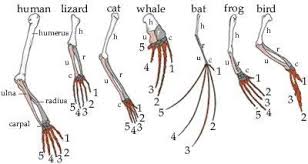
What is this an example of?
a)
vestigial structures
b)
embryology
c)
homologous structures
d)
fossil record
23.
When the DNA of an organism is altered it is referred to as…
a)
Mutation
b)
Gene Flow
c)
Genetic Drift
d)
Sexual Selection
24.

Which species’ DNA is most similar to the DNA of the toothed whale?
a)
Hippopotamus
b)
Baleen Whale
c)
Grazing Mammals
d)
Camels
25.
The environment around Manchester, England, changed during the Industrial Revolution. How did this change affect peppered moths living in the area?
a)
Natural selection favored moths with dark wings because predators could not see them on the soot-colored trees.
b)
Natural selection favored moths with white wings that were easy for predators to see.
c)
Natural selection favored moths with white wings because predators could not see them on the soot-colored trees.
d)
Natural selection caused moths with white wings to become extinct.
26.
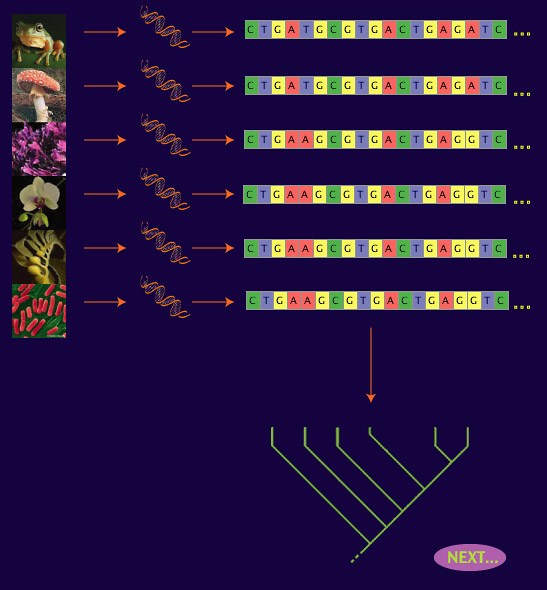
Two organisms that are closely related would have
a)
very similar DNA sequence
b)
exactly the same DNA sequences
c)
no proteins in common
d)
completely different DNA sequence
27.
A remnant or trace of an organism from the past is called a _______.
a)
Ancestor
b)
Skeleton
c)
Fossil
d)
Imprints
28.
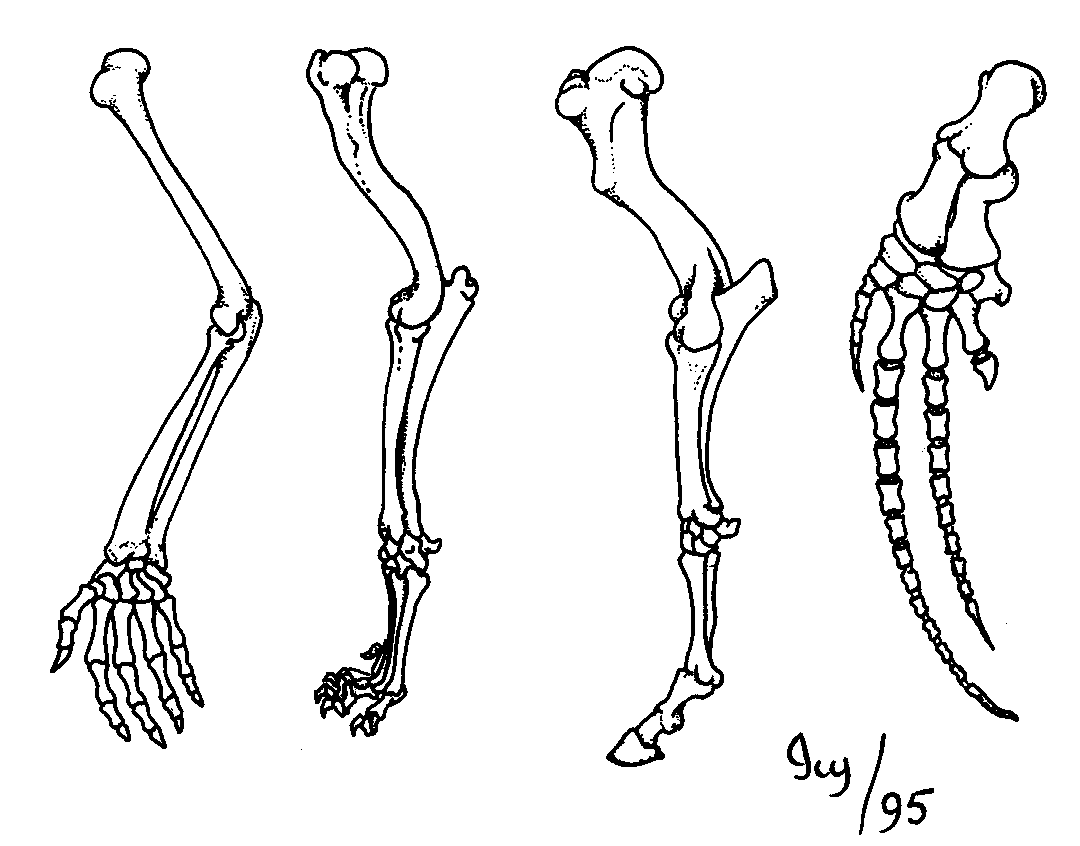
Structures with the same parts have different functions; suggests that organisms share a common ancestry
a)
vestigial structures
b)
homologous structures
c)
adaptive radiation
d)
fossil
29.
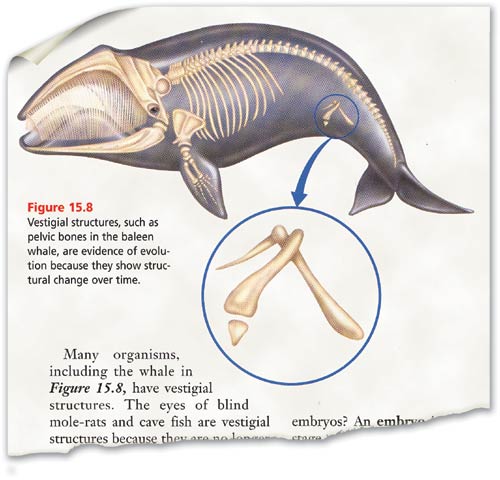
Which of the following is an example of a vestigial structure?
a)
the wings of a red-tailed hawk
b)
the hind limbs of a house cat
c)
the fins of sharks
d)
the tailbone of a human
30.
Why are advantageous traits more likely to be passed onto offspring?
a)
Because they are more likely to survive and reproduce.
b)
Because they come from dominant alleles.
c)
Because they come from recessive alleles.
d)
Because the trait is an acquired phenotype.
31.
Reasons that viruses are considered to be nonliving is because
a)
They are not cellular
b)
They cannot reproduce on their own
c)
They cannot make proteins
d)
all of the above
32.
Viruses are...
a)
prokaryotic
b)
eukaryotic
c)
non-living
d)
endospores
33.
What is a pathogen?
a)
Bacteria
b)
Virus
c)
Type of disease infection
d)
Protist
34.
A virus can be classified by its type of
a)
mitochondria
b)
chromosomes
c)
nucleic acid
d)
carbohydrates
35.
A(n) _____ is a virus that enters a bacterial cell.
a)
endospore
b)
decomposer
c)
plasmid
d)
bacteriophage
36.
An organism that produces its own food supply from inorganic compounds is called a(an)
a)
heterotroph
b)
consumer
c)
detritivore
d)
autotroph
37.
What is the term for each step in the transfer of energy and matter within a biological community?
a)
energy path
b)
food web
c)
trophic level
d)
food pyramid
38.
Autotrophs make up the _______ level in all ecosystems.
a)
First
b)
Second
c)
Third
d)
Fourth
39.

which symbiosis is this
a)
parasitism
b)
mutualism
c)
commensalism
d)
nonalism
40.

symbiotic relationship in which both organisms benefit
a)
competition
b)
Mutualism
c)
nitrogen fixation
d)
energy pyramid
41.

A living relationship between two species in which one organism is harmed is called...
a)
mutualism
b)
commensalism
c)
parasitism
d)
niche
42.

What does a food web represent?
a)
All connections of energy flow throughout all organisms in a habitat.
b)
The specific ways that mutualism is carried out.
c)
A single pathway or energy flow between organisms.
d)
How carnivores get their food.
43.

The image provided is an example of a(n):
a)
Carnivore
b)
Herbivore
c)
Producer
d)
Autotroph
44.

The image provided is an example of a(n):
a)
Producer
b)
Autotroph
c)
Consumer
d)
Insect
45.
The amount of energy that usually transfers from one trophic level to the next...
a)
10%
b)
20%
c)
80%
d)
50%
46.
Which of the following would be the definition of a detritivore?
a)
Animals that eat insects.
b)
Organisms that feed on rocks, recycling the nutrients back into the ground.
c)
Organisms that eat only pants
d)
Things that feed on dead organisms, recycling the nutrients back into the ground.
47.
Water temperature would be an example of ...
a)
A biotic factor
b)
An abiotic factor
48.
The living portions of the ecosystem.
a)
Biotic factors
b)
Abiotic factors
49.
A collection of organisms that belong to different populations but all live in the same area and interact with one another.
a)
Population
b)
Ecosystem
c)
Community
d)
Ecosphere
50.
A collection of organisms that make up a community as well as all of the nonliving aspects of the environment.
a)
Population
b)
Community
c)
Habitat
d)
Ecosystem
51.
Organisms that can capture energy from inorganic, nonliving sources.
a)
Producers
b)
Consumers
c)
Detritivores
d)
Carnivores
52.
A graphic illustration that shows each trophic level and the amount of useable energy contained within.
a)
Food chain
b)
Food web
c)
Energy Pyramid
d)
All of these
53.

In this Food Web Pyramid Which type of consumer gets only 10% of the energy stored in plants?
a)
Herbivore
b)
Carnivore
c)
Omnivore
d)
Secondary Consumer
54.
Which one is not a consumer?
a)
anemone
b)
bear
c)
shark
d)
vulture
55.
As you move upward, from level to level, in an energy pyramid, energy _____.
a)
increases
b)
decreases
c)
stays the same
d)
increases exponentially
56.
B=brown eyes
b= blue eyes
What is true about two brothers that have brown eyes?
One has genotype BB the other Bb.
b= blue eyes
What is true about two brothers that have brown eyes?
One has genotype BB the other Bb.
a)
they have same phenotype and genotype
b)
they have different genotypes and phenotypes
c)
they have same phenotype but different genotypes
d)
they have same genotype but different phenotypes
57.
What does heterozygous mean?
a)
An organism that has the same genes for a trait (TT or tt)
b)
An organism that has different genes for a trait (Tt)
c)
When neither gene is fully dominant; offspring is a mixture of both
d)
the different forms of a trait (hair color--> brown, blonde, red
58.

This is an example of what?
a)
Complete dominance
b)
Incomplete dominance
c)
Codominance
d)
None of the above
59.

Which process and type of resulting cells are represented?
a)
mitosis, gametes
b)
mitosis, body cells
c)
meiosis, gametes
d)
meiosis, body cells
60.
Which of the following cell types is formed by meiosis?
a)
muscle cells
b)
skin cells
c)
sperm cells
d)
blood cells
61.

Which best describes the process shown?
a)
mutation in which the DNA content of the gene is ltered
b)
segregation of sister chromatids
c)
condensation and segregation of the alleles
d)
crossing-over which alleles are exchanged
62.
What is one advantage of sexual reproduction?
a)
offspring are identical to parents
b)
offspring are resistant to viruses
c)
offspring are born live, rather thna from eggs
d)
offspring inherit a wider variety of genetic information
63.

What phase is shown in the picture?
a)
anaphase 1
b)
anaphase 2
c)
metaphase 1
d)
telophase 1
64.

Term for homozygous organisms that display two dominant phenotypes at the same time
a)
codominance
b)
incomplete dominance
c)
multiple alleles
d)
linked genes
65.
An organism's appearance is known as its
a)
heredity
b)
phenotype
c)
genotype
d)
pedigree
66.
One form of a gene is called_______________
a)
a DNA
b)
a Phenotype
c)
a trait
d)
an allele
67.
the condensed form of DNA is called________________
a)
an allele
b)
a gene
c)
a chromosome
d)
a phenotype
68.
Which of the following will only show if two alleles are present?
a)
a dominant trait
b)
a recessive trait
69.

Replicate the following strand of DNA:
AATCATGGA
AATCATGGA
a)
AATCATGGA
b)
TTAGTACCT
c)
UUAGUACCU
d)
GGATAUCUA
70.
The enzyme that unzips the DNA to prepare for replication
a)
helicase
b)
replicase
c)
polymerase
d)
synthase
71.
DNA replication results in two DNA molecules,
a)
each one with two original strands
b)
each one with two new strands
c)
each one with one new strand and one original strand
d)
one with two new strands and the other with two original strands
72.
The bonds that hold the two strands of DNA together come from...
a)
the attraction of phosphate groups
b)
strong bonds between bases and sugars
c)
carbon to carbon bonds in the sugar
d)
weak hydrogen bonds between the bases
73.
The DNA nucleotide is composed of three parts. Which two components make up the nucleotide backbone?
a)
ribose sugar and base
b)
ribose sugar and phosphate group
c)
nitrogen base and deoxyribose sugar
d)
deoxyribose sugar and phosphate group
74.
In what phase of the cell cycle does DNA replication take place?
a)
G1
b)
S
c)
G2
d)
M
75.

What is a gene?
a)
A segment of RNA that encodes for a protein
b)
A chromosome
c)
A segment of DNA that encodes for a protein
d)
Your genome
76.
The "on/off" switch for an operon is called the
a)
promoter
b)
repressor
c)
operator
d)
gene
77.
what does a promoter do?
a)
it allows a gene to be transcribed
b)
it creates a DNA segment
c)
it is another word for ribosomes
d)
it is another word for RNA
78.
A protein that binds to the operator and blocks the RNA polymerase
a)
regulator
b)
repressor
c)
activator
d)
corepressor
79.
In the lac operon model the genes within the operon will be expressed if:
a)
lactose is absent in the cell
b)
glucose is present in the cell
c)
lactose is present in the cell
80.
This plant structure is designed to allow water to move up/out to rest of plant
a)
Xylem
b)
Pholem
c)
Roots
d)
Leaves
81.
This plant structure is designed to allow glucose to be transported throughout the entire plant.
a)
Xylem
b)
Pholem
c)
Roots
d)
Leaves
82.
Specialized cells that absorb water by osmosis
a)
Nerve Cell
b)
Xylem
c)
Palisade Cell
d)
Root Hair Cell
83.

Nitrogen fixing bacteria, lives in nodules on the root of a plant called
a)
Broccoli
b)
Legumes
c)
Beats
d)
Carrots
84.

What converts some atmospheric nitrogen into nitrates that organisms can use?
a)
Sun
b)
Rain
c)
Thunder
d)
Lighting
85.
Which of the following describes the role of nitrogen-fixing bacteria in the nitrogen cycle? Nitrogen-fixing bacteria convert
a)
nitrates intro nitrogen gas
b)
ammonia into proteins
c)
nitrogen gas into ammonia
d)
proteins into nitrates
86.
What converts nitrogen into a useable form for plants and animals?
a)
bacteria
b)
fungi
c)
rain
87.
Which of the following processes converts C6H12O6 to an inorganic molecule CO2
a)
translation
b)
photosynthesis
c)
cellular respiration
d)
excretion
88.
Which process moves carbon stored in fossil fuel into another carbon reservoir?
a)
When fossil fuels are burned, carbon enters the atmosphere as carbon dioxide.
b)
The denitrifying bacteria turns the fossil fuel into carbon dioxide gas.
c)
Decomposers convert the fossil fuels into greenhouse gases like carbon dioxide.
d)
The fossil fuels react with the soil to produce carbonates and carbon dioxide.
89.
Cancer creates abnormal cells by disrupting
a)
the cell cycle
b)
red blood cell formation
c)
DNA replication
d)
ATP synthesis
90.
An abnormal mass of cancer cells is called a
a)
tumor
b)
cyst
c)
lesion
d)
polyp
91.
One difference between DNA and RNA is that....
a)
Only RNA has the base Uracil
b)
only RNA contains the base Thymine
c)
only RNA contains the base Cytocine
d)
only RNA contained the base Guanine
92.
A triplet of mRNA is called a
a)
codon
b)
anticodon
c)
amino acid
d)
peptide bond
93.

What is the correct amino acid sequence for the mRNA code AUGCCAGUAUGA?
a)
Met-Pro-Val-Stop
b)
Met-Pro-Arg-Stop
c)
Tyr-Gly-His
d)
Tyr-Gly-Arg-His
94.

Which phase of which process does this picture show?
a)
Transcription
b)
Translation
c)
Replication
95.
Genetic drift is change in the allele frequency of a population due to...
a)
random chance
b)
natural selection
c)
non-random mating (sexual selection)
d)
artificial selection
96.
This mechanism of evolution occurs when populations migrate.
a)
Extinction
b)
Gene flow
c)
Genetic drift
d)
Natural Selection
97.

The model below shows a how populations of organisms can change. Which of the following concepts is best illustrated by this demonstration?
a)
Evolution of a predatory species
b)
Genetic drift
c)
Environmentally induced genetic mutations
d)
Gene flow
100 %

