wayground logo

Free Printable Worksheets

Font size

S
M
L
XL
Worksheets

Biology Unit 2 Review

Total questions: 101

Worksheet time: 2hrs 59mins

Name
Class
Date
1.
The brain or "control center" of the cell. 
a)
Mitochondria
b)
Cell Membrane
c)
Cytoplasm
d)
Nucleus
2.
The watery liquid that fills the cell: 
a)
Chromatin
b)
Nucleolus
c)
Cytoplasm
d)
Cell Membrane
3.
The "power plant" of the cell that produces energy. 
a)
Mitochondria
b)
Cytoplasm
c)
Centrioles
d)
Lysosomes
4.
Tiny holes that allow nutrients to enter the nucleus:
a)
Cytoplasm
b)
Mitochondria
c)
Flagellum
d)
Nuclear Pores
5.
"Garbage collectors" of the cell that remove waste: 
a)
Cell Membrane
b)
Centrioles
c)
Lysosomes
d)
Nucleus
6.
Another word for chromatin: 
a)
Genetic Material
b)
DNA
c)
Chromosomes
d)
All of the above
7.
Protective outermost layer of the cell: 
a)
Cell Membrane
b)
Nucleus
c)
Chromatin
d)
Microtubules 
8.
Makes protein for the cell: 
a)
Nucleus
b)
Ribosomes
c)
Cytoplasm
d)
Cell Membrane
9.
Maze-like organelle that makes ribosomes: 
a)
Rough Endoplasmic Reticulum
b)
Lysosomes
c)
Nucleus
d)
Chromatin
10.
"Post office" of the cell that packages proteins and fats: 
a)
Rough ER
b)
Smooth ER
c)
Golgi Apparatus
d)
Lysosome
11.

In what organelle is the genetic material found inside?

a)

cell membrane

b)

chloroplast

c)

nucleus

d)

ribosome

12.

What is the function of a chloroplast?

a)

makes proteins for animal cells

b)

allows materials in and out of the cell

c)

provides structure and support

d)

absorbs sunlight for photosynthesis

13.

Identify the structure that is indicated by the arrow in the image.

a)

cell wall

b)

central vacuole

c)

chloroplast

d)

cell membrane

14.
What kind of transport does not require energy?
a)
Active 
b)
Vacuole 
c)
Passive 
d)
Na/K Pump 
15.
What is something that prokaryotic and eukaryotic cells have in common?
a)
They have a nucleus. 
b)
They are multi-cellular. 
c)
They have DNA. 
d)
They have organelles that are membrane-bound.
16.
What is facilitated diffusion?
a)
Transport that uses proteins to help move molecules across the membrane. 
b)
Movements of substances through a membrane. 
c)
When molecules spread from High to Low concentration on their own. 
d)
When pressure pushes something through a membrane. 
17.
What macromolecules help to make the cell membrane? 
a)
Proteins 
b)
Carbohydrates 
c)
Phospholipids 
d)
All of the above 
18.
All of the following statements are true about prokaryotic cells EXCEPT 
a)
No nucleus 
b)
They are simple and small 
c)
Have a cell wall 
d)
Have organelles 
19.
Which of the following is the best example of osmosis? 
a)
NA/K Pump 
b)
Water moving though the cell membrane 
c)
Kidneys 
d)
Photosynthesis 
20.
Movement of materials through a vesicle into the cell that requires energy is 
a)
exocytosis
b)
endocytosis 
c)
osmosis 
d)
simple diffusion 
21.
What are the 2 parts of a phospholipid? 
a)
Hydrophobic head, hydrophilic tails 
b)
Hydrophobic heads, hydrophobic tails 
c)
Hydrophilic heads, hydrophobic tails 
d)
Hydrophilic heads, hydrophilic tails 
22.
What is an isotonic solution?
a)
When solutions are in equilibrium 
b)
When the solution has more solute 
c)
When the solution has less solute 
d)
Has a greater pressure 
23.
Active transport does not require energy.
a)
True 
b)
False 
24.
Which of the following is correct about the Golgi? 
a)
Digests waste materials 
b)
Protection and Support 
c)
Modifies and packages molecules 
d)
cellular movement 
25.
Which type of cellular transport moves molecules from low concentrations to high concentrations?
a)
Osmosis
b)
Diffusion
c)
Passive Transport
d)
Protein Pumps
26.
The release of large particles, often waste materials from the inside of the cell to the outside of the cell.
a)
Osmosis
b)
Exocytosis
c)
Endocytosis
d)
Diffusion
27.
What type of solution has more solutes and less water than a cell that it contains?
a)
Isotonic
b)
Hypertonic
c)
Hypotonic
d)
None of the Above
28.
What happens to a plant cell that is placed into a hypotonic solution?
a)
It shrinks
b)
Plasmolysis
c)
It swells
d)
Cytolysis
29.

Which type of solution makes a cell shrink?

a)

Hypotonic

b)

Hypertonic

c)

Isotonic

30.
If the water concentration in a cell is 90% and the water concentration outside the cell is 95%, what direction will the water move?
a)
Into the cell
b)
Out of the cell
c)
The water will not move
31.
Which of the following terms means water-loving?
a)
Hypotonic
b)
Hypertonic
c)
Hydrophobic
d)
Hydrophilic
32.
Which type of solution causes a cell to swell?
a)
Hypotonic
b)
Hypertonic
c)
Isotonic
33.
Proteins are made of monomers called ___________
a)
Nucleotides
b)
Monosaccharides
c)
Amino Acids
d)
Glycerol and fatty acids
34.
Monosaccharides are monomers of
a)
Carbohydrates
b)
Lipids
c)
Proteins
d)
Nucleic Acids
35.
DNA and RNA are examples of 
a)
Carbohydrates
b)
Lipids
c)
Proteins
d)
Nucleic Acids
36.
Waxes, oils and fats are examples of
a)
Carbohydrates
b)
Lipids
c)
Proteins
d)
Nucleic Acids
37.
Which macromolecule is shown?
 View Figure 1 (if not visible)
a)
lipid
b)
protein
c)
nucleic acid
d)
carbohydrate
38.
What is the function of nucleic acids?
a)
store genetic information
b)
store energy (long-term)
c)
store energy (short-term)
d)
build skin, hair, nails, muscles
39.
Which of the following organic compounds is the main source of energy for living things?
a)
carbohydrates
b)
lipids
c)
nucleic acids
d)
proteins
40.
Which macromolecule stores energy, insulates us, and makes up the cell membrane?
a)
lipids
b)
proteins
c)
carbohydrates
d)
nucleic acids
41.
What are the monomers of DNA?
a)
glycerols
b)
amino acids
c)
fatty acids
d)
nucleotides
42.
Lipids can be digested into what smaller subunits?
a)
nucleic acids
b)
amino acids
c)
fatty acids
d)
glucose
43.
Which group of biomolecules provide quick energy to organisms?
a)
proteins
b)
carbohydrates
c)
lipids
d)
nucleic acids
44.
Genetic information is stored in which class of organic compounds?
a)
proteins
b)
lipids
c)
nucleic acids
d)
carbohydrates
45.
All polymers are made up of...
a)
monosaccharides
b)
monomers
c)
proteins
d)
None of these
46.
Building blocks of the body, hair , muscles etc.
a)
protein
b)
nucleic acid
c)
lipids
d)
carbohydrates
47.
Is found in the cell membrane as a bilayer. 
a)
lipids
b)
protein
c)
nucleic acid
d)
carbohydrate
48.
Enzymes are..
a)
nucleic acids 
b)
carbohydrates 
c)
lipids 
d)
proteins 
49.
Which is an example of a lipid?
a)
Candy
b)
Olive Oil
c)
DNA
d)
Meat
50.
How many sugar units make up polysaccharides?
a)
one
b)
two
c)
more than two
d)
zero
51.
Which organelle performs PHOTOSYNTHESIS?
a)
Chloroplast
b)
Mitochondria
52.
Which of the following is the correct equation for PHOTOSYNTHESIS?
a)
CO+ light + H2O --> O+ Sugar
b)
CO+ sugar + H2O --> O+ light
c)
O2 + light + H2O --> CO+ Sugar
d)
CO+ O2 + H2O --> Light+ Sugar
53.
What is the pigment in chloroplasts that performs photosynthesis?
a)
Chlorosynthesis
b)
Chlorophyll
c)
ADP
d)
Electron Transport
54.
Which gas is removed from the atmosphere during photosynthesis?
a)
hydrogen
b)
oxygen
c)
nitrogen
d)
carbon dioxide
55.
What are the products of photosynthesis?
a)
water and carbon dioxide
b)
oxygen and glucose
c)
oxygen and carbon dioxide
d)
oxygen and water
56.
Leaves look green because.....
a)
they eat their vegetables
b)
to blend into their environment
c)
they contain a molecule named chlorophyll
d)
they are sick
57.

The Calvin Cycle takes place in the:

a)

Stroma

b)

Thylakoid

c)

Grana

d)

Stomata

58.
Which is not a product of the Calvin Cycle?
a)
ADP
b)
NADP+
c)
G3P
d)
FADH2
59.
In the Calvin Cycle, ________ and ________ from the light dependent reactions convert PGA into G3P
a)
O2, ATP
b)
CO2, H2
c)
ADP, NADPH
d)
NADPH, ATP
60.
The light dependent phase occurs in the __________.
a)
Stroma
b)
Thylakoid Membrane
c)
Chlorophyll
d)
Chloroplast Membrane
61.
What is the net gain of ATP during glycolysis?
a)
1
b)
2
c)
3
d)
4
62.
Glycolysis takes place in the 
a)
mitochondria
b)
cell membrane
c)
cytoplasm
d)
nucleus
63.
This is the first step of cellular respiration
a)
Glycolysis
b)
Lactic Acid Fermentation
c)
Alcoholic Fermentation
d)
Aerobic Respiration
64.
This means that oxygen is needed
a)
anaerobic 
b)
aerobic
65.
This process does not make ATP alone, but it allows glycolysis to continue making ATP when oxygen is unavailable for cellular respiration.
a)
Fermentation
b)
Electron Transport Chain
c)
Glycolysis
d)
Kreb's cycle
66.
What is the correct equation for cellular respiration?
a)
6O2 + C6H12O6 -> 6CO2 + 6H2O + Energy
b)
6O2 + C6H12O6 + Energy -> 6CO2 + 6H2O
c)
6CO2 + 6H2O -> 6O2 + C6H12O6 + Energy
d)
6CO2 + 6H2O + Energy -> 6O2 + C6H12O6
67.
What are the products of aerobic respiration?
a)
Glucose and oxygen
b)
Carbon dioxide and water
c)
Lactic acid
d)
Carbon monoxide
68.
Anaerobic respiration.....
a)
doesn't require CO2
b)
requires CO2
c)
doesn't require oxygen
d)
requires oxygen
69.
Which molecule isn't an energy carrier?
a)
FADH2
b)
NADH
c)
oxygen
d)
ATP
70.
What is cellular respiration?
a)
the breakdown of glucose  to release ATP
b)
the breakdown of glucose to release NADH
c)
the breakdown of glucose to release FADH
d)
the breakdown of glucose to release carbon
71.
 The expression "feel the burn" means that a person exercising is doing 
a)
lactic acid fermentation
b)
alcoholic fermentation
c)
photosynthesis
d)
aerobic respiration
72.
Where does anaerobic respiration occur?
a)
glucose molecule
b)
mitochondria
c)
cytoplasm
73.
Where does aerobic respiration take place?
a)
Cytoplasm
b)
Mitochondria
c)
Stroma
d)
Thylakoid
74.
Along with 2ATP, what is produced during glycolysis?
a)
6CO2
b)
6O2
c)
C6H12O6
d)
2 pyruvate
75.
The overall goal of cellular respiration is to make:
a)
Glucose
b)
ATP
c)
Oxygen
d)
Water
76.
Which is a product of Kreb's Cycle?
a)
Carbon dioxide
b)
Glucose
c)
Pyruvate
d)
Water
77.
Which is a product of the ETC?
a)
Carbon dioxide
b)
Glucose
c)
Oxygen
d)
Water
78.
What is the name of the process that helps make beer and wine?
a)
Fermentation
b)
Alcoholic fermentation
c)
Lactic acid fermentation
d)
Glycolysis
79.
Which type of fermentation occurs in muscles?
a)
Alcoholic 
b)
Lactic acid
80.

In what process is mRNA synthesized?

a)

Transcription

b)

Translation

c)

DNA Replication

d)

Mitosis

81.

Where does TRANSCRIPTION occur?

a)

Nucleus

b)

Ribosome

c)

Cytoplasm

d)

Mitochondria

82.

Why must transcription occur where DNA can be found?

a)

because DNA can't leave

b)

because ribosomes are in the nucleus

c)

because DNA polymerase is found there

d)

because helicase unzips the DNA

83.

Which of the following is a codon?

a)
b)

ATG

c)

AUG

d)

AUT

84.

How many nucleotides equal 1 amino acid?

a)

1

b)

2

c)

3

d)

4

85.

On which molecule can an anticodon be found?

a)

mRNA

b)

DNA

c)

tRNA

d)

rRNA

86.

Where is the anticodon located?

a)

at the top of the molecule it's found on

b)

at the bottom of the molecule it's found on

c)

on the right of the molecule it's found on

d)

on the left of the molecule it's found on

87.

What is the purpose for anti-codons?

a)

to ensure the correct amino acid is dropped off

b)

to match the strand of DNA

c)

to decode a sequence of 4 nucleotides into an amino acid

d)

to make me hate biology

88.

A polypeptide is a sequence of ____________________ held together by a ______________ bond.

a)

amino acids; peptide

b)

fatty acids; ionic

c)

proteins; hydrogen

d)

fatty acids; covalent

89.

Which two thing are found on a molecule of tRNA?

a)

amino acids; anticodons

b)

amino acids; codons

c)

ribose sugar; proteins

d)

deoxyribose sugar; codons

90.

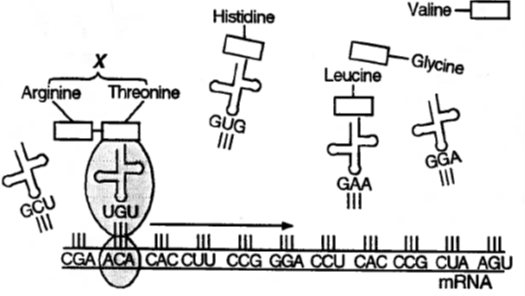
How do you know when to begin translating a strand of mRNA?

a)

look for AUG

b)

start at the beginning

c)

look for ATG

d)

when Ms. H tells me to

91.

TRANSCRIBE this DNA sequence: TACGTTACT

a)

AUGCAAUGA

b)

ATGCAATGA

c)

AUGGATUGA

d)

TACGTTACT

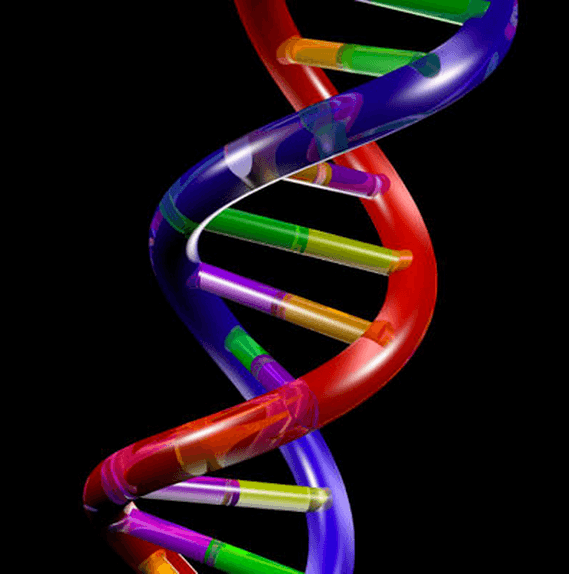
92.
What process is going on in this photo? 
a)
Transcription 
b)
Translation 
c)
Replication 
d)
All the above 
93.
Does the order of amino acids in a protein matter?
a)
YES!
b)
NO!
94.

A DNA nucleotide may be made up of a phosphate group, along with

a)

deoxyribose sugar and uracil

b)

ribose sugar and cytosine

c)

deoxyribose sugar and thymine

d)

ribose sugar and adenine

95.
Which sequence of DNA bases would pair with this partial strand
ATG TGA CAG
a)
ATG TGA CAG
b)
TAC ACT GTC
c)
GTA AGT GAC
d)
CAT TCA CTG
96.
Which of the following best describes a DNA molecule?
a)
double helix
b)
contains ribose
c)
made of amino acids
d)
contains Uracil
97.
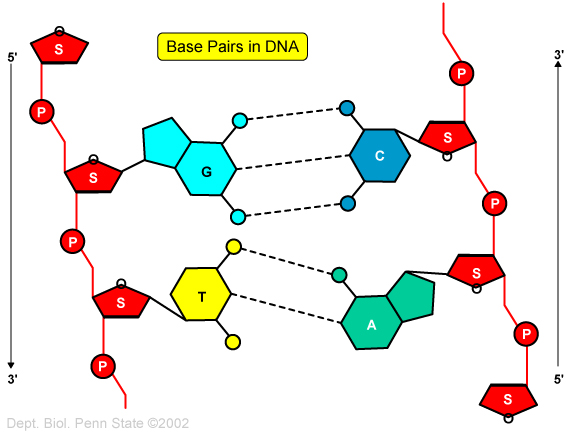
In a molecule of double-stranded DNA, the amount of Adenine present is always equal to the amount of
a)
cytosine
b)
guanine
c)
thymine
d)
uracil
98.
What determines the code, or information, of a DNA molecule?
a)
the shape (structure) of the nitrogen bases
b)
the order (sequence) of the nitrogen bases
c)
the color of the nitrogen bases
d)
the frequency (number) of nitrogen bases
99.
Which 2 molecules form the sides (backbone) of the DNA ladder?
a)
deoxyribose sugar and adenine
b)
deoxyribose sugar and a hydrogen bond
c)
deoxyribose sugar and the nucleus
d)
deoxyribose sugar and phosphate
100.
Nitrogenous bases are joined by which type of bond?
a)
polar bonds
b)
ionic bonds
c)
covalent bonds
d)
hydrogen bonds
101.
The enzyme that unzips the DNA to prepare for replication
a)
helicase
b)
replicase
c)
polymerase
d)
synthase