wayground logo

Free Printable Worksheets

Font size

S
M
L
XL
Worksheets

Living Environment Regents Review

Total questions: 101

Worksheet time: 2hrs 35mins

Name
Class
Date
1.
Antibodies... 
a)
destroy body cells
b)
destroy toxins
c)
make pathogens stick together
d)
destroy particular viruses and bacteria
2.

A vaccine contains...

a)

cow pox

b)

a small amount of the pathogen that is weakened or dead

c)

a large amount of the pathogen

d)

small pox

3.
What do antibodies do?
a)
bind and flag infectious agents
b)
destroys infectious agents
c)
recognizes infectious agents
4.
Which best describes the relationship between antibodies and antigens?
a)
Antibodies are specific to one antigen
b)
Antigens are produced in response to antibodies
c)
One antibody can affect several different antigens
d)
Immunity develops when an antigen destroys an antibody.
5.
Antibodies are specific (acts on) one
a)
Antigen
b)
white blood cell
c)
 red blood cells
d)
 virus
6.
The resistance to specific pathogens, or disease-causing agents is called _________.
a)
spleen
b)
lymphatic system
c)
anitbodies
d)
immunity
7.
HIV is an example of what kind of transmission?
a)
Bloodborne
b)
Waterborne
c)
Airborne
8.
What is the scientific term for spreading a disease?
a)
Passing
b)
Catching
c)
Transmitting
d)
Giving
9.
What is one way a pathogen can enter the body?
a)
Nose
b)
Mouth
c)
Broken Skin
d)
All of the Aove
10.
Disease-causing microorganism, such as a bacterium or virus.
a)
pathogen 
b)
allergen
c)
prion 
d)
antigen 
11.
What do white blood cells do?
a)
Seek out and kill all living tissue
b)
Seek out and kill pathogens
c)
Transport food around the body
d)
Repair cuts and injuries
12.
Antibiotics are used to treat
a)
viruses
b)
bacteria
c)
both viruses and bacteria
d)
fungal infections, only
13.
What is the original source of almost all energy in most ecosystems?
a)
carbohydrates
b)
sunlight
c)
water
d)
carbon
14.
This is an image of a _________.
a)
consumer
b)
scavenger
c)
decomposer
d)
producer
15.
An illustration that uses arrows to show the many possible directions in which matter and energy can pass through the organisms in an ecosystem.
a)
Food chain
b)
Food web
c)
Energy Pyramid
d)
Succession Map
16.
A collection of organisms that make up a community as well as all of the nonliving aspects of the environment.
a)
Population
b)
Community
c)
Habitat
d)
Ecosystem
17.
Organisms that feed on both living producers and other consumers.
a)
Carnivores
b)
Omnivores
c)
Herbivores
d)
Detritivores
18.
Part of the earth that living organisms inhabit
a)
biosphere
b)
biome
c)
niche
d)
ecosystem
19.
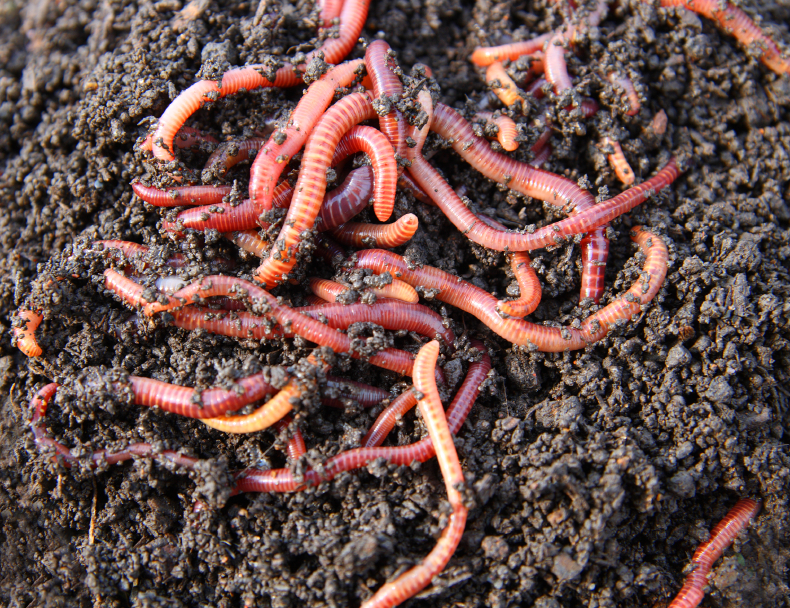
What role do these organisms play in their ecosystem as they break down matter?
a)
producer
b)
primary consumer
c)
secondary consumer
d)
decomposer
20.
What is the first thing that would happen in this food chain if the grass died?
Sun -> Grass -> Mouse -> Snake -> Hawk
a)
The snake population would increase
b)
the mouse population would increase
c)
the mouse population would decrease
d)
the hawk population would decrease
21.
How many carnivores are shown in this food web?
a)
6
b)
4
c)
5
d)
3
22.
The main human activity that releases greenhouse gases is:
a)
using bottled water
b)
burning fossil fuels
c)
texting on cellphones
d)
eating meat
23.
Which is a true statement?
a)
All microorganisms are harmful.
b)
All microorganisms are beneficial.
c)
Some microorganisms are harmful while others are beneficial.
d)
Microorganisms are beneficial only to humans.
24.
Anything that helps an animal survive in its environment.
a)
counter-shading
b)
mimicry
c)
adaptation
d)
camouflage
25.
An organism that produces its own food supply from inorganic compounds is called a(an)
a)
heterotroph
b)
consumer
c)
detritivore
d)
autotroph
26.
What type of foods do we get energy from?
a)
sugars
b)
carbs
c)
glucose
d)
all of the above
27.

What type of gas is required for photosynthesis?

a)

O2

b)

CO2

28.

What is the energy that is produced through cellular respiration?

a)

CTP

b)

ATP

c)

Light Energy

d)

Glucose

29.

What gas is produced during photosynthesis?

a)

CO2

b)

O2

30.
What form of energy is required for photosynthesis?
a)
sunlight
b)
electric
c)
gas
31.
The process by which organisms maintain homeostasis is known as
a)
synthesis
b)
regulation
c)
respiration
d)
digestion
32.

Small molecules are combined to form larger molecules by the process of

a)

regulation

b)

synthesis

c)

excretion

d)

transport

33.
The process of taking in and breaking down food into more usable parts is known as
a)
digestion
b)
respiration
c)
ingestion
d)
excretion
34.
The tendency of an organism to maintain a stable internal environment or "steady state" is called
a)
homeostasis
b)
regulation
c)
metabolism
d)
excretion
35.
The movement of materials throughout and organism is called
a)
respiration
b)
transport
c)
metabolism
d)
digestion
36.
What does a food web represent?
a)
All connections of energy flow throughout all organisms in a habitat.
b)
The specific ways that mutualism is carried out.
c)
A single pathway or energy flow between organisms. 
d)
How carnivores get their food. 
37.
An organism that produces its own food supply from inorganic compounds is called a(an)
a)
heterotroph
b)
consumer
c)
detritivore
d)
autotroph
38.
The image provided is an example of a(n):
a)
Carnivore
b)
Herbivore
c)
Producer
d)
Autotroph
39.
The image provided is an example of a(n):
a)
Producer
b)
Autotroph
c)
Consumer
d)
Insect
40.
The nonliving aspects of an ecosystem.
a)
Abiotic factors
b)
Biotic factors
41.
The living portions of the ecosystem.
a)
Biotic factors
b)
Abiotic factors
42.
Water temperature would be an example of ...
a)
A biotic factor
b)
An abiotic factor
43.
A collection of organisms that make up a community as well as all of the nonliving aspects of the environment.
a)
Population
b)
Community
c)
Habitat
d)
Ecosystem
44.
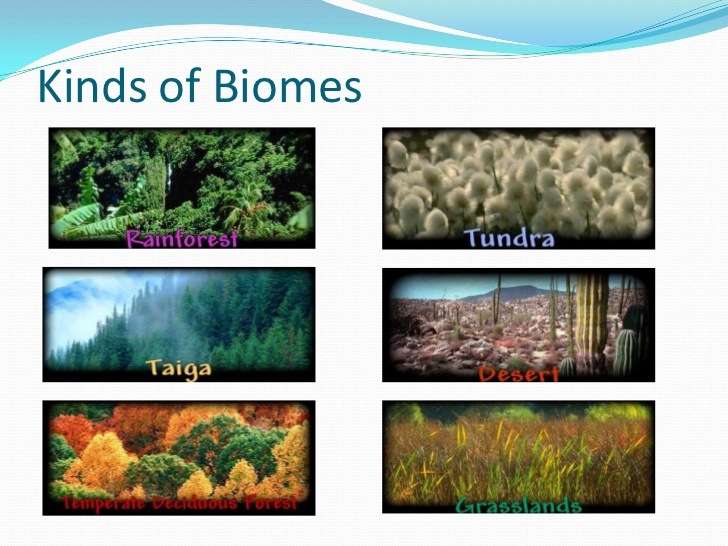
What is the main factor that separates the biomes?
a)
Land
b)
Water
c)
Climate
d)
Longitude
45.

Which biome has the most biodiversity?

a)

Temperate Forest

b)

Rainforest

c)

Tundra

d)

Grasslands

46.
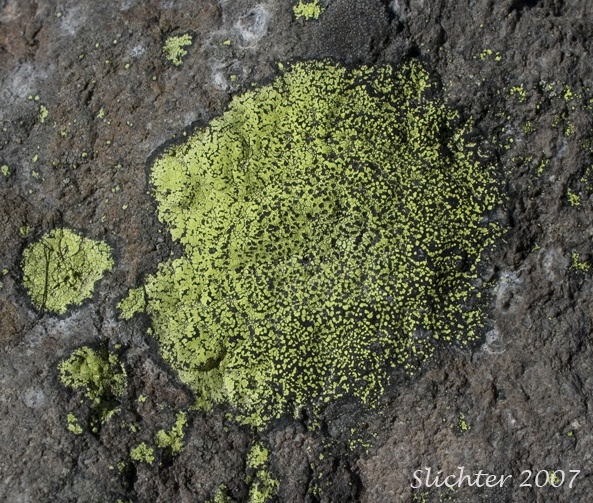
What is the name given to lichen or algae after a primary succession?
a)
pioneer species
b)
volunteer species
c)
founder species
d)
conqueror species
47.
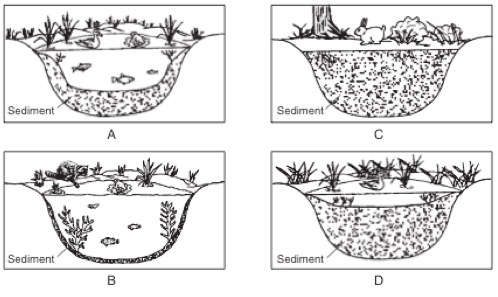
What is the correct order from oldest (happened first) to youngest (happened last) in this pond succession?
a)
A, B, C, D
b)
D, C, B, A
c)
B, A, D, C
d)
C, D, A, B
48.
What is one advantage of sexual reproduction?
a)
offspring are identical to parents
b)
offspring are resistant to viruses
c)
offspring are born live, rather thna from eggs
d)
offspring inherit a wider variety of genetic information
49.

Creates sperm and eggs

a)

Mitosis

b)

Meiosis

50.
Two identical cells are produced
a)
Mitosis
b)
Meiosis
51.
Asexual reproduction
a)
Mitosis
b)
Meiosis 
52.
An organism has 20 chromosomes in its skin cell. How many chromosomes are in its gamete cells? 
a)
20
b)
10
c)
40
d)
15
53.
An organism has 16 chromosomes in its skin cell. How many chromosomes are in its heart cells?
a)
16
b)
32
c)
8
d)
64
54.
The clear, jelly-like material in a cell that supports and protects the cell’s organelles.
a)
Cytoplasm
b)
Cell Membrane
c)
Nucleus
d)
Mitochondria
55.
The part of the cell that makes protein.
a)
Vacuoles
b)
Ribosomes
c)
Golgi Apparatus
d)
Cytoplasm
56.
Acts like a subway system, carrying protein through the cell.
a)
Golgi Apparatus
b)
Nuclear Membrane
c)
Ribosomes
d)
Endoplasmic Reticulum
57.
The part of the cell that is used for storage.
a)
Nucleus
b)
Cell Membrane
c)
Mitochondria
d)
Vacuole
58.
Breaks down food  to release energy. Known as the power plant of the cell.
a)
Endoplasmic Reticulum
b)
Mitochondria
c)
Ribosomes
d)
Cell Wall
59.
Uses energy from the sun to make food for the plant.
a)
Cell Wall
b)
Cell Membrane
c)
Chloroplasts
d)
Vacuole
60.
Which organelle is DNA usually found in?
a)
cell membrane
b)
vacuole
c)
chloroplast
d)
nucleus
61.
What is another name for natural selection?
a)
survival of the smartest
b)
survival of the fastest
c)
survival of the biggest
d)
survival of the fittest
62.
What is a change in an organism that allows for it to survive in its environment?
a)
homologous
b)
vestigial
c)
variation
d)
adaptation
63.
How much DNA do you receive from one parent in asexual reproduction?
a)
25%
b)
50%
c)
75%
d)
100%
64.
How much DNA do you receive from one parent in sexual reproduciton
a)
25%
b)
50%
c)
75%
d)
100%
65.
What is a disadvantage to asexual reproduction?
a)
It produces more offspring
b)
It produces fewer offspring
c)
They are all the same and do not have diversity
d)
They are all different and have diversity
66.
The main purpose of mitosis is for
a)
growth only. 
b)
tissue repair only. 
c)
growth and tissue repair. 
d)
neither growth nor tissue repair
67.
Which process and type of resulting cells are represented?
a)
mitosis, gametes
b)
mitosis, body cells
c)
meiosis, gametes
d)
meiosis, body cells
68.
Meiosis produces ___________ while mitosis produces __________.
a)
Sex cells, body cells
b)
Body cells, sex cells
69.
This variable in an experiment is the one being deliberately changed by the scientist. 
a)
dependent variable
b)
independent variable
c)
data
d)
control group
70.
A __________ includes all living and non-living things in an environment. 
a)
population
b)
niche
c)
abitotic
d)
ecosystem
71.
Which organism make their own food through the process of photosynthesis? 
a)
decomposer
b)
consumer
c)
herbivore
d)
producer 
72.
Examples of how humans negatively affect local ecosystems are
a)
Building dams, deforestation (cutting down trees), adding point sources to nearby streams to allow for run-off, building roads and structures, and salting roads.
b)
Creating laws to prohibit fishing from local streams.
c)
Planting trees and other plants to attract native species.
d)
Removing non-native species from the environment.
73.
the process by which a new community forms where no community lived before 
a)
resource
b)
invasive (non- native) species
c)
primary succession
d)
competition
74.
In the energy pyramid below, which organism has the least amount of energy available?
a)
Producers
b)
Herbivores
c)
Carnivores
d)
Top Predator
75.
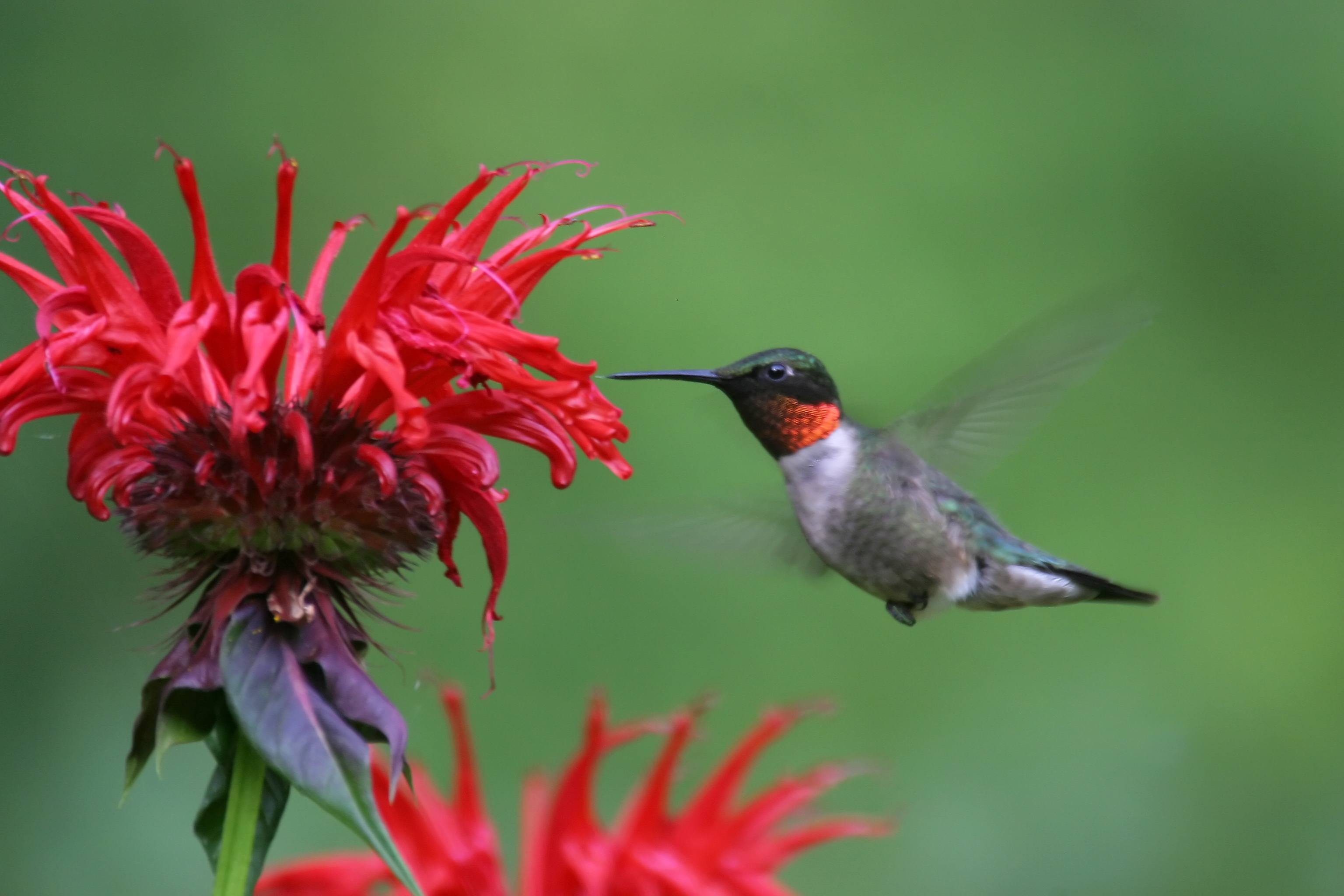
What type of symbiosis?  Hummingbirds feed on nectar from flowers.  The flowers are pollinated by hummingbirds as they move from flower to flower.
a)
commensalism
b)
mutualism
c)
parasitism
d)
predation
76.
The average temperature of the surface of Earth has increased approximately 1°C in the past century. Which reason best explains this increase in temperature?
a)
lower levels of ozone in the atmosphere
b)
lower levels of nitrogen in the atmosphere
c)
higher levels of carbon dioxide in the atmosphere
d)
higher levels of oxygen in the atmosphere
77.
An error in DNA copying that results in a new trait
a)
Homeostasis
b)
Mutation
c)
Natural Selection
d)
Selective Breeding
78.
What process is being shown in this image?
a)
Variation
b)
Natural Selection
c)
Selective Breeding
d)
Homeostasis
79.
The process by which humans choose a plant or animal to breed based on specific traits.
a)
Adaptation
b)
Hybrid 
c)
Selective Breeding
d)
Artificial Fertilization
80.

When making a DNA Fingerprint, the gel electrophoresis machine filters the DNA by size. Which fragments make it further down in the gel?

a)

smaller

b)

larger

c)

codons

d)

anticodons

81.
RNA is read in sections called:
a)
Triplets
b)
Genes
c)
Codons
d)
Genes
82.
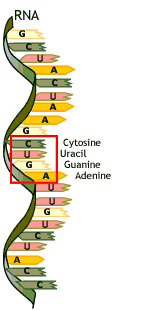
In RNA, Uracil pairs with ______. 
a)
cytosine
b)
adenine
c)
guanine
d)
thymine
83.
The process to go from DNA to mRNA is _______
a)
translation
b)
transcription
c)
replication
84.
Which statement explains the importance of maintaining a constant internal environment to ensure proper enzyme functioning?
a)
 Changes in pH and temperature will cause the enzyme reaction rate to be too fast.
b)
Temperature and pH determine amino acid sequences in enzymes
c)
Changes in pH will change the genetic instructions of enzymes
d)
Increasing the temperature and pH can alter the specific shape of enzymes.
85.
Caffeine is a compound found in the seeds of many different plants, such as coffee beans, cola nuts, and cacao beans (the source of chocolate). The presence of this chemical in all three types of plants suggests that these plants
a)
inherited identical mutations
b)
share a common ancestry
c)
were exposed to the same type of radiation in the past 
d)
were cloned from a caffeine plant
86.
Which substance is an organic molecule?
a)
water
b)
oxygen
c)
starch
87.
Which substance is an inorganic molecule?
a)
water
b)
starch
c)
DNA
d)
fat
88.
Students in a science class took their pulse rates before and after they ran in place for one minute. The class data showed that pulse rates increased with exercise. A graph of the data would look most like (SEE DIAGRAM)
a)
1
b)
2
c)
3
d)
4
89.

An organic compound made of amino acids.

a)

protein

b)

carbohydrate

c)

nucleic acid

d)

lipid

90.

The cells of the blood that contain the red pigment hemoglobin which aids in the transport of oxygen

a)

red blood cells

b)

white blood cells

c)

platelets

d)

plasma

91.

The copying of the exact base sequence of the DNA.

a)

replication

b)

meiosis

c)

sexual reproduction

d)

fertilization

92.

The fertilized egg.

a)

zygote

b)

gamete

c)

sex cell

d)

infant

93.

A protein that speeds up the rate of biochemical reactions; an organic catalyst.

a)

enzyme

b)

carbohydrate

c)

lipid

d)

nucleic acid

94.

A nonliving, physical factor that limits the type of organisms that can exist in a particular ecosystem.

a)

limiting factor

b)

trees

c)

bacteria

d)

viruses

95.

Openings in the lower epidermis of the leaf which allows gases to be exchanged between the plant tissues and the atmosphere.

a)

stomates

b)

guard cells

c)

chloroplasts

d)

mitochondria

96.

A monosaccharide that is the primary source of cellular energy in most organisms. It is one of the basic building blocks of polysaccharide carbohydrates.

a)

glucose

b)

starch

c)

lipids

d)

amino acids

97.

Differences and variety in the organisms and their roles

in an ecosystem

a)

biodiversity

b)

cloning

c)

monoculture

d)

bottleneck effect

98.

The maximum number of organisms that an ecosystem

can support without deteriorating

a)

carrying capacity

b)

exponential growth

c)

mitosis

d)

photosynthesis

99.

The production of genetically identical organisms.

a)

cloning

b)

meiosis

c)

gene splicing

d)

sexual reproduction

100.

The movement of molecules from an area of high

concentration to an area of low concentration without

the use of energy

a)

diffusion

b)

active transport

c)

photosynthesis

d)

mitosis

101.

An organism's particular role in the community

a)

niche

b)

habitat

c)

environment

d)

community