wayground logo

Free Printable Worksheets

Font size

S
M
L
XL
Worksheets

DNA Assignment

Total questions: 100

Worksheet time: 2hrs 34mins

Name
Class
Date
1.
Which of the following units are repeatedly joined together to form a strand of DNA? (This is the MONOMER of DNA.) 
a)
amino acids
b)
nucleotides
c)
fatty acids
d)
polysaccharides
2.
Adenine bonds with ______________.
a)
Guanine
b)
Thymine
c)
Cytosine
d)
Adenine
3.
Guanine bonds with ______________.
a)
Adenine
b)
Guanine
c)
Cytosine
d)
Thymine
4.
Why is DNA important?
a)
it is very small and very complicated
b)
it's in everything
c)
it serves as the blueprint for traits of all living things
d)
because we eat it every day for energy
5.
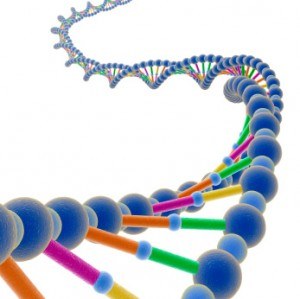
Name this structure
a)
double helix
b)
nucelotide
c)
twisted ladder
d)
hydrogen bond
6.
What are the 4 nitrogen bases?
a)
adenine, thymine, cytoplasm, and guanine
b)
adenine, thymine cytosine, and guanine
c)
adenine, thymine, cytosine, and gylcerol
d)
adenine, thymine, cytosine, and glucose
7.
Which organelle is DNA usually found in?
a)
cell membrane
b)
vacuole
c)
chloroplast
d)
nucleus
8.
Which shows the correct complementary base pairing for DNA?
a)
C-A, T-G
b)
A-G, C-T
c)
C-G, U-A
d)
T-A, G-C
9.
The process by which a DNA molecule is copied is called _____.
a)
binary fission
b)
mitosis
c)
replication
d)
translation
10.
What bonds the nitrogen bases in the center of the DNA strand?
a)
Covalent Bonds
b)
Ionic Bonds
c)
Hydrogen Bonds
d)
Metallic Bonds
11.
Which sequence of DNA bases would pair with this partial strand
ATG TGA CAG
a)
ATG TGA CAG
b)
TAC ACT GTC
c)
GTA AGT GAC
d)
CAT TCA CTG
12.
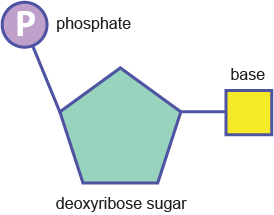
Which 2 molecules form the sides (backbone) of the DNA ladder?
a)
deoxyribose sugar and adenine
b)
deoxyribose sugar and a hydrogen bond
c)
sugar and a nitrogenous base
d)
deoxyribose sugar and phosphate
13.
In a molecule of double-stranded DNA, the amount of Adenine present is always equal to the amount of
a)
cytosine
b)
guanine
c)
thymine
d)
uracil
14.
What two parts of a nucleotide do not change throughout the structure of DNA?
a)
Five-Carbon Sugar and Nitrogen Base
b)
Phosphate Group and Nitrogen Base
c)
Five-Carbon Sugar and Phosphate Group
d)
All components remain the same throughout the DNA structure?
15.
DNA codes for...
a)
cholesterol
b)
proteins
c)
fatty acids
d)
a sandwich
16.
What helps to classify a nitrogen base as a purine or a pyrimidine? 
a)
the number of sugars
b)
the number of "rings"
c)
the number of bases
d)
the number of phosphates
17.
What are the purines?
a)
A & G
b)
G & C
c)
A & T
d)
G & T
18.
DNA is made up of sub units called monomers.   Together DNA is considered a ________. 
a)
polymer
b)
polypeptide
c)
polygraph
d)
none of the above
19.
Which of the following best describes a DNA molecule?
a)
double helix
b)
contains ribose
c)
made of amino acids
d)
contains Uracil
20.
Which of the following things does a nucleotide NOT contain?
a)
a sugar
b)
a nitrogen base
c)
a phosphate
d)
a polymerase
21.
The DNA is found in the nucleus of what type of organisms?
a)
Bacteria
b)
Eukaryotes
c)
Prokaryotes
d)
Viruses
22.
Which of the following is a base that is NOT contained in DNA?
a)
Adenine
b)
Thymine
c)
Uracil
d)
Guanine
23.
Which of the following does NOT describe the structure of DNA?
a)
double helix
b)
nucleotide polymer
c)
sugar-phosphate backbone
d)
contains adenine-uracil pairs
24.
Chargraff's Rule says that
a)
Adenine will be equal to Thymine
b)
Cytosine will be equal to Thymine
c)
Uracil will be equal to Guanine
d)
Adenine will be equal to Cytosine
25.
The enzyme that unzips the DNA to prepare for replication
a)
helicase
b)
replicase
c)
polymerase
d)
synthase
26.
DNA replication results in two DNA molecules,
a)
each one with two original strands
b)
each one with two new strands
c)
each one with one new strand and one original strand
d)
one with two new strands and the other with two original strands
27.
DNA and RNA are macromolecules in the category of
a)
Proteins
b)
Lipids
c)
Nucleic Acids
d)
Carbohydrates
28.
DNA is a polymer made of monomers called
a)
Nucleotides
b)
Proteins
c)
Amino Acids
d)
Lipids
29.
The principle Watson and Crick created that said adenine pairs with thymine and guanine pairs with cytosine is called
a)
base pairing
b)
super coiling
c)
replication
d)
substitution
30.
What does DNA stand for?
a)
Ribonucleic Acid
b)
Deoxyribonucleic Acid
c)
Both of these
d)
None of these
31.
Who was responsible for determining the structure of DNA?
a)
Watson and Crick
b)
Chargaff
c)
Rosalind Franklin
d)
All of the above
32.
What holds the two sides of the DNA ladder together?
a)
Ionic bonds
b)
Hydrogen bonds
c)
Covalent bonds
d)
Van der waals
33.
Fill in the complementary bases according to the base-pair rule in DNA: A T C C A G
a)
T U G G T C
b)
T A G G T C
c)
T A C G T G
d)
T A C C A C
34.
What determines the traits of an organism?
a)
The length of DNA molecules
b)
The way nucleotides are paired in the two strands of  DNA
c)
The order of nucleotides in DNA molecules
d)
The proportions of A, T, C, and G in DNA molecules
35.
DNA codes for...
a)
cholesterol
b)
proteins
c)
fatty acids
d)
a sandwich
36.
Name this structure
a)
double helix
b)
nucelotide
c)
twisted ladder
d)
hydrogen bond
37.
Adenine bonds with ______________.
a)
Guanine
b)
Thymine
c)
Cytosine
d)
Adenine
38.
What sugar is in DNA?
a)
deoxyribose
b)
ribose
c)
oxyribose
d)
deoxyose
39.
The backbone of a DNA molecule is made of which two components?
a)
phosphate molecules and ribose sugars
b)
deoxyphosphate molecules and ribose sugars
c)
phosphate molecules and deoxyribose sugars
d)
deoxyphosphate molecules and deoxyribose sugars
40.
Cytosine makes up 42% of the nucleotides in a sample of DNA from an organism. Approximately what percentage of the nucleotides in this sample will be thymine?
a)
8%
b)
16%
c)
31%
d)
42%
41.
In trying to determine whether DNA or protein is the genetic material, Hershey and Chase made use of which of the following facts?
a)
DNA contains sulfur, whereas protein does not.
b)
DNA contains phosphorus, whereas protein does not.
c)
DNA contains nitrogen, whereas protein does not.
d)
DNA contains purines, whereas protein includes pyrimidines.
42.
The leading and the lagging strands differ in that
a)
the leading strand is synthesized in the same direction as the movement of the replication fork, and the lagging strand is synthesized in the opposite direction
b)
the leading strand is synthesized by adding nucleotides to the 3' end of the growing strand, and the lagging strand is synthesized by adding nucleotides to the 5' end.
c)
the lagging strand is synthesized continuously, whereas the leading strand is synthesized in short fragments that are ultimately stitched together.
d)
the leading strand is synthesized at twice the rate of the lagging strand.
43.
For a science fair project, two students decided to repeat the Hershey and Chase experiment, with modifications. They decided to label the nitrogen of the DNA, rather than the phosphate. They reasoned that each nucleotide has only one phosphate and two to five nitrogens. Thus, labeling the nitrogens would provide a stronger signal than labeling the phosphates. Why won't this experiment work?
a)
Radioactive nitrogen has a half-life of 100,000 years, and the material would be too dangerous for too long.
b)
Avery et al. have already concluded that this experiment showed inconclusive results.
c)
Although there are more nitrogens in a nucleotide, labeled phosphates actually have 16 extra neutrons; therefore, they are more radioactive.
d)
Amino acids (and thus proteins) also have nitrogen atoms; thus, the radioactivity would not distinguish between DNA and proteins.
44.
For a science fair project, two students decided to repeat the Hershey and Chase experiment, with modifications. They decided to label the nitrogen of the DNA, rather than the phosphate. They reasoned that each nucleotide has only one phosphate and two to five nitrogens. Thus, labeling the nitrogens would provide a stronger signal than labeling the phosphates. Why won't this experiment work?
a)
Radioactive nitrogen has a half-life of 100,000 years, and the material would be too dangerous for too long.
b)
Avery et al. have already concluded that this experiment showed inconclusive results.
c)
Although there are more nitrogens in a nucleotide, labeled phosphates actually have 16 extra neutrons; therefore, they are more radioactive.
d)
Amino acids (and thus proteins) also have nitrogen atoms; thus, the radioactivity would not distinguish between DNA and proteins.
45.
What does DNA stand for?
a)
Deoxyribonucleic acid
b)
Denitrogenous acid
c)
Deribonucleic acid
d)
Diribonucleic acid
46.
What is responsible for holding the two strands of the DNA double helix together?
a)
hydrogen bonds
b)
alleles
c)
London dispersion forces
d)
deoxyribose sugars
47.
Name this structure
a)
double helix
b)
nucelotide
c)
twisted ladder
d)
hydrogen bond
48.
Which sequence of DNA bases would pair with this partial strand
ATG TGA CAG
a)
ATG TGA CAG
b)
TAC ACT GTC
c)
GTA AGT GAC
d)
CAT TCA CTG
49.
Which of the following best describes a DNA molecule?
a)
double helix
b)
contains ribose
c)
made of amino acids
d)
contains Uracil
50.
A nucleotide includes...?
a)
pentose sugar
b)
nitrogenous base
c)
phosphate group
d)
all of the above
51.
In DNA, Adenine bonds with ______________.
a)
Guanine
b)
Thymine
c)
Cytosine
d)
Adenine
52.
Guanine bonds with ______________.
a)
Adenine
b)
Guanine
c)
Cytosine
d)
Thymine
53.

This laboratory procedure is known as

a)

CLONING

b)

gel electrophoresis

c)

chromatography

d)

use of a dichotomous key

54.

In preparation for an electrophoresis procedure, enzymes are added to DNA in order to

a)

convert the DNA into gel

b)

cut the DNA into fragments

c)

change the color of the DNA

d)

produce longer sections of DNA

55.

A student performed a gel electrophoresis experiment. The results are represented in the diagram

below. Compared to the fragments at the top of the gel, the fragments at the lower end are

a)

larger, and move slower

b)

larger, and move faster

c)

smaller, and move faster

d)

smaller, and move slower

56.

Which chemicals are used to cut DNA into fragments for a gel electrophoresis procedure?

a)

enzymes

b)

molecular bases

c)

hormones

d)

ATP molecules

57.

This technique used to analyze DNA involves the

a)

synthesis of new DNA strands from subunits

b)

separation of DNA fragments based on size

c)

production of genetically engineered DNA molecules

d)

removal of defective genes from DNA

58.
Based on these results whose blood was found in the blood stain at the crime scene?
a)
Bob
b)
Sue
c)
John
d)
Lisa
59.
DNA fingerprinting works because
a)
Most genes are dominant
b)
All organisms contain RNA
c)
The most important genes are different among most people
d)
No two people, except identical twins, have exactly the same DNA 
60.
What is the purpose of gel electrophoresis?
a)
helps cut DNA
b)
count the genes in DNA
c)
separates DNA based on size
d)
allows for an exact replicated organism
61.
Why do the fragments of DNA in gel electrophoresis travel away from the negative electrode?
a)
DNA is negatively charged so attracted to the positive end of the unit
b)
DNA is positively charged to attracted to the negative end of the unit
c)
the agarose gel in negatively charged
d)
the agarose gel is positively charged
62.
In gel electrophoresis, the largest DNA fragment will appear
a)
closest to the starting wells
b)
farthest from the starting wells
c)
three quarters away from the starting wells
d)
it depends on how many fragments there are
63.
Which is the primary purpose of using restriction enzymes in gel electrophoresis?
a)
It allows the strands of DNA to be cut into various lengths for testing
b)
It restricts the number of base pairs that can be tested in a sample
c)
It makes the testing simpler by moving the strands into the gel faster
d)
It charges the DNA strands
64.

Once DNA has been extracted from the nucleus of a cell, it is exposed to ______ ______ that act like biochemical scissors to cut the DNA.

a)

restriction enzymes

b)

gel agarose

c)

clotting factors

d)

electric shock

65.
Which two bat species are most closely related?
a)
 Bat 1 and Bat 2
b)
Bat 1 and Bat 3
c)
Bat 2 and Bat 3
d)
There’s no way to tell
66.
a)

micropipette

b)

transfer pipette

c)

pipette pump

d)

serological pipette

67.
When using a micropipettor, if you push to the second stop to fill it you will get ____________
a)
the correct amount of solution
b)
too much solution
c)
too little solution
d)
either too much or too little solution
68.
The best tool to measure 146 uL (microliters) ______________.
a)
A PTP (plastic transfer pipette)
b)
A 5 - 50 uL micropipettor
c)
A 2 - 200 uL micropipettor
d)
A graduated cylinder
69.
In order to accurately fill a micropipettor you must ______________?
a)
Add a tip and push the button to the first stop.
b)
Add a tip and push the button to the second stop
c)
Turn the white wheel upward
d)
Push the eject button
70.
This equipment is used to 
a)
measure & transfer large volumes
b)
measure & transfer small volumes
c)
spin chemicals/tubes
d)
sterilize equipment
71.

Micropipettes are very accurate tools of measurement, but they are only as accurate as the person using it.

a)

true

b)

false

72.

Always change out the micropipette tip when changing reagents.

a)

true

b)

false

73.

This is a p20 micropipette.

How many microliters will this micropipette take up?

a)

500 uL

b)

50 uL

c)

5.0 uL

d)

0.5 uL

74.

This is a p200 micropipette.

How many microliters will this micropipette take up?

a)

500 uL

b)

50 uL

c)

5.0 uL

d)

0.5 uL

75.

This laboratory procedure is known as

a)

CLONING

b)

gel electrophoresis

c)

chromatography

d)

use of a dichotomous key

76.

In preparation for an electrophoresis procedure, enzymes are added to DNA in order to

a)

convert the DNA into gel

b)

cut the DNA into fragments

c)

change the color of the DNA

d)

produce longer sections of DNA

77.
Which of the following best describes a DNA molecule?
a)
double helix
b)
contains ribose
c)
made of amino acids
d)
contains Uracil
78.
Which sequence of DNA bases would pair with this partial strand
ATG TGA CAG
a)
ATG TGA CAG
b)
TAC ACT GTC
c)
GTA AGT GAC
d)
CAT TCA CTG
79.
Why is DNA important?
a)
it is very small and very complicated
b)
it's in everything
c)
it serves as the blueprint for traits of all living things
d)
because we eat it every day for energy
80.
DNA replication results in two DNA molecules,
a)
each one with two original strands
b)
each one with two new strands
c)
each one with one new strand and one original strand
d)
one with two new strands and the other with two original strands
81.
In what phase of the cell cycle does DNA replication take place?
a)
G1
b)
S
c)
G2
d)
M
82.
Nitrogenous bases are joined by which type of bond?
a)
polar bonds
b)
ionic bonds
c)
covalent bonds
d)
hydrogen bonds
83.
In a molecule of double-stranded DNA, the amount of Adenine present is always equal to the amount of
a)
cytosine
b)
guanine
c)
thymine
d)
uracil
84.
What sugar is in DNA?
a)
deoxyribose
b)
ribose
c)
oxyribose
d)
deoxyose
85.
Which 2 molecules form the sides (backbone) of the DNA ladder?
a)
deoxyribose sugar and adenine
b)
deoxyribose sugar and a hydrogen bond
c)
deoxyribose sugar and the nucleus
d)
deoxyribose sugar and phosphate
86.
Replicate the following strand of DNA: 
AATCATGGA
a)
AATCATGGA
b)
TTAGTACCT
c)
UUAGUACCU
d)
GGATAUCUA
87.
What are the three components of a nucleotide?
a)
sugar, hydrogen, nitrogen base
b)
sugar, oxygen, nitrogen base
c)
sugar, phosphate, nitrogen base
d)
sugar, phosphate, protein
88.
What does DNA do?
a)
a.  It carries genetic codes from parents to offspring.
b)
a.  It carries oxygen from the lungs to the body.
c)
a.  It tells you who you are.
d)
a.  It defines the organism.
89.
Which organelle is DNA usually found in?
a)
cell membrane
b)
vacuole
c)
chloroplast
d)
nucleus
90.

How many chromosomes do human cells have?

a)

46

b)

23

c)

2

d)

44

91.
What is a gene?
a)
A bundle (like a hot dog bun) that the DNA is packed into
b)
something inside the nucleus
c)
a piece of DNA
d)
all of your DNA
92.

Bundled up, organized DNA is called a

a)

gene

b)

trait

c)

chromosome

d)

nucleotide

93.

The type of weak bond found between the complementary base pairs in a strand of DNA.

a)

hydrogen bond

b)

base pair

c)

nucleotide sequence

d)

nucleotide

94.

Which of the following nitrogenous bases are paired correctly?

a)

Adenine-guanine

b)

cytosine-thymine

c)

adenine-thymine

d)

guanine-thymine

95.
Which of the following best describes a DNA molecule?
a)
double helix
b)
contains ribose
c)
made of amino acids
d)
contains Uracil
96.
Nucleotides are made up of a sugar, phosphate, and..?
a)
nitrogenous base
b)
nucleic acid
c)
cholesterol
d)
fatty acid
97.
Which sequence of DNA bases would pair with this partial strand
ATG TGA CAG
a)
ATG TGA CAG
b)
TAC ACT GTC
c)
GTA AGT GAC
d)
CAT TCA CTG
98.
The sugar in DNA is ?
a)
sucrose
b)
glucose
c)
deoxyribose
d)
fructose
99.

What is number 2 called?

a)

centromere

b)

chromosome

c)

chromatid

d)

homologous chromosomes

100.

The 2 exact copies of DNA in a chromosome are called ________.

a)

chromatids

b)

genes

c)

mutations

d)

pathogens