wayground logo

Free Printable Worksheets

Font size

S
M
L
XL
Worksheets

Unit 8: Protein Synthesis

Total questions: 102

Worksheet time: 1hrs 10mins

Name
Class
Date
1.
What is a codon?
a)
a sequence of 3 amino acids
b)
a sequence of three nitrogen bases
c)
a sequence of 3 enzymes
d)
a sequence of 3 proteins
2.
The DNA nucleotide is composed of three parts. Which two components make up the nucleotide backbone?
a)
ribose sugar and base
b)
ribose sugar and phosphate group
c)
nitrogen base and deoxyribose sugar
d)
deoxyribose sugar and phosphate group
3.
Which type of RNA delivers the genetic code to the ribosome?
a)
tRNA
b)
mRNA
c)
rRNA
d)
tmRtmRNA
4.
What is the function of transfer RNA?
a)
It is a part of the ribosome.
b)
It bonds to other RNA molecules, leading to their destruction.
c)
It delivers the correct amino acid to the ribosome.
d)
It carries the information coding for the amino acid sequence of a protein.
5.
Which nucleotide is complementary to adenine?
a)
adenine
b)
thymine
c)
cytosine
d)
guanine
6.
Which most directly affects the sequence of amino acids in a protein?
a)
the DNA in the nucleus of the cell
b)
the amino acids found in the cytoplasm
c)
the type of cell in which the protein is made
d)
the region of the cell in which the protein is made
7.
How are the amino acids linked together during translation?
a)
by creating peptide bonds
b)
by creating hydrogen bonds
c)
by creating covalent bonds
d)
by creating phospate bonds
8.
How many amino acids can be represented by a single 3-base DNA sequence?
a)
1
b)
3
c)
6
d)
8
9.
Which correctly outlined the central dogma
a)
DNA --> mRNA --> rRNA
b)
DNA --> tRNA --> protein
c)
DNA --> mRNA --> protein
d)
DNA --> amino acid --> protein
10.
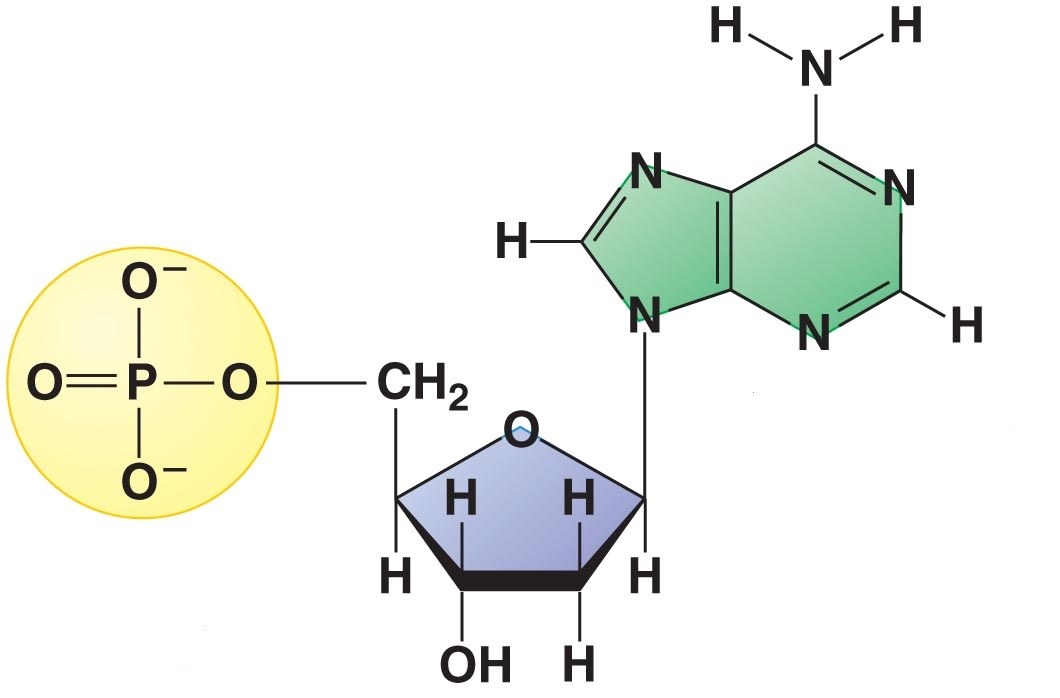
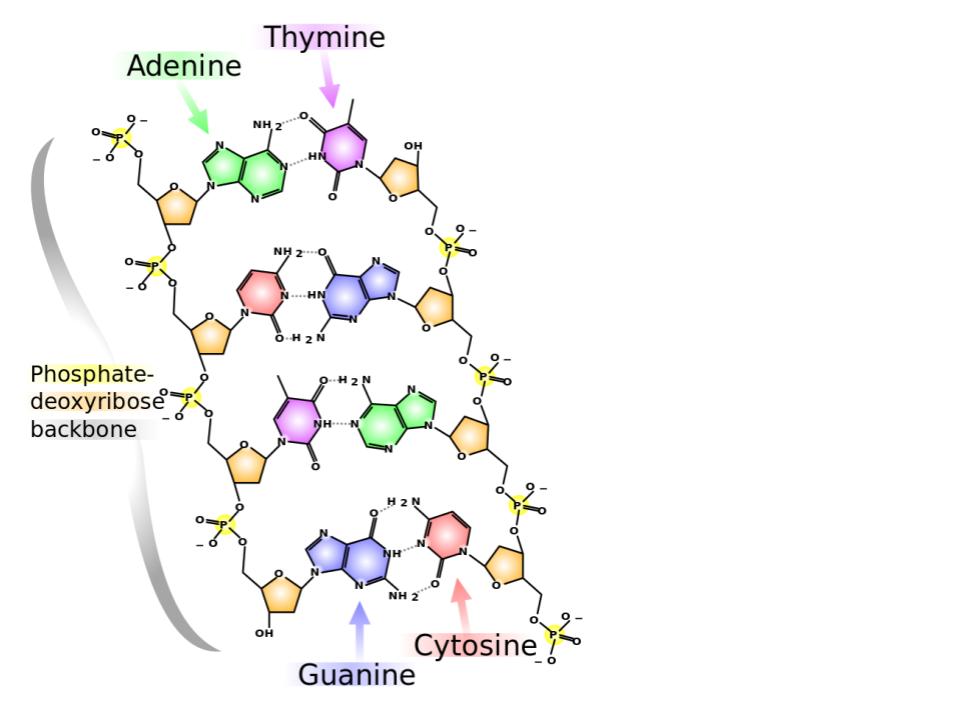
The drawing shows the structure of what molecule?
a)
A DNA molecule
b)
A lipid molecule
c)
A carbohydrate molecule
d)
A protein molecule
11.
Which of the following best defines a gene?
a)
A diploid cell containing two sets of chromosomes
b)
A unit made up of chromosomes that control for a specific trait
c)
A segment of DNA that codes for a particular protein
d)
All the other answers are correct.
12.
What is the difference between DNA and RNA
a)
DNA has uracil and RNA has thymine
b)
DNA is involved in transcription and RNA is involved in translation
c)
DNA contains thymine and RNA contains uracil
d)
DNA is made of nucleotides and RNA is not
13.
What will be the resulting mRNA from this DNA sequence:
GAT-TAC-AGA-TTA-CAT?
a)
CTA-ATG-TCT-AAT-GTA
b)
GAU-UAG-UGA-UUA-GUT
c)
CUA-AUG-UCU-AAU-GUA
d)
CAT-ACA-TAC-ATA-TAG
14.
What type of bonds hold the nitrogen bases in the DNA rungs together?
a)
ionic bonds
b)
hydrogen bonds
c)
peptide bonds
d)
james bonds
15.

What will be the complementary DNA sequence resulting from the following:

GAT-TAC-AGA-TTA-CAT?

a)

CTA-ATG-TCT-AAT-GTA

b)

GAU-UAG-UGA-UUA-GUT

c)

CUA-AUG-UCU-AAU-GUA

d)

CAT-ACA-TAC-ATA-TAG

16.

In what process is mRNA synthesized?

a)

Transcription

b)

Translation

c)

DNA Replication

d)

Mitosis

17.

Where does TRANSCRIPTION occur?

a)

Nucleus

b)

Ribosome

c)

Cytoplasm

d)

Mitochondria

18.

Why must transcription occur where DNA can be found?

a)

because DNA can't leave

b)

because ribosomes are in the nucleus

c)

because DNA polymerase is found there

d)

because helicase unzips the DNA

19.

On which molecule can an anticodon be found?

a)

mRNA

b)

DNA

c)

tRNA

d)

rRNA

20.

What is the purpose for anti-codons?

a)

to ensure the correct amino acid is dropped off

b)

to match the strand of DNA

c)

to decode a sequence of 4 nucleotides into an amino acid

d)

to make me hate biology

21.

A polypeptide is a sequence of ____________________ held together by a ______________ bond.

a)

amino acids; peptide

b)

fatty acids; ionic

c)

proteins; hydrogen

d)

fatty acids; covalent

22.

Which two thing are found on a molecule of tRNA?

a)

amino acids; anticodons

b)

amino acids; codons

c)

ribose sugar; proteins

d)

deoxyribose sugar; codons

23.

How do you know when to begin translating a strand of mRNA?

a)

look for AUG

b)

start at the beginning

c)

look for ATG

24.

How do you know when to STOP translating a strand of mRNA?

a)

look for STOP on the decoder

b)

stop at the end of the strand

c)

translation never stops

25.

TRANSCRIBE this DNA sequence: TACGTTACT

a)

AUGCAAUGA

b)

ATGCAATGA

c)

AUGGATUGA

d)

TACGTTACT

26.

TRANSLATE this RNA sequence: AUGCAAUGA

a)

Met-Glu-Stop

b)

Met-His-Stop

c)

Thr-Glu-Stop

d)

Thr-Pro-Stop

27.
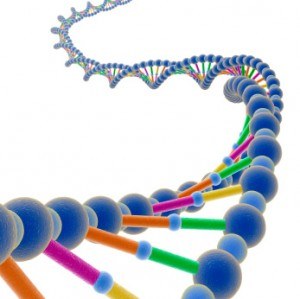
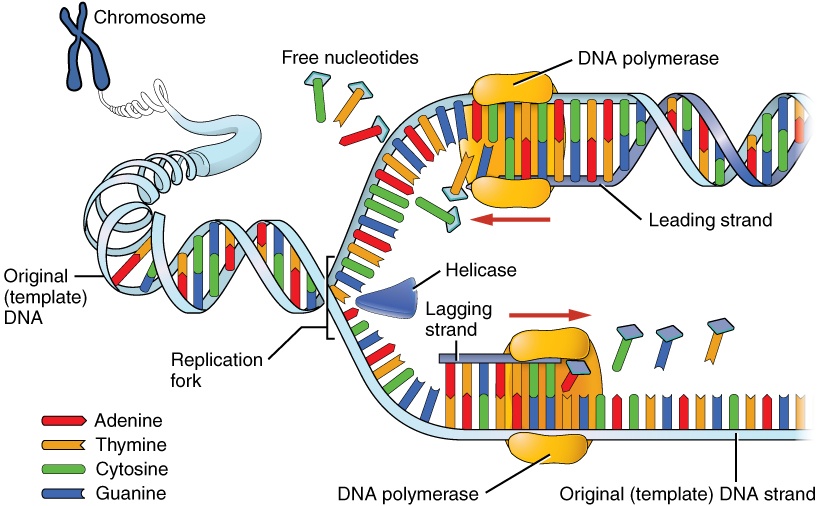
What process is going on in this photo? 
a)
Transcription 
b)
Translation 
c)
Replication 
d)
All the above 
28.

A DNA nucleotide may be made up of a phosphate group, along with

a)

deoxyribose sugar and uracil

b)

ribose sugar and cytosine

c)

deoxyribose sugar and thymine

d)

ribose sugar and adenine

29.

Which of the following units are repeatedly joined together to form a strand of DNA? (This is the MONOMER of DNA.)

a)

amino acids

b)

nucleotides

c)

fatty acids

d)

polysaccharides

30.

The important enzyme related with transcription is;

a)

gyrase

b)

DNA polymerase

c)

RNA polymerase

d)

ligase

31.

Which organelle is the location where protein is made?

a)

Ribosome

b)

Nucleus

c)

Cytoplasm

d)

Nucleotide

32.

Insertion, deletion, and substitution are all examples of a change in a genetic sequence which is also referred to as (a)

a)

Gene

b)

Amino Acid

c)

Ribose

d)

Mutation

33.

During transcription, this type of ribonucleic acid is responsible for copying the DNA and brining it out of the nucleus.

a)

tRNA

b)

mRNA

c)

rRNA

d)

dRNA

34.

When these bond together, they form a protein

a)

Amino Acids

b)

Peptide Bonds

c)

Ribose

d)

Nucleotides

35.

These building blocks consist of a sugar, phosphate, and nitrogen base.

a)

Ribose

b)

Nucleotide

c)

Gene

d)

Protein

36.

During translation, this type of ribonucleic acid is responsible for delivering amino acids to help make a protein.

a)

mRNA

b)

rRNA

c)

tRNA

d)

dRNA

37.

mRNA occurs during this process

a)

Translation

b)

Transcription

c)

Replication

d)

Delivery

38.

Which of the following is the complementary mRNA sequence to this DNA strand: AACTGAA

a)

UUGACUU

b)

TTGACTT

c)

AACTGAA

d)

AACUGAA

39.

Which of the following is the tRNA that will be used to decode to this DNA strand: AACTGA

a)

AAC and TGA

b)

TTG and ACT

c)

UUG and ACU

d)

AAC and UGA

40.
Who is credited for discovering the shape of DNA?
a)
James Lebron and Francis Oneill
b)
James Watson and Francis Crick
c)
Henry Ford
d)
Rosalind Franklin
41.
What 3 things make up a nucleotide?
a)
Sugar, Phosphate, Nitrogen Base
b)
Sugar, Hydrogen, Carbon
c)
Carbon, Phosphate, Nitrogen
d)
mRNA, tRNA and rRNA
42.
What makes DNA different from RNA?
a)
they type of phosphate
b)
the type of sugar
c)
having C pair with G
d)
Having A's
43.
What amino acid is coded for by the mRNA UCU?
a)
Serine
b)
Arginine
c)
Glycine
44.
What amino acid would be coded for by the DNA AAA?
a)
Lysine
b)
Phenylalanine
c)
Leucine
45.
A 3 nucleotide sequence of mRNA
a)
codon
b)
anticodon
46.
a 3 nucleotide sequence of tRNA
a)
codon
b)
anticodon
47.
What is TRANSCRIPTION?
a)
DNA  → mRNA
b)
mRNA → protein
c)
DNA → amino acids
d)
amino acid → sugar
48.
What is DNA REPLICATION?
a)
DNA  → DNA
b)
DNA  → mRNA
c)
mRNA → DNA
d)
mRNA → protein
49.
What would be the tRNA anticodon for the mRNA codon CAG?
a)
GTC
b)
GUC
c)
CUG
d)
CAG
50.
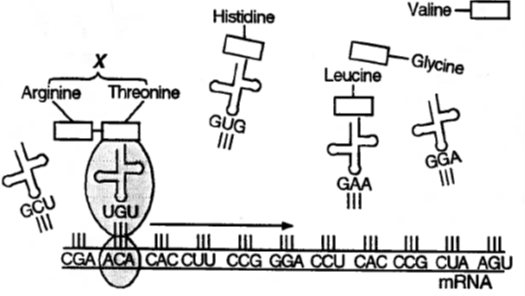
Which phase of which process does this picture show?
a)
Transcription
b)
Translation
c)
Replication
51.

What would be the tRNA anticodon for the mRNA codon GUA CGG ACC?

a)

GUA CGG ACC

b)

CAT GCC TGG

c)

CAU GCC UGG

d)

GTA CGG ACC

52.

What would be the tRNA anticodon for the DNA GTA CGG ACC?

a)

GTA CGG ACC

b)

CAT GCC TGG

c)

CAU GCC UGG

d)

GUA CGG ACC

53.
Which of the following best describes a DNA molecule?
a)
double helix
b)
contains ribose
c)
made of amino acids
d)
contains Uracil
54.
Nitrogenous bases are joined by which type of bond?
a)
polar bonds
b)
ionic bonds
c)
covalent bonds
d)
hydrogen bonds
55.
What does DNA stand for?
a)
Deoxyribonucleic acid
b)
Denitrogenous acid
c)
Deribonucleic acid
d)
Diribonucleic acid
56.
Cytosine always pairs with
a)
Adenine
b)
Thymine
c)
Uracil
d)
Guanine
57.
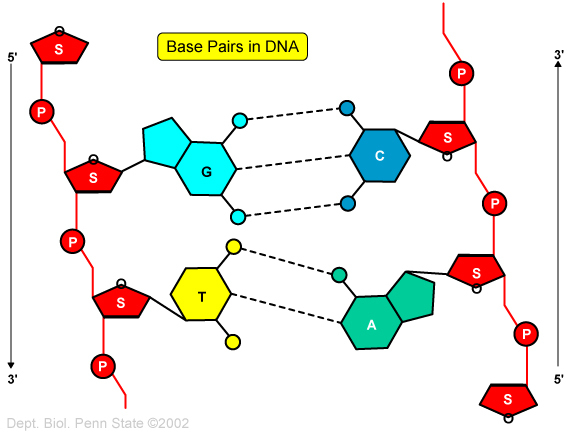
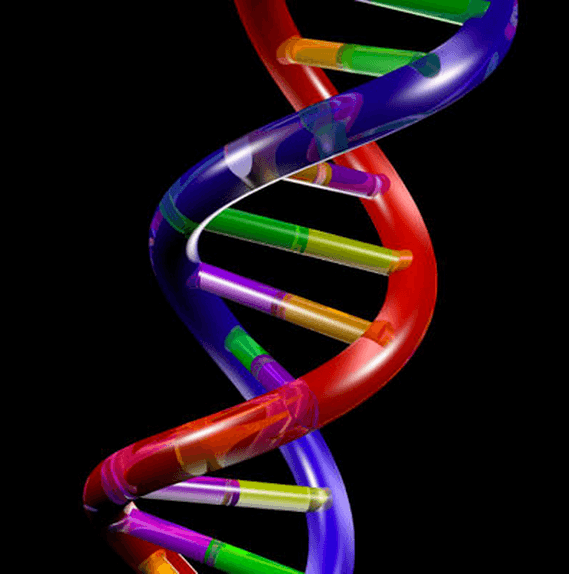
Name this structure
a)
double helix
b)
nucelotide
c)
twisted ladder
d)
hydrogen bond
58.
Which organelle is DNA usually found in?
a)
cell membrane
b)
vacuole
c)
ribosome
d)
nucleus
59.
Guanine bonds with ______________.
a)
Adenine
b)
Guanine
c)
Cytosine
d)
Thymine
60.
The two strands of DNA are held together by:
a)
Hydrogen Bonds
b)
Phosphodiester Bonds
c)
Glycolsyl Bonds
d)
Glycosidic Linkages
61.
What is the complement to the DNA strand below:
5'-ATGCCAT-3'
a)
5'-TACGGTA-3'
b)
3'-TACGGTA-5'
c)
3'-ATGGCAT-5'
d)
5'-ATGGCAT-3'
62.
The enzyme that unzips the DNA to prepare for replication
a)
helicase
b)
replicase
c)
polymerase
d)
synthase
63.
A process in which DNA has the unique ability to make an exact copy of itself.
a)
Replication
b)
Translation
c)
Transcription
64.
Which of the following units are repeatedly joined together to form a strand of DNA?
a)
amino acids
b)
nucleotides
c)
fatty acids
d)
polysaccharides
65.
If a strand reads:
3' A A A T T T C 5'
The matching strand would read...
a)
5' T T T A A A G 3'
b)
3' T T T A A A G 5'
c)
5' A A A T T T C 3'
d)
3' U U U A A A G 5'
66.
If the percentage of DNA is made of 30% Thymine, what is the correct percentage of Guanine?
a)
30
b)
15
c)
20
d)
60
67.
These are the "smaller", single ringed bases such as thymine and cytosine
a)
complementary
b)
 cytosine
c)
purine
d)
pyrimidine
68.
These are the "larger", double-ringed bases such as adenine and guanine.
a)
complementary
b)
 cytosine
c)
purine
d)
pyrimidine
69.
In Chargaff's Rule, adenine pairs with ________, and cytosine pairs with _________.
a)
thymine, guanine
b)
guanine, thymine
c)
uracil, guanine
d)
thymine, uracil
70.
What is the sugar in the DNA molecule?
a)
deoxyribose
b)
ribose
c)
glucose
d)
fructose
71.
A monomer of DNA is called a(n)
a)
Monosaccharide
b)
Amino Acid
c)
Triglyceride
d)
Nucleotide
72.

A monomer of protein is called a(n)

a)

Monosaccharide

b)

Amino Acid

c)

Triglyceride

d)

Nucleotide

73.
What are the 4 nitrogenous bases in DNA?
a)
adenine, thymine, cytoplasm, and guanine
b)
adenine, thymine cytosine, and guanine
c)
adenine, thymine, cytosine, and gylcerol
d)
adenine, thymine, cytosine, and glucose
74.
Which sequence of DNA bases would pair with this partial strand
ATG TGA CAG
a)
ATG TGA CAG
b)
TAC ACT GTC
c)
GTA AGT GAC
d)
CAT TCA CTG
75.
What determines the code, or information, of a DNA molecule?
a)
the shape (structure) of the nitrogen bases
b)
the order (sequence) of the nitrogen bases
c)
the color of the nitrogen bases
d)
the frequency (number) of nitrogen bases
76.
In what phase of the cell cycle does DNA replication take place?
a)
G1
b)
S
c)
G2
d)
M
77.
X-Ray diffraction pictures of DNA that suggested a helical shape were taken by:
a)
Watson & Crick
b)
Meselson & Stahl
c)
Beadle & Tatum
d)
Gosling & Franklin
78.
Who's work concluded that the %A=%T  and %G=%C
a)
Chargaff
b)
Meischer
c)
Levene
d)
Hammerling
79.
RNA is read in sections called:
a)
Triplets
b)
Genes
c)
Codons
d)
Genes
80.
Transcription is a process that in eukaryotic cells takes place in the:
a)
Nucleus
b)
Cytoplasm
c)
Golgi Apparatus
d)
Rough E.R.
81.
What is the RNA synthesized from a section of DNA with the code: GATTACA ?
a)
CUAAUGU
b)
GATTACA
c)
GAUUCA
d)
CTAATGA
82.
The enzyme that produces RNA in Transcription is called
a)
RNA Polymerase
b)
DNA Polymerase
c)
Transcriptase
d)
RNA Intrase
83.
Splicing is accomplished by:
a)
Spliceosomes
b)
DNA Ligase
c)
RNA Polymerase I
d)
SSBPs
84.
What is not done after Transcription?
a)
Chunking of mRNA into codons
b)
Intron Splicing
c)
5' Cap addition
d)
Poly A-tail added
85.
Translation is a process in eurkaryotic cells takes place in the:
a)
Cytoplasm
b)
Nucleus
c)
Nucleolus
d)
Golgi Bodies
86.
tRNA molecules match the mRNA codons with a(n):
a)
Codon
b)
Anti-Codon
c)
Intron
d)
Methylated Cap
87.
Translation begins with a(n):
a)
Start Codon
b)
Intron
c)
Promoter
d)
Origin
88.

The codon UAC would have an anti-codon match:

a)

AUG

b)

TAC

c)

UAG-3'

d)

CAU

89.
When the Ribosome reaches ________________ the process of translation stops
a)
Stop Codon
b)
Okazaki Fragment
c)
Terminator
d)
taq Polymerase
90.
Translation is a process that produces
a)
mRNA
b)
Protein
c)
Polypeptide Chains
d)
tRNA
91.
The process of copying a gene's DNA sequence into a sequence of RNA is called:
a)
Transcription
b)
Translation
c)
Splicing
d)
Protein Synthesis
92.

An mRNA codon with the sequence 5'-GAC-3' would be matched by a tRNA anti-codon with the sequence:

a)

GAC

b)

CUG

c)

GUC

d)

CTG

93.

The process of replication using one parent strand and one new strand of DNA

a)

Okasaki Fragment

b)

Semiconservative replication

c)

DNA polymerase

d)

Copy copy

94.

A permanent change in an organisms DNA

a)

Operon

b)

Intron

c)

Mutation

d)

Mutagen

95.

Synthesis of mRNA from DNA

a)

Transcription

b)

Translation

c)

Mutation

d)

Introns

96.

Single strand of nucleic acid made from DNA

a)

RNA

b)

DNA

c)

Nucleotide

d)

Intron

97.

The type of RNA that associates with ribosomes

a)

MRNA

b)

RRNA

c)

QRNA

d)

TRNA

98.

The building blocks of proteins

a)

nucleotides

b)

adenines

c)

amino acids

d)

sugars

99.

Sequences of mRNA that DO code for a protein are called

a)

introns

b)

exons

c)

none of the above

100.

The coding sequences that remain in the final mRNA sequences are called ___________________.

a)

Introns

b)

Exons

c)

Ozaki Fragments

d)

tRNA

101.

The three base code in DNA or mRNA is called a ____________.

a)

Sequential Fit

b)

Intron

c)

Exon

d)

Codon

102.

Sequences of DNA that are not present in the final DNA sequence are called.

a)

Exons

b)

Mutations

c)

Introns

d)

Ozaki Fragments