Worksheets
Fall 21 - ACP Review
Total questions: 107
Worksheet time: 2hrs 47mins
Which of these is NOT a unique structure to plant cells?
cell wall
central vacuole
chloroplas
nucleus
Where do new cells come from?
other cells
nucleus
Golgi body
macrophages




Which of the following organelles is responsible for cellular respiration?
Mitochondria
Nucleus
Endoplasmic Reticulum
Ribosome
repair and build body tissue; required for the structure, function, and regulation of the body's tissues and organs
lipid
protein
nucleic acid
carbohydrate
functions include storing energy, signaling/chemical messengers, hormone regulation
carbohydrate
protein
nucleic acid
lipid
involved in hormone production; enzymes
nucleic acid
carbohydrate
lipid
protein
provides immediate energy source
carbohydrate
lipid
nucleic acid
protein
store and transfer genetic information
nucleic acid
carbohydrate
lipid
protein
DNA
protein
nucleic acid
carbohydrate
lipid
fats
lipid
carbohydrate
nucleic acid
protein
sugar
lipids
carbohydrate
nucleic acid
protein
chromosomes are made of
protein
carbohydrate
lipid
nucleic acid
amino acids
monomer of nucleic acid
monomer of protein
monomer of carbohydrate
monomer of lipids
work together to express a trait
lipid
carbohydrate
protein
nucleic acid
made in ribosomes
protein
lipid
nucleic acids
carbohydrate
made in smooth endoplasmic reticulum
lipid
protein
nucleic acid
carbohydrate
ABC-DEF
mutated chromosome
AC-DEF
This is a _____________ mutation.
ABC-DEF
mutated chromosome
ABBC-DEF
ABC-DEF
mutated chromosome
AED-CBF
The mutated DNA segment is TTACGCAAC. This is an example of ___ mutation.

Which is the mRNA molecule that would be created from this DNA template:
TGGCAAGTACGT
ACCGTTCATGCA
UGGCAAGUACGU
UCCGUUCUUGCU
ACCGUUCAUGCA

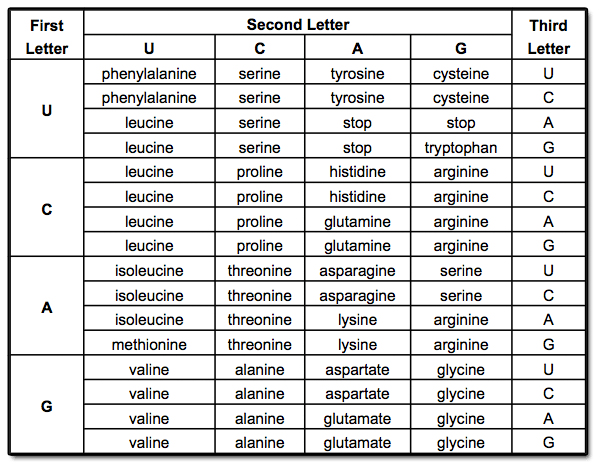
What is the correct amino acid sequence for the mRNA code AUGCCAGUAUGA
Met-Pro-Ala-Val
Met-Pro-Val
Tyr-Gly-His
Tyr-Gly-Arg-His
The correct sequence of mitosis:
metaphase, anaphase, telophase, prophase
prophase, metaphase, anaphase, telophase
prophase, anaphase, metaphase, telophase
telophase, metaphase, prophase, anaphase
During which cycle can you identify chromosomes
G1 phase
G2 phase
S phase
M phase
Identical halves of a chromosome are called?
Cousins
Chromatids
Centromere
Centrosome
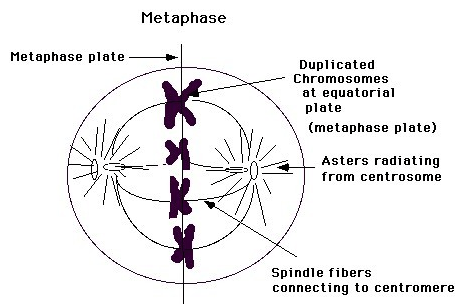
Chromosomes are visible and spindle fibers start to appear
prophase
metaphase
telophase
anaphase
Sister Chromatids separate from each other
prophase
telophase
anaphase
metaphase
Having only one copy of each chromsome
haploid
diploid
triploid
octoploid
There are 2 nucli in one cell
telophase
prophase
anaphase
metaphase
The division of chromosomes is called?
anaphase
mitosis
cytokineses
G0
The division of the cytoplasm is called?
anaphase
mitosis
cytokineses
G0
What type of cell will form a cell plate during mitosis?
Haploid cells
Plant Cells
Animal Cells
Diploid Cells
Non dividing state of the cell cycle
Interphase
Mitosis
Telophase
Cytokinesis
Uncontrolled growth can result in:
G0 phase
S phase
Replication
Cancer
Responsible for making sure that the cell is ready to divide
G1 checkpoint
G2 checkpoint
M checkpoint
G0 checkpoint
Movement of a solvent (usually water) from a low solute concentration to a high solute concentration in order to equalize the concentration of the two solutions. No energy required.
diffusion
osmosis
active transport
facilitated diffusion
Movement of both solvent and solute particles from high concentration to low concentration in order to equalize the concentration of the solution. No energy required.
diffusion
osmosis
facilitated diffusion
active transport
Movement of specific molecules down a concentration gradient (from high concentration to low concentration) passing through the membrane via a specific carrier protein. No energy required.
osmosis
diffusion
facilitated diffusion
active transport
Movement of a substance across a cell membrane against its concentration gradient from lower concentration to higher concentration. Energy required.
osmosis
diffusion
facilitated diffusion
active transport
Movement of very large molecules (into the cell) across the cell membrane through the fusion of vesicles. Energy required.
diffusion
endocytosis
exocytosis
osmosis
Movement of very large molecules (out of the cell) across the cell membrane through the fusion of vesicles. Energy required.
diffusion
endocytosis
exocytosis
osmosis
Substance dissolved in another substance.
solute
solvent
isotonic
hypotonic
The substance that dissolves another substance.
solute
solvent
hypotonic
hypertonic
Concentration (amount) of solutes OUTSIDE of the cell membrane is GREATER than inside cell; this promotes a greater flow of water outside the cell thus leading to cell shrinking.
solvent solution
isotonic solution
hypertonic solution
hypotonic solution
Concentration (amount) of solutes OUTSIDE of the cell membrane is LESS than inside the cell; this promotes a greater flow of water inside the cell thus leading to cell bursting.
solvent solution
isotonic solution
hypertonic solution
hypotonic solution
One difference between prokaryotes and eukaryotes is that prokaryotes do NOT have
DNA
A cell membrane
Cytoplasm
A nucleus
The genetic material that provides instructions for making proteins is
DNA
Cytosol
Cytoplasm
A ribosome

Refer to the diagram above. The cell shown is probably an animal cell because it
Has mitochondria
Does not have a cell wall
Has a cell membrane
Does not have a nucleus
Which cells have a cell membrane, cytoplasm, ribosomes, and DNA?
Only animal cells
Only prokaryotic cells
Only eukaryotic cells
All cells
A cell that requires a lot of energy might contain large numbers of
Chromosomes
Vacuoles
Mitochondria
Lysosomes
All the following are found in both plant and animal cells, except
A cell wall
A cell membrane
Mitochondria
Endoplasmic reticulum
Why do heart cells, nerve cells, and liver cells look different under a microscope?
Different types of microscopes have different levels of magnification.
Shape determines function; each cell listed performs a specific task and is shaped for that task.
Mutations in the cell cause it to take on different shapes and features.
The cells listed above do not look different under a microscope.
Autotrophs are organisms that can create their own “food” through the process of photosynthesis. Which organelle in plant cells does photosynthesis take place?
Cytoplasm
Chromatin
Chloroplast
Chromosome
ATG TGA CAG