wayground logo

Free Printable Worksheets

Font size

S
M
L
XL
Worksheets

3-Week Review (5th 6-weeks) - NatSel/DichKey/DiCross

Total questions: 102

Worksheet time: 2hrs 23mins
Name
Class
Date
1.

Gradualism means Natural Selection would normally happen over many generations and very

a)

slowly

b)

quickly

c)

in space

d)

beyond time

2.

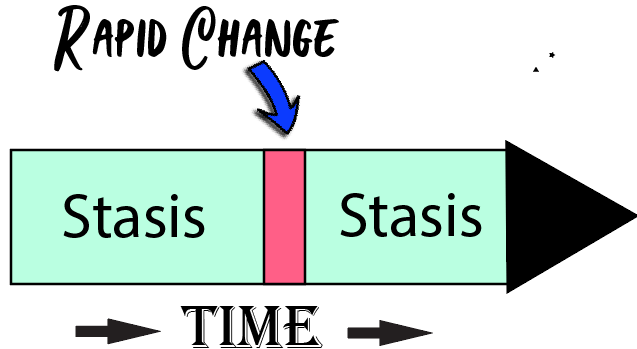
Punctuated Equilibrium implies catastrophic events caused natural selection to speed up due to great environmental changes.

a)

True

b)

False

3.

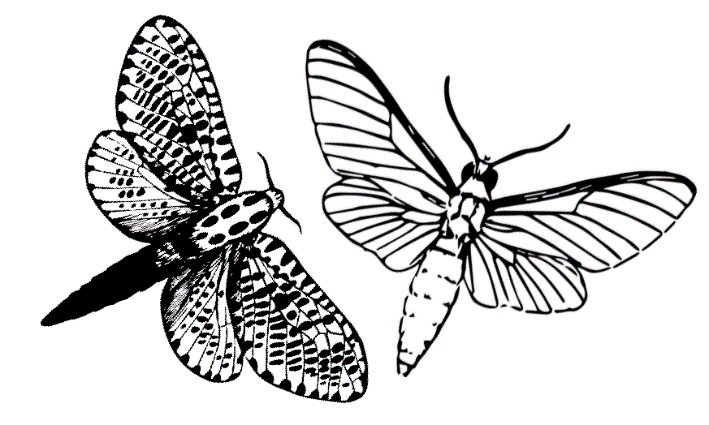
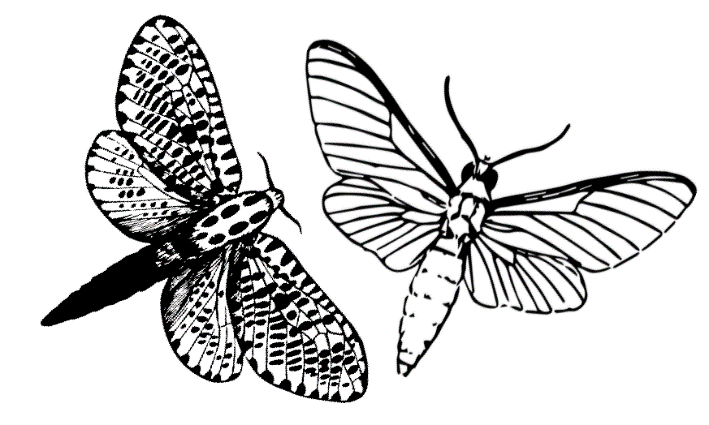
According to natural selection, light colored tree trunks would favor

a)

light colored moths

b)

dark colored moths

c)

red colored moths

d)

red and light colored moths

4.

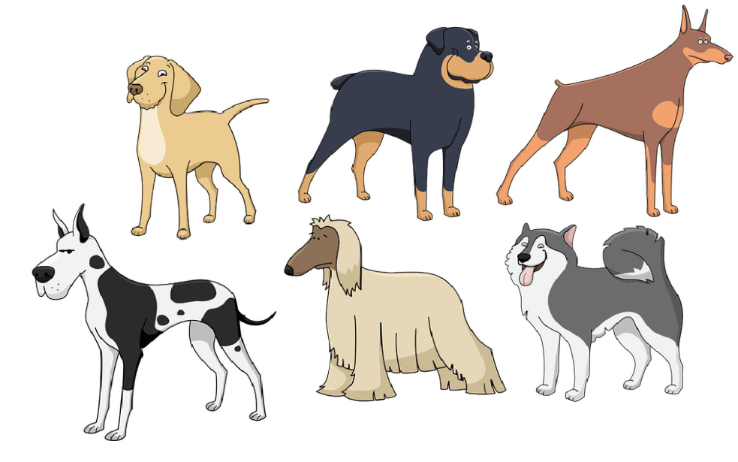
Genetic diversity in a species makes long term survival of some members

a)

impossible

b)

improvable

c)

more likely

d)

less likely

5.

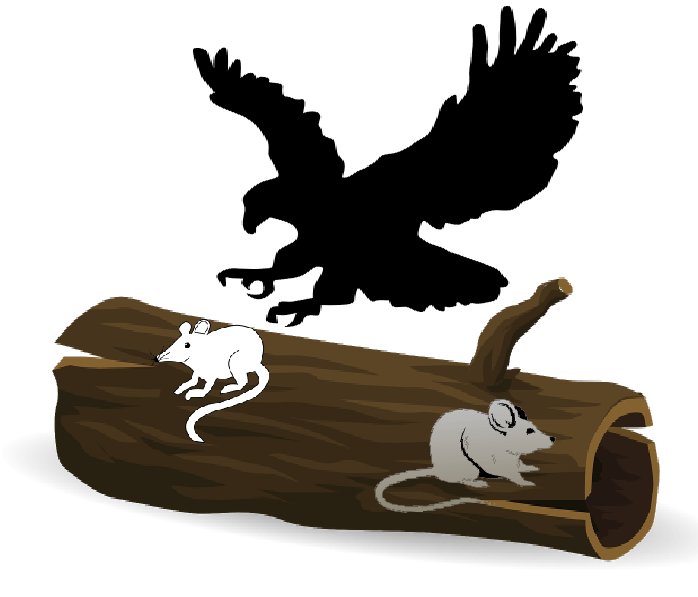
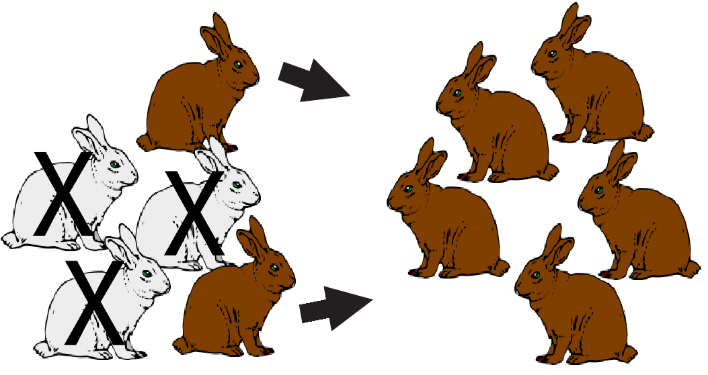
Over the years, white mice became extinct and darker mice survived. This is

a)

stabilizing selection

b)

directional selection

c)

disruptive selection

d)

due to exercise

6.

A physical trait favored by an environmental change can be called an

a)

adaptation

b)

extinction

c)

possibility

d)

mutation

7.

Natural Selection is driven by a change in the environment and survival of the

a)

Earth

b)

Fastest

c)

Fittest

d)

Biggest

8.

Average phenotypes are favored in the environment, while extremes have lower survival rates.

a)

seasonal selection

b)

distruptive selection

c)

directional selection

d)

stabilizing selection

9.

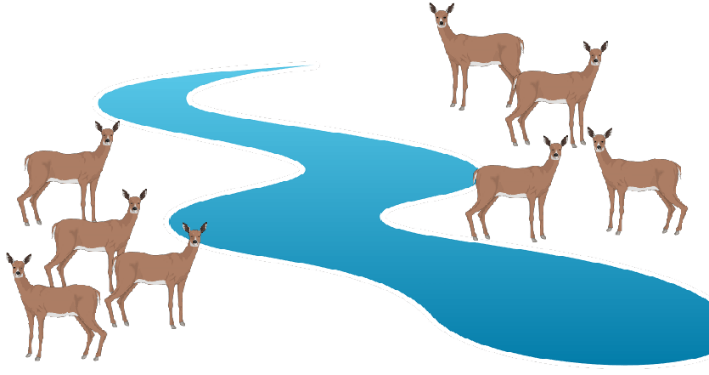
Two populations of the same species are separated by land barriers like rivers or mountains.

a)

geographical isolation

b)

temporal isolation

c)

adaptive ratiation

d)

behavioral isolaton

10.

Two populations of the same species do not have the same mating rituals or signals.

a)

geographical isolation

b)

temporal isolation

c)

adaptive ratiation

d)

behavioral isolaton

11.

All the possible gene combinations in a population.

a)

allele

b)

gene pool

c)

genome

d)

mitosis

12.

The frequency that single genes (alleles) for a trait appear in a population.

a)

Genome

b)

Gene frequency

c)

Genetic Drift

d)

Population Frequency

13.

Changes in the gene pool over time.

a)

Mitosis

b)

Genetic Variation

c)

Gene Pool

d)

Genetic Drift

14.

Isolated small populations speed up genetic drift.

a)

Gene Pool

b)

Mitosis

c)

Speciation

d)

Founders Effect

15.

Organisms of the same species can no longer interbreed therefore creating two species.

a)

Gene Pool

b)

Genetic Drift

c)

Gene Frequency

d)

Speciation

16.

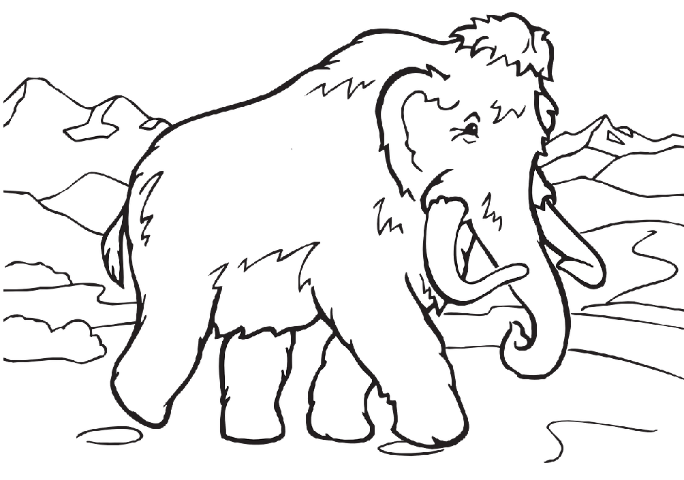
Severe population reduction reduces the gene pool

and increases the rate of genetic drift. Woolly mammoths became extinct. Elephants survived.

a)

Gene Pool

b)

Bottleneck Effect

c)

Founders Effect

d)

Gene Frequency

17.
Survival of the Fittest and Evolution were proposed by what scientist?
a)
Charles Darwin
b)
Albert Einstein
c)
Steven Hawking
d)
Isaac Newton
18.
Behavioral changes of individuals of a species that allow for better survival. (Acquired traits)
a)
Variation
b)
Adaptation
c)
Behavior
d)
Environment
19.
When every organism of a species has died.
a)
Evolution
b)
Natural Selection
c)
Extinction
d)
Artificial Selection
20.
Where the better adapted organisms survive to pass traits along to offspring.
a)
Evolution
b)
Natural Selection
c)
Extinction
d)
Artifical Selection
21.
What are the most studied animals in the galapagos?
a)
Finches
b)
Tortoises
c)
Turtles
d)
Lizards
22.
Why are advantageous traits more likely to be passed onto offspring?
a)
Because they are more likely to survive and reproduce.
b)
Because they come from dominant alleles.
c)
Because they come from recessive alleles.
d)
Because the trait is an acquired phenotype.
23.
Mutations are a change in what?
a)
DNA
b)
tRNA
c)
genotype
d)
phenotype
24.
An inherited trait that increases an organism's chance of surviving and reproducing.
a)
variation
b)
adaptation
c)
vestigial structure
d)
mutation
25.
Body parts of organisms that are the same in structure and position but different in function.
a)
embryos
b)
homologous structures
c)
analogous structures
d)
vestigial structures
26.
Body parts that function like each other, but are different in structure.
a)
embryos
b)
homologous structures
c)
analogous structures
d)
vestigial structures
27.
Body parts that have lost their original function.
a)
embryos
b)
homologous structures
c)
analogous structures
d)
vestigial structures
28.
Organisms with these structures are believed to be closely related.
a)
analogous structures
b)
homologous structures 
c)
mutated DNA
d)
gills
29.
Organisms with these structures are NOT believed to be closely related.
a)
analogous structures
b)
homologous structures
c)
vestigial strucutres
d)
gills
30.
Organisms with these are believed to be related to an organism who once used the body part.
a)
analogous structures
b)
homologous structures
c)
vestigial structures 
d)
gills
31.
When an organism of a species has an adaptation, it will compete for resources better, survive longer and pass that adaptation on to it's offspring. This process is called
a)
evolution by natural selection
b)
artificial selection
c)
inbreeding
d)
outbreeding
32.
What is the purpose of a dichotomous key?
a)
to find a common ancestor
b)
to show the evolution of organisms
c)
to show relationships between organisms
d)
to identify organisms
33.
From the table, which two animals are MOST CLOSELY related
a)
House Cate and Red Fox
b)
Red Fox and Dog
c)
Dog and Wolf
d)
Wolf and Gopher
34.
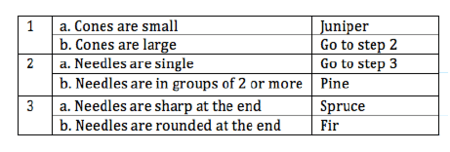
A dichotomous key for trees is provided. Hikers found a tree that has large brown cones and single sharp needles. What species of tree have the hikers found?
a)
Juniper
b)
Pine
c)
Spruce
d)
Fir
35.
What step do we always start with when using dichotomous keys?
a)
1
b)
2
c)
3
d)
4
36.
When using a dichotomous key to identify organisms, what do we look at?
a)
physical features
b)
weather patterns
c)
environment
d)
diet
37.
Using this dichotomous key, identity the name of the circled fish.
a)
band-tail puffer
b)
spotted goat fish
c)
peacock flounder
d)
trumpet fish
38.
The scientific name for an organism is made from the:
a)
class and family name
b)
genus and species name
c)
domain and kingdom name
d)
kingdom and phylum name
39.
Tool used by a taxonomist to identify an unknown organism is a:
a)
dichotomous key
b)
binomial nmenclature
c)
scientific name
d)
binomial key
40.
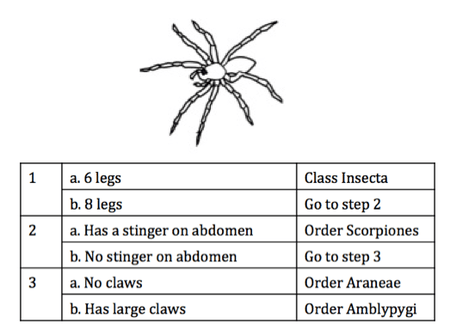
An illustration and a dichotomous key are given. What is the correct classification for this organism?
a)
Class Insecta
b)
Order Amblygygi
c)
Order Araneae
d)
Order Scorpiones
41.
A table of arachnid and insect characteristics is shown. Which characteristic could be used to distinguish between
arachnids and insects?
a)
Jointed legs
b)
Body segments
c)
Presence of eyes
d)
Presence of antennae
42.
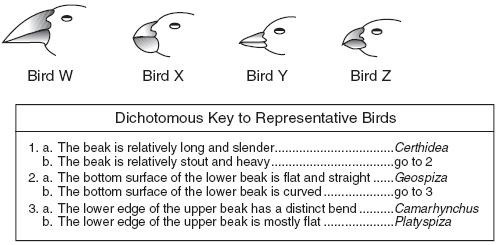
What is the name of bird W?
a)
Certhidea
b)
Geospiza
c)
Camarhynchus
d)
Platyspiza
43.
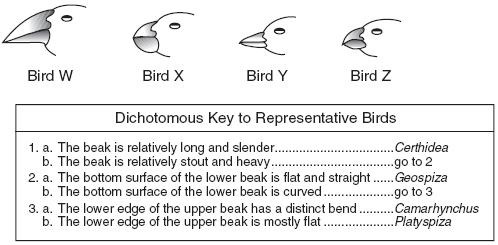
What is the name of bird Z?
a)
Certhidea
b)
Geospiza
c)
Camarhynchus
d)
Platyspiza
44.
What is a dichotomous key used for in science?
a)
To organize biomes
b)
Classify organisms
c)
Identify bacteria only
d)
None of these
45.
A student discovers an arachnid with a segmented abdomen, long legs, and a tail with no stinger. The student uses the dichotomous key below to identify it. Which arachnid has the student found?
a)
Whip Scorpion
b)
Wind Scorpion
c)
Daddy long legs
d)
Scorpion
46.
Using this dichotomous key, identify the name of the circled Fish, J.
a)
peacock flounder
b)
band-tail puffer
c)
trumpet fish
d)
spotted goat fish
47.
The first part of a scientific name is an organism's _______________ and the second part is its ________________.
a)
species, genus
b)
phylum, order
c)
class, spices
d)
genus, species
48.
What is the scientific name of housefly?
a)
Musca domestica
b)
Insect domestica
c)
Animalia domestica
d)
Diptera domestica
49.

A student discovers an arachnid with a segmented abdomen, long legs, and a tail with no stinger.

The student uses the dichotomous key below to identify it.

1. a) Abdomen segmented.............go to 2

b) Abdomen not segmented ......go to 4

2. a) Abdomen with tail....................go to 3

b) Abdomen without tail...............go to 5

3. a) Tail with stinger..........................Scorpion

b) Tail without stinger.....................Whip scorpion

4. a) Legs longer than body.............Daddy Long Legs

b) Legs not longer than body……….Wind scorpion

5. a) Covered with spines .......................Mite

b) Few spines.....................................Tick

a)

Whip Scorpion

b)

Daddy Long Legs

c)

Mite

d)

Tick

50.

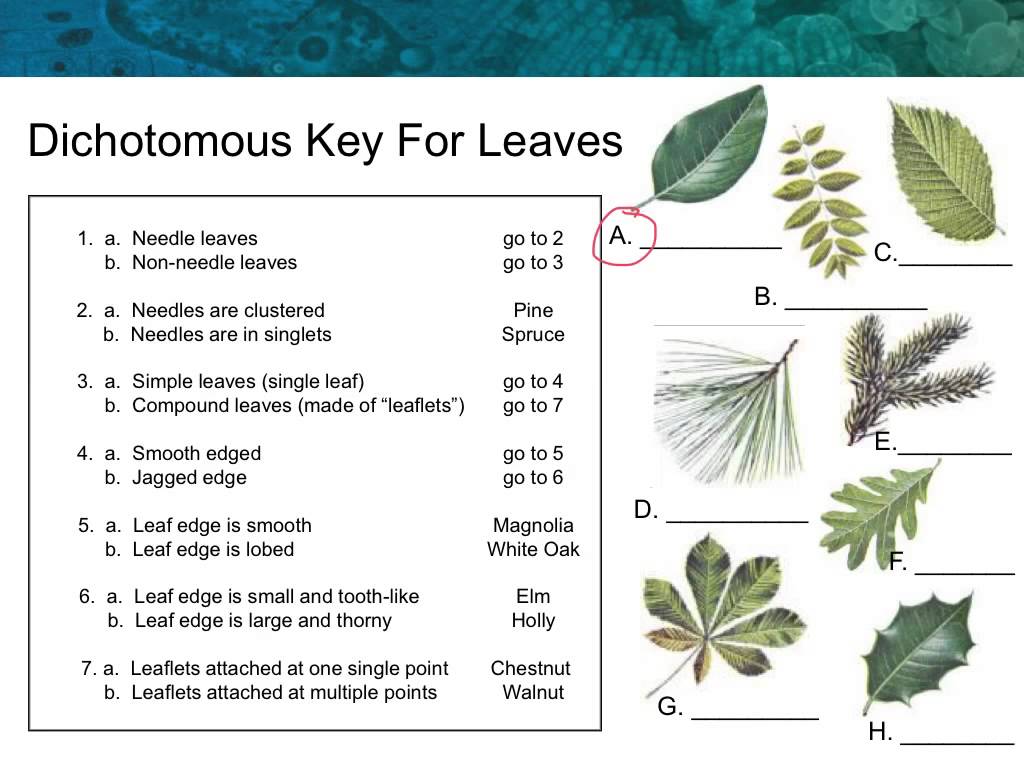
Which leaf is shown in the drawing?

a)

Magnolia

b)

Redbud

c)

Sweetgum

d)

None of the above

51.

Which of the paired statements could be used to tell the difference between the two insects using a dichotomous key?

a)

Has 6 legs

Has 8 legs

b)

Large hind legs

Small hind legs

c)

2 pairs of spots on wing cover

3 pairs of spots on wing cover

d)

Antennae absent

Antennae present

52.

Which shark is the picture of?

a)

Cow Shark

b)

Great White Shark

c)

Hammerhead Shark

d)

Saw Shark

53.

What species of tree is the fruit from?

a)

Fraxinus americana

b)

Franinux negundo

c)

Acer platanoides

d)

Acer negundo

54.

Use the dichotomous key to identify this white wildflower

a)

Starflower

b)

Chickweed

c)

Common Strawberry

d)

Bowman's root

55.

What is insect B?

a)

Bee

b)

Ladybug

c)

Firefly

d)

Dragonfly

56.

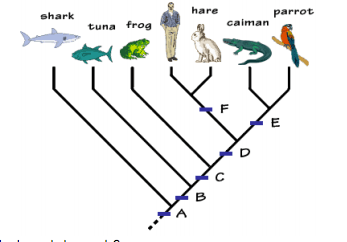
On the cladogram, which organism is the closest relative of the parrot?

a)

Frog

b)

Hare

c)

Caiman

d)

Parrot

57.

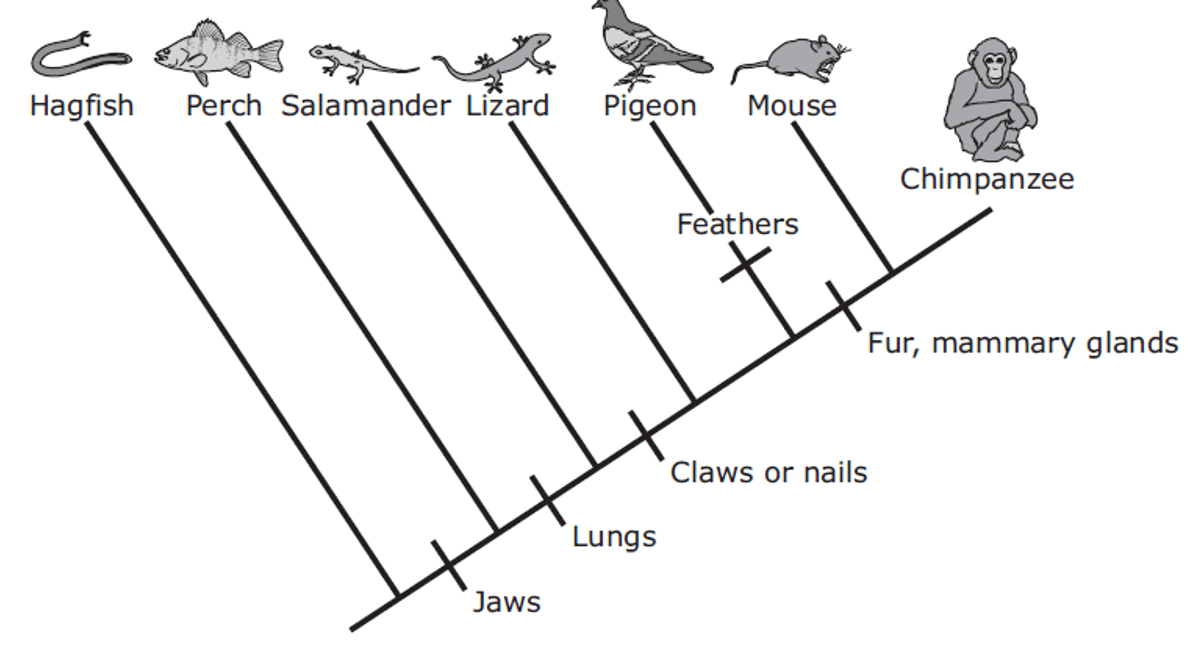
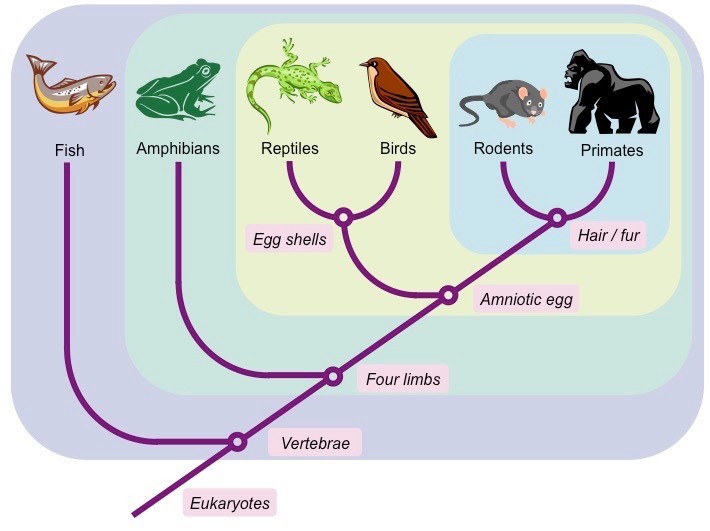
All the animals to the right of the salamander would have the common characteristic of...

a)

Fur

b)

Claws or nails

c)

Lungs

d)

Jaws

58.

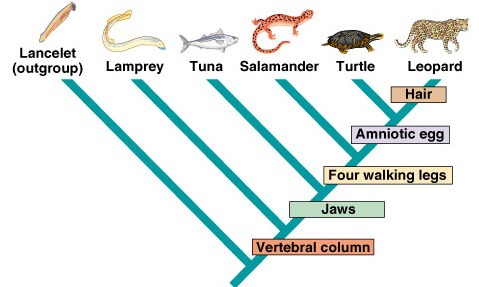
Which is the newest trait?

a)

Amniotic egg

b)

Walking legs

c)

Jaws

d)

Hair

59.

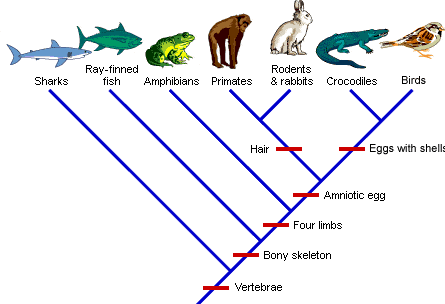
According to this cladogram, sharks are MOST closely related to which organism?

a)

Amphibians

b)

Ray finned fish

c)

Crocodiles

d)

Birds

60.

What characteristic do all the organisms on this cladogram share?

a)

Being bi-pedal & having language

b)

Complex brains

c)

Fully binocular vision

d)

Partial binocular vision & opposable thumbs

61.

Which trait do only humans have, according to the cladogram?

a)

jaws

b)

mammary glands & hair

c)

terrestrial during all life stages

d)

bipedal & opposable thumbs

62.

What is this a picture of?

a)

Pedigree

b)

Cladogram

c)

Family Tree

d)

Oak Tree

63.

What characteristic distinguishes amphibians from birds and reptiles?

a)

Amniotic egg

b)

Egg shells

c)

Vertebrae

d)

Hair/fur

64.
Kangaroos and opossums both incubate their immature in pouches. This means they -
a)
share a common ancestor
b)
possess vestigial organs
c)
have similar skeleltal structures
d)
belong to the same species
65.
According to the cladogram, which organism is most distantly related to the human?
a)
crayfish
b)
rat
c)
perch
d)
frog
66.
Individuals that are well adapted to their environment will survive and produce:
a)
Fewer mutations
b)
Stronger genes
c)
More offspring
d)
Better traits
67.
A dihybrid cross shows the possible outcomes of _______ 
a)
two alleles
b)
two parents
c)
two traits/characters
d)
a self pollination
68.
A red flower (Rr) is crossed with a white flower (rr). What is the genotypic ratio?
a)
0 RR; 0 Rr: 4 rr
b)
2 RR; 0 Rr: 2 rr
c)
4 RR; 0 Rr: 0 rr
d)
0 RR; 2 Rr: 2 rr
69.
T4 - Black fur in mice (B) is dominant to brown fur (b). Short tails (T) are dominant to long tails (t). What percentage of the offspring of the cross BbTt x BBtt will have black fur and long tails?
a)
0%
b)
25%
c)
50%
d)
100%
70.
What gamete possibilities could come from this parent's genotype?
a)
AB, AB, aB, aB
b)
Ab, AB, Ab, ab
c)
Ab, Ab, Ab, Ab
d)
AB, aB, ab, aB
71.
A male beetle has the genotype Ttbb. If this beetle mates with a female with genotype TTBb, what is the chance their offspring will have the genotype TtBb?
a)
12.5%
b)
25%
c)
50%
d)
75%
72.
What gamete possibilities could come from this parent's genotype?
a)
aB, ab, AB, Ab
b)
aB, Ab, AB, AB
c)
AB, aB, AB, Ab
d)
aB, ab, aB, ab
73.
What gamete possibilities could come from this parent's genotype?
a)
aB, ab, AB, Ab
b)
Ab, AB, Ab, AB
c)
AB, AB, Ab, AB
d)
Ab, AB, ab, aB
74.
What goes in box 1
a)
AABb
b)
AABB
c)
aabb
d)
AaBb
75.
What goes in box 3
a)
Aabb
b)
AABB
c)
AAbb
d)
aaBb
76.
Cross Two Homozygous plants
(
RRYY x rryy)
R = round seeds, r  = wrinkled seeds Y = yellow seeds, y = green seeds
What percent will have Round and Yellow seeds? 
a)
0%
b)
25%
c)
50%
d)
100%
77.
Long tongues (T) are dominant to short tongues in green tree frogs.  What is the probability that two frogs that are heterozygous for long tongues could produce offspring with short tongues?
a)
100%
b)
75%
c)
50%
d)
25%
78.
Donkey and the fire-breathing dragon have lots of babies.  If breathing fire is a recessive trait (f), what must be Donkey’s genotype if they have a baby that breathes fire?
a)
FF
b)
ff
c)
Ff
d)
F
79.

What is the correct phenotype ratio when crossing two heterozygous parents in a dihybrid cross?

a)

100% heterozygous

b)

1:2:1

c)

3:1

d)

9:3:3:1

80.
Based off this punnett square, what fraction of the offspring will have wrinkled, yellow seeds?
a)
9/16
b)
3/16
c)
1/16
d)
16/16
81.
Which of the following genotypes is heterozygous?
a)
Bb
b)
BB
c)
bb
d)
B
82.
Which of the following genotypes is homozygous dominant?
a)
A
b)
Aa
c)
AA
d)
aa
83.
R= red 
r= green
Which color is recessive?
a)
red
b)
green
c)
both
d)
brown
84.
Which trait is always expressed when present?
a)
recessive
b)
dominant
c)
phenotype
d)
allele
85.
Assume dad's gametes are on top, what is his genotype?
a)
AAPP
b)
AaPp
c)
aaPP
d)
Aapp
86.
Assume mom's gametes are on the left, what is her genotype?
a)
TTZz
b)
TtZz
c)
ttZZ
d)
TtZZ
87.
Using the dihybrid cross and key provided, what is the probability of the offspring being tall and white?
a)
9
b)
2
c)
3
d)
6
88.
Which of the following is the best example for a heterozygous genotype?
a)
AA
b)
Ab
c)
Bb
d)
bb
89.
Which of the following identifies the gametes?
a)
A
b)
B
c)
C
d)
D
90.
How many alleles do we get from each parent for each trait?
a)
one
b)
two
c)
three
d)
four
91.
How many letters would go above each box 1, 2, 3, and 4?
a)
1 letter (ie. A)
b)
2 different letter (i.e. AB)
92.
How many letters would go to the left of box 1, 5, 9, and 13
a)
1 letter (ie. A)
b)
2 different letter (i.e. AB)
93.
What goes in box 2
a)
AbAB
b)
aBAb
c)
abab
d)
ABaB
94.
What goes in box 4
a)
ABAb
b)
ABAB
c)
AbAb
d)
aBAB
95.
What goes in box 5
a)
ABAB
b)
ABab
c)
abAB
d)
AbAb
96.
What goes in box 6
a)
aBAB
b)
ABAB
c)
aBaB
d)
AbAb
97.
What goes in box 9
a)
aBAB
b)
ABAB
c)
aBaB
d)
abab
98.
What goes in box 13
a)
ABab
b)
abab
c)
ABAB
d)
AbAb
99.
What goes in box 15
a)
abab
b)
ABAB
c)
aBaB
d)
AbAb
100.
Which of the following genotypes is homozygous dominant?
a)
A
b)
Aa
c)
AA
d)
aa
101.

What is considered to be the phenotype?

a)

Double stranded chromosomes

b)

The physical trait that is expressed

c)

The combination of genes

d)

All of the genetic information

102.

What is another term for heterozygous?

a)

Hybrid

b)

Mixed

c)

Different

d)

Same