wayground logo

Free Printable Worksheets

Font size

S
M
L
XL
Worksheets

Unit 10 Review

Total questions: 108

Worksheet time: 1hrs 21mins

Name
Class
Date
1.
These cells activate killer T cells and other helper T cells as well as activate B cells
a)
Helper T Cells
b)
Cytotoxic T Cells
c)
Macrophages
d)
Suppressor Cells
2.
A white blood cell that makes antibodies
a)
T cell
b)
bacteria
c)
B cell
d)
mast cell
3.
These cells are responsible for identifying the "enemy" in an immune response.
a)
Killer-T Cells
b)
Antibodies
c)
Helper-T Cells
d)
B Cells
4.
Example of 3rd line of defense.
a)
T cells and B cells reacting to pathogens
b)
Phagocytes engulfing pathogens
c)
Hydrochloric acid killing pathogens
d)
Mucus and cilia catching pathogens
5.
These cells are responsible for making antibodies.
a)
Helper T Cells
b)
Killer T Cells
c)
B Cells
d)
Macrophages
6.
These cells remain in the blood stream after an immune response.
a)
Memory B and T Cells
b)
Killer T Cells and B Cells
c)
Helper T  and B Cells
d)
Suppressor Cells and Macrophages
7.
Killer T Cells-
a)
Kill the pathogen
b)
Kill your infected body cells
c)
Kill only viruses
d)
Kill only bacteria
8.
Proteins produced by B cells and designed to mark antigens to be destroyed, specific to the antigen.
a)
Antigens
b)
Active Immunity
c)
Antibodies
d)
Antibiotics
9.
The part of foreign materials that cause a response from the immune system are called _____________________.
a)
Antigens
b)
Active Immunity
c)
Antibodies
d)
Antibiotics
10.
Antigens are part of...
a)
Your own immune system.
b)
The pathogen.
11.
Antibodies are made by...
a)
Your own cells.
b)
The pathogen.
12.
What is the role of a Killer T cell?
a)
Kills specific pathogens
b)
Helps activate other immune cells
c)
Produces antibodies
d)
Binds to antigens
13.
What is the role of a helper T cell?
a)
Kills pathogens
b)
Helps activate killer T and B cells
c)
Produces antibodies
d)
Binds to antigens
14.
What is the role of a B cell?
a)
Kills pathogens
b)
Helps activate other immune cells
c)
Produces antibodies
d)
Binds to antigens
15.
What is the role of antibodies?
a)
Kills pathogens
b)
Helps activate other immune cells
c)
Produces antibodies
d)
Binds to antigens and neutralizes pathogen
16.
The body detects pathogens by their...
a)
Antigens
b)
Antibodies
c)
Histamines
d)
DNA
17.
The blue molecule in this image is a(n) _______
a)
Antibody
b)
Antigen
c)
Pathogen
d)
Blood cell
18.
The orange molecule in this image is a(n) _______
a)
Antibody
b)
Antigen
c)
Antibiotic
d)
Blood cell
19.
When a macrophage engulfs a pathogen and displays the antigens, what happens next?
a)
Helper T cells pick up information about the specific pathogen
b)
B cells produce antibodies
c)
Killer T cells destroy more pathogens
d)
Nothing
20.
What body system protects animals against invaders such as bacteria and viruses?
a)
Immune System
b)
Integumentary System
c)
Mammary System
d)
Respiratory System
21.
Which of the following is a non-specific response?
a)
Fever
b)
Red, itchy eyes that may be crusted shut
c)
Signs that is related to one antigen
22.
First recognizes foreign body and eats it and displays it to the other cells
a)
Macrophage
b)
T Cells
c)
B Cells
23.
What do memory cells do?
a)
Kills the virus
b)
Eats the virus
c)
Patrol the area and make the immune system work faster next time.
d)
Makes antibodies
24.
Which of the following is an example of active immunity?
a)
You get a vaccination
b)
You create antibodies
c)
You get infected
d)
All of these are correct
25.
What is the first barrier against disease?
a)
White blood cells
b)
Red blood cells
c)
the skin
d)
leucocytes 
26.
If you are feeling ill and the doctor prescribes you some antibiotics to help you feel better, you are infected with a _______
a)
Virus
b)
Bacteria
27.
The chicken pox is spread via contact from person to person. In order to prevent getting the chicken pox, you can get a vaccination. Is chicken pox caused by a virus or a bacterium?
a)
Bacterium
b)
Virus
28.
The common cold can be spread many different ways. One such way is through coughing and sneezing. Is the common cold caused by bacteria or by viruses?
a)
Bacteria
b)
Virus
29.
How do human diseases caused by bacteria and diseases caused by viruses react to antibiotics? 
a)
Neither responds to antibiotics.
b)
Both respond to antibiotics.
c)
 Viral diseases respond to antibiotics; bacterial diseases do not.
d)
Bacterial diseases respond to antibiotics; viral diseases do not.
30.
The 3 functions of the MALE reproductive system:
a)
produce sex hormones, produce eggs, provide nourishing environment for the baby
b)
produce sex hormones, produce/store sperm. deliver sperm to female reproductive system
c)
produce hormones, urination, cleansing of reproductive organs
31.
The 3 functions of the FEMALE reproductive system:
a)
produce sex hormones, produce eggs, provide nourishing environment for baby
b)
produce sex hormones, produce/store sperm. deliver sperm to female reproductive system
c)
produce hormones, urination, cleansing of reproductive organs
32.
A sperm's tail is known as:
a)
scrotum
b)
flagellum
c)
acrosome
33.
the process when a sperm cell joins an egg
a)
penis
b)
ovaries
c)
menstrual cycle
d)
fertilization
34.
reproductive glands in which eggs are produced
a)
penis
b)
ovaries
c)
menstrual cycle
d)
fertilization
35.
Which produces egg cells and female hormones?
a)
cervix
b)
fallopian tube
c)
vagina
d)
ovaries
36.
What do you call the process in which the ovary releases a mature egg cell?
a)
penile erection
b)
ejaculation
c)
ovulation
d)
nocturnal emission
37.
Where does fertilization usually take place?
a)
ovary
b)
fallopian tube
c)
cervix
d)
vagina
38.
2. What are the female sex cells called?
a)
Eggs
b)
Sperm
c)
Fallopian
d)
Uterus
39.
The diagram shows the female reproductive system. The part labelled B is called  
a)
sperm 
b)
the egg  
c)
the womb  
d)
the ovary 
40.

A sac that is shaped like an upside-down pear, with thick lining and muscles where a fertilized egg (zygote) comes to grow into a baby. Also called the womb.

a)

Vagina

b)

Cervix

c)

Fallopian tube

d)

Uterus

41.

This is the tube where semen can is transferred by the penis. It is also called as the birth canal when a baby is about to be born.

a)

Ovary

b)

Vagina

c)

Vulva

d)

Fallopian tube

42.

What is epididymis?

a)

A set of coiled tubes that allow the growth and maturation of sperms.

b)

A long tube that releases the sperms outside of the male's body.

c)

A short tube that allows the sperms to move into the seminal vesicle.

d)

The outer sex organ of male.

43.

Which of the following describes semen?

a)

It is a combination of egg and sperm cells.

b)

It contains the fertilized egg.

c)

It contains sperm, hormones, and nutrient-filled fluids.

d)

It is produced in the testicles.

44.

Which tube allows the passage of semen and urine in males?

a)

Ureters

b)

Urethra

c)

vas deferens

d)

Penis

45.

Trace the pathway of sperm cells from the male to the female reproductive system.

a)

Testicle > epididymis > urethra > seminal vesicle > vas deferens > vagina

b)

Testicle > epididymis > vas deferens > seminal vesicle > urethra > vagina

c)

Testicle > seminal vesicle > epididymis > vas deferens > urethra > vagina

d)

Testicle > seminal vesicle > vas deferens > epididymis > urethra > vagina

46.

Trace the pathway of the egg cell from production to pregnancy.

a)

Cervix > ovary > fallopian tube > uterus > vagina

b)

Uterus > Ovary > fallopian tube > cervix > vagina

c)

fallopian tube > Ovary > uterus > cervix > vagina

d)

Ovary > fallopian tube > uterus > cervix > vagina

47.
Which number shows the epididimus?
a)
12
b)
11
c)
10
d)
9
48.
Where are sperms produced?
a)
9
b)
11
c)
10
d)
12
49.
The DNA in the sperm cell is in the ....
a)
body
b)
tail
c)
neck
d)
head
50.

The diagram shows the male reproductive system.

Where is testosterone produced?

a)

A

b)

B

c)

C

d)

D

51.

Which statement best describes Blood Pressure?

a)

The Force applied on the Blood Vessels by the Heart

b)

It’s Normal and Healthy to have extended periods of High Blood Pressure.

c)

Your Blood Pressure is Higher when you Sleep.

d)

Being Nervous can Decrease your Blood Pressure.

52.

When an individual has Atherosclerosis, it forms Plaque within the Arteries.

How does Atherosclerosis affect Blood Flow?

a)

Arterial plaque clogs the arteries, limiting or stopping blood flow.

b)

Arterial plaque changes the direction of blood flow, which forces oxygenated blood to the heart.

c)

Arterial plaque changes the size of blood cells, which prevents blood from flowing in the arteries.

d)

Arterial plaque clears the arteries, increasing blood flow.

53.

Flexibility in blood vessels allows the vessels to stretch and move based on changes in Blood Volume. Conditions like Hypertension can cause the arteries to harden and lose their Flexibility.

How would the hardening of the arteries most likely affect Blood Flow?

a)

The hardening of the arteries would likely cause blood flow to remain constant.

b)

The hardening of the arteries would likely increase blood flow.

c)

The hardening of the arteries would likely cause blood flow to stop completely.

d)

The hardening of the arteries would likely restrict blood flow.

54.

Blood Volume and Blood Pressure are related.

What happens to Blood Pressure and the Heart Rate when there's an increase in Blood Volume?

a)

Increase in Volume leads to a Decrease in HR and BP.

b)

Increase in Volume leads to a decrease in HR and in BP.

c)

Increase in Volume leads to a decrease in HR and an increase in BP.

d)

Increase in Volume leads to an increase in HR and BP.

55.

A Doctor prescribes a Blood Thinner, like Aspirin, to a patient with a Heart Condition.

How will this Blood Thinner affect the Flow and Viscosity of Blood?

a)

The Blood Thinner will Increase the Flow and Decrease the Viscosity

b)

The Blood Thinner will Decrease the Flow and Increase the Viscosity

c)

The Blood Thinner will Increase the Flow and the Viscosity

d)

The Blood Thinner will Decrease the Flow and the Viscosity

56.

If the Arteries are Narrow and Hard, the Blood Pressure is likely to be _____ than Normal

a)

Higher

b)

Lower

57.

An Athlete comes in Dehydrated from the Field because his body lacks ALOT of Fluids.

How does Dehydration affect the Flow and Viscosity of Blood?

a)

Dehydration will Increase the Flow and Decrease the Viscosity

b)

Dehydration will Decrease the Flow and Increase the Viscosity

c)

Dehydration will Increase the Flow and the Viscosity

d)

Dehydration will Decrease the Flow and the Viscosity

58.

Select ALL of the Following Factors that CAN affect Blood Flow.

a)

Blood Pressure

b)

Heart Rate

c)

Respiratory Rate

d)

Viscosity

e)

Blood Sugar

59.
Receives sensory information and relays it to the proper part of brain for further processing
a)
Hypothalamus
b)
Reticular Formation
c)
Cerebellum
d)
Thalamus
60.
Damage to the cerebellum would most affect the career of
a)
an architect
b)
a teacher
c)
an athlete
d)
a librarian
61.
The Medulla Obolongata controls our ___.
a)
Blood Pressure 
b)
Muscle Memory 
c)
Pain reaction
d)
Memory 
62.
What is the largest part of the brain?
a)
Thalamus
b)
Cerebellum
c)
Spinal Cord
d)
Cerebrum
63.
The parietal lobe controls __________.
a)
Vision
b)
Problem Solving
c)
Memory
d)
Sense of touch, pain, pressure
64.
The lobe responsible for making plans and evaluating consequences
a)
Frontal Lobe
b)
Temporal Lobe
c)
Parietal Lobe
d)
Occipital Lobe
65.
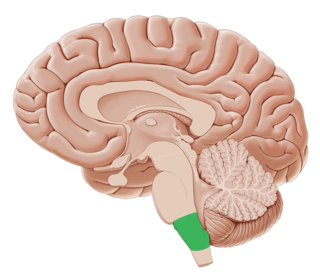
What is this?
a)
Cerebrum
b)
Cerebellum
c)
Brain Stem
d)
Diencephalon
66.
Controls hearing and smell
a)
Frontal Lobe
b)
Temporal Lobe
c)
Occipital Lobe
d)
Parietal Lobe
67.

This structure is involved in fear/panic response

a)

Cerebellum

b)

Hippocampus

c)

Amygdala

d)

Parietal Lobe

68.
Which structure is G?
a)
midbrain
b)
thalamus
c)
hypothalamus
d)
pons
69.
The lobe responsible for vision
a)
Frontal Lobe
b)
Temporal Lobe
c)
Parietal Lobe
d)
Occipital Lobe
70.

What is this?

a)

Corpus callosum

b)

Medulla Oblongata

c)

Cerebellum

d)

Hypothalamus

71.
Which structure is E?
a)
midbrain
b)
thalamus
c)
pons
d)
hypothalamus
72.
Controls behaviors (hunger, thirst, sleep, body temperature) through the release of hormones.
a)
hypothalamus
b)
thalamus
c)
adrenal glands
d)
pineal gland
73.

Which lobe is this?

a)

Occipital Lobe

b)

Parietal Lobe

c)

Temporal Lobe

d)

Frontal Lobe

74.
Which letter on the illustration represents the frontal lobe
a)
A
b)
B
c)
C
d)
D
75.
What part of the brain is Letter C pointing to?
a)
Frontal Lobe
b)
Parietal Lobe
c)
Occipital Lobe
d)
Temporal Lobe
76.
What part of the brain is Letter F pointing to?
a)
Pons
b)
Cerebellum
c)
Medulla Oblongata
d)
Parietal Lobe
77.
Controls vital functions such as breathing and heart rate
a)
Diencephalon
b)
Frontal Lobe
c)
Brain Stem
d)
Cerebellum
78.
The cerebrum is divided into four lobes 
a)
Upper brain, thalamus, brain stem 
b)
Frontal lobe, parietal lobe, occipital lobe, temporal lobe
c)
Temporal lobe, frontal lobe, ear lobe
79.

Blood pressure measures

a)

The contraction and relaxation of the heart

b)

The number of times the heart beats per minute

c)

The force exerted on the walls of the arteries by the blood

d)

The expansion and recoiling of the aorta

80.

Normal blood pressure for an adult is

a)

120/80 mm Hg or higher

b)

Less than 120/80 mm Hg

c)

110–140 over 60–90 mm Hg

d)

70–80 beats/min

81.

A structure that carries blood throughout the body?

a)

Blood Vessel

b)

Pulse

c)

Plaque

d)

Stroke

82.

Heart Attack, Stroke & Atherosclerosis are examples of?

a)

Respiratory Diseases

b)

Cardiovascular Diseases (CVD)

c)

Cholesterol

d)

Hypertension

83.

Atherosclerosis is a leading cause of other cardiovascular disease (CVD) and it happens when arteries become clogged by _______

a)

sugar

b)

plaque

c)

blood pressure

d)

insulin

84.

If a blood clot prevents blood from reaching the heart, we call this a ________

a)

stroke

b)

pulse

c)

heart attack

d)

hypertension

85.

If a blood clot prevents blood from reaching the brain, we call this a _______

a)

stroke

b)

heart attack

c)

tumor

d)

hernia

86.
What are Lymphocytes?
a)
A type of red blood cell
b)
A nucleus 
c)
A type of white blood cell
d)
Bone Marrow
87.
What are the two types of immune systems?
a)
Acquired & Adaptive
b)
Innate & Acquired
c)
Innate & Autoimmune
d)
Red & White Blood Cells
88.
What is phagocytosis?
a)
WBCs
b)
When cells eat other cells
c)
When a cell collapses
d)
When a cell releases nutrients
89.
Which white blood cell is more common?
a)
Monocytes
b)
Lymphocytes
c)
Neutrophils
d)
Basophils
90.

What is an example of Artificial active immunity?

a)

Vaccination

b)

Natural infection

91.

What are the major types of cells of Adaptive (Specific) Immunity?

a)

Natural Killer Cells

b)

Neutrophils and Basophils

c)

T cells and B cells

d)

Eosinophils and Macrophages

92.

Which are considered pathogens?

a)

Bacteria

b)

Viruses

c)

Fungi

d)

All of the above

93.

This sticky fluid traps any pathogens that try and get in our body

a)

Mucous Lining

b)

Blood

c)

Stomach Acid

d)

Skin

94.

What type of cells cause inflammation?

a)

White blood cells

b)

Mast Cells

c)

T Cells

d)

Vectors

95.

What are memory T Cells?

a)

The kills infected body cells

b)

They help the immune system respond quicker if the same pathogen enters the body again

c)

They signal B Cells

d)

They cause Inflammation

96.
The part of the female reproductive system where fertilization takes place
a)
Uterus
b)
Womb
c)
Vaginal opening
d)
Fallopian Tubes
97.
What is structure #3
a)
Ovary
b)
Fundus
c)
Fallopian Tube
d)
I don't know
98.
reproductive organs that produce eggs and hormones
a)
cervix
b)
vagina
c)
ovaries
99.
What do we call a fertilized egg?
a)
Sperm
b)
Testosterone
c)
Zygote
d)
Egg
100.

A major male sex organ that produces and stores sperm.

a)

Prostate Gland

b)

Testicle

c)

Ovary

d)

Vas deferens

101.

A muscular tube that transports sperm-filled semen.

a)

Vas deferens

b)

Fallopian tube

c)

Scrotum

d)

Penis

102.

What part of male reproductive system that function as a sac that holds the testes?

a)

Vas deferens

b)

Scrotum

c)

Penis

d)

Prostate gland

103.

A set of coiled tubes that connect to the vas deferens.

a)

Fallopian tube

b)

Epididymis

c)

Urethra

d)

Seminal Vesicle

104.

Using the diagram, which letter is the Vas Deferens?

a)

H

b)

I

c)

J

d)

K

105.

Which letter corresponds to Testis?

a)

D

b)

E

c)

F

d)

J

106.

Which Letter corresponds to the Prostate Gland?

a)

B

b)

D

c)

G

d)

K

107.

What is the function of vas deferens?

a)

A muscular tube that passes upward alongside the testes and transports mature sperm to the urethra.

b)

Sperm storage organ.

c)

Feces holding area.

d)

It produces sugar- rich fluid that provides sperm with a source of energy to help them move.

108.

Which statement is true about epididymis?

a)

A set of oily openings that release sperm

b)

A set of coiled tubes which transport and stores sperm cells.

c)

Producer of male sex hormones.

d)

Transport mature sperm to the urethra.