wayground logo

Free Printable Worksheets

Font size

S
M
L
XL
Worksheets

Unit 3, Concepts 3-5 Review

Total questions: 107

Worksheet time: 1hrs 6mins

Name
Class
Date
1.

What trophic level do the crabs belong to?

a)

Producer

b)

Primary consumer

c)

Secondary consumer

d)

Tertiary consumer

2.

In this food web, a ___ is a primary consumer and a ___ is a secondary consumer.

a)

rabbit, snake

b)

grass, mouse

c)

rabbit, wildflower

d)

snake, mouse

3.

In this aquatic food web, which organism(s) eats the squid?

a)

Seal and seagull

b)

Blue whale

c)

Seagull and krill

d)

It has no predators

4.

In this food web, how many different organisms feed on the producer?

a)

2

b)

3

c)

4

d)

5

5.

Which is an apex predator in this food web?

a)

Hawk

b)

Snake

c)

Frog

d)

Bird

6.

_______ are organisms that eat dead organisms.

a)

Omnivores

b)

Detritivores

c)

Carnivores

d)

Herbivores

7.

_____ means an organism that can make its own food and _____ means an organism that has to consume other organisms to gain nutrients and energy.

a)

Autotroph, Heterotroph

b)

Heterotroph, Autotroph

8.

When energy is passed in an ecosystem from one trophic level to the next, only ___ percent of the energy will be passed on.

a)

1

b)

10

c)

100

d)

50

9.

In this food web, how many different organisms feed on the producer?

a)

1

b)

2

c)

3

d)

4

10.

If the bird population DECREASED, which populations would INCREASE as a result?

a)

bees and deer

b)

bees and grasshoppers

c)

snakes and hawks

d)

grasshoppers and rabbits

11.

A ___ is an organism that makes its own food.

A ___ is an organism that eats other organisms to gain energy.

A ___ is an organism that breaks down dead organisms to gain energy.

a)

producer, consumer, decomposer

b)

producer, decomposer, consumer

c)

consumer, producer, decomposer

d)

decomposer, producer, consumer

12.

All energy on Earth comes from

a)

food.

b)

the sun.

c)

chemicals.

d)

non-living things.

13.

Deep sea vent bacteria get their energy from

a)

eating other bacteria.

b)

releasing sulfur.

c)

photosynthesis.

d)

chemosynthesis.

14.
The arrows in a food chain or web represents what?
a)
They point to the organism that is being eaten.
b)
It shows how sunlight flows within an ecosystem.
c)
They show what direction the energy is flowing between organisms. 
d)
They represent how water is transferred within a habitat.
15.
Why is a shark a carnivore.
a)
because it eats seaweed
b)
because it eats dead animals
c)
because it eats sand 
d)
because it eats other animals
16.
Organisms that create their own energy from sunlight or chemicals
a)
Herbivore
b)
Omnivore
c)
Autotroph
d)
Heterotroph 
17.
Which of the following would provide the most energy in an ecosystem?
a)
Producers
b)
Herbivore
c)
Omnivore
d)
Carnivore
18.
A wolf eats a rabbit, that just ate some berries.  What would you call the rabbit?
a)
Producer
b)
Omnivore
c)
Primary Consumer
d)
2nd order Heterotrph
19.
An organism that obtains energy by eating other organisms.
a)
Consumer
b)
Producer
c)
Decomposer
d)
Detriov
20.

If these organisms were arranged in an energy pyramid, which organism would have the least amount of total energy available?

a)

coyote

b)

insect

c)

lizard

d)

shrub

21.
What is indicated by the diagram?
a)
Food web
b)
Food chain
c)
Food map
d)
Food menu
22.

What will MOST LIKELY happen if a new producer is introduced into a food web?

a)

the omnivores will decrease

b)

the herbivores will increase

c)

the carnivores will decrease

d)

the decomposers will decrease

23.
  1. The figure to the right shows a trophic pyramid for an ecosystem. What happens to the amount of energy in the pyramid as it moves up through the different levels?

a)

Energy increases by 10% each level

b)

Energy decreases by 90% each level

c)

Energy decreases 10% each level

d)

Energy increases by 90% each level

24.
The stacks of disks in the chloroplast are called:
a)
Lamellae
b)
Grana
c)
Stroma
d)
Thylakoid
25.
Where does the light independent reaction take place?
a)
Matrix
b)
Stroma
c)
Thylakoid membrane
d)
Cytoplasm
26.

Which of the following equations represents the overall chemical reaction for photosynthesis?

a)

6O2+ 6H2O → C6H12O6+ 6O2

b)

C6H12O6 + 6H2O→ 6O2+ 6O2

c)

6CO2+ 6H2O→ C6H12O6+ 6O2

d)

6O2 + 6H2O→ C6H12O6 + 6CO2

27.

The organic molecule that is the cell's primary form of energy?

a)

Glucose

b)

ATP

c)

ADP

d)

GMP

28.
Which of the following is NOT a product of the light reactions?
a)
ATP
b)
NADPH
c)
Oxygen
d)
Glucose
29.

The place where the light reactions happen in the chloroplast..

a)

Stroma

b)

Grana

c)

Inner Membrane

d)

Thylakoid

30.

Autotrophs (producers) can perform photosynthesis because they have -

a)

Mitochondria

b)

Ribosomes

c)

A Nucleus

d)

Chloroplasts

31.
Leaves look green because.....
a)
they eat their vegetables
b)
to blend into their environment
c)
they contain a molecule named chlorophyll
d)
they are sick
32.
What are the products of photosynthesis?
a)
oxygen and carbon dioxide
b)
oxygen and glucose
c)
carbon dioxide and water
d)
water and glucose
33.
What is the chemical formula for glucose?
a)
C6H12O6
b)
C6H6O12
c)
C12H6O12
d)
C6O2H6
34.
What is the chemical formula for water?
a)
H2O
b)
HO2
c)
CHO2
d)
CO2H
35.
What is the chemical formula for carbon dioxide?
a)
H2O
b)
CO2
c)
CHO2
d)
CO2H
36.
What is the chemical formula for oxygen?
a)
H12O2
b)
C6O2
c)
O3
d)
O2
37.
After photosynthesis, plants store their energy as _________ .
a)
chlorophyll
b)
pigment
c)
glucose (sugar)
d)
Oxygen
38.
Which of the following go through the process of photosynthesis?
a)
bees
b)
algae
c)
humans
d)
mushrooms
39.

Which of the following statements best describes the term photosynthesis?

a)

When plants absorb the energy from the sun.

b)

How plants reproduce.

c)

The process by which plants make their own food.

d)

The process by which animals make their own food.

40.
Plants need carbon dioxide from their environment to produce glucose during which stage of photosynthesis? 
a)
The light-dependent stage
b)
The light-independent stage (The Calvin Cycle)
c)
The electron transport chain
d)
ATP formation
41.
Where do the light-dependent reactions occur? 
a)
thylakoid membrane
b)
stroma
c)
mesophyll
d)
mitochondria
42.

Where does the Light Independent Reactions (Calvin Cycle) occur?

a)
thylakoid
b)
stroma
c)
lumen
d)
mitochondria
43.

True or False.   The Light Independent Reactions (calvin cycle) can happen at night.

a)
true
b)
false
44.

TRUE or FALSE.  The Light Independent Reactions (calvin cycle) can happen during the day.

a)
True
b)
false
45.
Which organisms perform Photosynthesis?
a)
Only Autotrophs
b)
Only Heterotrophs
c)
Autotrophs and Heterotrophs
46.

Which organism go through cellular respiration?

a)

animals

b)

plants

c)

both animals and plants

d)

none

47.
The waste gas given off by cellular respiration is?
a)
oxygen
b)
carbon dioxide
c)
nitrogen
d)
methane
48.
Cellular Respiration's goal is to
a)
make water
b)
make ATP
c)
make glucose
d)
make  oxygen
49.
The process that converts food (glucose) into energy is called
a)
Cellular Respiration
b)
Photosynthesis
c)
Chloroplast
d)
Carbon dioxide
50.

What organelle does cellular respiration take place?

a)

Chloroplast

b)

Cell Wall

c)

Mitochondria

d)

Central Vacuole

51.

Cellular Respiration is an aerobic process which means it requires Oxygen.

a)

True

b)

False

52.

Which of the following are a part of cellular respiration? (select all that apply)

a)

glycolysis

b)

Krebs cycle

c)

electron transport chain

d)

photosynthesis

e)

Calvin cycle

53.
Where does glycolysis take place?
a)
Cytoplasm
b)
Stroma
c)
Thylakoid
d)
Mitochondria
54.

Where does at the Krebs cycle take place?

a)

Cytoplasm

b)

Mitochondria

c)

Stroma

d)

Thylakoid

55.

Where does at the electron transport chain take place?

a)

Cytoplasm

b)

Mitochondria

c)

Stroma

d)

Thylakoid

56.
______________ produces the most ATP.
a)
photosnthesis
b)
aerobic respiration
c)
anaerobic respiration
d)
glycolysis
57.
What are the products of aerobic respiration?
a)
Glucose and oxygen
b)
Carbon dioxide and water
c)
Lactic acid
d)
Carbon monoxide
58.
Aerobic respiration is different from anaerobic respiration in that aerobic respiration needs...
a)
chlorophyll
b)
carbon dioxide
c)
glucose
d)
oxygen
59.
How many ATP are produced in aerobic respiration?
a)
2
b)
33
c)
4
d)
36
60.
What type of respiration does not require oxygen?
a)
Aerobic
b)
Anaerobic
61.
Which type of respiration is most efficient?
a)
Aerobic
b)
Anaerobic
62.
Which organ breaks down lactic acid?
a)
Liver
b)
Lung
c)
Heart
d)
Bladder
63.
What are the products of anaerobic respiration?
a)
Glucose and oxygen
b)
Carbon dioxide and water
c)
Lactic acid
d)
Carbon monoxide
64.

Fermentation is a type of ....

a)

Aerobic Respiration

b)

Anaerobic Respiration

c)

Lactic Acid

65.
Which of these conditions would decrease the rate of photosynthesis in a plant?
a)
Above average precipitation
b)
Changing the daylight hours from 14 hrs to 10 hrs
c)
Changing the CO2 concentration from 380 ppm to 410 ppm
d)
All of these choices
66.
Which choice correctly shows the gases that enter and exit plants during photosynthesis?
a)
Enter: Oxygen
Exit: Carbon dioxide
b)
Enter: Water vapor
Exit: Glucose
c)
Enter: Carbon dioxide
Exit: Oxygen
d)
Enter: Light
Exit: Water vapor
67.
Opening that allows gas exchange
a)
Stomata
b)
Leaves
c)
Roots
d)
Vascular tissue
68.
In an ecological pyramid, which type of organism always has the least amount of energy available?
a)
Producers
b)
Herbivores
c)
Carnivores
d)
Top Predator
69.
How much of the energy in each level of a ecological pyramid gets lost as heat or used by the organism so that it cannot be passed on to the next trophic level?
a)
80%
b)
90%
c)
10%
d)
20%
70.
What makes an energy pyramid different than a food web or chain?
a)
It shows energy flowing from the top of the chain and downward. 
b)
The tropic levels are the opposite
c)
It shows the amount of energy in each trophic level
d)
It shows specific predator/prey relationships
71.

organisms that eat only meat or flesh

a)

herbivores

b)

carnivores

c)

omnivores

d)

producers

72.

another word for consumer is...

a)

herbivores

b)

heterotrophs

c)

omnivores

d)

autotrophs

73.

Where does photosynthesis occur?

a)

mitochondria

b)

chloroplast

c)

animal cells

d)

ribosomes

74.

Which of the following are products of photosynthesis? (Select 2)

a)

glucose

b)

light

c)

water

d)

oxygen

75.

What do plants take in through their ROOTS to make food (or carry out photosynthesis)?

a)

Carbon Dioxide

b)

Water

c)

Light

76.

What is the purpose of photosynthesis?

a)

To release energy

b)

To create glucose

c)

To grow

d)

To get oxygen for respiration

77.

What are the products of photosynthesis?

a)

Oxygen and Energy

b)

Carbon Dioxide and Glucose

c)

Glucose and Oxygen

d)

Oxygen and Water

78.
____________________ provides the energy necessary for photosynthesis.
a)
water
b)
sunlight
c)
glucose
d)
soil
79.
The ____________ is the most photosynthetic part of a plant.
a)
leaf
b)
flower
c)
roots
d)
stem
80.
Glucose is a ...
a)
sugar
b)
carbohydrate
c)
source of quick energy
d)
all are correct
81.
The formula for glucose is...
a)
C12 H22 O11
b)
NaCl
c)
NaOH
d)
C6 H12 O6
82.
This is ...
a)
mitochondria
b)
chloroplast
c)
cell
d)
phloem
83.
What is the chemical formula for carbon dioxide?
a)
H2O
b)
CO2
c)
CHO2
d)
CO2H
84.
What is the chemical formula for oxygen?
a)
H12O2
b)
C6O2
c)
O3
d)
O2
85.
What is the chemical formula for water?
a)
H2O
b)
HO2
c)
CHO2
d)
CO2H
86.
Because plants carry out photosynthesis, they are considered _____.
a)
heterotrophs
b)
autotrophs
c)
consumers
d)
unicellular
87.

Which of the following equations represents the overall chemical reaction for photosynthesis?

a)

6O2+ 6H2O → C6H12O6+ 6O2

b)

C6H12O6 + 6H2O→ 6O2+ 6O2

c)

6CO2+ 6H2O→ C6H12O6+ 6O2

d)

6O2 + 6H2O→ C6H12O6 + 6CO2

88.
The purpose of cellular respiration is to produce ?
a)
energy
b)
oxygen
c)
sugar
d)
protein
89.
What main food group do we get most of our energy from?
a)
proteins
b)
carbs
c)
meats
d)
nucleic acids
90.
What is the sugar that carbs are broken down to?
a)
sucrose
b)
maltose
c)
glucose
d)
lactose
91.
What is the energy molecule?
a)
DNA
b)
ATP
c)
RNA
d)
AAA
92.
What is the energy organelle?
a)
nucleus
b)
mitochondria
c)
ribosomes
d)
lysosomes
93.
The splitting of the glucose molecule is called?
a)
synthesis
b)
denaturalization
c)
glycolysis
d)
dissolving
94.
To get the most ATP molecules for energy in cellular respiration, you have to have lots of ?
a)
hydrogen
b)
oxygen
c)
carbon dioxide
d)
water
95.
The waste gas given off by cellular respiration is?
a)
oxygen
b)
carbon dioxide
c)
nitrogen
d)
methane
96.
Where does glycolysis take place?
a)
Cytoplasm
b)
Stroma
c)
Thylakoid
d)
Mitochondria
97.
What is the name of the 1st step of cellular respiration?
a)
Glycolysis
b)
Kreb's Cycle
c)
ETC
d)
Anaerobic respiration
98.
This process releases chemical energy from sugars and other carbon-based molecules to make ATP when oxygen is present.
a)
photosynthesis
b)
light-independent reaction
c)
cellular respiration
d)
light-dependent reaction
99.
What is the correct equation for cellular respiration?
a)
6O2 + C6H12O6 -> 6CO2 + 6H2O + Energy
b)
6O2 + C6H12O6 + Energy -> 6CO2 + 6H2O
c)
6CO2 + 6H2O -> 6O2 + C6H12O6 + Energy
d)
6CO2 + 6H2O + Energy -> 6O2 + C6H12O6
100.
What is cellular respiration?
a)
the breakdown of glucose  to release ATP
b)
the breakdown of glucose to release NADH
c)
the breakdown of glucose to release FADH
d)
the breakdown of glucose to release carbon
101.
The energy in ATP is stored 
a)
in the bond between the second and third phosphate
b)
in the bond between the first and second phosphate
c)
in the bond between the adenosine and the first phosphate
d)
I like turtles
102.

Which of the following is a reactant of cellular respiration?

a)

Glucose

b)

Carbon Dioxide

c)

Water

d)

ATP

103.

Which of the following is a reactant of cellular respiration

a)

Carbon Dioxide

b)

Water

c)

Oxygen

d)

ATP

104.

Which statement is true regarding cellular respiration?

a)

The reactants of cellular respiration are identical to the reactants of photosynthesis.

b)

The reactants of cellular respiration are obtained from the products of photosynthesis.

c)

The products of cellular respiration are the same as the products of photosynthesis

d)

Cellular respiration only occurs in autotrophs, photosynthesis occurs only in heterotrophs.

105.

A decrease in the amount of oxygen available will....

a)

not have an effect on the amount of energy produced during cellular respiration

b)

decrease the amount of glucose produced during cellular respiration

c)

cause the amount of water produced during cellular respiration to increase

d)

decrease the amount of energy produced during cellular respiration

106.

What type of respiration requires oxygen?

a)

Aerobic

b)

Anaerobic

107.

Which stage of the cellular respiration process produces the most ATP?

a)

Glycolysis

b)

Acetyl CoA

c)

Kreb's Cycle

d)

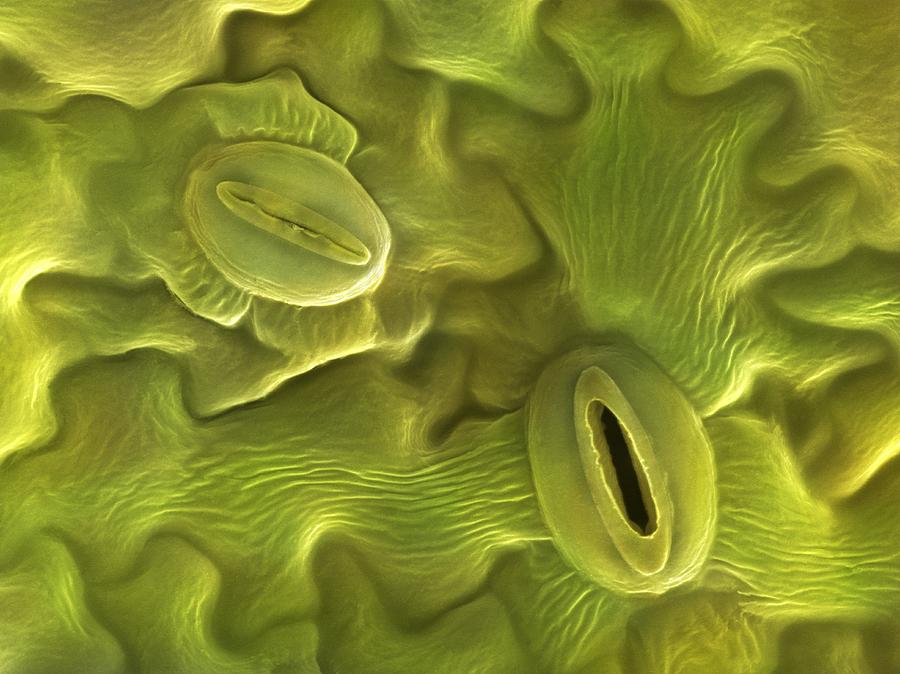
Electron Transport Chain