Worksheets
Biology STAAR Review
Total questions: 102
Worksheet time: 2hrs 5mins
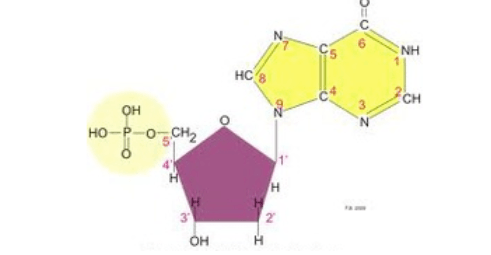
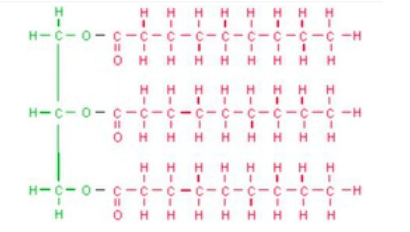
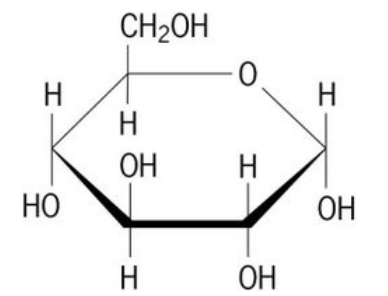

Which biomolecule is responsible for insulation and long-term energy storage?
Protein
Nucleic Acid
Lipid
Carbohydrate

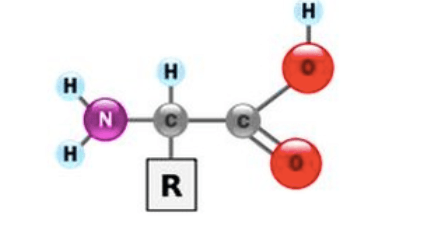
Which biomolecule is made of amino acids and provides structural support?
Nucleic Acid
Carbohydrate
Protein
Lipid

Which biomolecule is your main source of energy?
Nucleic Acid
Protein
Lipid
Carbohydrate

1. What organelle is responsible for letting things in and out of the cell?
Cell membrane
Mitochondria
Chloroplast
Nucleus

What organelle controls the functions within the cell (similar to the brain)? This organelle stores DNA!
Lysosome
Nucleus
Nucleolus
Chromosomes

What is the powerhouse of the cell? It converts glucose into energy that the cell can use during cellular respiration.
Mitochondrion
Golgi body
Nucleus
Ribosomes

Where are proteins synthesized? These structures are found in the cells of plant and animals. Bacteria too!
Golgi body
Mitoichondrion
Chromosomes
Ribosomes

Plants and animals are both examples of ___________________ because their cells contain a _________________.
prokaryotes, cell membrane
eukaryotes, cell membrane
prokaryotes ells, nucleus
eukaryotes cells, nucleus

What type of cell do bacteria fall under, as they possess no nucleus?
Prokaryotic Cells
Eukaryotic Cells
Viral Cells

The cell below is in a _________ solution. Water exited the cell because of the higher concentration outside the cell. As a result, the cell shrunk (smaller).
Hypotonic
Hypertonic
Isotonic

The cell below is in a _________ solution. Water entered the cell because of the higher concentration inside the cell. As a result, the cell swelled (bigger).
Hypertonic
Hypotonic
Isotonic

What will happen to a somatic cell in an isotonic solution?
Swell (bigger)
Shrink (smaller)
Stay the same size

What will happen if you place a plant cell in salt water?
It will swell (bigger) because water will enter the cell.
It will swell (bigger) because water will exit the cell.
It will shrivel (smaller) because water will exit the cell.

Osmosis is the movement of water. What will be the direction of the water movement?
From side A to side B
From side B to side A
The water will move in both direction at equal rates!

What type of transport involves movement across a protein channel? No energy required!
Facilitated Diffusion
Active Transport
Diffusion
Osmosis
Osmosis is the movement of __________ across a membrane.
food
energy
oxygen
water

What do viruses and living cells have in common?
Nucleic Acids (DNA and RNA)
Chloroplasts
Ribosomes
Cell Membrane

Why are viruses are considered nonliving organisms?
Viruses need a host cell to reproduce.
Viruses cannot absorb nutrients.
Viruses cannot make proteins.
All of the above?

Which of the following occurs after a virus attaches to a host cell in the viral reproduction process?
The host cell immediately dies.
The virus dies after attaching the the host cell.
The virus inserts its genetic information into the host cell.
Copies of the virus are immediately released from the host.

This infectious viral disease has many symptoms that range from chills, coughing and sneezing to fever, muscle aches, nausea and vomiting. These symptoms show up within 2 to 7 days after our cells become infected. What is the viral reproduction cycle of this virus?
Lytic Cycle
Lysogenic Cycle
Meiosis
Mitosis


In mitosis, the two resulting cells are -
different from the starting cell and identical to each other.
different from the starting cell and different from each other.
identical to the starting cell and different from each other.
identical to the starting cell and identical to each other.

During the ___ phase, DNA is replicated.
G1
S
G2
M
ATG TGA CAG


The mutated DNA segment is TTCGCAAG. This is an example of ___ mutation.
T-G-A-C-C-A
T-G-A-G-C-A
ATTGAGCC - Mutated
The example above is an example of a
AGA-TTC-ATA-GCG
Mutant-
AGA-TTC-AAT-AGC-G
If a heterozygous tall pea plant (Tt) is crossed with a short pea plant (tt), what are the possible genotypes of the future offspring?
100% Tt
50% Tt, 50% tt
75%Tt, 25%tt
25%TT, 50%Tt, 25%tt


w= non-white hair
If you cross a horse with WW and a horse with ww what fraction of the offspring would be expected to have white hair?




Why did the yellow ants survive better in the desert?
They could blend in/camouflage with the sand
They could dig into the sand and hide
They could kill the other ants
It was random.

The outcome of this adaptation in the scarlet king snake is to -


WHICH BODY SYSTEMS?
WHICH BODY SYSTEMS?


WHICH BODY SYSTEMS ?
WHICH BODY SYSTEMS?


Which of the following is a herbivore and primary consumer?
cricket
frog
hawk
shrew

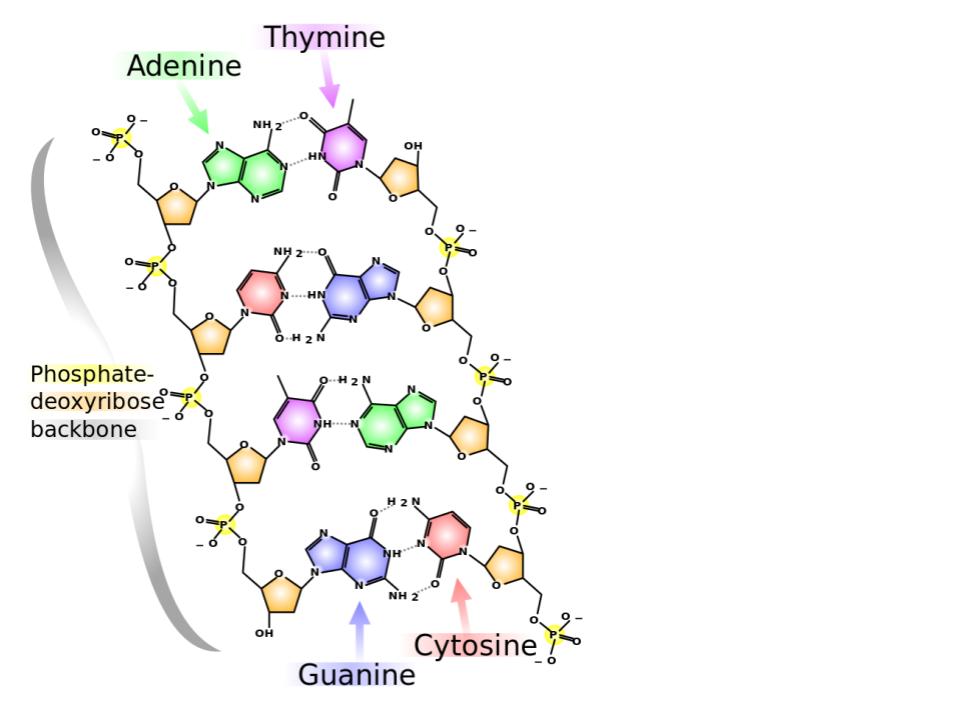
What is the function of nucleic acids?
Stores energy
Stores genetic information
Movement
Physical structure
Which element is found in nucleic acids (DNA and RNA) but NOT in proteins?
Nitrogen (N)
Phosphate (P)
Oxygen (O)
Hydrogen (H)
Which elements are found in carbohydrates and lipids (sources of energy)?
C, H, O, N, P
C, H, O, N
C, H, O

Which best describes the basic structure of a virus?
A nucleic acid strand surrounded by a protein coat.
A protein tail surrounded by a lipid coat.
A lipid tail surrounded by a carbohydrate coat.
A nucleic acid strand surrounded by a carbohydrate coat.

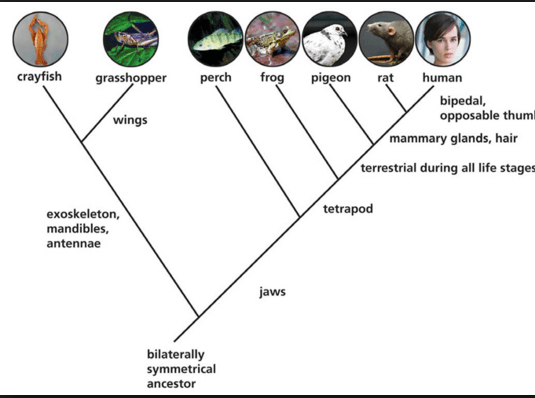
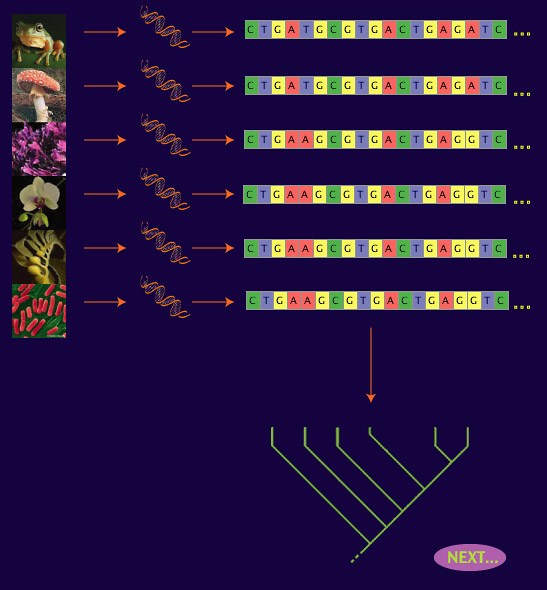
What trait do salamanders and turtles NOT share in this cladogram?
amniotic egg
four walking legs
jaws
vertebral column

Which organism's DNA will differ the most from the primates?
birds
sharks
rodents and rabbits
birds

What trait separates amphibians from primates in this cladogram?
amniotic egg
four limbs
egg with shells
bony skeleton