wayground logo

Free Printable Worksheets

Font size

S
M
L
XL
Worksheets

Biology EOC STAAR Review

Total questions: 109

Worksheet time: 3hrs 36mins

Name
Class
Date
1.
How do viruses reproduce?
a)
They copy their own genetic material inside a protein coat.
b)
They kill a cell and reproduce inside it.
c)
They invade a living cell and use the cell's functions to replicate their genetic material.
d)
They do not reproduce because they are not technically living things.
2.
Which cell part is present in eukaryotic cells, but not in prokaryotic cells?
a)
cell membrane
b)
cell wall
c)
cytoplasm
d)
nucleus
3.
Which of the following is a possible result of a disruption in the cell cycle?
a)
cancer
b)
photosynthesis
c)
cellular respiration
d)
protein synthesis
4.
Which organic macromolecules are composed of chains of amino acids that join to form the structural components of organisms?
a)
carbohydrates
b)
nucleic acids
c)
proteins
d)
lipids
5.
This cell is undergoing mitosis.  What stage of mitosis is shown?
a)
prophase
b)
metaphase
c)
anaphase
d)
telophase
6.
The ability to taste a bitter chemical called PTC is a dominant trait in humans.  The Punnett square below shows a cross between two parents who are heterozygous for the ability to taste this chemical.  What is the probability, expressed as a percentage, that these parents will produce an offspring who is homozygous recessive for the tasting trait?
a)
0%
b)
25%
c)
50%
d)
75%
7.
Which of these substances stores and transmits the information that specifies the traits of an organism?
a)
DNA
b)
RNA
c)
enzymes
d)
carbohydrates
8.
A strand of DNA with the sequence A-C-T-T-G serves as a template to form a strand of mRNA with the sequence U-G-A-A-C.  During which process would this happen?
a)
replication
b)
transcription
c)
translation
d)
meiosis
9.
The diagram summarizes two stages in the production of the specialized cells used for sexual reproduction.
What happens in the stage labeled "process 2"?
a)
The chromosomes cross over.
b)
Th chromosomes number is reduced by half.
c)
The chromosomes move to opposite end of the cell.
d)
Four identical gametes form.
10.
Proteins are formed in the cytoplasm of cell using genetic instructions from DNA, which is located in the cells nucleus.  Which of the following best explains how the genetic information gets to the site of protein synthesis?
a)
DNA is divided during mitosis, and one strand travels outside the nucleus to bind with RNA and form a protein
b)
DNA is copied to make mRNA. The mRNA leaves the nucleus and goes to the ribosomes, where the information is used to guide protein synthesis.
c)
Genetic information travels from DNA in the nucleus along a strand of mRNA that is connected to ribosomes in the cytoplasm where proteins are made.
d)
The genetic code is transferred to ribosomes on tRNA molecules, which can pass through the nuclear membrane.
11.
The diagram shows the base sequence of a strand of DNA.
From left to right, what is the sequence of the complementary strand of DNA in this molecule?
a)
T G A A C
b)
A C T  T G
c)
T G U U C
d)
U C T T G
12.
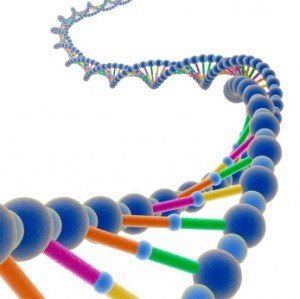
The table shows several DNA codons and their corresponding amino acids.
If a sequence of DNA reads AGTGGGTCT, for what sequence of amino acids does it code?
a)
arginine-glycine-serine
b)
serine-arginine-arginine
c)
serine-arginine-glycine
d)
serine-glycine-serine
13.
The table shows several DNA codons and their corresponding amino acids.
If a sequence of DNA reads AGTGGGTCT, for what sequence of amino acids does it code?
a)
arginine-glycine-serine
b)
serine-arginine-arginine
c)
serine-arginine-glycine
d)
serine-glycine-serine
14.
The legs of crocodiles and mice have similar bone structures and develop in a similar way.  What type of structures are the leg bones?
a)
homologous structures
b)
analogous structures
c)
fossilized structures
d)
vestigial structures
15.
The standardized system for naming organism is known as binomial nomenclature.  What two pieces of information are used to name and identify organisms using this system?
a)
genus and species
b)
class and genus
c)
class and species
d)
domain and kingdom
16.
In a strand of DNA, if it contains 20% of Thymine, then how much Guanine would be present?
a)
30%
b)
20%
c)
80%
d)
10%
17.
Which of the following best describes a DNA molecule?
a)
double helix
b)
contains ribose
c)
made of amino acids
d)
contains Uracil
18.
Which of the following units are repeatedly joined together to form a strand of DNA?
a)
amino acids
b)
nucleotides
c)
fatty acids
d)
polysaccharides
19.
Guanine bonds with ______________.
a)
Adenine
b)
Guanine
c)
Cytosine
d)
Thymine
20.
In a molecule of double-stranded DNA, the amount of Adenine present is always equal to the amount of
a)
cytosine
b)
guanine
c)
thymine
d)
uracil
21.
Which of the following means "genetic change over time"
a)
natural selection
b)
speciation
c)
evolution
d)
fitness
22.
Do organisms "decide" to evolve and change?
a)
Yes, they know they need to change to survive 
b)
No, they change because of natural selection
23.
Which organisms are most likely to survive?
a)
the best adapted
b)
the fastest
c)
the strongest
d)
the most domesticated (tamed)
24.
What word describes the process of having the advantageous traits that helps an organism survive  and reproduce?
a)
natural selection
b)
adaptation
c)
mutation
d)
genetic engineering
25.

What word describes a trait that helps an organism survive in its environment?

a)

natural selection

b)

mutation

c)

camouflage

d)

adaptation

26.
Three nucleotide bases on a strand of mRNA are a(n) ____.
a)
mutation
b)
chromosome
c)
codon
d)
anticodon
27.
21 nucleotides will provide how many codons?
a)
3 amino acids
b)
5 amino acids
c)
7 amino acids
d)
9 amino acids
28.
What are the building blocks of proteins ?
a)
monosaccharides
b)
nucleotides
c)
ribosomes
d)
Amino Acids
29.
What mutation has occurred here? 
T-G-A-C-C-A
T-G-A-G-C-A
a)
Substitution
b)
Deletion
c)
Insertion
d)
Frameshift 
30.
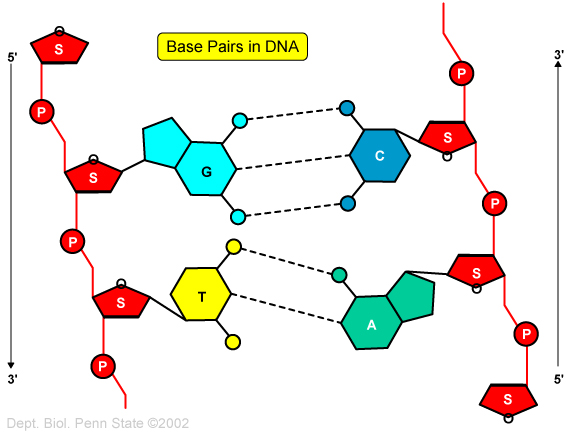
DNA molecule segment is : TTACGCAAG
The mutated DNA segment is TTCGCAAG. This is an example of ___ mutation.
a)
Substitution
b)
Deletion
c)
Insertion
d)
Inversion
31.
Nitrogenous bases are joined by which type of bond?
a)
polar bonds
b)
ionic bonds
c)
covalent bonds
d)
hydrogen bonds
32.
What are the three components of a nucleotide?
a)
sugar, hydrogen, nitrogen base
b)
sugar, oxygen, nitrogen base
c)
sugar, phosphate, nitrogen base
d)
sugar, phosphate, protein
33.
Which 2 molecules form the sides (backbone) of the DNA ladder?
a)
deoxyribose sugar and adenine
b)
deoxyribose sugar and a hydrogen bond
c)
deoxyribose sugar and the nucleus
d)
deoxyribose sugar and phosphate
34.
The basic unit of structure and function in the human body is the....
a)
organ
b)
organ system
c)
cell
d)
tissue
35.
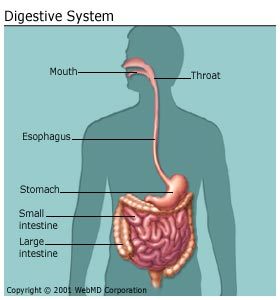
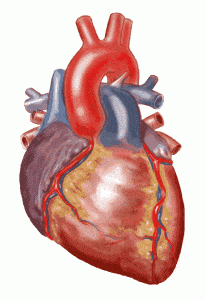
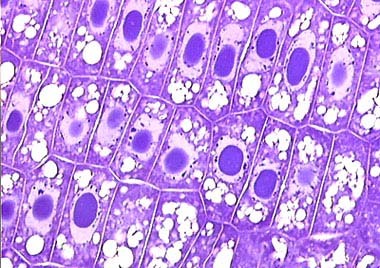
This is a example of........ 
a)
organ system
b)
cells
c)
organ
d)
tissue
36.
This is a example of ........
a)
cell
b)
organ system
c)
organ
d)
tissue
37.
This is a example of ........
a)
cell
b)
tissue
c)
organ 
d)
organ system
38.
What is the difference between a cell and a tissue?
a)
cell is basic unit of life; tissue is group of cells that work as one
b)
cell is group of tissues; tissue is basic unit of life
c)
cell is basic unit of life; tissue is groups of different cells
d)
cell is group of organs; tissue is group of different cells
39.
Which level of organization is the most complex?
a)
organism
b)
population
c)
community
d)
ecosystem
40.
Multiple organisms of the same species describes a
a)
organism
b)
population
c)
community
d)
ecosystem
41.
A forest full of many kinds of trees and grasses is an example of a
a)
group
b)
organism
c)
population
d)
community
42.
which is the correct order of the levels of organization from simple to complex?
a)
organism, population, community, ecosystem
b)
ecosystem, community, population, organism
43.
Which is the definition of a community
a)
multiple organisms of the same species
b)
all the living and nonliving things in an area
c)
a living thing
d)
multiple organisms of different species
44.
Name the photosynthesizing organelle of the plant cell.
a)
G
b)
B
c)
J
d)
C
45.
Name the process in the picture.
a)
transcription
b)
mitosis
c)
translation
d)
replication
46.
What process is occurring in the picture?
a)
DNA replication
b)
mitosis
c)
protein synthesis
d)
meiosis
47.
Which gas is filling the balloon in the experiment?
a)
Oxygen
b)
Carbon Dioxide
c)
Glucose
d)
Water
48.
Widow's peak is dominant to straight hair line. Cross a heterozygous widow's peak female with a heterozygous widow's peak male. What is the genotype ratio?
a)
1:2:1
b)
3:1
c)
1:1
d)
1:0
49.

Which stage of the cell cycle is where DNA replication occurs

a)

M phase

b)

S phase

c)

G1 phase

d)

G2 phase

50.

The movement of molecules from an area of low to high concentration is known as

a)

Simple Diffusion

b)

Osmosis

c)

Active Transport

d)

Facilitated Diffusion

51.

Which Non-Mendelian genetics is where your traits blend together?

a)

Co-dominance

b)

Incomplete Dominance

c)

Sex-linked Trait

d)

Polygenetics

52.

Which macromolecule provides you with insulation?

a)

Carbohydrates

b)

Lipids

c)

Protein

d)

Nucleic Acid

53.
Enzymes catalyze reactions by ___________ Activation Energy.
a)
Increasing
b)
Decreasing
54.
An experiment is performed on plants to see how different liquids affect plant growth. Each plant in the experiment is given a different liquid; water, apple juice, or milk. Each plant has the same amount of soil, sunlight, and listens to the same music. In this investigation, the independent variable is ...
a)
The type of plant
b)
The amount of sunlight
c)
The type of music
d)
The type of liquid
55.

Which of the following converts food into energy for the cell?

a)

vacuole

b)

mitochondria

c)

cytoplasm

d)

cell membrane

56.
The amount of energy that usually transfers from one trophic level to the next...
a)
10%
b)
20%
c)
80%
d)
50%
57.
What is something that prokaryotic and eukaryotic cells have in common?
a)
They have a nucleus. 
b)
They are multi-cellular. 
c)
They have DNA. 
d)
They have organelles that are membrane-bound.
58.
Active transport does not require energy.
a)
True 
b)
False 
59.
In this image, the cell is using which type of molecular transport?
a)
Osmosis
b)
Diffusion 
c)
Endocytosis
d)
Exocytosis 
60.
What are the two reactants of cellular respiration?
a)
C6H12O6 & 6CO2
b)
6 CO2 & 6H2O
c)
C6H12O& 6O2
d)
6CO2 & 6O2
61.
Name structure #5.
a)
rough ER
b)
nucleus
c)
vesicle
d)
cytoplasm
62.
All of the living and nonliving things in an area that interact with each other are called a/an ______.
a)
community
b)
habitat
c)
population
d)
ecosystem
63.
What type of transport is illustrated?
a)
facilitated diffusion
b)
active transport
c)
diffusion
d)
osmosis
64.
Provides support and protection for the cell, while also controlling the movement of materials in and out of the cell.
a)
Cellular Membrane
b)
Nucleus
c)
Ribosomes
d)
Vacuole
65.
What will most likely be the result if all of the mitochondria are removed from a plant cell? 
a)
It will be unable to carry out respiration. 
b)
It will lose water through osmosis. 
c)
It will break down the ribosomes in the cell. 
d)
It will be unable to photosynthesize
66.
Fruit fly body cells have 8 chromosomes. After mitosis, you would expect a resulting fruit fly daughter cell to have ...
a)
16 chromosomes.
b)
46 chromosomes.
c)
8 chromosomes.
d)
4 chromosomes.
67.
Structure B is pointing to the _____. 
a)
chromosome
b)
centromere
c)
DNA
d)
chromatid
68.

In which cell below would a student likely observe a cell plate during mitosis?

a)

rat muscle cell

b)

alligator stomach cell

c)

onion root cell

d)

human lung cell

69.

Is the following cell diploid or haploid?

a)

Diploid

b)

Haploid

70.
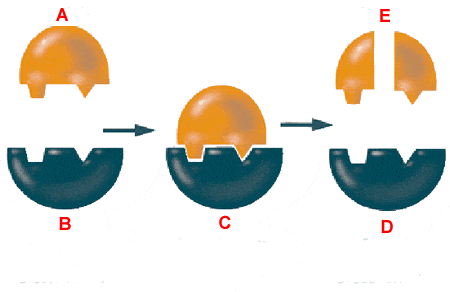
How do enzymes increase the speed of chemical reactions?
a)
reducing the number of products   
b)
reducing the activation energy
c)
increasing the temperature of the cell
d)
increasing the concentration of reactants 
71.
The cell below is in a _________ solution.
a)
Hypotonic
b)
Hypertonic
c)
Isotonic
72.
What two products does a plant make during photosynthesis?
a)
Water and Glucose
b)
Oxygen and Glucose
c)
Oxygen and Water
d)
CO2 and Glucose
73.

What is the role of the pioneer species in Primary Succession?

a)

To kill any remaining organisms from before the disturbance

b)

To break down rock and rebuild soil

c)

To provide food for large animals

d)

To put fresh oxygen into the air

74.
The diagram below represents a cell. Which organelle is the site where amino acids are synthesized into proteins? 
a)
1
b)
2
c)
3
d)
4
75.
An offspring will receive how many alleles from each parent to determine a specific trait?
a)
one
b)
two
c)
three
d)
five
76.
G = green, g = yellow
The genotype for a yellow plant is...
a)
GG
b)
Gg
c)
gg
d)
all of the choices result in yellow
77.
 Which sequence depicts the correct order of protein synthesis within a cell? 
a)
DNA → mRNA → amino acids → proteins
b)
DNA → amino acids → mRNA → proteins
c)
 DNA → mRNA → proteins → amino acids
d)
DNA → proteins → amino acids → mRNA
78.
Which is a characteristic of cancer?
a)
rapid and uncontrolled cell growth
b)
 cell growth delayed at the G1 checkpoint. 
c)
cell growth delayed at the G2 checkpoint. 
d)
damage to a cell’s cytoplasm
79.
Some peeled pieces of apple were placed in distilled water and some in very salty water. The cells in the apple pieces will…
a)
Lose water in both solutions
b)
Gain water in both solutions
c)
Lose water in the distilled water and gain water in the salty water
d)
Gain water in the distilled water and lose water in the salty water
80.
what are the reactants for cellular respiration?
a)
H2O and O2
b)
glucose and O2
c)
glucose and CO2
d)
H2O and CO2
81.
In Texas, longhorn cattle eat grass. People eat the cattle. What can you construct from this information?
a)
a community
b)
an ecosystem
c)
a food web
d)
a food chain
82.
The food web shows the flow of energy through a sagebrush-steppe ecosystem.
Which of these organisms are in a trophic level that receives a larger percentage of the energy captures by the producers than the percentage received at the bats' trophic level?
a)
Mountain lions
b)
Snakes
c)
Hawks
d)
Ground squirrels
83.
Which is the most closely related to the bumble bee, Bombus pennsylvanicus?
a)
Ammophila procera 
b)
Melissodes bimaculata 
c)
Bombus bimaculatus
d)
Ceratina calcerata
84.
A cross section of rock layers is shown below.   Which fossil is found in the oldest layer? 
a)
dinosaur
b)
fish
c)
shel
d)
leaf
85.
Autotroph or heterotroph?
a)
Autotroph
b)
Heterotroph
86.
 A scientist is trying to discover a new treatment to stop lung cancer cells from dividing. In the cancer cells, which of these processes will stop if the treatment is successful?
a)
mitosis
b)
meiosis
c)
binary fission
d)
genetic recombination
87.
Autotroph or heterotroph?
a)
Autotroph
b)
Heterotroph
88.
Which is true about active transport?
a)
It requires energy
b)
it does not require energy
c)
It moves substances down the concentration gradient
d)
it moves material from high to low concentration
89.
Osmosis is the movement of _____ across a membrane.
a)
food
b)
energy
c)
oxygen
d)
water
90.
Polar bears swim across large expanses of ocean while hunting for seals, their main source of food. The bears use the ice as resting spots during long swims. However, the sea ice is rapidly melting as a result of global warming. Which statement describes what MOST LIKELY will happen as global warming continues?
a)
Polar bear and seal populations will decrease
b)
Polar bear population will decrease and seal population increase
c)
Polar bear population will increase and seal population will decrease
d)
Polar bear populations will decrease, seal populations will not change
91.
Which of these best describes mutualism?
a)
a relationship between two species where both benefit
b)
a relationship between two species where neither benefit
c)
a relationship between two species where one species benefits and the other is not affected
d)
a relationship between two species where one species benefits and the other species is harmed
92.
The differences in the species seen in the diagram are most likely a result of ____. 
a)
Length of mating season
b)
Population size 
c)
Color of feathers 
d)
Available food sources
93.
Which amino acid would be transferred to the position of codon CAC?
a)
Leucine
b)
Glycine
c)
Valine
d)
Histidine
94.
Which biomolecule is the key source of energy?
a)
Lipid
b)
Protein
c)
Carbohydrate
d)
Nucleic Acid
95.
According to the diagram, which bird has the most similar DNA to a large tree finch?
a)
small tree finch
b)
medium tree finch
c)
large ground finch 
d)
green warbler finch
96.
According to the cladogram, which organism is most distantly related to the human?
a)
crayfish
b)
rat
c)
perch
d)
frog
97.
Individuals that are well adapted to their environment will survive and produce:
a)
Fewer mutations
b)
Stronger genes
c)
More offspring
d)
Better traits
98.
Individuals that are well adapted to their environment will survive and produce:
a)
Fewer mutations
b)
Stronger genes
c)
More offspring
d)
Better traits
99.
Cattle egrets forage (feed) in fields among cattle. The egret gets easy access to flying insects stirred up by the cattle, and the cattle don't care if they are there or not.
a)
mutualism
b)
commensalism
c)
competition
d)
parasitism
100.
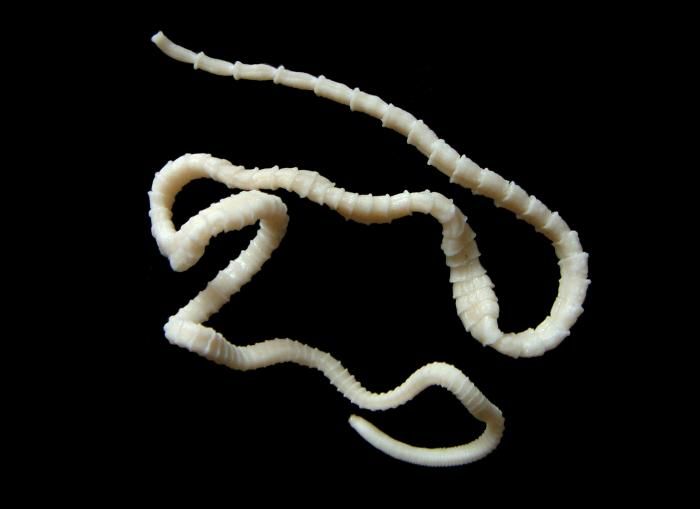
A tapeworm and a cat have this type of relationship.
a)
mutualism
b)
parasitism
c)
commensalism
d)
competition
101.
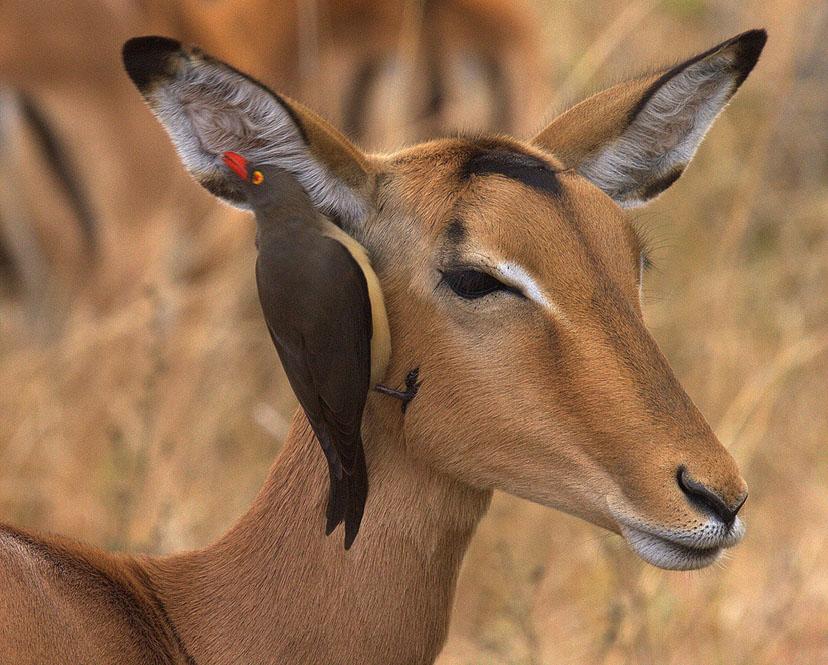
Red-billed oxpeckers are birds that often feed on parasites that infest impala.  This is an example of _______.
a)
commensalism
b)
mutualism
c)
neutralism
d)
competition
102.
A reduction in which of these would lead to a decrease in all other populations?
a)
Coyote
b)
Grass
c)
Grasshoppers 
d)
Squirrel 
103.
Which of these best explains the difference between the way animals and plants exchange gases with their environment?
a)
Animals use only photosynthesis, while plants use both photosynthesis and respiration
b)
Animals use only respiration, while plants use both photosynthesis and repiration
c)
Animals use both photosynthesis and respiration, while plants use only respiration
d)
Animals use both photosynthesis and respiration, while plants only use photosynthesis
104.
What is the main function of a selectively permeable membrane?
a)
storage of water
b)
storage of chemicals
c)
breaks down molecules within the cell
d)
regulates what enters and leaves the cell
105.
In a certain insect, round wings (R) are dominant to pointed wings (r). Which cross will produce the greates number of genotypic and phenotypic variations?
a)
rr X rr
b)
Rr X Rr
c)
Rr X RR
d)
RR X RR
106.
Which of these best describes the initial change caused by a DNA mutation?
a)
a change in the swquence of base pairs 
b)
a change in the production of enzymes 
c)
a change in the number of nucleosomes within a cell
d)
a change in the number of hydrogen bonds between the bases 
107.
Which of these best describes mutualism? 
a)
a relationship between two species where both species benefit
b)
a relationship between two species where neither species benefits
c)
a relationship between two species where one species benefits and one is not affected
d)
a relationship between two species where on species benefits and the other is harmed
108.
How many daughter cells are formed in meiosis? 
a)
0
b)
1
c)
2
d)
4
109.
What will happen if an animal cell that has a solute concentration of 1% is placed in a 5% saltwater solution? 
a)
It will shrink bacuse there is less water outside the cell
b)
it will burst because there is more water on the outside of the cell
c)
It will burst becuase there is more water inside the cell than outside
d)
It will remain the same size because there it an equal amount of water inside and outside the cell