Worksheets
Biology Mid Year Review
Total questions: 110
Worksheet time: 2hrs 2mins

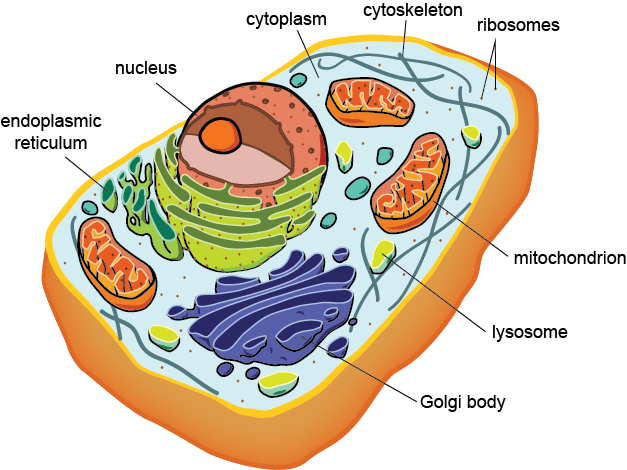
What is the main difference between prokaryotic and eukaryotic cells?
Prokaryotic cells have a nucleus and Eukaryotic cells do not
Prokaryotic cells are unicellular and Eukaryotic cells are multicellular.
Prokaryotic cells do not have a nucleus, Eukaryotic cells do have a nucleus.
Prokaryotic cells are plant cells and Eukaryotic cells are animal cells.

The main function of chloroplasts is:
To control what enters and leaves the cell.
To break down food to release energy for the cell.
To control all activities of the cell.
To produce food for the cell using the sun's energy.

Ribosomes are the cell organelle that
Break down food to produce energy for the cell.
Produce proteins for the cell.
Break down broken cell parts.
Make food for the cell using the sun's energy.

Which types of organisms are Prokaryotes?
Animals
Plants
Fungi
Bacteria

A solution that causes a cell to swell is called a
hypertonic
hypotonic
isotonic

A plant cell is placed in a solution whose solute concentration is twice as great as the concentration of the cells cytoplasm. The cell membrane is selectively permeable, allowing water but not the solute to pass through. What will happen to the cell?
No change
The cell will shrivel because of osmosis
The cell will swell because of osmosis
The cell will shrivel because of active transport

An organism that produces its own food supply from inorganic compounds is called a(an)
heterotroph
consumer
detritivore
autotroph

This is referred to as the energy currency of the cell
ADP
ATP
Mitochondria
Nucleus


Fertilization usually takes place here.
uterus
fallopian tubes
vagina
ovaries


The efficiency of energy transfer from a lower trophic level to the next highest level is roughly
1%
10%
100%
1000%

The arrows in a food chain or web represents what?
They point to the organism that is being eaten.
It shows how sunlight flows within an ecosystem.
They show what direction the energy is flowing between organisms.
They represent how water is transferred within a habitat.

High blood viscosity means
There is a high concentration of blood cells and solutes
The blood is more thick and the heart has to pump harder
Blood pressure goes up
All are correct

Atherosclerosis is caused by
a buildup of fat in the arteries
a buildup of protein in the arteries
a buildup of calcium in the arteries
a buildup of sodium in the arteries

Which of these molecules stores the most energy?
NADH
NAD+
ADP
ATP

Which of the following organisms are LEAST closely related?
organisms that share a domain
organisms that share a family
organisms that share a genus
organisms that share a species

The scientific name for an organism is made from the:
class and family name
genus and species name
domain and kingdom name
kingdom and phylum name

Cells that do not have a true nucleus are called....
eukaryote
prokaryote
unicellular
multicellular

Cells that have a true nucleus are called....
eukaryotes
prokaryotes
unicellular
multicellular


The first two months of development in the uterus is called
fetus
embryo
eggs
ovum


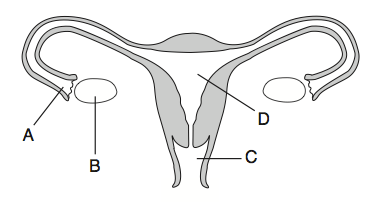

Where does fertilization take place?
Ovary
Womb
Vagina
Fallopian tube

How does the baby exchange substances between the baby and the mother?
Ovary
Womb
umbilical cord
Fallopian tube

This variable in an experiment is the one being deliberately changed by the scientist.
dependent variable
independent variable
data
control group

Should experiments be repeated over and over to see if the results are the same each time?
yes
no

A series of steps used by scientists to solve a problem or answer a question.
scientific method
recipe
data collection
metric system

Mr. S. sets up an experiment to see how the mass of a ball affects the distance it rolls off a ramp. Identify the dependent variable.
height of the ramp
distance traveled by the ball
mass of the ball
weight of the ball

Under a microscope, a student observes a specimen containing a cell wall, nucleus, and chloroplasts. Which of the following could the specimen being observed belong to?
oak tree leaf
human
bacteria
cat hair


Which of the following does a bacteria cell NOT have in common with a plant cell?
cytoplasm
cell membrane
genetic material (DNA)
nucleus

What is the purpose of an enzyme?
give permission for the reaction
raise activation energy
speed up reactions
control how many reactions occur


What are the reactants (what's needed) for photosynthesis?
glucose and oxygen
light, water, and carbon dioxide

What is the purpose of photosynthesis?
make glucose
make ATP
make light
release carbon dioxide

What type of organism uses photosynthesis?
plants
bacteria
animals
both plants and bacteria

What is the gas we breath out that plants use for photosynthesis?
sulfur
carbon dioxide
oxygen
hydrogen

Unlike active immunity, passive immunity causes
long term resistance to disease
short and long term resistance to disease
no resistance to disease
short term resistance to disease

The cell membrane is selectively permeable, which means...
All materials can enter and leave the cell
Certain things can enter while others cannot
The cell manually sorts through all materials
Only certain cells can interact with the cell.

What is the name of the process in which molecules move from an area of high concentration to an area of low concentration across a selectively permeable membrane?
Diffusion
Osmosis
Active Transport
Facilitated Diffusion

low to high
uses energy/ATP

How many ATP molecules can a glucose molecule produce during aerobic respiration?
2
4
34
38

The diffusion of WATER across a semi-permeable membrane is
osmosis
diffusion
endocytosis
exocytosis

Active transport requires
energy
the nucleus
chloroplasts
lysosomes

The cell membrane
regulates what enters/leaves cell
helps maintain homeostasis
keeps contents of cell in place
all of the above

Permeable means
it is permanent
the concentration levels are different
things can pass through


What might happen if you remove a primary consumer from the ecosystem?
There would be more food for secondary consumers.
The number of primary consumers would increase.
The number of plants would increase.
The number of secondary consumers would increase.


What is one way that someone can get active acquired immunity?
genetic disposition
gamma globulin
antitoxins
having a disease
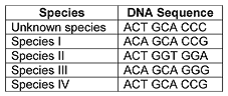


What are the results of high blood pressure?
Leaking Arteries
Heart attack or stroke
Lifestyle Diseases
Insomnia

What helps prevent High Blood Pressure?
Physical Excersise
Stress Management
All of the Above
Low Sodium Diets

Which structures are found in every living cell?
cell membrane and cytoplasm
chloroplasts and mitochondria
a cell wall and nucleus
chloroplasts and cell wall

What is the function of the cell nucleus found in both plant and animal cells?
to produce energy
to control cell activity
to remove waste products
to allow molecules to enter the cell

Cell organelles that are responsible for digesting food, worn out organelles and other cellular wastes are called ___________________.
Mitochondria
Vacuoles
Lysosomes
Chlororplasts

Low to High
Passive Transport
Active Transport


What do scientists call bacteria and viruses that can make people sick?
diseases
vaccines
antibodies
pathogens

Diseases are passed from human to human by these four types of germs:
Viruses, influenza, HIV, and vaccines
Viruses, bacteria, fungi, and parasites
Viruses, cancers, mutagens, and DNA
Viruses, blood, pollutants, and symptoms

A well-tested concept that explains a wide range of observations is called a(an):
hypothesis
experiment
cause and effect
scientific theory

What is another name for natural selection?
survival of the smartest
survival of the fastest
survival of the biggest
survival of the fittest

__________ immunity is when the bodies makes its own antibodies.
passive
active
cell mediated
false

____________ immunity occurs when an individual receives antibodies.
active
passive
false
cell mediated


A possible explanation to a problem that has not yet been tested.
data
theory
hypothesis
fact

What is the cell organelle that stores water, food and waste called?
The cytoplasm
The lysosomes
The vacuole
The mitochondria

Identify which of these is NOT a major difference between plant and animal cells.
Only plant cells have a cell wall.
Only animal cells have mitochondria.
Animal cells do NOT contain chloroplasts.
Plant cells have a large central vacuole.

___________ form the two layers of the cell membrane.
Carbohydrates
Proteins
Phospholipids
Cholesterol


Solutes move with the concentration gradient, therefore no energy is used.
Passive Transport
Active Transport
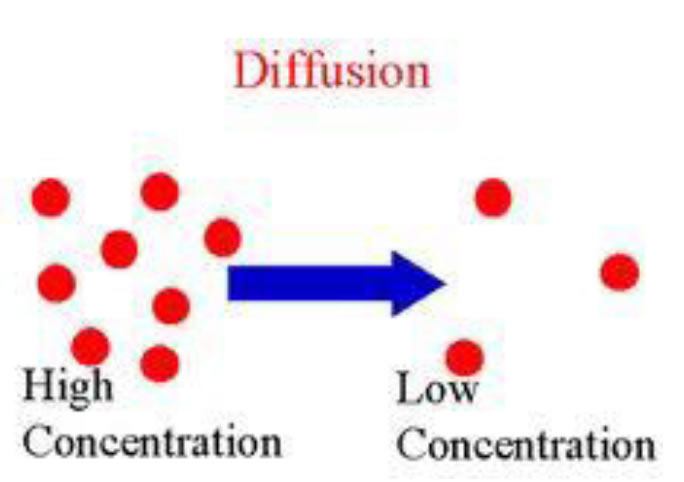


Where does cellular respiration occur?
Nucleus
Mitochondria
Vacuole
Chloroplast

Enzymes are considered to be
Lipids
Carbohydrate
Protein
Nucleic Acid

Which of the following is a risk factor of heart disease?
Working out for 30 minutes
Smoking
Playing video games
Drinking fruit juice

Atherosclerosis can lead to heart disease. What is Atherosclerosis?
Blood clots
A weakening of heart muscles
A disease of the arteries that deposits plaques of fatty material on their inner walls
Structural problems

Which of the following terms is terms is another way to say "Heart Disease"?
Hypertension
Cardiovascular Disease
Atherosclerosis
Coronary Heart Disease

Which of the following is NOT a cause of heart disease?
Plaque buildup in blood vessels
Structural Issues with the heart
Diseased Vessels
Collapsed lung

Which statement about the beetles in this environment is best supported by the data?

These limbs provide evidence of common ancestry because they—


A plant cell is placed in a solution whose solute concentration is twice as great as the concentration of the cells cytoplasm. The cell membrane is selectively permeable, allowing water but not the solute to pass through. What will happen to the cell?
No change
The cell will shrivel because of osmosis
The cell will swell because of osmosis
The cell will shrivel because of active transport