wayground logo

Free Printable Worksheets

Font size

S
M
L
XL
Worksheets

Mendelian Genetics

Total questions: 115

Worksheet time: 1hrs 26mins

Name
Class
Date
1.
What did Mendel call the two kinds of traits exhibited by the pea plants (one coming from the father, one from the mother)?
a)
Genesis
b)
Elective traits
c)
Alleles
d)
Quadrants
2.
What do we call the result of the genotype (for example, the color of the peas)?
a)
Visible traits
b)
Physiotrait
c)
Genotype 2
d)
Phenotype
3.
If green is dominant over purple, then what is the genotype for this individual?
a)
Purple
b)
Green
c)
GG
d)
gg
4.
Another word for homozygous is...
a)
purebred
b)
hybrid
c)
heterozygous
d)
dominant
5.
Tt is-
a)
homozygous dominant
b)
homozygous recessive
c)
heterozygous
d)
none of these
6.
If a pea plant were homozygous recessive for height, how would its alleles be represented?
a)
TT
b)
Tt
c)
tt
d)
tT
7.
A __________ is a segment of DNA that codes for a particular protein, which leads to a particular trait.
a)
Gene
b)
Allele
c)
Codon
d)
Nucleotide
8.
Which of the following best describes a GENOTYPE?
a)
The allele/genetic makeup of an organism.
b)
The physical expression of a trait.
9.
Which of the following is an example of a heterozygous genotype?
a)
RR
b)
Rr
c)
rr
10.
The letters on the TOP AND SIDE of a punnett square represent ______________.
a)
The combination of alleles in offspring.
b)
The possible alleles given by the parents following meiosis.
c)
The genotype and phenotype of offspring.
d)
The results of genetic mutations in offspring.
11.

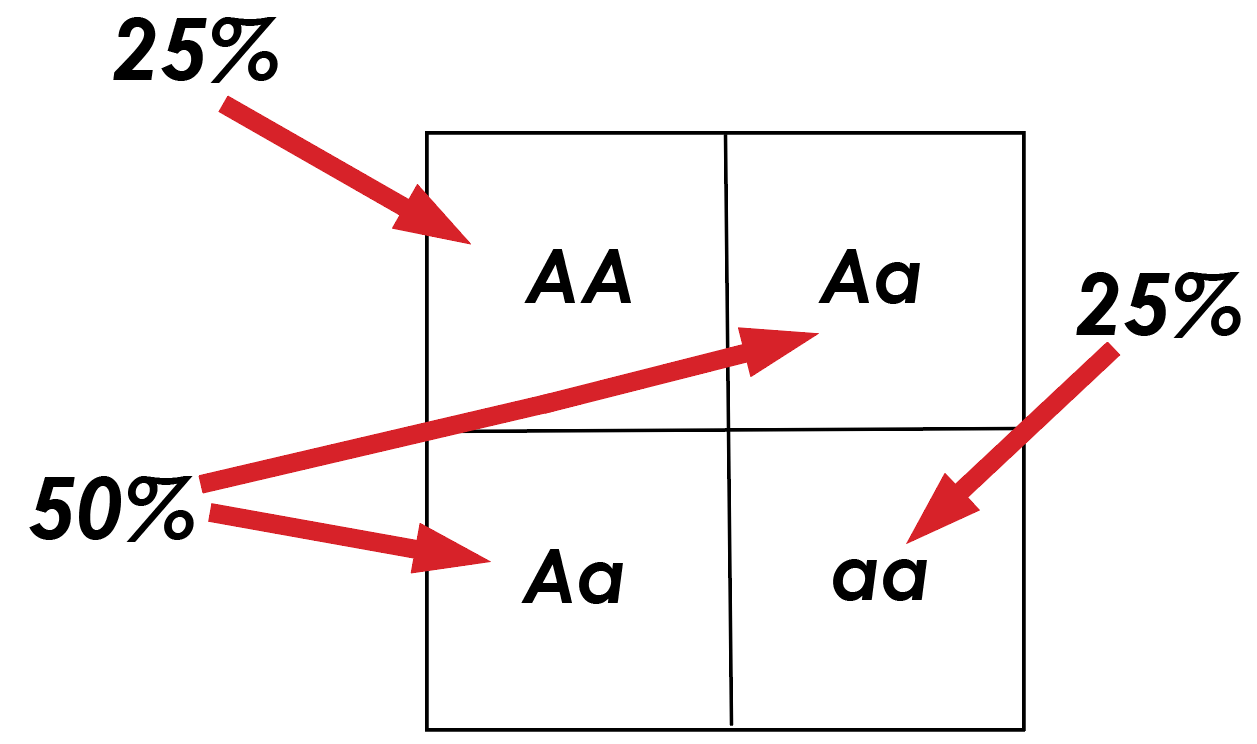
What is the predicted percentage of homozygous recessive offspring in this cross?

a)

0%

b)

25%

c)

50%

d)

75%

12.
The dominant trait in this punnett square is
a)
yellow pea seeds
b)
green pea seeds
c)
there is no dominant seed
13.
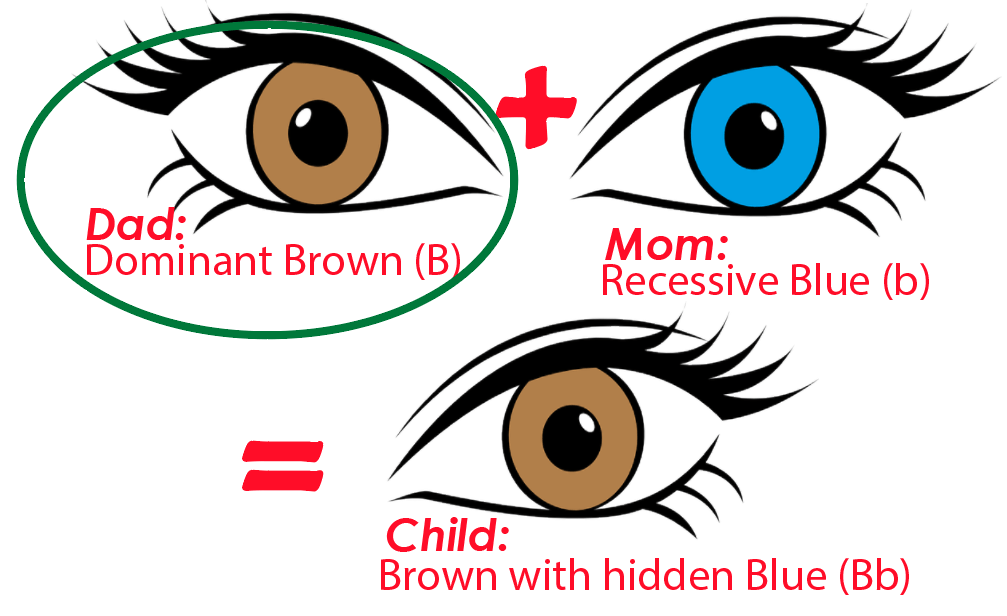
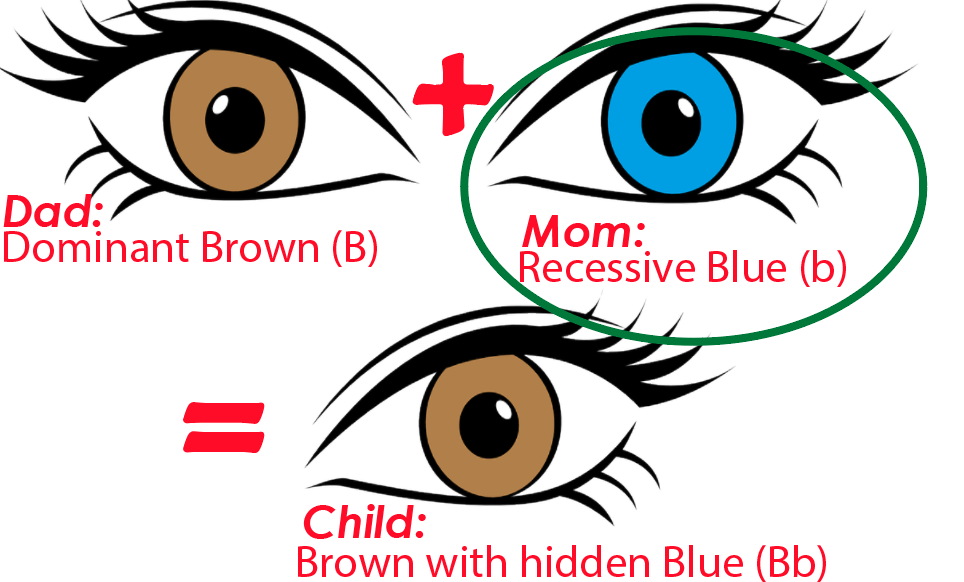
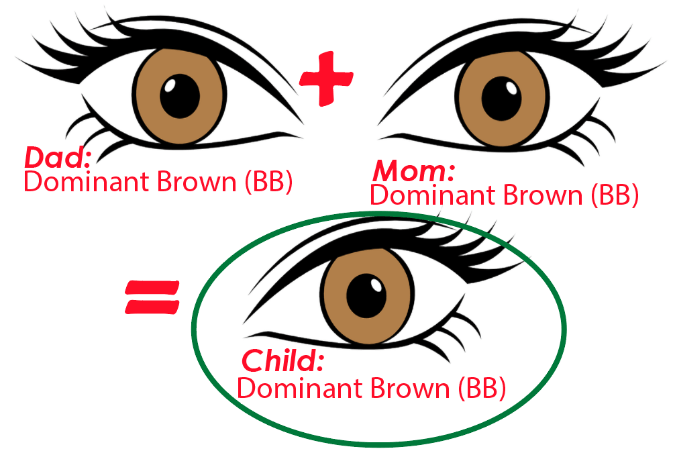
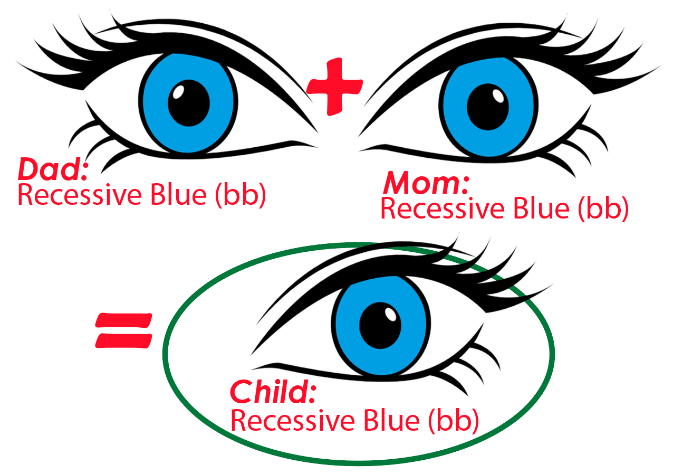
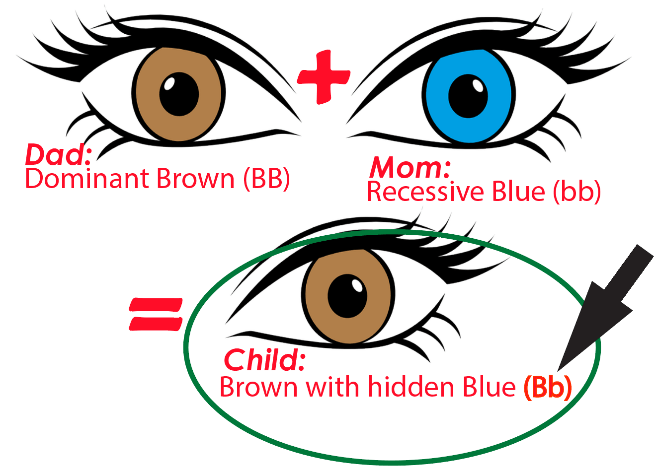
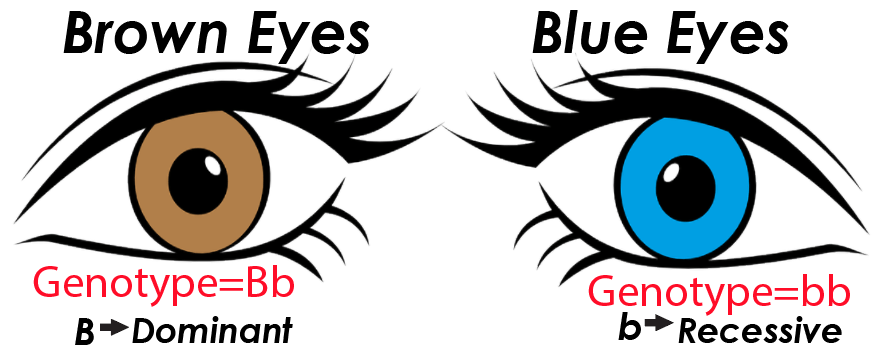
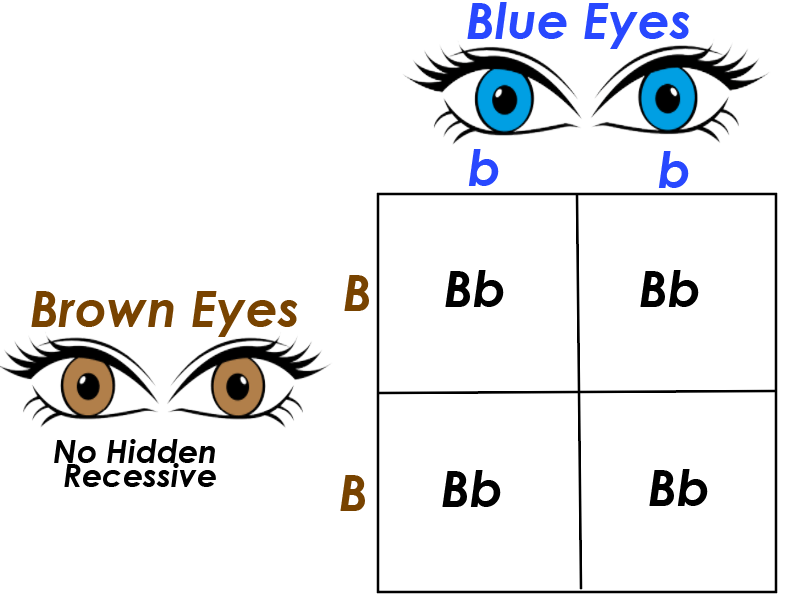
Two brown eyed parents (Bb) have a baby. What is the chance the baby is blue eyed?
a)
0 %
b)
25%
c)
50%
d)
75%
14.
this image is an example of
a)
codominance
b)
dominance
c)
incomplete dominance
15.
How are Incomplete Dominance and Co Dominance different than a normal Mendelian cross?
a)
There is no difference
b)
The heterozygous genotype has a unique phenotype
c)
There is no heterozygous genotype
d)
There is only one phenotype regardless of genotype.
16.
Why do we see only tall plants in the second generation?
a)
The gene for tall height is dominant
b)
The gene for short height is dominant
c)
The gene for tall height is recessive
d)
The parents did not have the tall gene
17.
This type of inheritance pattern shows BOTH traits in possible offspring
a)
complete dominance
b)
incomplete dominance
c)
co-dominance
d)
dominant pattern
18.
A breed of chicken shows codominance for feather color. One allele codes for black feathers, another codes for white feathers. The feathers of heterozygous chickens of this breed will be:
a)
all black
b)
all white
c)
all gray
d)
speckled black and white
19.
In some carnations, flower color exhibits codominance.  Identify the correct genotypes for red, white, and speckled carnations.
a)
Red = RR, white = rr, speckled = Rr
b)
Red = RR, white = WW, speckled = rw
c)
Red = RR, white = ww, Speckled = Rw
d)
Red = RR, white = WW, speckled = RW
20.

Passing on traits from parents to offspring

a)

Chromosome

b)

Genotype

c)

Heredity

d)

Allele

21.

The instruction of one allele covers up the instruction

of the other allele in a homologous pair. Symbolized by a capital letter.

a)

Recessive Allele

b)

Dominant Allele

c)

Heredity

d)

Trait

22.

The instructions of this allele are covered up by the other allele in a homologous pair. Symbolized by a small letter.

a)

Homozygous

b)

Dominant

c)

Recessive

d)

Genetics

23.

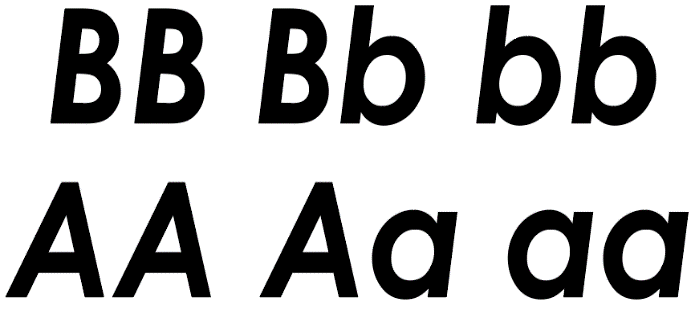
The letter symbols for both homologous alleles.

BB Bb bb AA Aa aa

a)

Genotype

b)

Phenotype

c)

Recessive

d)

Dominant

24.

A genotype where only dominant alleles were passed on

from both parents for one trait

BB AA TT LL

a)

Homozygous Recessive

b)

Homozygous Dominant

c)

Dihybrid

d)

Heredity

25.

A genotype where only recessive alleles

were passed on from both parents for one trait

bb aa tt ll

a)

Heredity

b)

Homozygous Dominant

c)

Homozygous Recessive

d)

Phenotype

26.

A genotype where one dominant and one recessive allele was passed on from both parents for one trait.

Bb Aa Tt Ll

a)

Allele

b)

Homozygous Dominant

c)

Homozygous Recessive

d)

Heterozygous

27.

The observable traits dictated by the genotype

a)

Phenotype

b)

Genotype

c)

Homozygous Recessive

d)

Homozygous Dominant

28.

During meiosis and gamete formation, homologous (paired up) alleles split up

a)

Phenotype

b)

Law of Segregation

c)

Genotype

d)

Dihybrid Cross

29.

During meiosis, the homologous pairs of chromosomes and the matching alleles are lined up independently.

Offspring are a mix of maternal genes and paternal genes.

This increases genetic variation.

a)

Homozygous Dominant

b)

Law of Segregation

c)

Crossing Over

d)

Independent Assortment

30.

The genetic cross between two parents for one trait:

Example BB x bb

B = dominant for brown

b = recessive for blue

a)

Incomplete Dominance

b)

Dihybrid Cross

c)

Monohybrid Cross

d)

Iron Cross

31.

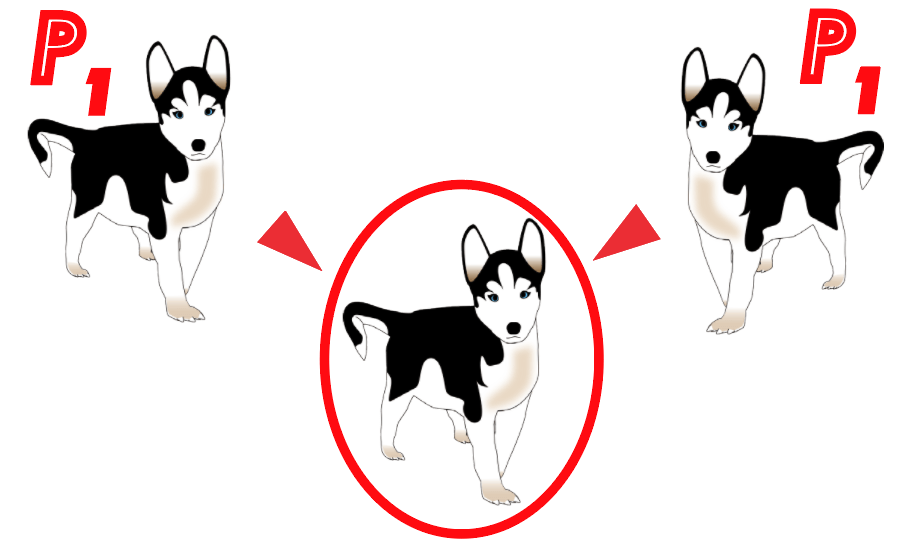
Referring to the original parents.

a)

P1

b)

F1

c)

F2

d)

Homozygous

32.

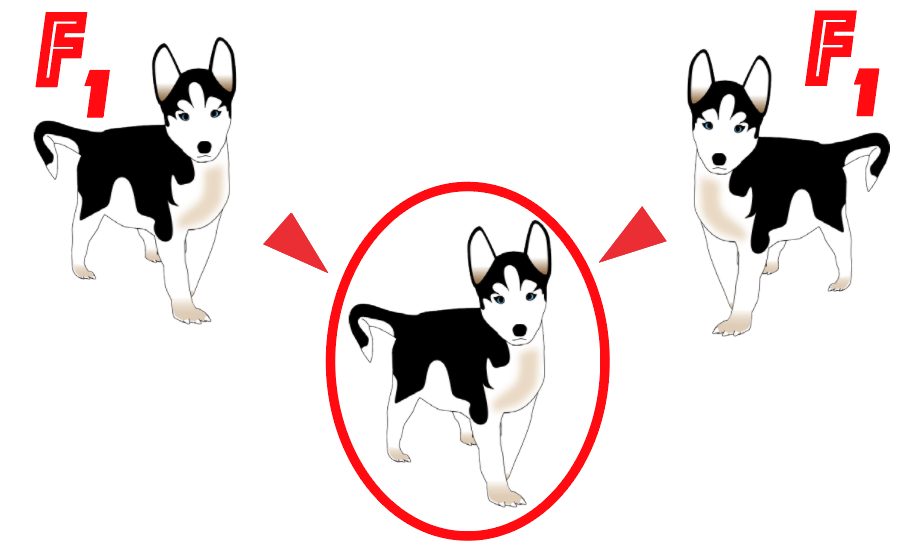
First Filial (child) Generation: the offspring of P1

a)

P1

b)

F2

c)

F1

d)

Heterozygous

33.

Second Filial Generation: the offspring of F1

a)

P1

b)

F1

c)

F2

d)

Homozygous Recessive

34.

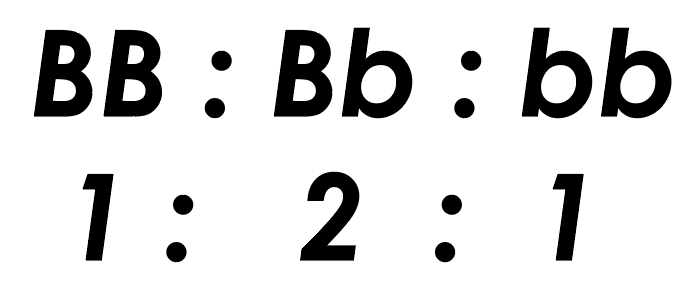
The ratio of homozygous dominant to heterozygous

to homozygous recessive offspring

a)

Genotypic Ratio

b)

Phenotypic Ratio

c)

Monohybrid Cross

d)

Homologous Pair

35.

The ratio of phenotypes in a Punnett Square

a)

Phenotypic Ratio

b)

Genotypic Ratio

c)

Dihybrid Cross

d)

Independent Assortment

36.

The chance that a genotype or phenotype

will actually occur in offspring

a)

Probability

b)

Phenotype

c)

Genotype

d)

Homozygous Recessive

37.

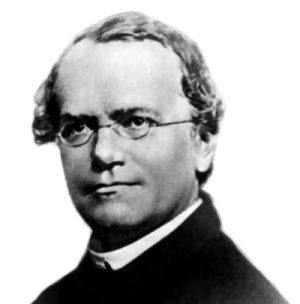
The Italian monk/scientist who first showed

the principles of genetics

a)

Watson and Crick

b)

Linnaeus

c)

Darwin

d)

Mendel

38.
Green peas are dominant (G) to yellow peas (g). What is the genotype for a hetereozygous dominant offspring?
a)
Gg
b)
gg
c)
GG
39.
In Mendel's pea plants, the homozygous recessive phenotype was white flowers.  If Mendel crossed two homozygous recessive pea plants, what color flowers would be seen in the offspring?
a)
white and purple
b)
white 
c)
purple
d)
lavendar
40.
Dominant alleles are represented by a(n)
a)
phenotype
b)
lower case letter
c)
upper case letter
d)
punnett square 
41.
True or False:
A heterozygous dominant trait can be written as BB.
a)
True
b)
False
42.
What is the percentage of a homozyogus dominant offspring?
a)
75%
b)
50%
c)
25%
d)
0%
43.
Round (R) seeds are dominant to wrinkled (r) seeds.
What is the genotype for a homozygous dominant offspring?
a)
RR
b)
Rr
c)
rr
44.
If two purebred species (BB) are crossed, what percentage of their offspring would be BB?
a)
25%
b)
50%
c)
75%
d)
100%
45.
Short hair (S) is dominant to long hair (s).
What is the genotype for an offspring with long hair?
a)
SS
b)
Ss
c)
ss
46.
What percentage of the offspring will be heterozygous dominant?
a)
100%
b)
75%
c)
50%
d)
25%
47.
What percentage of the possible offspring will be hybrids?
a)
25%
b)
50%
c)
75%
d)
100%
48.
In pea plants, the trait for tall stems is dominant over the trait for short stems. If two heterozygous tall plants are crossed, what percentage of the offspring would be expected to have the same phenotype as the parents?
a)
100%
b)
75%
c)
50%
d)
25%
49.
In snapdragons, Tallness (T) is dominant to dwarfness (t). In a cross between two plants that are heterozygous for this trait, the percent of offspring expected to exhibit dwarfness is
a)
 25%
b)
100%
c)
50%
d)
0%
50.
Cystic Fibrosis (CF) is a genetic disorder that is controlled by a recessive allele. If a person suffering from CF were to marry an individual who is heterozygous for the trait, what % of their children could be expected to unaffected carriers of the trait? Ignore issues of sterility in persons with CF.
a)
0%
b)
25%
c)
75%
d)
50%
51.
Tay Sachs disease is a fatal genetic disorder. Children born with this disorder generally die before they are five years old. A couple has had three children who died of Tay Sachs. About this couple it can safely be assumed that:
a)
 any children they have in the future will also die from this disease
b)
they are both heterozygous for the Tay Sachs trait
c)
 they are both homozygous for the Tay Sachs trait
d)
one is heterozygous and the other is homozygous for the Tay Sachs trait
52.
What did Gregor Mendel use to discover the principles that rule heredity?
a)
Pea Plant
b)
Pigeons
c)
Pear trees
d)
Photosynthesis
53.
Gregor Mendel is known as the father of _________
a)
Modern Medicine
b)
Father of the Green Revolution
c)
Father of Genetics
d)
The Pea Plant Man
54.
What do we call the table used to calculate the probability of an offspring's genotype?
a)
Punnett square
b)
Venn diagram
c)
Golden ratio
d)
Fibonacci sequence
55.
What is the genotype for this organism?
(E= 3 eyes, e= 1 eye)
a)
EE
b)
Ee
c)
ee
d)
EE or Ee
56.
Which of the following terms refers to the different possibilities of a gene?
a)
chromosome
b)
DNA
c)
Punnett Squares
d)
allele
57.
If something is heterozygous, it is also...
a)
purebred
b)
hybrid
c)
dominant
d)
recessive
58.
A phenotype is the...
a)
letter combination
b)
dominant gene
c)
recessive gene
d)
physical appearance
59.
If this image were real, it would represent what type of inheritance?
a)
incomplete dominance
b)
codominance
c)
polygenic inheritance
d)
compete dominance
60.
AB blood type is an example of what type of inheritance?
a)
complete dominance
b)
incomplete dominance
c)
codominance
d)
polygenic inheritance
61.
A red flowered plant (RR) breeds with a White flowered plant (WW). The gene for petal color in these plants expresses incomplete dominance.  What percentage of the offspring will have pink (RW) flowers?
a)
0%
b)
25%
c)
50%
d)
100%
62.
How many PAIRS of chromosomes do humans have?
a)
23
b)
46
c)
1
d)
2
63.
Snap dragon color is a incomplete dominant trait.  A red flower (RR) is crossed with white flower (rr)? What color are flowers that are Rr?
a)
Red
b)
Red and White
c)
White
d)
Pink
64.
An offspring will receive how many alleles from each parent to determine a specific trait?
a)
one
b)
two
c)
three
d)
five
65.
A calico cat shows both the traits for orange fur and black fur. What kind of allele expression is this?
a)
Incomplete Dominance
b)
Co dominance
c)
Independent assortment
d)
Recessive inheritance
66.
This is an example of ___________?
a)
Incomplete dominance
b)
Co-Dominance
67.
In a Punnett square each box represents a(n)....
a)
offspring
b)
parent
c)
gene
d)
trait
68.
What type of inheritance is shown?
a)
complete
b)
incomplete
c)
codominance
d)
sex-linked
69.
In butterfly bushes, dark purple and pink parents will produce offspring with lavender flowers. This is a result of 
a)
codominance
b)
incomplete dominance
c)
complete dominance
d)
recessive dominance
70.

This picture shows what the red blood cell of someone with sickle cell anemia. This disorder is carried on the X chromosome and is most common in sub-saharan populations. What type of inheritance pattern must it follow?

a)

codominance

b)

sex-linked inheritance

c)

multiple allele inheritance

d)

incomplete dominance

71.
How many phenotypes are there in ABO blood types?
a)
3
b)
4
c)
6
d)
12
72.
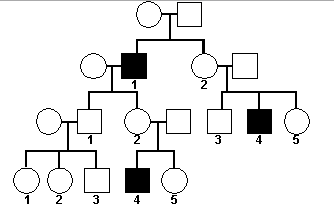
What is this diagram called?  What do the circles represent?
a)
karyotype, males
b)
karyotype, females
c)
pedigree, females
d)
pedigree, males
73.
How many children do #5 & #6 have?
a)
1 male child
b)
2 male and 2 female children
c)
2 male children
d)
1 daughter and 1 son
74.
What do the shaded shapes represent?
a)
normal individuals
b)
individuals who have the trait
c)
carriers
d)
deceased
75.
ABO blood types are an example of what type of inheritance?
a)
multiple alleles
b)
incomplete dominance
c)
polygenic inheritance
d)
genetic mutations
76.
There are many variations in skin color that can be inherited based on the combination of alleles that you inherit from your mom and dad.  This bell curve distribution is an example of
a)
incomplete dominance
b)
codominance
c)
multiple alleles
d)
polygenic inheritance
77.
What gender of offspring are most often affected by sex-linked inheritance?  What gender are usually carriers of the trait?
a)
males, males
b)
females, males
c)
males, females
d)
females, females
78.
The image shows the pattern of inheritance for colorblindness.  From this diagram we can tell that colorblindness is
a)
a codominant trait
b)
a sex-linked trait
c)
carried on the Y chromosome
d)
is associated with a dominant allele
79.
For any given trait there may be more than two choices for alleles, the trait may be inherited on more than one gene or chromosome, and there are many types of inheritance patterns it may follow, however, for each trait you may only inherit how many alleles?
a)
1
b)
2
c)
23
d)
46
80.
How much of your DNA do you inherit from your mom?
a)
10%
b)
25%
c)
50%
d)
it varies
81.
What is the result of meiosis?
a)
2 daughter cells that are haploid and genetically different
b)
2 daughter cells that are haploid & identical
c)
4 daughter cells that are diploid & genetically different
d)
4 daughter cells that are haploid & genetically different 
82.

A single gene has 3 or more alternative forms. These are called

a)

heterozygotes

b)

multiple alleles

c)

epistatic

d)

polygenic

83.
In mice, the homozygous mice are black and white. The heterozygous mice are gray. What pattern of inheritance is expressed in fur color in mice?
a)
complete dominance and recessiveness
b)
co-dominance
c)
incomplete dominance
d)
pleiotropy
84.
Homozygous is when...
a)
the alleles are the same
b)
the alleles are different
c)
the alleles are absent
d)
the alleles are present
85.
Heterozygous is when...
a)
the alleles are the same
b)
the alleles are different
c)
the alleles are absent
d)
the alleles are present
86.
Blood types are an example of co dominance and
a)
incomplete dominance
b)
sex linked traits
c)
multiple alleles
d)
polygenics
87.
This is when a trait is controlled by more than one gene.
a)
Multiple alleles
b)
Polygenetic inheritance
c)
Codominance
d)
Incomplete Dominance 
88.
If this pedigree shows an autosomal recessive disorder, what MUST the genotype of individual II-3 be?
a)
HH
b)
Hh
c)
hh
d)
None of the above
89.
How are individuals III-2 and II-4 related?
a)
Cousins
b)
Dad and Daughter
c)
Uncle and Niece
d)
Grandpa and Granddaughter
90.
What type of heredity is shown in the pedigree?
(hint: check your notes - "modes of inheritance")
a)
Sex-Linked Dominant
b)
Sex-Linked Recessive
c)
Autosomal Dominant
d)
Autosomal Recessive 
91.

If this pedigree shows a recessive disorder, what MUST the genotype of individual 4 be?

a)

HH

b)

Hh

c)

hh

92.
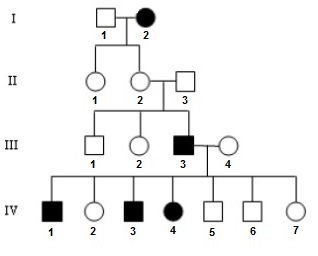
How many generations are shown in this pedigree?
a)
1
b)
2
c)
3
d)
4
93.
How many kids did the mother and father from the first generation have?
a)
2
b)
4
c)
5
d)
6
94.
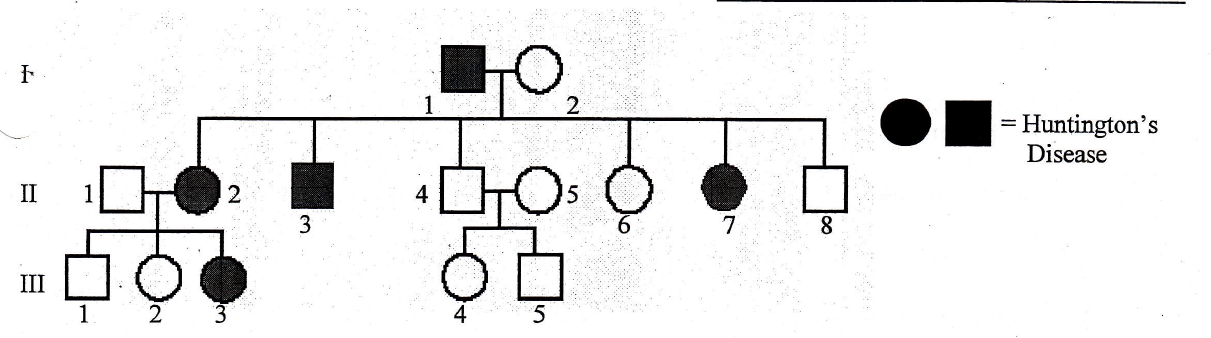
There are no carriers for Huntington's Disease- you either have it or you don't. Is Huntington's disease caused by a dominant or recessive trait?
a)
Dominant
b)
Recessive
95.
How are individuals I-2 and III-5 related?
a)
Grandpa and grandson
b)
Mom and son
c)
Uncle and nephew
d)
Grandma and grandson
96.
This pedigree represents the inheritance of hemophilia in this family. How many of the females have the hemophilia trait?
a)
8
b)
5
c)
2
d)
3
97.
Huntington's Disease is a dominant trait.
What is the correct genotype for individual I-2?
a)
HH
b)
Hh
c)
hh
d)
H_
98.
Hemophilia is a recessive sex-linked trait. If H = normal & h = has hemophilia, which genotype represents a male with hemophilia. 
a)
XHY
b)
XHXh
c)
XhXh
d)
Xh
99.
What do half colored symbols represent?
a)
The individual is a carrier (heterozygous).
b)
The individual expresses the trait.
c)
The individual has both recessive alleles.
d)
The individual has both dominant alleles.
100.
What do we use pedigrees for?
a)
To look at families
b)
To make determinations about the offspring
c)
To track traits in families
d)
Nothing
101.

On a pedigree, this symbol represents a ---

a)

not affected female.

b)

not affected male.

c)

affected male.

d)

affected female.

102.

On a pedigree, this symbol represents a ----

a)

not affected male.

b)

not affected female.

c)

affected male.

d)

affected female.

103.

What is the mode of inheritance shown here?

a)

Recessive because it "skips" a generation

b)

Dominant because it shows up in every generation

104.

In the second generation of this pedigree, how many people are carriers of the trait? *Remember: a carrier does not have the disorder/disease, but can pass it on to his/her children.

a)

1

b)

2

c)

3

d)

5

105.

Why do all the daughters in Generation II carry the colorblind gene?

a)

Because mom passed on the gene.

b)

Because dad passed on the X chromosome.

106.

What type of heredity is shown in the pedigree?

a)

Sex-Linked Dominant

b)

Sex-Linked Recessive

c)

Autosomal Dominant

d)

Autosomal Recessive

107.

The pedigree is showing a _____________ trait.

a)

autosomal dominant

b)

autosomal recessive

c)

sex linked recessive

108.
What is the genotype of the mother?
a)
BB
b)
bb
c)
Bb
d)
BB or Bb
109.
What is the genotype of the father?
a)
AA
b)
aa
c)
Aa
d)
AA or aa
110.

This is a __ trait.

a)

autosomal recessive

b)

sex-linked recessive

c)

autosomal dominant

111.

This trait is

a)

autosomal recessive.

b)

sex-linked recessive.

c)

autosomal dominant.

112.

Generation 2 individuals 5 and 6 are

a)

brother and sister.

b)

cousins.

c)

married.

d)

not related.

113.
What type of heredity is shown in the pedigree?
a)
Sex-Linked Dominant
b)
Sex-Linked Recessive
c)
Autosomal Dominant
d)
Autosomal Recessive 
114.
What is the mode of inheritance shown here?
a)
Autosomal Dominant
b)
Autosomal Recessive
c)
Sex Linked Recessive
115.

What is the mode of inheritance shown here?

a)

Autosomal Dominant

b)

Autosomal Recessive

c)

Sex Linked Recessive